

Magazine
Miriam Peretz: Choosing Life After Loss — Faith, Resilience, and the Power of Jewish Spirit
Miriam Peretz shares her journey of strength, motherhood, grief, prayer, and unwavering commitment to the sanctity of life
- Avner Shaki
- | Updated
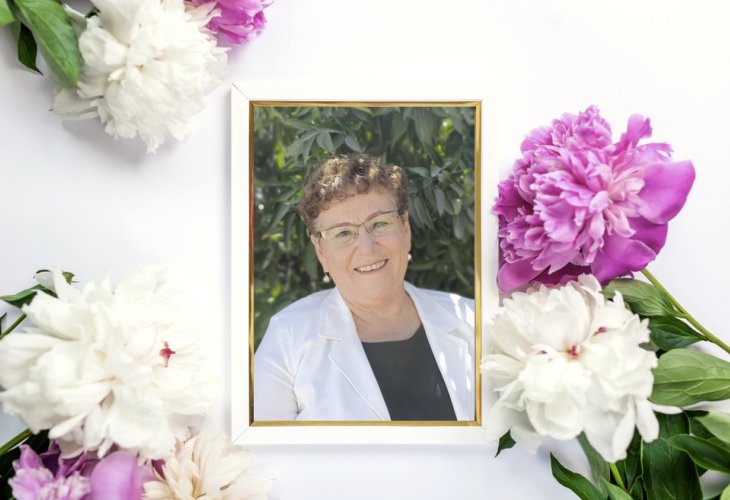 Miriam Peretz
Miriam Peretz is a widow and mother of six, supervisor in the Youth and Society Administration of the Ministry of Education, lives in Givat Ze’ev.
A childhood memory that has stayed with you?
“I was born in Casablanca, Morocco. My parents were born in the Atlas Mountains. Our living conditions were better than what they had there, but compared to today — they were very poor. I grew up in the mellah, the Jewish quarter. It was like a ghetto — no running water, no bathroom inside the house. There were shared toilets for several families, and of course no water in the home.
We were a very poor family. We lived in one room — my grandfather, my parents and four children. And no, we did not suffer from ‘crowding’. What matters is how wide the heart is, not how big the house is. Next to the bedroom we had a tiny room that served as a sort of kitchen — no gas, no refrigerator, none of the basic things. We had coals, and water that we bought.
My father didn’t work — he mainly took care of us. He was the opposite of what people imagine when they think of a ‘Moroccan man’. We were a family that broke stereotypes. My mother was the breadwinner. She worked as a cleaner in the home of the rabbi of Casablanca.
“When I was ten, we immigrated to Israel — straight to the Hatzerim transit camp in Be’er Sheva, and until 11th grade we lived in a shack. In the transit camp we had a refrigerator — but not electric. We had to buy ice to keep things cool.
There was a sense of togetherness in the transit camp — everyone’s doors were open. Everyone who lived there was deeply grateful to have merited reaching the Land of Israel. My father worked sweeping streets in Be’er Sheva. My mother didn’t work. We lived a materially poor life — but rich in joy and spirituality. My mother would always say: ‘Thank God that we are in the Land of Israel, among Jews.’
“My mother and I built a clay oven in the yard, made of mud and straw, and in that oven my mother would bake bread for everyone in the camp. One of my strongest memories of her — proof of what an incredible woman of kindness she was — is that every Friday at five in the morning, no matter the weather, she would gather wood and light the oven in honor of Shabbat. Each woman would come with the dough she needed to bake, and my mother would stand there and bake for everyone.
“She was an expert — she never mixed up the loaves. Every family got the bread just the way they liked it. She would mark each loaf with symbols so she wouldn’t confuse between them. Toward Shabbat, every family would bring their Moroccan Shabbat stew. When the oven was full, we would seal the opening with mud and pray that nothing would burn. On Shabbat morning, after prayers, a representative from each family would come to collect their stew. We were very poor, and still, everyone came to our house.”
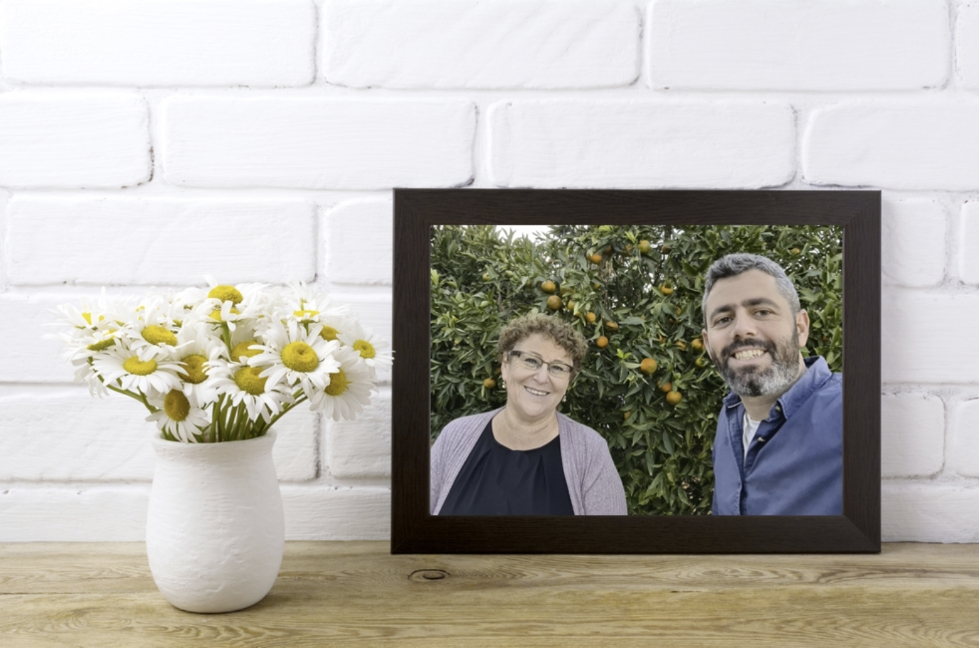 מרים פרץ ואבנר שאקי
Tell us about a meaningful experience you had through performing a mitzvah
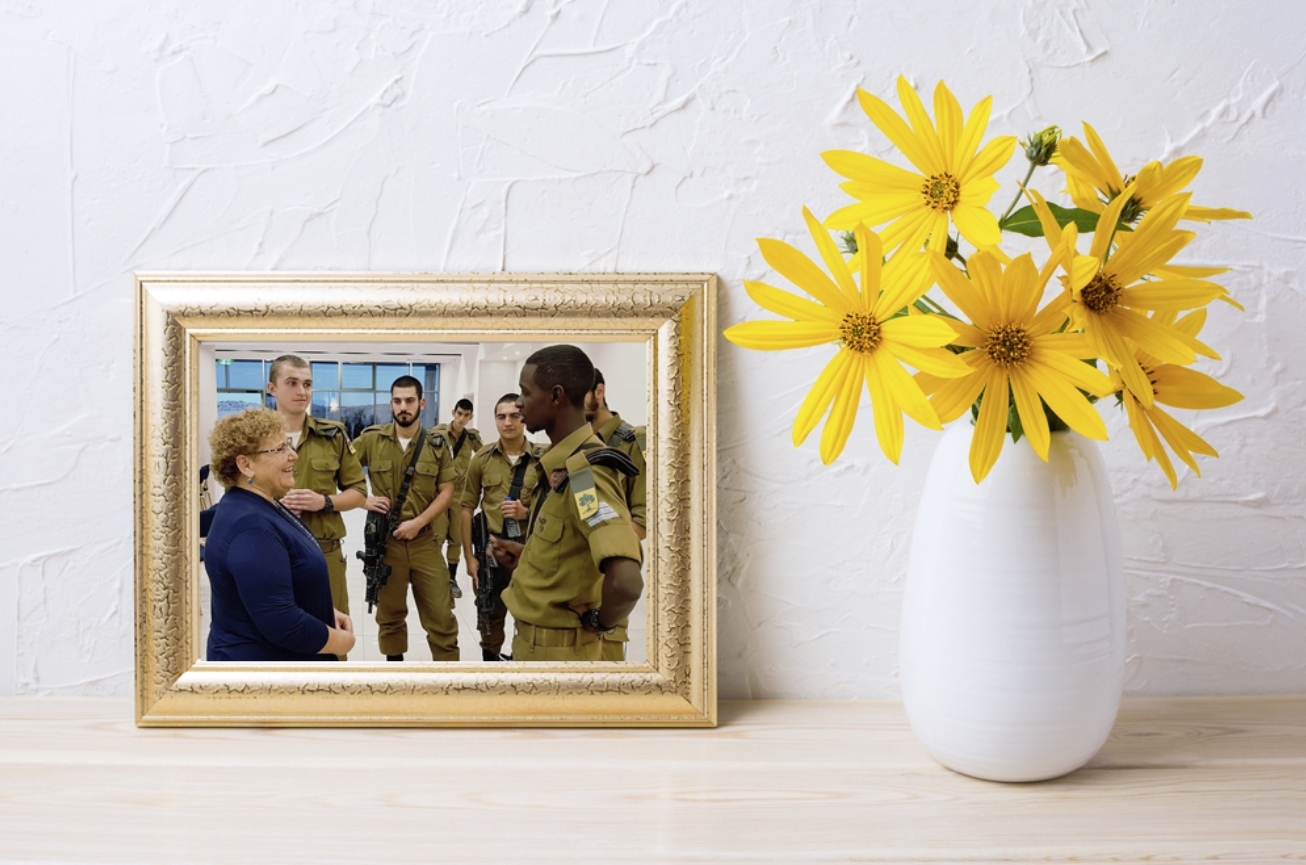
“After our wedding, my husband and I moved to Ofira — Sharm el-Sheikh, in Sinai. There was a school there for the children of the soldiers serving in the area, and I started teaching there. We received special budget approval for Jewish studies, and I began teaching Bible, Oral Torah, and the weekly Torah portion. The children loved it — they absorbed everything.
“Over time things progressed — I began preparing boys and girls for bar and bat mitzvah. I was responsible for all the ceremonies at the school. At one point my husband managed to obtain a Torah scroll, and he decided to set up a synagogue in one of the bomb shelters.
“We didn’t have a minyan, so Eliezer would send Uriel and Eliraz — who were about five at the time, to stand on the main street, sometimes in 45-degree heat, and say to everyone who passed by that they were needed as the tenth man. When children call you to come pray — you come.
“Often the men who arrived were wearing tank tops and shorts — but in Eliezer’s synagogue there was a sort of clothing rack, and anyone who wanted could borrow proper clothing. Over the years a yeshiva was eventually established there. We truly felt we were on a mission. Many families came to our home and saw Judaism for the first time.
“Uriel and Eliraz were born there. After the peace agreement with Egypt, we had to evacuate. It was during Passover — and when we read the Haggadah a few days before leaving, something felt wrong. We couldn’t believe we were giving our homes to Egypt — and especially during Passover.”
Tell us about a prayer that was especially meaningful to you
“For me, prayer is closeness to God — a moment of connection, the place where my tears gather, where I release my pain. Prayer gives voice to my grief. It moves me deeply — there are prayers that overtake me, like on the High Holy Days. I feel as though the hymns were written just for me.
“The words that tear me apart the most are from the verse: ‘Forever, God, Your word stands firm in the heavens.’ That is the moment of total acceptance of what happened to me. I say to God: ‘You decided this.’ It is the absolute expression of faith — that everything is from Him, and I accept it.
“When we reach ‘Et Sha’arei Ratzon,’ I am entirely inside the story of the Binding of Yitzchak. That is the peak for me — it is the song of my family. After Uriel was killed, Eliezer would collapse during that prayer and hold Eliraz tightly. It took on immense meaning. I bound my sons. In the original Binding there was a miracle — for us, there wasn’t.
“One of my sons, Avichai — may he live and be well — has an incredible voice. When we reach ‘Speak, my people, for her joy has turned away…’ everyone falls silent, and he sings. I feel they are singing to me. The prayer book fills with tears. Another line that touches me deeply: ‘An eye bitterly weeps — and a heart rejoices.’ My whole life moves between joy and pain.”
What moves you most in Judaism?
“There are many things — but one of the greatest is the sanctity of life — a supreme value in Judaism. I am a natural optimist — fiery and full of energy. I walk strongly with the Divine command, ‘Choose life.’
“But what does ‘choose life’ really mean? Do we really choose? No — no one asked us to be born. For me, choosing life means choosing what kind of life you want to live — what meaning you give to your life. Because life itself — only God gives.
“If I had known that two of my sons would be killed — I would not have wanted to be born. But that is what happened — and the question is not why, but how you go on. How you sanctify life.
“Life is one great challenge, and a person’s role is to discover their inner strength in the face of those challenges — to become better, more moral, more righteous.
“When people ask me, ‘Two of your sons were killed — how can you go on living?’ I answer: I choose life. I woke up this morning — that is a fact. Now, do I want to lie in bed, cry over my fate and blame God and the world, or do I want to enjoy the good I still have, be with my grandchildren, help people, see the beauty in the world and thank God for it? That is choosing life.
“For me, life is not how many years you live — but what you do with them. Some people waste their lives.
“If Uriel and Eliraz had been given even one more minute, they would have used it to learn more Torah and do more acts of kindness. They did not have much time — so it is even more important for me to give meaning to my life — to sanctify life.
“We are a people who do not glorify death — we raise our children so that they will live. We are a people who cling to life. And I want to live a life that is worthy — a life worth living — for myself, and also for my sons who are no longer here.”

