

Magazine
Lidor Yosefi: Faith, Music, Loss, and Renewal
The beloved singer reflects on his Yemenite roots, deep connection to Judaism, the tragedy of losing his son, the power of faith, and creating music as a path to healing and devotion to God
- Avner Shaki
- | Updated
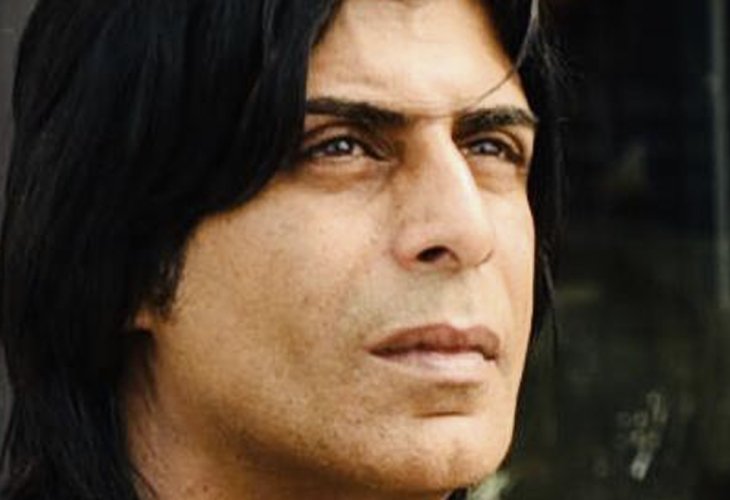 Lidor Yossefi
Lidor Yosefi is married and father who lives in Afula. He is a singer and songwriter.
Share a childhood memory
“I’m Yemenite on both sides, originally from Rosh HaAyin, and I practically grew up with my grandparents — real old-generation Yemenite Jews — with the modest clothing, side-locks, and all the traditions. I’m the oldest child and the first grandchild, so I always felt surrounded by a special kind of love.
“From a very young age I studied with my mori, Mori Karavani — a righteous and special man. I would walk to him on foot, even though it was pretty far, and studied there together with a few neighborhood kids.
“The mori loved me very much — I was an excellent student — and already in first grade I was called up to read from the Torah. At the same time, I also learned a lot from my father, and from both of them I absorbed my roots — Torah learning and Torah reading.
“Thank God, I merited to continue with that through the years. Alongside all this, the world of music was woven in too. Prayer and Torah reading in our tradition include a lot of melody and song — and that’s where my connection to music really began. I also loved listening to my grandmother sing — she never missed an opportunity. Whether she washed dishes, cooked, or cleaned the house, she was always singing. Sadly, I still haven’t recorded traditional Yemenite songs — but I believe it will happen.”
What does Judaism mean to you?
“Judaism is everything to me. I come from a religious home — and even today, I’m religious. The times when I drifted away weren’t because of ideology, but because of temptations. My roots were always strong — but when you grow up and step out into the world, it becomes harder. You want to express yourself, find your place.
“They called me ‘the wonder child from Rosh HaAyin.’ I received so much positive feedback, and I believed music was my calling. But once I entered the industry, it wasn’t easy to hold onto the values I grew up with.
“People sometimes say I ‘became religious,’ but that’s not how I feel. Yes — there were periods when I was less careful about certain things — but I was always with God. The soul comes from a very high place — and when it goes off track, it cries out. When I drifted, I heard my soul crying — and I thank God for helping me return to Him, and for continuing to help me every single day.”
What are your dreams?
“My greatest dream is to bring nachat (joy and honor) to God — in the place He wants me to be. Today, my goal is to conquer the stage, but to do it for the sake of sanctifying God’s Name. Someone once asked me who my manager is — and I said: The Master of the World. He’s the main One. And of course, I don’t perform on Shabbat.”
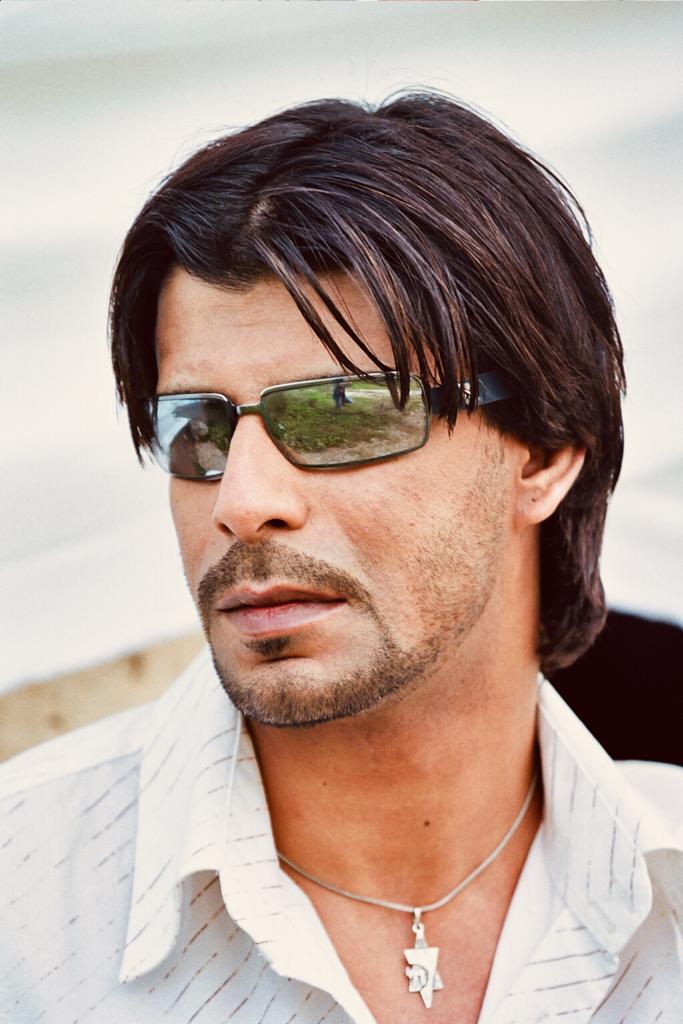 לידור יוספי (צילום: ראם נגר)
Are you where you imagined yourself professionally?
“I reached very high places in my career — but certain things made it hard to stay there. There are many demands from a successful artist — and it was hard for me to meet them.
“And of course, the passing of my son Shalev, of blessed memory — made it even harder to continue. As a famous singer, you’re expected to smile all the time — but sometimes inside, you’re broken. Public exposure is complicated.
“I create out of love, and for the sake of Heaven. Today my goal is to recognize the place that’s truly right for me. I believe I’ve found it — but I always want to grow.”
Share something personal about your family
“After my son passed away tragically at age three, I survived only because of my faith. Without a strong faith, I don’t think I’d be here talking to you today. I don’t know what would have happened to me.
“I lived in a world where I had no reason to get up in the morning. God gave me strength to live through that pain — and yes, I call it ‘suffering of love.’ Over time I came to understand that what happened — painful as it is, came from God’s love, and it brought me tremendous spiritual strength.
“In terms of music — it brought me back to my audience stronger, more open, more alive. Today I sing from a truer place. My child is still with me — strengthening me from above.
“You can’t understand an experience like that. You can only believe that it is somehow for the good — and keep walking forward. I just say thank you — for what I understand and for what I don’t.
“Back then, people expected me to go on stage and appear on TV, but inside, I was extinguished. My joy for life disappeared. Any smile I showed was just an act. In that space, I worked on my faith simply to stay alive. It was survival.
“Today, thank God, I’m remarried — and I have an eight-year-old daughter. I went through a spiritual and emotional journey that will stay with me for the rest of my life.”
Tell us about your song ‘Kos Yeshuot’
“The song was born from a deep love for God — a love that grows stronger every year as I reach new spiritual levels. I’ve been holding onto this song for seven years — and with God’s help, it finally came out.
“The song speaks mainly about teshuvah (spiritual return). King David — who merited to become the ‘fourth leg of the Divine chariot’ because of his repentance — wrote in Tehillim (Psalms): ‘I will lift the cup of salvation and call in the Name of God.’ I hope the song brings people closer to God.”
He shares that the song was co-written with Gilad Masami — himself a ba’al teshuvah who once performed in a hugely successful pop-Mediterranean music duo: “We decided to collaborate before he flew to Uman for Chanukah. I showed him the song, and he promised to add a new verse there. He told me that in Uman it didn’t flow — but on the flight home, suddenly everything came to him at once.”
Where do your melodies come from?
“It started very young — I was always humming melodies that came into my head. At 13 I began piano lessons at the community center in Rosh HaAyin. Later I learned guitar and drums too — and I realized there are techniques for composing — but to this day, I mostly compose from emotion.
“A melody has to pass through the heart and soul. Technique can help, but the heart is everything.
“Often a melody just comes down to me — and the moment it does, I record it immediately. I have piles of drafts — even from twenty years ago.
“The lyrics are different — they’re more connected to what I’ve lived through. The melodies sometimes come unrelated to my experiences.
“In terms of style, it’s important to understand what this generation connects to. If the language is too formal or ‘high,’ it won’t work. You have to find the middle — to adapt to the times, but still stay true to yourself.
“I try to write about real life — about God — about the true world and not the fake one. In my writing and composing, I try to be a channel for Him.”

