

Magazine
The Legacy of Moshe Zar: A Pioneer of Land Redemption
A legendary figure in the struggle for Jewish settlement in Samaria, Moshe Zar built a symbolic hilltop home, survived terror attacks, and inspired generations of pioneers who continue expanding communities across the Shomron
- Hidabroot
- | Updated
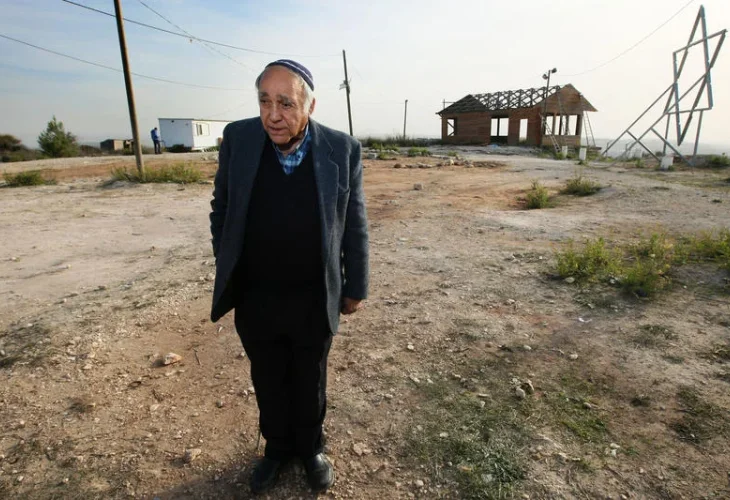 Moshe Zar at Chavat Gilad, Archive (Photo by Kobi Gideon, Flash 90)
Anyone who passes near the hill close to Karnei Shomron cannot miss the huge four-story structure standing proudly at the top of the mountain, with an Israeli flag flying from its roof.
It is an unusual building, and if not for the flag one might think that an Arab family lived there, since there are no Jewish communities in the surrounding area. But that is not the case. The house was built by the land redeemer Moshe Zar, of blessed memory, who passed away earlier this year.
“My father bought the land already in the early 1980s,” recalls his son Itai, the youngest of his eight children. “Right afterward he brought in a bulldozer to open an access route up the hill and began the construction process. I was six years old at the time, but I remember him explaining that he was going to build a house that ‘no crane in the world would be able to move,’ because this is the land of the Jewish people and it does not end at the Green Line.
Since then, the house has stood in place. For us, as people who have spent our entire lives establishing communities and redeeming land, it is an inseparable part of Jewish settlement. I believe the day will come when it will be united with Karnei Shomron.”
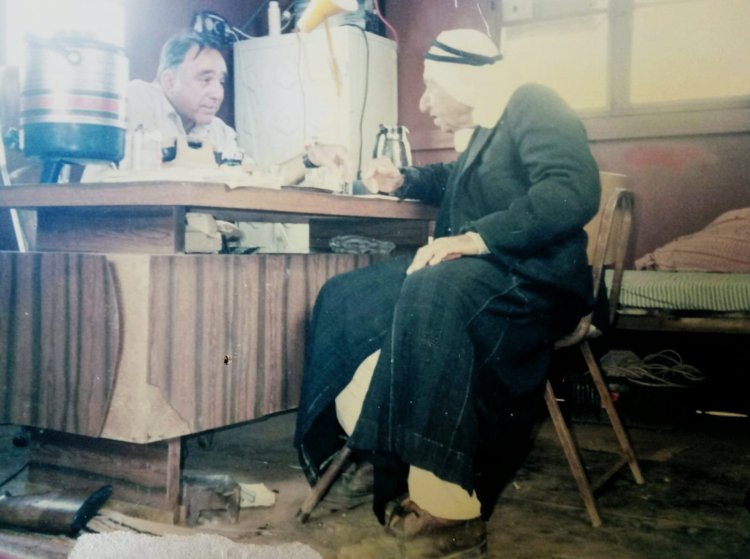 משה זר בחתימה על רכישת קרקעות
“My Father Did Not Know Fear”
Moshe Zar became one of the most well-known figures associated with land redemption in the Shomron region, on which many established communities were later built, including Emanuel.
“My father began purchasing land from local Arabs already in the late 1970s,” says his son. “In those years, the Arabs were not afraid and were even glad to earn money from the sales. But the Jordanians, who still saw themselves as intending to regain control of the area, realized that land was being sold to Jews and issued a death sentence for anyone who sold property to them.
As a result, several Arabs were killed by members of their own communities after being accused of ‘selling land to Moshe Zar,’ and many who had cooperated with my father were afraid to meet him.
At one point, while he was in the process of purchasing the mountain near Karnei Shomron, his plan was to build a large house at the top as a clear declaration of Jewish presence, since until then most settlement consisted of caravans.
He arranged to meet an Arab contractor who was supposed to help move the project forward. They agreed that my father would wait for him at a bend in the road. When my father arrived, the man pulled out a gun and shot him, hitting his arm. My father managed to escape and also succeeded in wounding his attacker.
Despite his injury, he got into his car and drove as far as the Shomron gas station, where he encountered Shaul Segal, the contractor who was then building Emanuel. Shaul notified my mother over the two-way radio that ‘Moshe has been injured.’
My father was evacuated to the hospital in critical condition. At first, we were told there was no chance he would survive, but thank God he recovered and returned to full activity, including continuing his land purchases, without fear.
This was not the first time his life had been saved. He was also a disabled IDF veteran from the Sinai Campaign. He had been severely wounded there as well, survived miraculously, and ever since had a glass eye. But as you can see, nothing stopped him.”
When asked how his father was able to continue without fear, Itai answers: “My father always said about himself, ‘Moshe Zar does not know what fear is.’ He believed deeply in the justice of his mission and felt that God protected him because of the important work he was doing.”
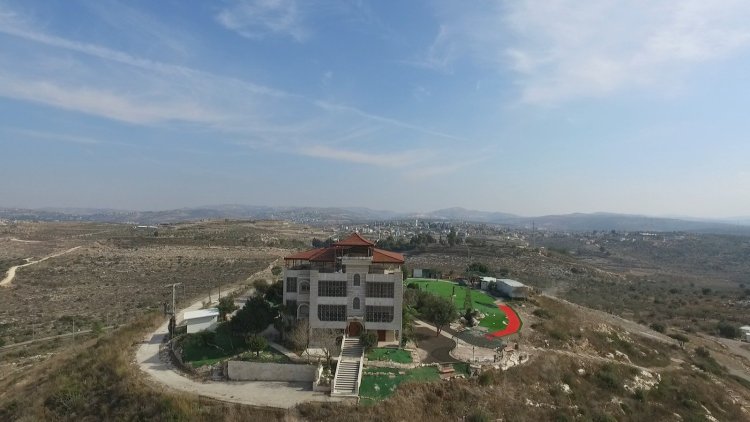 הבית שעל הגבעה, סמוך לקרני שומרון
“We Were the First on the Hill”
Itai was not only his father’s son, but also his close partner for many decades. Together they managed the land and settlement projects throughout the Shomron.
“My father always saw his work as a way of commemorating my older brother Gilad, who was murdered twenty-four years ago,” says Itai. “He was killed on the bypass road near Shechem, close to Kedumim. Several communities and neighborhoods have since been founded in his memory, among them the community of Chavat Gilad, where I live today with about fifty other residents.”
“I worked with my father literally until his final days,” Itai continues. “Four days before he passed away, I returned from reserve duty and visited him in the hospital. We spoke about many matters, and as always he was sharp, fully aware of every detail of every project. Even at his age he had an incredible memory and vast knowledge. He always said, ‘I still have many plans,’ and everyone who knew him knew how true that was. He was a true powerhouse of initiative, constantly dreaming and striving forward.”
“From the time I was a child, I do not remember a single Torah thought he shared that did not include themes of settlement, Jewish labor, land, agriculture, and industry. This was the message he passed down to us as children and grandchildren. He repeated again and again how essential it is to love the Land of Israel, to travel it, to live in it, and never to give up parts of it.
Today my father has hundreds of descendants, many of them serious Torah scholars in yeshivot. Some have already founded farms. Not long ago, my daughter established a cattle farm in the Jordan Valley. Several of my sisters’ daughters have also founded farms, and my brother and I live today in Chavat Gilad together with other members of the family. My father led us in this direction. It was his life’s mission.”
“When I was eight years old, we moved into the well-known house at the top of the mountain. We were the first ones there, alone on the hilltop. Only when I grew older did I understand how great the sacrifice was. But I do not regret it at all. On the contrary, I am filled with pride at the privilege of helping bring life to a barren place.”
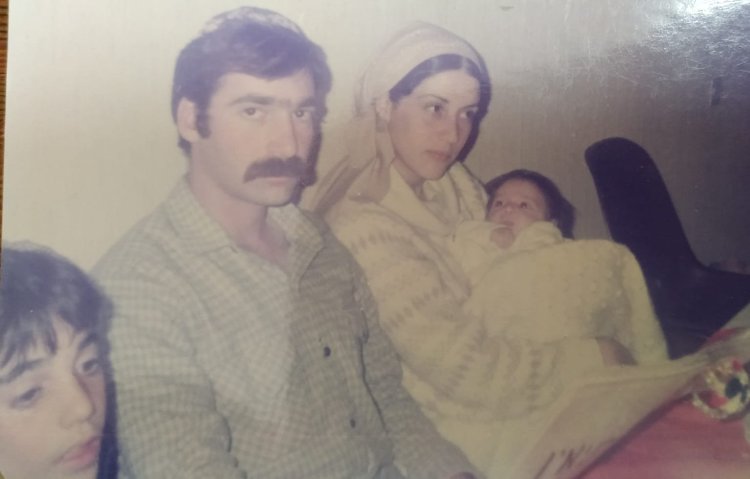 גלעד זר הי''ד עם משפחתו
Experiencing the Current War
“The war pained him deeply,” Itai shares. “From the holiday of Simchat Torah onward he was filled with worry, especially since dozens of his descendants, including myself, were fighting in Gaza. He stayed in constant contact and wanted to know how each of us was doing.
It bothered him very much that there were people in the government who trusted the enemy too much and helped pave the way for the disaster that occurred. But once the major strikes and victories began, we saw how much strength and comfort it gave him. On the morning of the strike in Iran he even called me and said, ‘Mazel tov, Israel struck Iran.’”
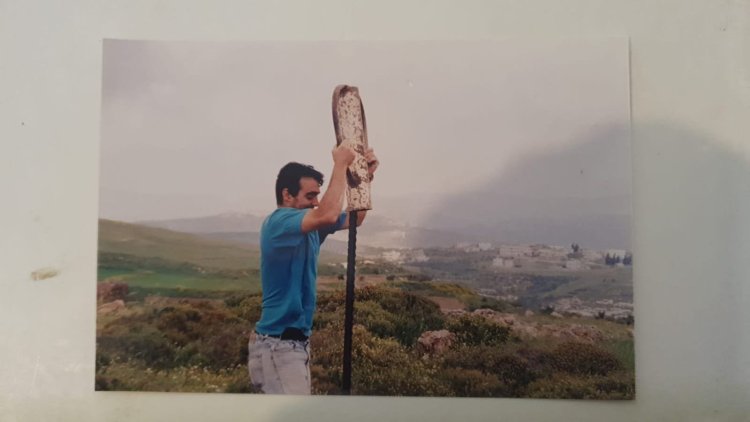 איתי זר בתקיעת יתד לחוות גלעד
Continuing the Mission
Now, after his father’s passing, Itai says that many responsibilities have remained in his hands.
“We will continue the projects in the Shomron and will not stop advancing them,” he emphasizes. “There is still so much to do. It is now clearer than ever that the decisive answer to our enemies is the expansion of settlement and the firm recognition that the Land of Israel will forever remain ours.”

