

Tu Bishvat
Finding Hope: Springing Up from Winter Shadows
Explore the symbolism of “Man as the tree of the field,” the rising inner sap of faith, and how struggle, hope, and spiritual resilience lead to new beginnings
- Rabbanit Chavah Levi
- | Updated
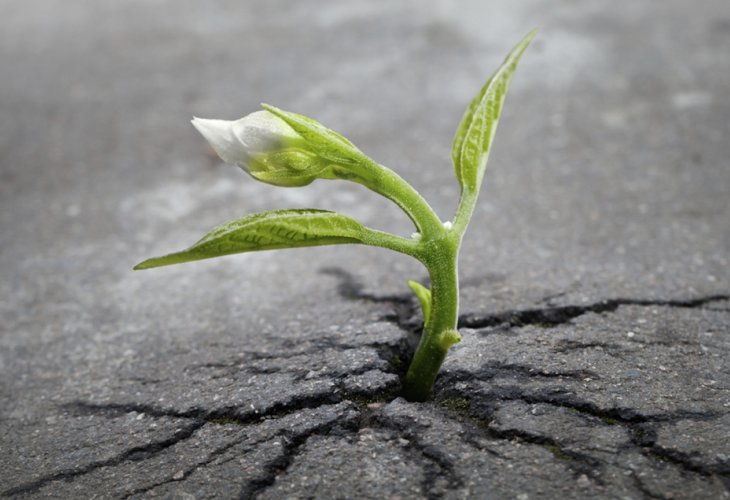 (Photo: shutterstock)
The month of Shevat is an acronym for “May we be blessed with good tidings.”
Rabbi Chaim Palagi writes in his book Moed Le’chol Chai: “In the month of Shevat, one should make an effort to love peace and pursue peace, to bring peace between a person and his fellow and between a husband and his wife more than during the rest of the year. One should be especially careful to honor Torah scholars, to support those whose strength is weak, not to gossip, and to refrain from running toward harmful behavior — with greater caution during this month than in all other days of the year.”
It seems that in the very heart of winter, when both the inner and outer world feel gray and heavy, and our mood is weaker and less vibrant — precisely then Rabbi Chaim Palagi offers us wondrous guidance for personal growth: to rise above difficulty, to do good deeds, to step out of the tired and burdened “self,” and to add positive action, awaken generosity, and draw from within ourselves reserves of spiritual strength.
“For Man Is Like the Tree of the Field”
In the Book of Devarim we find a comparison between a person and a tree: “For man is like the tree of the field” (Devarim 20:19).
When we look at a tree, we see that it is generally made up of three main components: the roots, the body of the tree (the trunk, branches, and leaves), and the fruit.
When we look at a human being, we discover the same three elements.
The roots represent faith — from which spiritual life grows. A constant connection to the wellspring of faith nourishes and strengthens the soul. The body of the tree corresponds to the human body. And the fruit represent our offspring — our children.
The most important element is the root. Without roots, the tree dies. The stronger the roots of faith, the stronger a person’s soul becomes, and the more capable it is of standing firm against the foreign winds that try to uproot it.
Renewal Hidden in Winter
In the month of Shevat, the trees appear lifeless. They stand without strength, without “joy of life.”
And yet — precisely then, when it seems that hope has vanished, renewal begins from within. The sap begins to rise inside the trees, announcing that awakening and rebirth are on the way.
Every year, once again, something green breaks out of the gray. In a single moment, the branch of the almond tree bursts into beautiful white blossoms, and the landscape fills with fresh, vibrant color.
The same is true for us. At times we feel buried under a kind of exile that seems endless — seasons of pressure, heaviness, worry. You may feel that nothing inside you is blooming anymore, that everything feels frozen — love, creativity, vitality — as if it has all faded away.
“He Brings Forth Salvation”
In our prayers we say: “The King who brings death and gives life — and causes salvation to sprout.”
Do not lose heart. Precisely at the moment when you feel that everything is lost, when the darkness grows and you feel broken — know that from there, a unique inner strength is born.
Just as Rashi explains: the sap begins to rise. This “sap” is like a heavenly messenger within you — a voice that whispers “grow,” breathing life back into you and bringing forth salvation.
Faith, hope, and trust begin to grow from within, just as the fruit begins to form inside the tree — signaling a new creation in the world of growth.
And so, within the soul, excitement awakens, renewal begins to emerge, and something new takes shape.
You step forward — into a new beginning.

