

Israel News
10 Fascinating Facts About the Alter Rebbe
As we mark his 213th yahrzeit, discover ten fascinating insights into the life and legacy of Rabbi Schneur Zalman of Liadi, founder of Chabad Hasidism and author of the Tanya.
- Naama Green
- | Updated
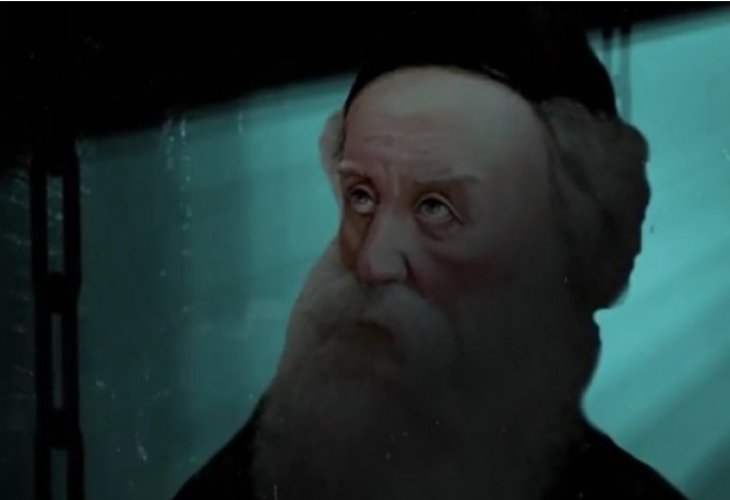 Rabbi Schneur Zalman of Liadi, the author of 'Tanya'
This coming Friday, the 24th of Tevet, marks the 213th yahrzeit of Rabbi Schneur Zalman of Liadi. Known by several revered titles, including the Alter Rebbe, Baal HaTanya, Baal Shulchan Aruch HaRav, and Rashaz, Rabbi Schneur Zalman left a lasting imprint on Jewish thought, law, and spiritual life. Here are ten fascinating facts that shed light on his life, teachings, and enduring influence.
1. Founder of Chabad Hasidism
Rabbi Schneur Zalman was the founder and first Rebbe of Chabad Hasidism. He was a close disciple of the Maggid of Mezeritch, the successor of the Baal Shem Tov. His two major works, the Tanya and Shulchan Aruch HaRav, became foundational texts of Chabad and are studied widely across the Jewish world.
2. A Soul of Two Lights
At the time of his birth, the Baal Shem Tov held a celebratory meal and proclaimed that a special soul had descended into the world to illuminate it. He foretold that this soul would shine with both revealed Torah and inner, Hasidic wisdom. For this reason, the child was named Schneur, meaning “two lights.”
3. A New Soul With a Unique Mission
When Rabbi Schneur Zalman arrived at the court of the Maggid of Mezeritch, his teacher told him that his soul was new. It had not returned to the world for correction, but for a unique divine mission that had not yet been fulfilled. His role, the Maggid explained, was to clarify and articulate the teachings of the Baal Shem Tov in an organized, intellectual framework that would later be known as the Chabad approach.
4. Author of the Tanya
Rabbi Schneur Zalman authored the Tanya, also known as Likutei Amarim. This work offers a deep and structured exploration of the Jewish soul, drawing heavily on Kabbalistic concepts while presenting them in a way that is accessible and practical. The Tanya remains one of the most influential works of Jewish spiritual thought.
5. Making a Home for Hashem in This World
A central teaching of the Tanya is that the purpose of creation is to make a dwelling place for Hashem in the lower realms. This means transforming the physical world into a vessel for holiness. Rabbi Schneur Zalman emphasized that this is achieved primarily through practical mitzvot, refining the material world itself, rather than relying solely on intellectual understanding or emotional inspiration.
The Tanya has been translated into eleven languages, including English, French, Russian, Spanish, and Arabic. By 2010, more than six thousand editions had been printed, including a Braille version.
6. Strengthening Faith From Within
One of the unique qualities attributed to the Tanya is its ability to strengthen faith in the heart. Among Hasidim, it is well known that studying the Tanya can dispel doubts in matters of faith. Rather than answering every question intellectually, the book awakens the divine soul and reignites inner certainty and trust in Hashem.
7. Author of a Monumental Halachic Work
In addition to his spiritual writings, Rabbi Schneur Zalman authored the Shulchan Aruch HaRav, an extensive work of Jewish law. Tragically, much of the original manuscript was lost in a fire, and only about a quarter of it survives today. The remaining sections focus mainly on Orach Chaim, with portions of Yoreh De’ah and Choshen Mishpat. Despite this loss, the work is considered the authoritative halachic source within Chabad and a major contribution to Jewish legal literature.
8. Imprisonment and Redemption
Rabbi Schneur Zalman was once falsely accused to the Russian authorities of sending funds to Jews living in the Land of Israel, then under Ottoman rule. As a result, he was imprisoned. After several weeks, he was miraculously released on the 19th of Kislev. This date is celebrated in Chabad as a festival of redemption, marking the moment when his teachings began to spread more openly and widely.
9. The Power of Melody
Rabbi Schneur Zalman possessed a deep musical sensitivity and composed several melodies. Ten of his melodies have been preserved within Chabad tradition. He famously taught that “the tongue is the pen of the heart, and the melody is the pen of the soul,” expressing the idea that music reaches places words cannot. These melodies are seen as powerful tools for spiritual awakening and repentance.
10. The Melody of Arba Bavos
The most sacred of Rabbi Schneur Zalman’s melodies is Arba Bavos, meaning “Four Gates.” This four part composition corresponds to the four spiritual worlds described in Kabbalah: Atzilut, Briah, Yetzirah, and Asiyah. Due to its profound sanctity, it is played only on specific occasions, such as during the month of Elul, Yom Kippur, Simchat Torah, the final day of the pilgrimage festivals, and the 19th of Kislev. It is also used at deeply meaningful life moments, including weddings, bar mitzvahs, brit milah ceremonies, and the funerals of righteous individuals.
A Lasting Light
Rabbi Schneur Zalman of Liadi was not only a towering scholar and spiritual guide, but a figure who shaped Jewish life for generations. His teachings continue to illuminate minds and hearts, fulfilling the vision foretold at his birth: to bring two lights into the world.

