

Israel News
Iran Protests Enter Fourth Day as Arrests Mount and Unrest Spreads
Demonstrations sparked by currency collapse widen nationwide, drawing in university students as authorities deploy force, deny a reported death, and warn of decisive legal action
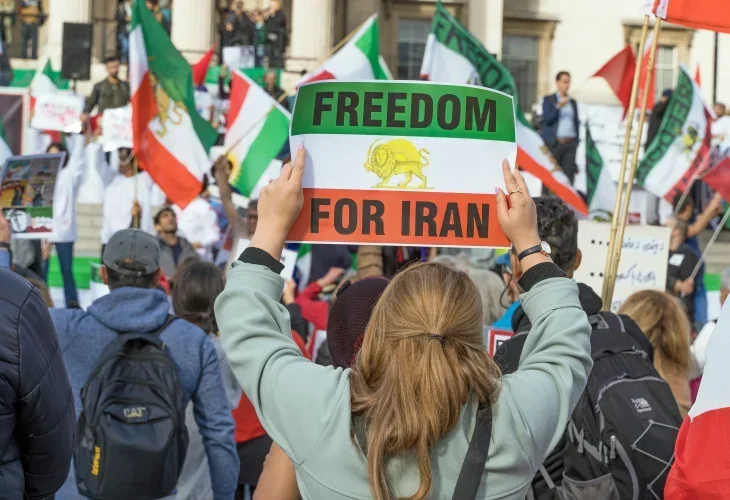 Iran (Shutterstock)
Nationwide protests across Iran entered a fourth day on Wednesday, after demonstrations sparked by a sharp currency collapse and soaring living costs expanded to include university students, workers, and broader sections of the public. Authorities responded with arrests, heavy security deployments, and warnings of a firm legal response as unrest showed no sign of easing.
The protests began over the weekend following the rial’s plunge to record lows against the U.S. dollar, rapidly eroding purchasing power and inflation exceeding 40 percent. What began as strikes by shopkeepers in Tehran’s commercial districts quickly spread to the streets, with demonstrations now reported across multiple regions of the country.
Universities have emerged as major flashpoints in the unrest. Student gatherings were reported at several campuses in Tehran, with videos circulating on social media showing demonstrators chanting anti-government slogans, confronting security forces, and dismantling signs linked to institutions associated with Iran’s leadership. Student outlets reported that one student at Tehran’s Amirkabir University was severely injured when members of the Basij militia, affiliated with the Islamic Revolutionary Guard Corps, broke up a campus gathering.
At the University of Tehran, officials said several students were detained during protests but later released following intervention by university leadership. Two major universities in the capital announced that all remaining classes would be held online through the end of the semester, citing cold weather, energy shortages, and student welfare. In Mashhad, students at Ferdowsi University issued a statement calling for protests, declaring that universities should not be spaces of fear. Reports indicated that protest slogans in several locations went beyond economic demands, including chants of “death to the dictator.”
Tensions escalated further in the southern city of Fasa, where Iranian authorities reported that protesters damaged parts of the provincial governor’s office. Four suspects were arrested, and three police officers were injured. Officials insisted the unrest in the city was limited and under control.
Following the Fasa incident, security forces intensified their response in several areas. Residents described checkpoints, constant patrols, and a visible presence of both uniformed and plainclothes officers. Video footage and eyewitness accounts showed security forces firing tear gas and, in several locations, shooting toward protesters. Additional reports described the use of live rounds at some protest sites. Security vehicles were also deployed around major commercial hubs in Tehran, as authorities sought to deter further gatherings.
Conflicting accounts also emerged regarding a possible fatality. Some opposition-linked outlets and social media sources reported that an 18-year-old identified as Mahdi Samavati was killed by security forces’ gunfire. Iranian judicial officials and local authorities categorically denied that any protester had been killed, dismissing the reports as rumors. No independent confirmation of a death has been established.
Iran’s leadership delivered mixed messages as demonstrations continued. President Masoud Pezeshkian said he had instructed the interior minister to engage in dialogue with representatives of the protesters to hear their “legitimate demands.” Government spokeswoman Fatemeh Mohajerani acknowledged widespread economic pressure and said peaceful protest is recognized under Iran’s constitution. At the same time, Interior Ministry officials framed the unrest as a test of social cohesion, while the prosecutor general separately warned that any attempt to turn economic protests into insecurity or damage to public property would be met with a “legal, proportionate and decisive” response.
The unrest was triggered by the rapid depreciation of the rial and mounting inflation, which have driven up the cost of food, medicine, and basic goods. Bazaar strikes and mall closures were followed by broader street protests, forcing the government to replace the central bank governor and declare widespread public office closures, officially citing energy shortages.
As night-time demonstrations continued and more businesses announced closures in solidarity, the protests appeared poised to carry on. With security forces on high alert and economic grievances unresolved, Iran now faces a delicate balancing act between dialogue, containment, and the risk of further escalation.

