

Facts in Judaism
The Lasting Impact of the Second Temple's Destruction on the Jewish People
Why does an event from nearly two thousand years ago continue to shape Jewish history? The answer begins with the destruction of the Second Temple.
- Yonatan HaLevi
- | Updated
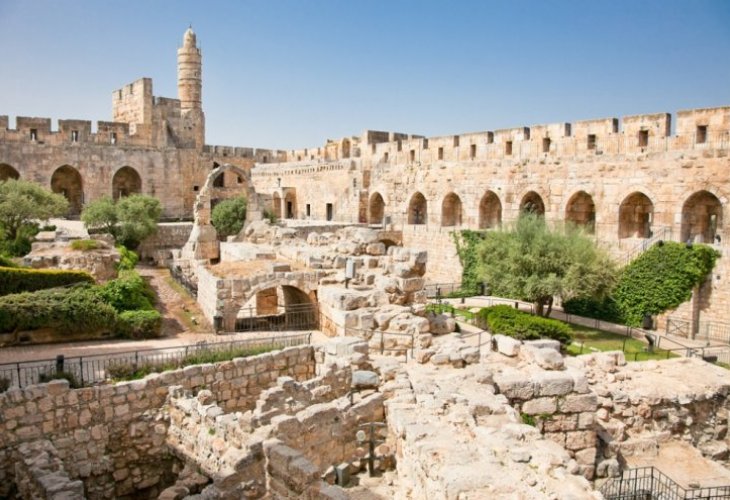 City of David (Photo: Shutterstock)
The Fall of the Second Temple
In the year 70 CE, on the 9th of Av, the Second Temple in Jerusalem was destroyed by the Roman Empire. This event stands as one of the greatest tragedies in Jewish history, and its impact is still felt today. Under the command of Titus, hundreds of thousands of Jews were killed, and many others were taken captive and sold into slavery. The Roman slave markets were flooded with Jewish prisoners, driving the price of a Jewish slave lower than that of a workhorse. The Jewish people were left shattered and heartbroken.
The destruction was further reinforced years later when the Roman official Tornosrufus plowed over the Temple site on the 9th of Av, in the year 3828 according to the Jewish calendar, symbolizing the complete devastation of Jerusalem.
For nearly two thousand years, the Jewish people have mourned the loss of the Temple through four annual fast days and other customs of mourning. This raises a powerful question: why does Jewish grief endure for an event so distant in time? And will this mourning ever end with the rebuilding of the Third Temple?
The Spiritual Causes of the Destruction
Rabban Yochanan ben Zakkai, who lived during the time of the destruction, explained that the calamity was not only military or political, but spiritual. He attributed it to the lack of peace among the Jewish people.
The Midrash in Yalkut Shimoni on Exodus teaches that the altar must be built of whole stones, stones that promote peace between Israel and their Father in Heaven. If inanimate stones can bring peace, the Midrash explains, how much more responsibility rests on people to foster harmony among themselves.
The Talmud, in Yoma 9b, makes this idea even clearer. It states that despite the Jewish people engaging in Torah study, mitzvot, and acts of kindness during the Second Temple period, the Temple was destroyed because of baseless hatred between Jews.
The historian Josephus also wrote that internal conflict among the Jewish people caused more damage than the Roman armies themselves. The well known story of Kamsa and Bar Kamsa became the symbol of this hatred, leading the sages to declare that Jerusalem was destroyed because of Kamsa and Bar Kamsa.
Rebuilding Jewish Life After the Destruction
After the destruction of the Temple, Rabban Yochanan ben Zakkai took decisive action to preserve Jewish life. He established the Sanhedrin in Yavneh and enacted special ordinances designed to keep the memory of the Temple alive while nurturing hope for its future rebuilding.
He taught that prayer and acts of kindness could serve as spiritual substitutes for the sacrifices that could no longer be offered. Avot d’Rabbi Natan records a moving encounter: as Rabban Yochanan ben Zakkai left the ruins of Jerusalem, Rabbi Yehoshua followed him and cried out in anguish over the destroyed Temple. Rabban Yochanan comforted him, saying that the Jewish people still possessed a powerful form of atonement, acts of loving kindness, as the verse states, “For I desire mercy and not sacrifice.”
These acts included caring for brides and grooms, honoring the deceased, helping the poor, and maintaining regular prayer. Through this approach, Jewish spiritual life continued even without the Temple.
The Bar Kochba Revolt and the Fall of Betar
Despite the devastation of the Great Revolt, Jewish resistance did not end. In 132 CE, the Bar Kochba Revolt erupted, becoming one of the largest Jewish uprisings against Roman rule. Jewish sources estimate that Bar Kochba commanded a force of approximately one hundred thousand fighters.
The revolt ended in tragedy with the fall of Betar on the 9th of Av in 135 CE. The Talmud in Gittin describes the massacre in chilling terms, stating that the Romans used the blood of the slain to fertilize their vineyards for years afterward.
Following this, the Romans attempted to erase Jewish connection to the land entirely. Jerusalem was renamed Aelia Capitolina, and the land of Israel was renamed Palestina.
Living in the Shadow of the Destruction
The consequences of the Second Temple’s destruction have continued throughout history, shaping both Jewish suffering and Jewish resilience. The sages taught that as long as baseless hatred remains uncorrected, complete redemption cannot arrive.
In response to ongoing upheaval, the rabbis made an unprecedented decision to record the Oral Torah. In 219 CE, Rabbi Yehudah HaNasi compiled the Mishnah, ensuring the preservation of Jewish law and tradition.
Major historical developments followed. Christianity was established as a dominant force in 312 CE. In 638 CE, Muslim forces captured Jerusalem, allowing Jewish life there to resume after Christian rule.
Jewish scholarship flourished with figures such as Rashi beginning in 1040 and the Tosafists who followed. The Crusades began in 1096, bringing widespread slaughter to Jewish communities across Europe. During this time, Spain became a relative refuge for Jews, offering opportunity and growth.
Yet suffering continued. The first blood libel appeared in 1144. The Inquisition began in 1478. The expulsion from Spain occurred on the 9th of Av, 1492, the same year Columbus reached the Americas.
The spiritual renaissance of Tzfat emerged in the 1500s with the Arizal and the kabbalists. Jewish life expanded into Poland, America, and beyond, sometimes gaining material success while losing spiritual connection.
Movements such as Hasidut arose, followed by the influence of the Vilna Gaon. The Enlightenment, Reform movement, Conservative movement, and rising antisemitism reshaped Jewish identity in complex and painful ways.
The twentieth century brought the Holocaust, the murder of six million Jews, and global indifference to Jewish suffering. Shortly thereafter, the State of Israel was reborn in 1948, a moment unparalleled in human history, yet one marked by constant conflict.
Signs of the End of Exile
The sages taught that the final period before redemption would be difficult. The Talmud in Sotah 49b describes moral confusion, rising prices, social breakdown, and disrespect between generations. Yet it ends with a powerful conclusion: when all else fails, we rely only on our Father in Heaven.
The survival of the Jewish people through thousands of years of persecution defies all historical logic. By any natural measure, the Jewish nation should have vanished long ago. Its continued existence points to divine guidance moving through history.
Jewish history teaches a clear lesson: when Jews remain connected to Torah, mitzvot, and Jewish life, their identity endures across generations.
The Hope for the Third Temple
Belief in the coming of the Messiah and the rebuilding of the Third Temple is one of Maimonides’ thirteen principles of faith. According to Rashi, the Third Temple is already prepared and will descend from Heaven. According to Maimonides, the Messiah himself will build it.
Midrashic sources promise that the final Temple will never again be destroyed and that the Divine Presence will dwell there forever. The prophets speak of a time of peace, the ingathering of exiles, and the restoration of Jerusalem as the spiritual heart of the world.
The long exile will end when the Creator wills it. Until then, the Jewish people continue to live with faith, memory, and hope, strengthening themselves through unity, kindness, and devotion to Torah.

