

Facts You Didn't Know
From Slavery to Freedom: The Exodus Explained
Explore the story of Israel’s enslavement in Egypt, the miracles of the Exodus, and why this defining experience lies at the heart of Jewish faith and identity.
- Yonatan HaLevi
- | Updated
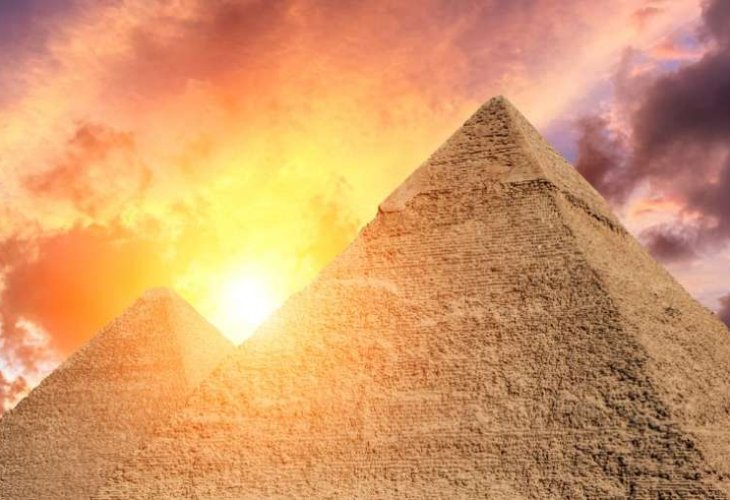 The Exodus (Photo: Shutterstock)
In the book of Bereshit, we read about Jacob and his family descending to Egypt. This move fulfilled Hashem’s promise to Jacob: “I will go down with you to Egypt, and I will surely bring you up again.” At first, the Israelites settled peacefully, but over time they multiplied greatly. Pharaoh grew fearful of their increasing numbers and viewed them as a threat.
To weaken the Israelites, Pharaoh enslaved them, subjecting them to harsh labor and brutal conditions. He hoped that oppression would reduce their population, but instead, the opposite occurred.
Pharaoh’s Decrees and the Courage of the Midwives
As the Israelites continued to grow, Hashem blessed the women to give birth to multiple children at once. When Pharaoh realized that slavery was not achieving his goal, he summoned the Hebrew midwives and ordered them to kill all newborn boys. The midwives, who feared Hashem, refused to obey. They explained that Hebrew women gave birth quickly and without assistance.
Pharaoh then issued a far harsher decree: every newborn Hebrew boy was to be thrown into the Nile. Under this unbearable suffering, the Israelites cried out to Hashem, and He heard their prayers.
The Birth of Moses
Hashem prepared the redemption by bringing a savior into the world. Yocheved, from the tribe of Levi, gave birth to a son. Despite the danger, she hid him for three months. When she could no longer conceal him, she placed him in a basket sealed against water and set it among the reeds of the Nile. His sister Miriam watched from afar.
Pharaoh’s daughter discovered the baby and was moved by compassion. She adopted him and named him Moses. Moses was raised in Pharaoh’s palace, fully aware of his Hebrew origins.
Moses Flees Egypt
As a young man, Moses witnessed an Egyptian beating a Hebrew slave and intervened, killing the Egyptian. The next day, he tried to stop a quarrel between two Hebrews, but his actions became known. Fearing for his life, Moses fled to Midian.
There, he married Zipporah, the daughter of Jethro, and became a shepherd. While Moses lived in Midian, the suffering of the Israelites in Egypt grew even more intense, and they cried out again to Hashem.
The Call to Redemption
Hashem revealed Himself to Moses and commanded him to return to Egypt and demand Pharaoh: “Let My people go, that they may serve Me.” Moses hesitated, citing his difficulty with speech, but Hashem appointed his brother Aaron to speak on his behalf.
Moses returned to Egypt, gathered the elders, and announced that redemption was approaching. The people believed him. Pharaoh, however, refused to release them and instead increased their workload by denying them straw for brick making. Brokenhearted, Moses turned to Hashem, who reassured him that the redemption was near.
The Four Expressions of Redemption
Hashem revealed to Moses four promises of redemption: He would take the Israelites out of Egypt, free them from slavery, redeem them with great wonders, and take them as His people at Mount Sinai. Afterward, He would bring them to the land promised to their ancestors.
The Ten Plagues
To compel Pharaoh to release the Israelites, Hashem brought ten plagues upon Egypt. Each plague demonstrated divine power and targeted Egyptian arrogance and idolatry. Time and again, Pharaoh promised to release the Israelites, only to withdraw his promise once relief came.
Throughout the plagues, the Israelites were protected and unharmed. The final plague, the death of the firstborn, shattered Pharaoh’s resistance and forced him to surrender.
The Exodus From Egypt
After the death of the firstborn, Pharaoh urgently demanded that the Israelites leave Egypt. Moses insisted that the departure take place openly, by daylight. The Israelites left in haste, without time for their dough to rise, carrying unleavened bread. They also took gold, silver, and garments from the Egyptians.
Each year on the 15th of Nissan, Jews commemorate this event by avoiding chametz, eating matzah, and retelling the story of the Exodus to their children.
The Splitting of the Sea
Soon after the Israelites left, Pharaoh regretted his decision and pursued them with his army. Trapped between the sea and the Egyptian forces, the people cried out to Hashem. At Hashem’s command, Moses split the sea, allowing the Israelites to cross safely on dry land.
The Egyptians followed but were drowned when the sea returned to its natural state. This moment marked the birth of the Jewish people as a nation and was celebrated with song by Moses, Miriam, and the Israelites.
Deeper Interpretations of the Exodus
Jewish tradition offers profound insights into the miracles of the Exodus. Perush HaRokeach teaches that thunder and lightning accompanied the plague of the firstborn, yet only the firstborn were struck.
The Zohar explains that the night of the final plague was illuminated like day, allowing all to clearly witness Hashem’s power, echoing King David’s words: “The night will shine like the day.”
The Zohar also teaches that Jacob was resurrected at the time of the Exodus so he could witness the redemption of his descendants.
Rabbeinu Bachaye explains that the sea did not split all at once. Instead, it parted gradually as the Israelites advanced, which explains the verse, “The sea saw and fled.”
According to Pirkei DeRabbi Eliezer, Pharaoh himself survived the sea and later became the king of Nineveh, where he ultimately recognized Hashem’s greatness.
Historical Echoes of the Bondage
Various historians and archaeological findings align with the biblical account of Israelite slavery in Egypt. Ancient Egyptian documents record the presence of Semitic slaves, many bearing Hebrew names. References to the term “Apiru,” often identified with Hebrews, appear repeatedly in Egyptian texts.
Scholars have noted the unusual imbalance between male and female slaves in Egypt, which parallels the Torah’s account of Pharaoh’s decree to kill newborn boys. Archaeological discoveries of infant remains further echo this tragic chapter.
The Timeless Impact of the Exodus
The Exodus is remembered constantly in Jewish life. It is recalled in Kiddush, the Shema, tefillin, Passover, and Sukkot. These reminders reinforce how Hashem redeemed us from slavery, gave us the Torah, formed us into a nation, and brought us to the land of Israel.
Sefer HaChinuch explains that remembering the Exodus is a foundational principle of Jewish faith. The miracles of Egypt revealed Hashem’s mastery over nature and confirmed His presence in the world.
This memory binds the Jewish people together and defines our responsibility to Hashem. In the very first of the Ten Commandments, Hashem introduces Himself as the One who took us out of Egypt, reminding us that gratitude and loyalty to our Redeemer are at the heart of Jewish morality and faith.

