

Beginners Guide
The Omer: The Prohibition of New Grain Explained
An exploration of the prohibition against harvesting and consuming new grain before bringing the Omer offering, and how this law continues to apply today.
- Rabbi Pinchas Doron
- | Updated
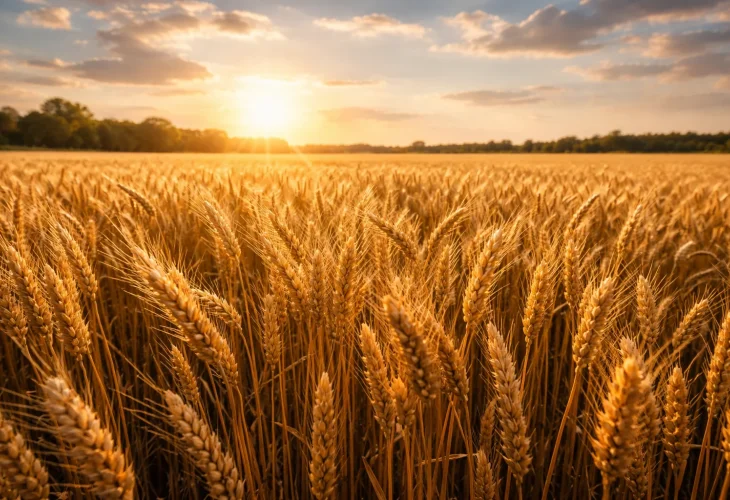
What Is “New Grain”?
In Jewish law, “new grain” refers to grain from the most recent harvest that has not yet been permitted for eating. The Torah teaches that this grain may only be eaten after a special offering, called the Omer, was brought in the Temple. Until that time, the grain is considered chadash and remains forbidden.
What Is the Prohibition?
The Torah prohibits eating new grain before the Omer offering is brought on the 16th of Nissan. This prohibition is known as chadash and applies to five species of grain: wheat, barley, spelt, oats, and rye.
The Torah identifies three specific forms of prohibited consumption: bread, roasted grain, and kernels. Eating an olive-sized amount of any of these forms results in a separate prohibition.
Understanding Roasted Grain
“Roasted grain,” known as kali, refers to grain that has been dried or roasted in an oven but has not been kneaded with water or salt. Even if the roasted grain is later ground into flour, it remains prohibited, since its forbidden status was already established at the time it was roasted.
What Are Kernels?
“Kernels,” called karmel, is a term derived from words meaning “soft” and “rubbed by hand.” Some explain that this refers to grains that are roasted while still in their stalks. In practice, any form of new grain that does not fall under the categories of bread or roasted grain is still prohibited due to its chadash status.
When Does New Grain Become Permitted?
New grain remains prohibited until the 16th of Nissan, when the Omer offering is brought. Once the offering is completed, the grain becomes permitted. In certain cases, the grain may be permitted later on the same day.
If the court declares the month of Adar to be shorter, the date when new grain becomes permitted arrives earlier, affecting when chadash may be eaten.
New Grain Outside the Land of Israel
The question of whether the prohibition of chadash applies outside the Land of Israel was widely debated by the sages of the Mishnah and Talmud.
Some authorities rule that chadash is forbidden by Torah law everywhere, meaning that eating an olive-sized amount before the Omer is prohibited both in Israel and abroad. Others hold that it is uncertain whether the Torah prohibition applies outside Israel, while some maintain that the prohibition in foreign lands is rabbinic rather than biblical.
As a result of these differing opinions, certain leniencies have been adopted in some communities regarding grain grown outside the Land of Israel. However, grain that originated in Eretz Yisrael retains its forbidden status even if it is exported and processed abroad.
There is also disagreement regarding grain owned by non-Jews. Some authorities rule that chadash applies even to grain grown by gentiles, while others hold that it does not.
Maran, author of the Shulchan Aruch, rules that the prohibition of chadash applies even today and includes grain from outside the Land of Israel. For this reason, Sephardic Jews in particular are encouraged to be careful regarding this prohibition.

