

Yom Kippur
From War Fragments to Works of Faith: The Inspiring Art of Eli Gross
A Haredi artist who left hi-tech turns rocket fragments into mezuzot, pendants, and a two-meter Chanukah menorah
- Hidabroot
- | Updated
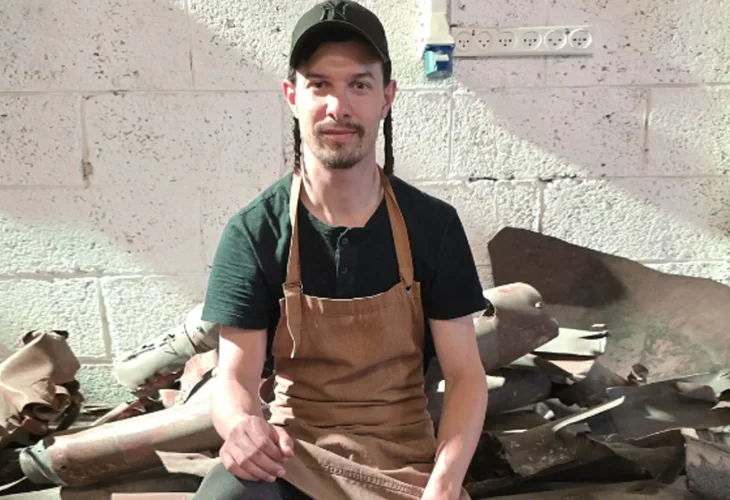 Eli Gross
“I always loved art, but life led me instead into hi tech,” says Eli Gross, a Haredi artist who manages to surprise. “As a child I remember myself creating an amazing model of the Beit HaMikdash and also doing a lot of drawing, but I never thought for a moment that these hobbies could turn into a profession.”
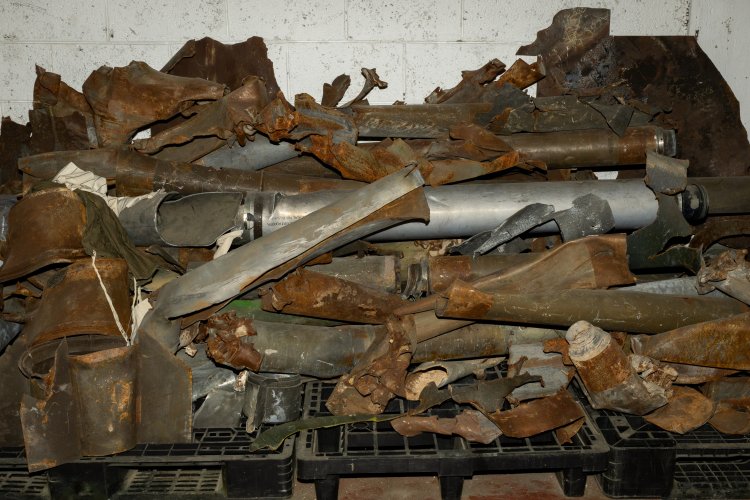
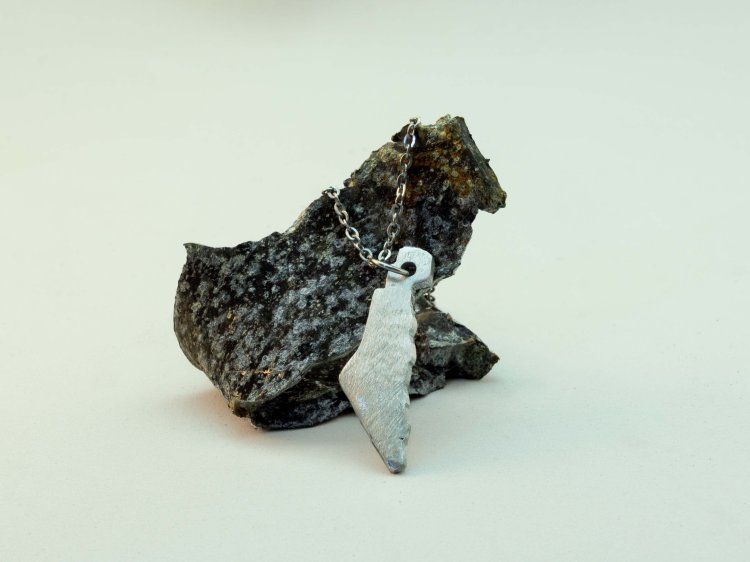
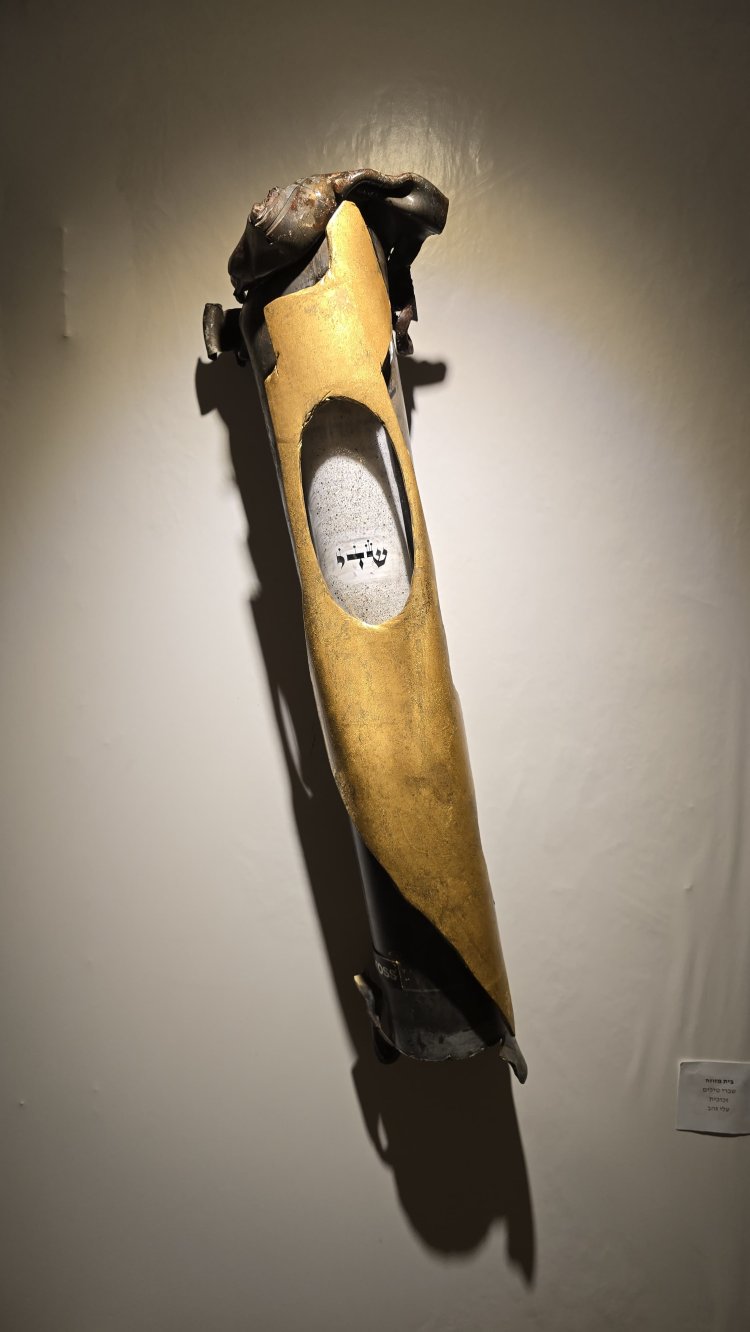
Eli entered the world of hi tech around the age of twenty, and for about seven years worked in various government offices, in the Knesset, and in other significant places. It seemed that nothing could stop his work, except for the war that broke out. Shortly after Simchat Torah 5784 he was called up for reserve duty, and at that time rocket fragments that had been fired at Israel happened to come into his hands. “Something about these fragments moved me,” he says. “It was not only the fact that I knew that these rockets, by miraculous divine providence, had not harmed anyone, but also the feeling that in my hands I was holding a very meaningful raw material, something that speaks to me and that I can create something from. In the end I decided to make from these broken rocket pieces a pendant in the shape of the Land of Israel, our eternal land. From that moment I felt that ‘I had discovered something.’ I felt very connected to creating specifically from rocket fragments, and that is how I began to make different works from them, mainly pendants and mezuzot.”
 (צילום: Lilia Megera)
Fragments of protection
“After a rocket falls in Israeli territory, whether it explodes or not, the police arrive at the site and collect the fragments from the area in order to make sure they are not dangerous. Usually they are eventually destroyed and there is no official approval to keep such fragments. But I approached the police directly, presented my artworks to them, and asked for permission to use the rocket pieces, after they verified that they are not dangerous, so that they could serve me as raw material. Thus, during the first year of the war I found myself mobilized under emergency orders, but every time I went out on leave or for rest, I used that time to create.”
 (צילום: Lilia Megera)
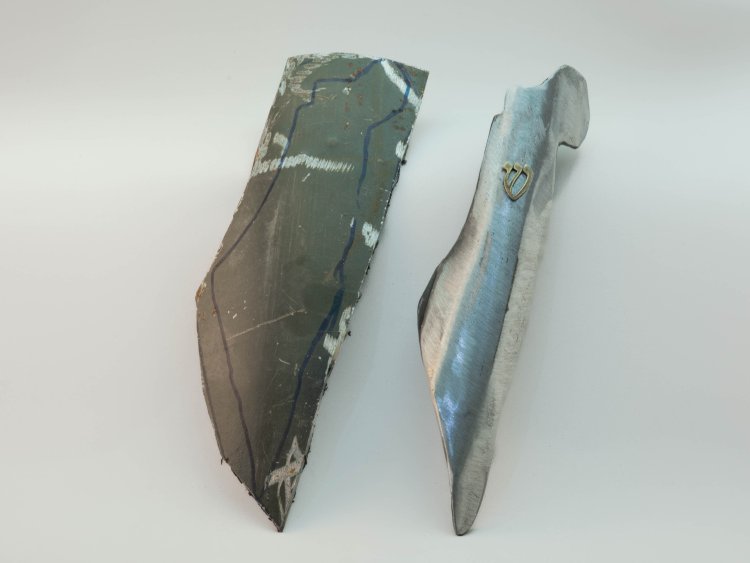
After the holidays came the ceasefire opposite Lebanon, which became a turning point for Gross. “During that period I went on a tour in the north,” he says. “I visited communities and areas that had been damaged, while hearing fascinating and moving stories from the time of the war, and to my great joy I received more and more rocket fragments.” Gross emphasizes that this was indeed a joy, not only because he now had raw material in abundance, but also because he is careful to use only fragments of rockets that did not harm people at all, even if they caused damage to property. “The works that I create are a symbol of miracles and not of destruction,” he stresses. “Every fragment has a story, and through the act of creation I continue, in fact, to tell the miracle story of that fragment, which illustrates how the Creator of the world protected us, and how the evil intentions to harm us did not succeed.
 (צילום: Lilia Megera)
“With time I learned to distinguish on my own between the types of fragments. There were those from rockets that were fired from Gaza and were made from simple metals such as steel, there were rocket fragments from Lebanon, and I even obtained rocket fragments from Iran, which may today be considered something ordinary, but in those days, as we recall, rockets from Iran arrived only in one very specific attack and the great majority of them were intercepted. My collection also included fragments of Iron Dome interceptors, and yes, I included those as well, because I see them too as fragments of higher protection that the Creator of the world sent down to us from Heaven in order to protect us.”
A menorah of miracles
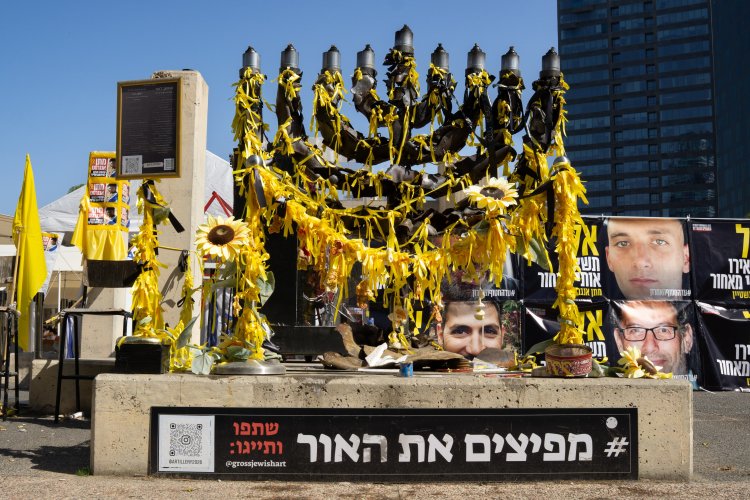
One day Gross arrived at Moshav Avivim, which is located right next to the Lebanese border. “I met there very special people who shared with me their miracle stories,” he says, “and when I asked one of the residents, where fragments can be obtained, he surprised me and answered, ‘Come to my house.’ When we entered the house he seated me in the living room and began, with great emotion, to tell me about his miracle. At the beginning of the war they were at home and did not evacuate, because they have there an agricultural farm and orchards. One day they left the house to run errands, really for a very short time, and exactly at that moment there was a direct hit of a rocket on their house, and it exploded in the center of the house and destroyed everything. When they arrived back at the house a few minutes later, they realized that their lives had been given to them as a gift. That man gave me a piece of the fragment that had struck their house and asked me, ‘Take this and make from it something big and meaningful.’”
 (צילום: Lilia Megera)
Gross joined that extraordinary fragment to additional special fragments, and then the decision formed in his heart: “He wanted to create a menorah from them.”
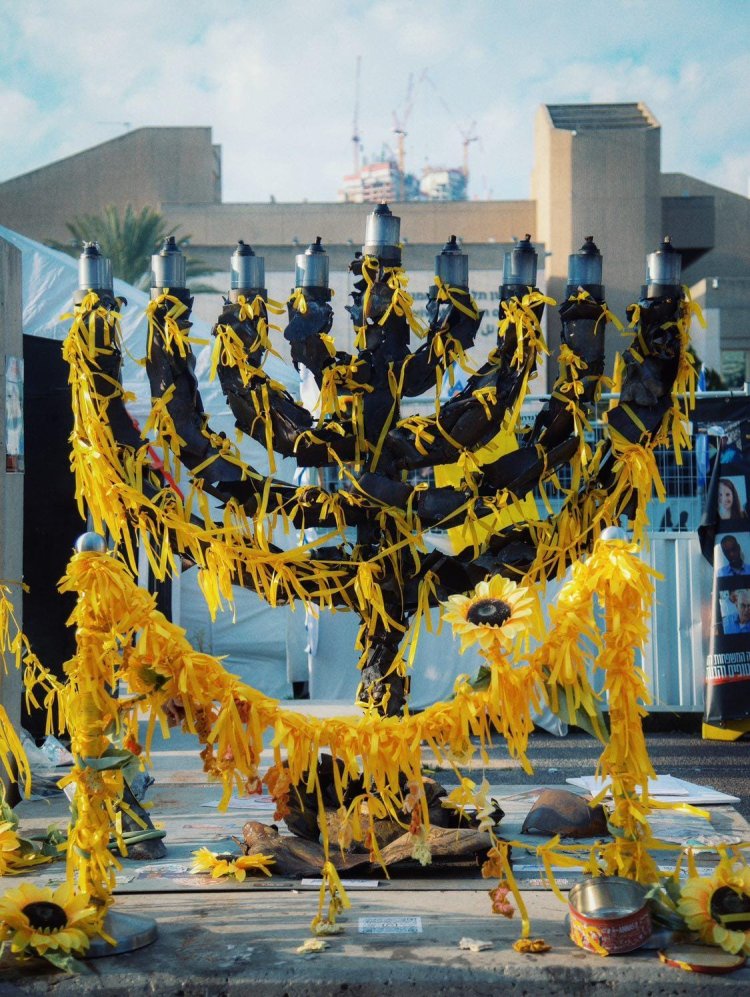
“It was three weeks before Chanukah,” he says, “and I decided to build a huge menorah made entirely from many rocket fragments. Despite the short amount of time I built a menorah two meters high, behind which are hidden hundreds of special miracle stories that I heard. When the menorah was ready I felt that there was nothing more fitting and symbolic than to place it in Hostage Square in Tel Aviv, with the aim of publicizing the miracle as much as possible. The menorah indeed stood there throughout all the days of Chanukah, with the candles being lit each evening by significant figures, rabbis and government officials, a soldier who was seriously wounded in Gaza, a hostage who was freed in one of the daring operations, and others. Until now the menorah still stands in the square, with thousands of yellow ribbons tied to it, and it tells the miracle stories of the people of Israel.”
 (צילום: David Stiven)
An exhibition with hope
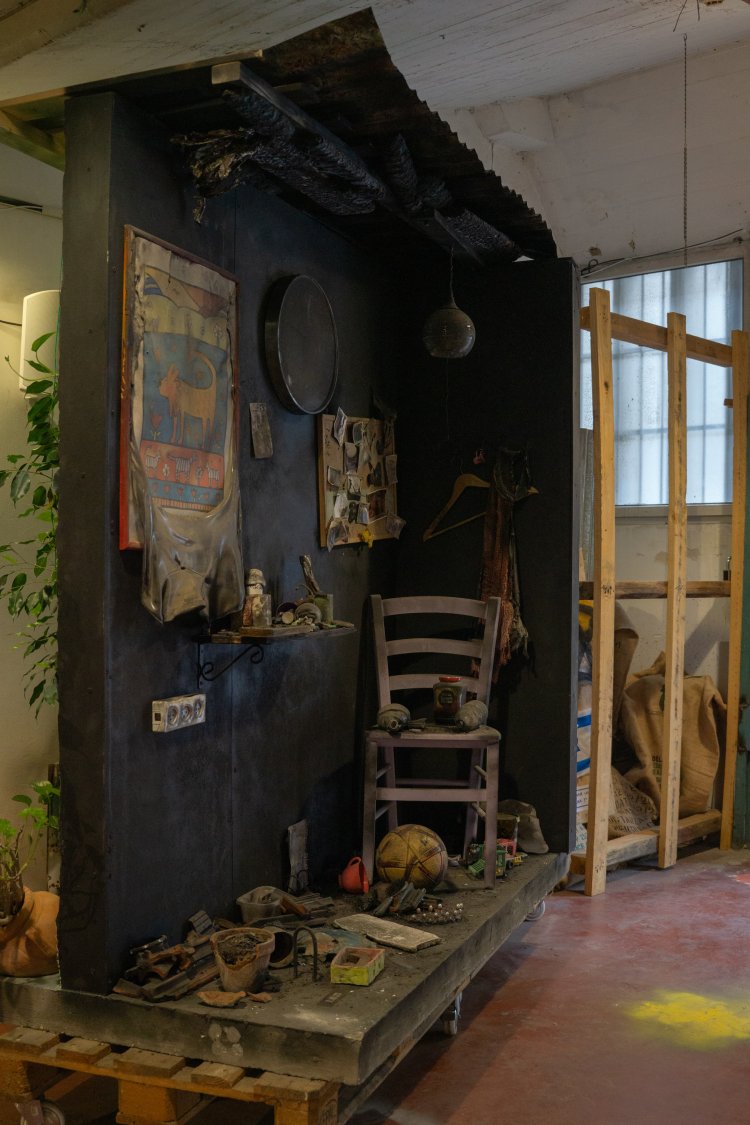
Alongside Gross being released from the IDF and the establishment of the unique project, Gross also experienced another transformation in his life. “I decided that I no longer wish to return to the field of hi tech, and prefer to focus only on art,” he says. “As part of that I established a studio in south Tel Aviv, where I currently work on my creations, and where I am also going to present a solo exhibition in a few weeks.
 (צילום: Lilia Megera)
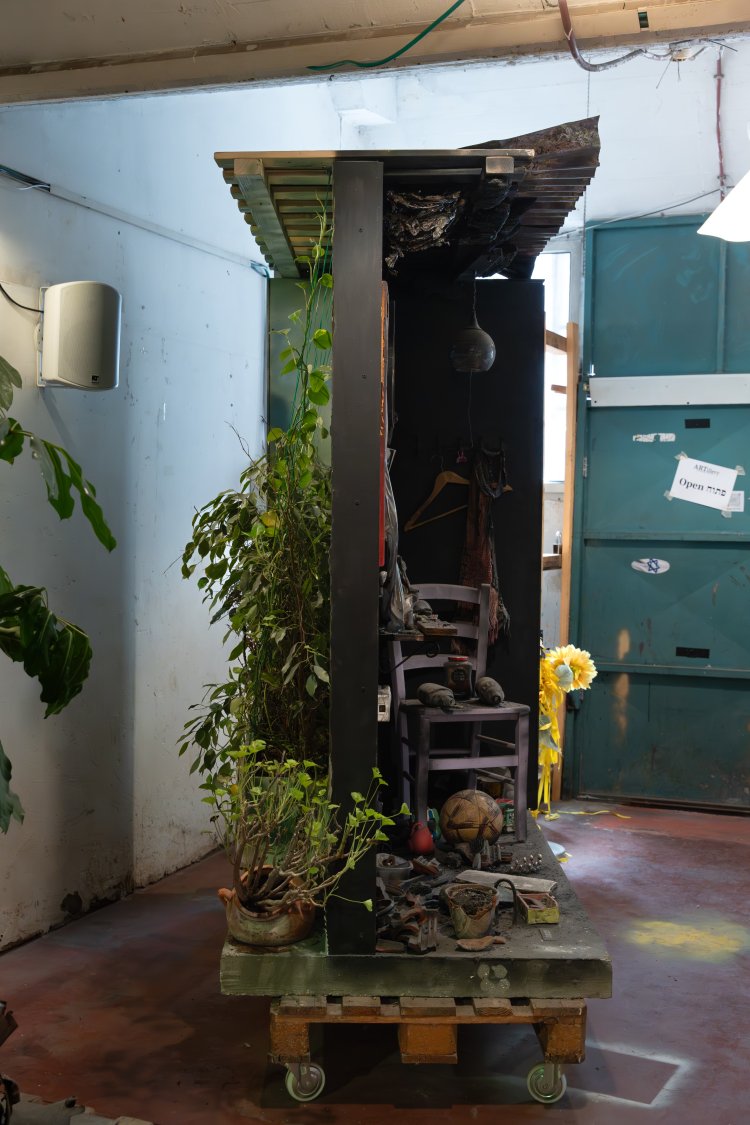
Gross describes his exhibition: “Most of the raw materials that make it up are, of course, rocket fragments, and there is also a large memorial wall on which are displayed burned objects from one of the homes in Beeri. Here too, behind the story there is a great miracle, as the family was in the safe room throughout that entire day while the terrorists were walking around the house and burning it, but even though the safe room door was not locked, the family was not discovered and was saved. To the burned objects that I display on the wall I added plants from the family’s yard, which symbolize both destruction and renewal together. One of the especially impressive pieces in the exhibition is a large mezuzah made from fragments and coated with real gold. After the exhibition ends, I aspire to bring it to Ben Gurion Airport and place it at one of the gateways of our country, because in essence there is nothing more symbolic than that.”
 (צילום: Lilia Megera)
 (צילום: Lilia Megera)
