

Beginners Guide
The Mitzvah of Mezuzah: Faith, Protection, and Responsibility
Treasured for its deep meaning and power of protection, the mitzvah of mezuzah has safeguarded Jewish homes throughout history. Explore the faith and tradition behind this sacred practice.
- Rabbi Eitan Ziner
- | Updated
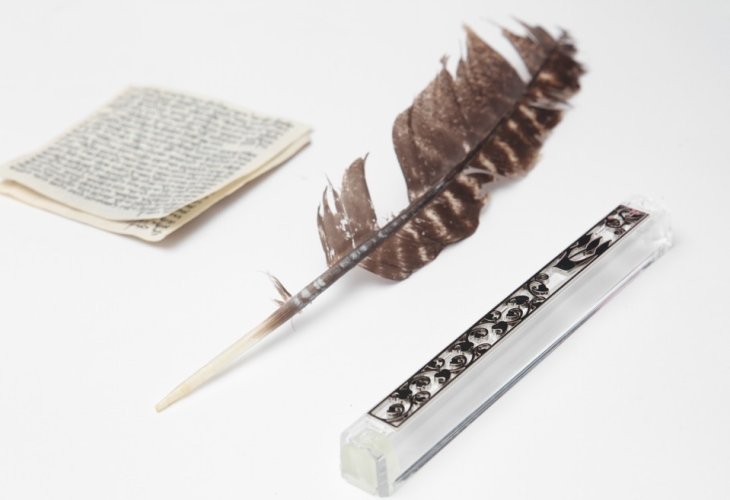 (Photo: shutterstock)
Among the mitzvot cherished by the Jewish people, the mitzvah of mezuzah holds a special place. Jews across the world take great care to place mezuzot on their doorways, recognizing this commandment as both a declaration of faith and a source of protection.
The mitzvah of mezuzah is one of the 613 commandments given in the Torah. Its proper observance clearly demonstrates that both the Written Torah and the Oral Torah were given together to Moses at Mount Sinai. The Written Torah presents the commandments in brief form, while the Oral Torah explains their details, meaning, and practical application. Without the Oral Torah, it would be impossible to fulfill even a single mitzvah correctly.
Why the Oral Torah Is Essential
Regarding mezuzah, the Torah states: “You shall write them on the doorposts of your house and upon your gates.” From this verse alone, one might mistakenly think that the words should be written directly on the doorposts themselves. The verse does not explain what should be written, on what material, where it should be placed, or how it should be affixed.
All of these essential details are transmitted through the Oral Torah. It teaches that the words are written on a parchment, placed inside a case, and affixed to the doorpost in a specific position. Without this tradition, the mitzvah could not be fulfilled.
The Immense Responsibility of the Sofer
The laws of writing a mezuzah are numerous and precise. For this reason, the responsibility of a sofer, a trained Torah scribe, is immense.
The Talmud relates that Rabbi Meir once told Rabbi Ishmael that he worked as a scribe. Rabbi Ishmael warned him to be extremely careful, explaining that even a single missing or extra letter could have serious consequences. Writing sacred texts is not merely technical work. It is a sacred task with far-reaching spiritual impact.
Mezuzah in Egypt
The roots of the mitzvah of mezuzah reach back to Egypt, before the Exodus. On the night of the plague of the firstborn, the Israelites were commanded to place blood on their doorposts and lintels. This act served as a sign of protection, causing the destructive force to pass over their homes.
Although the application of blood was a one-time command, it was later replaced by the mitzvah of mezuzah. The message remained the same: the doorway of a Jewish home becomes a place of divine protection.
The Zohar teaches that the mezuzah protects against harm and death. When a mezuzah is placed properly, it guards the home and those who dwell within it.
The Name on the Back of the Mezuzah
Maimonides notes that it is customary to write the letters Shin, Dalet, and Yud on the back of the mezuzah parchment. These letters form one of the names of Hashem and also serve as an acronym for “Shomer Daltot Yisrael,” Guardian of the doors of Israel.
This inscription does not invalidate the mezuzah because it appears on the outside of the parchment, but it reinforces the idea of protection associated with this mitzvah.
Mezuzah and Divine Protection
The Talmud recounts the story of Onkelos, the nephew of the Roman emperor Titus. When Roman soldiers attempted to arrest him, he touched the mezuzah and explained that while earthly kings require guards to protect them, Hashem guards His servants from the outside. Upon hearing this, the soldiers were so moved that they converted.
Another Midrash tells of a wealthy ruler who sent a priceless jewel to Rabbi Yehudah the Prince and asked for something of equal value in return. Rabbi Yehudah sent him a mezuzah. When the ruler questioned its worth, Rabbi Yehudah explained that the mezuzah protects a person even while they sleep, something no jewel can do.
A Contemporary Story of Protection
The protective power of the mezuzah is not only described in ancient sources. In recent years, many have shared stories of remarkable events connected to this mitzvah.
One such story involved a Torah scholar and his wife during her pregnancy. After accidentally knocking a mezuzah loose from their bedroom doorway, complications arose with the baby’s position, requiring plans for surgery. Upon checking their mezuzot, they discovered that the bedroom mezuzah had been affixed upside down.
Once the mezuzah was corrected, the baby miraculously returned to a proper position. The birth proceeded naturally, astonishing the doctors and bringing great joy to the family.
Ensuring a Proper Mezuzah
To fulfill the mitzvah properly, it is essential to purchase mezuzot written by certified, observant scribes and obtained from reliable, supervised sources. Saving money by purchasing inferior mezuzot can undermine the mitzvah entirely.
While it is praiseworthy to beautify the mezuzah case, the primary focus must always be on the quality of the parchment and the writing. The case should fit the parchment properly and be appropriate for its location. Outdoor mezuzot, for example, must be protected from weather damage.
A Message for Our Time
The mezuzah is more than a symbol. It is a daily reminder of faith, responsibility, and divine presence in the home. By fulfilling this mitzvah with care and sincerity, we invite protection, blessing, and holiness into our lives.
May we merit to observe the mitzvot with devotion and integrity, and may they bring us health, peace, unity, and redemption.

