

Magazine
From France to the Moon: Ariel Gomez on Faith, Engineering, and Israel’s Beresheet Spacecraft
A SPACEIL systems engineer shares his childhood journey from antisemitism in France to aliyah, the challenges of building a moon mission, and the deep faith that guided his path
- Avner Shaki
- | Updated
 Earth as seen from the 'Beresheet' spacecraft (Photo: SpaceIL)
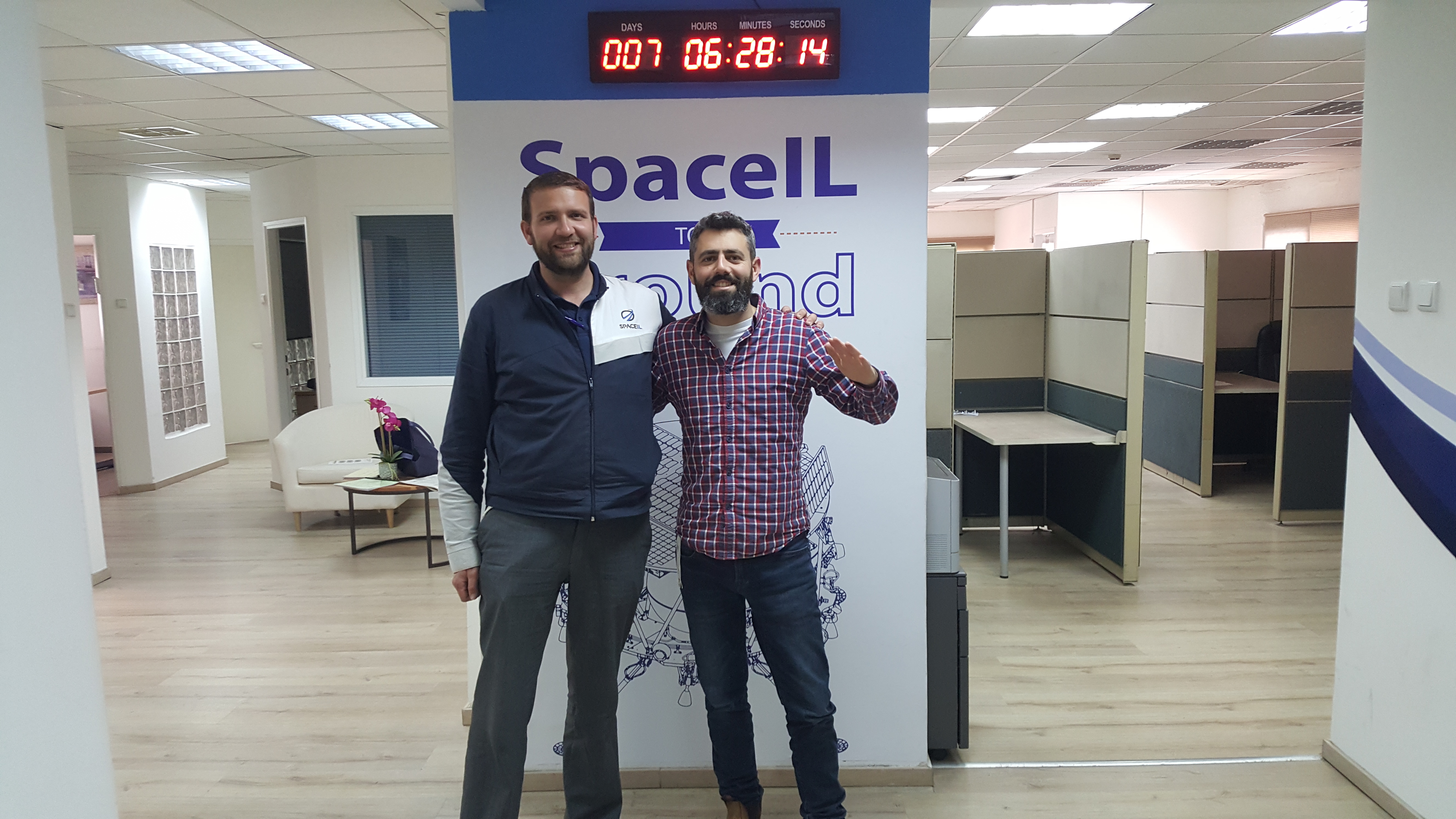
Ariel Gomez is married and a father of four, living in Beit Shemesh. "I am an engineer at SPACEIL, the organization that developed and launched the Beresheet spacecraft to the moon.”
A Childhood Memory That Stays With You
“I was born in France, and at age 18 I made aliyah on my own. My family joined me a few years later. Thank God, I’ve done a lot since coming to Israel — I built a family, earned a bachelor’s degree in electronic engineering at Machon Lev, served in a technological army unit, worked at Elbit Systems, and more.
“But as a child and teenager, I lived in France — and of course I have many memories from there, some of them difficult.
“One of the strongest memories is walking with my father to synagogue every Shabbat. We lived near Nice, in southern France, and the walk each way took over forty minutes. That was the closest synagogue. It was just the two of us; my sisters didn’t come and my brother was too young, so we would walk together and talk the whole way.
“I remember that on one of those walks I told my father that I dreamed of building a car that could fly above other cars. Maybe that’s where the seeds were planted that eventually led me to build a spacecraft.
“As for the less pleasant memories — many times during those walks, passersby would shout at us: ‘Dirty Jew,’ and other insults that aren’t worth repeating. Even though the situation in France back then was better than today, experiences like that — and many others, made me want to move to Israel. I simply didn’t feel that France was my home. And thank God, that’s what eventually happened.”
A Memorable Conversation or Encounter
“I came to SPACEIL through a placement company. They invited me for an interview, and before going I looked them up online. I didn’t fully understand what they did.
“At the interview, the manager asked if I knew their work. I answered, ‘Not really.’ He told me, ‘We’re building a spacecraft to go to the moon.’ I laughed out loud, thinking he was joking — but he repeated that he was serious.
“I told him that I didn’t come from an aerospace background. He said he didn’t care that I didn’t yet know how to get to the moon — what mattered was whether I was willing to try and think it through together with them. I said yes, and the rest is history.
“The process wasn’t easy. We faced all kinds of challenges — professional, technical, and personal. I was asked to do things that were extremely complex and that I didn’t know how to approach — and there was no one to ask. No one in Israel had ever done something like this.
“Many times, to move forward, we needed to make assumptions, without knowing if they were correct. And there was no one in the world who could tell us if they were right or wrong.
“People don’t realize that getting to the moon is incredibly complicated. No European country has succeeded yet. Representatives from the European Space Agency came to us to explore cooperation, because they want to learn from us. It’s surreal — because there’s no comparison between their budget and resources and our small team.
“I think what we did is amazing. In tough moments along the way, I would tell myself: there’s no way Hashem put me here without giving me the tools to succeed. So I prayed a lot, made every effort I could — and thank God, we succeeded. This achievement will be remembered for generations, and I thank Hashem for giving me the privilege to be part of it.”
How Present Is God in Your Life — and How Does That Affect Your Work?
“Hashem is deeply present in my life and greatly influences everything I do.
“For example, everything connected to the moon is tied to sanctifying the month. The Gemara in Rosh Hashanah tells a story about two witnesses who testified before Rabban Gamliel that they had seen the new moon. Based on their testimony, he declared the new month, while other sages opposed it.
“The witnesses said they had seen the moon in the morning — and shortly after, it disappeared. Rabban Gamliel said: ‘I have a tradition from my father’s house — sometimes the moon appears long, and sometimes short.’ In other words, there can be irregularities in the moon’s motion.
“For years I didn’t understand that Gemara — but during my work on Beresheet, I learned that there are indeed situations in which the moon advances and then slightly retreats in its orbital path. Scientists discovered and documented this only in the past few decades.
“It’s incredible that we’ve had this ancient tradition for thousands of years — long before modern science. It shows the truth of the Torah, even when we don’t fully understand it.
“For me, this work is a Torah mission. I feel strong help from Above. Our CEO calls it ‘more luck than wisdom,’ but we saw with our own eyes that everything was with divine assistance.
“We even consulted rabbinic authorities about operating the spacecraft on Shabbat. We met with the Technology and Halacha Institute, analyzed every system, consulted Rav Yitzhak Yosef and Rav Nechemia Goldberg, and followed their rulings. We don’t perform maneuvers on Shabbat, even though it costs us precious fuel. Many times we worked extra before Shabbat so we wouldn’t have to on Shabbat.
“Originally the optimal launch window was Friday night — but we refused, and also Motzei Shabbat, we refused. It was written into our project contract that we would not launch on Shabbat. In the end, the launch took place on Thursday night, and it was an enormous Kiddush Hashem.”
A Jewish Figure Who Inspires You
“In everything connected to space and the moon — and in many other areas, I’m deeply inspired by the Lubavitcher Rebbe. He was the first rabbi to say that we must engage with space exploration — already back in the 1960s. He encouraged using the most advanced technology, all according to Halacha.
“The Rebbe even addressed theological questions about reaching the moon, taught spiritual lessons from space travel, and explained that even when a person feels alone — he still hears guidance from afar, and ignoring it can be dangerous. That parallel to Hashem guiding man is profound and powerful.”
A Story That Happened to You Along the Way
“When I began working on Beresheet, I told my children I had started a new job. My son asked whether I’d still be working with lasers and cameras — and I told him: ‘No, I’m going to build a spacecraft.’
“I remember the shock on his face. Honestly, shock is a reasonable reaction when your father tells you he’s going to help build something that — with Hashem’s help, will reach the moon.
“When the offer came, I asked my father whether to join a risky two-year project or stay at a stable company. He told me: in life, trains come and go — and you must choose which ones you board. In this case, he said, get on the train. Today I’m very glad I listened.”
Professionally — Are You Where You Imagined You’d Be?
“I always saw myself as an engineer — but I never imagined something this extraordinary. Beresheet is truly ‘far-reaching’ in every sense. Many teams around the world dropped out — but we remained, because ‘Nothing stands in the way of will.’
“My role since 2016 has been systems engineer of the spacecraft — responsible for major elements including the simulator, experiments, and landing-site selection. It’s demanding, intense, and deeply meaningful.”
A Difficult Life Lesson You Learned
“During the project there were major crises, including layoffs. I didn’t know if I’d have a job the next day. But I decided not to run away. I told myself: If Hashem put me here, I’m staying until He decides otherwise.
“There were nights I did Kiddush Levanah (sanctification of the moon), looked up at the moon — and felt strongly that I shouldn’t leave. We trusted Hashem, persevered — and with great help from Above, we pulled through.
“That’s a lesson I carry for life, and share with others: Sometimes you don’t understand why you’ve been placed somewhere. But if it’s good and meaningful, don’t give up. Keep going. Because sometimes, dreams really do come true.”

