

Magazine
From Orphan to Therapist: Limor Zusman’s Story of Faith, Healing, and Strength
She lost both parents at age six, but today Limor is a mother of six, a couples and parenting counselor, and a powerful voice for orphans
- Efrat Talia Cohen
- | Updated
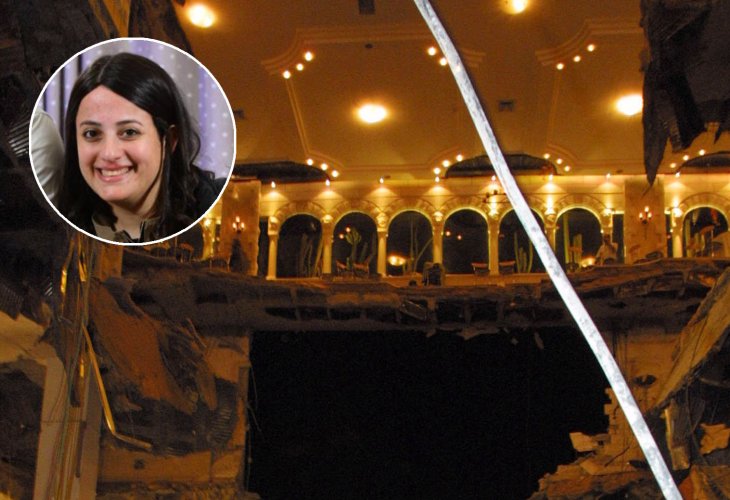 Inset: Limor Zusman (Background: Versailles Disaster. Photo: Flash90)
Although more than 23 years have passed, it's impossible to forget the story of the Versailles wedding hall disaster: a wedding that turned into a tragedy in a single moment, when the dance floor collapsed in Jerusalem, taking the lives of 23 people and injuring more than 300. We may have however forgotten the people whose lives were changed by that night, and who still live with it every day.
Limor Zusman was then a six-year-old girl, the third of four children, who lost both her parents at once.
“We were living in Jerusalem then, in Pisgat Ze’ev,” she recalls. “It was my mother’s friend whose son was getting married – not someone especially close. My parents debated whether to go at all, and in the end they decided they would just drop in for a short visit to say mazal tov.
“The truth is that I was waiting for them to leave, because I wanted to make a mess in the house with my brother, and then we went to sleep. In the morning I woke up with an unusual thirst that really bothered me and I screamed: ‘Abba, I’m thirsty, Abba, water.’ He didn’t answer, and that was strange. I got up and went to the living room and looked for him. Instead, I saw my grandmother sitting there and crying. She told me my parents had been in an accident and that we had to pray for their recovery.
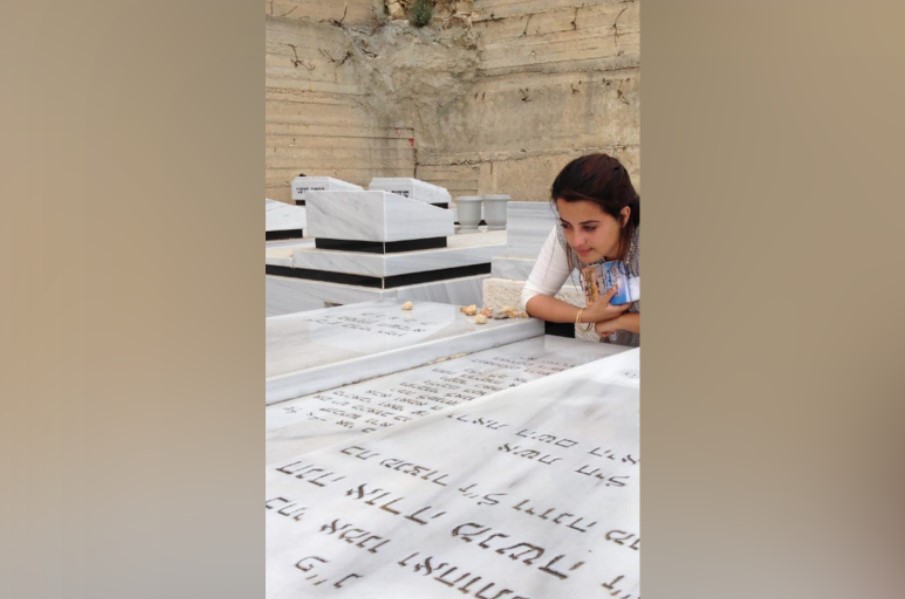
“Today I know it was already final, but she found it hard to tell me. A short time later they told me they had passed away. I remember that in that moment I simply understood, very deeply, that from now on I only have myself, and that I have special protection from Heaven. There’s a photo from that moment that someone nearby took – six-year-old Limor pointing at the stars and saying: ‘Abba, Ima and God are watching over me.’ In one moment I grew 30 years.”
Right after the disaster, the orphaned children went to live with relatives. From that point on, she says, her survival journey began.
“There was no conversation, no processing, no talking about the loss. All the family members were mourning and sunk in their own grief, and that was it. There was no one who really saw me or knew how to mediate it for me. I’m not saying this in a judgmental way, but in my experience there was a little girl there that nobody noticed.
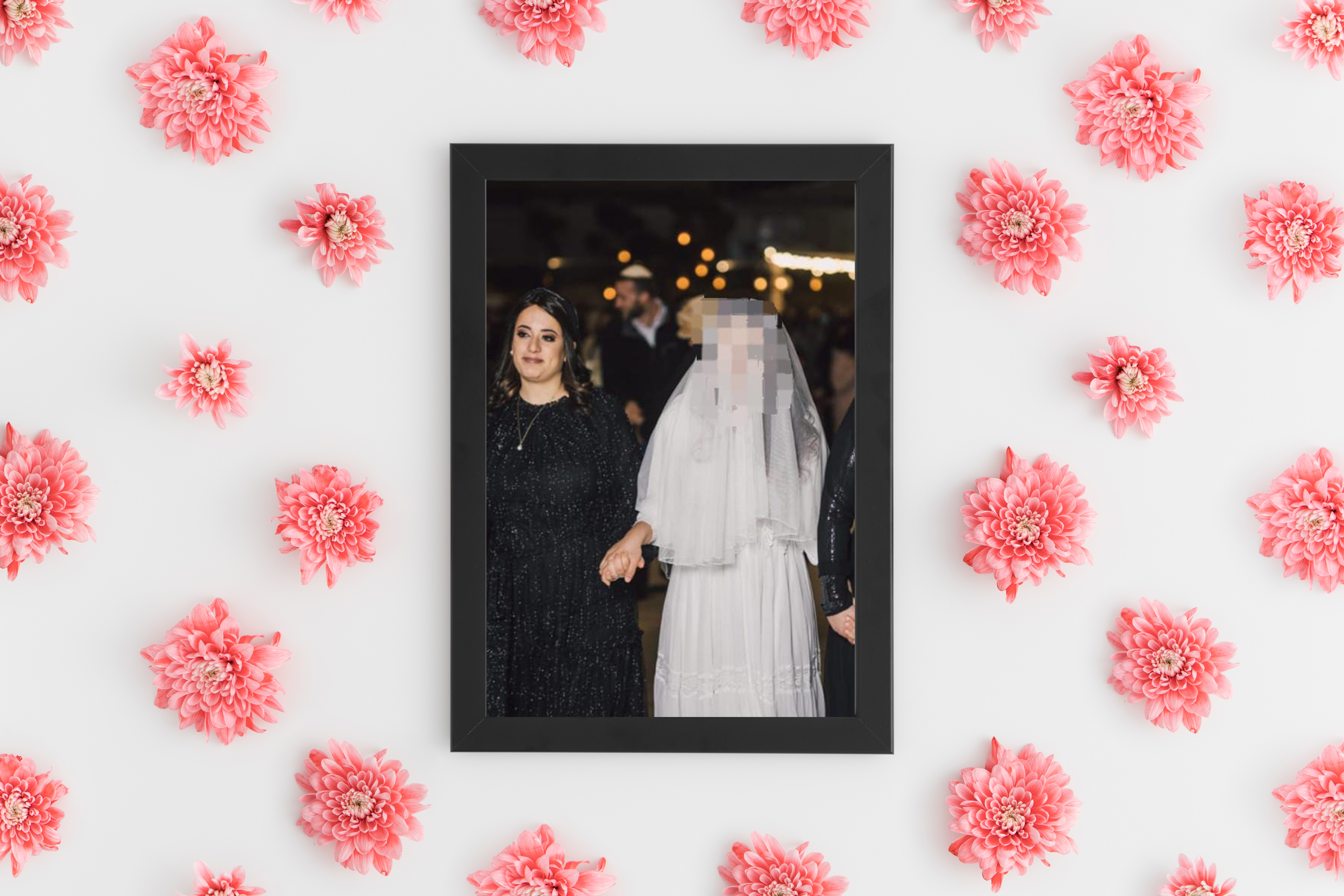 לימור מלווה את אחותה הקטנה לחופה
“I understood that if at this moment they didn’t see me – they were never going to see me. That was the realization that hit me: I will have to get married on my own strength; I don’t have connections or anyone to ‘arrange’ things for me, I don’t have a father and mother anymore. And if I go get help for myself and someone cares – I’ll have to pay for that.”
Today, Limor is 29, a mother of six, living in Tel Zion. But to reach this point in time, with the strength and clarity she has now, she had to go through a long, demanding journey with herself and with life.
“I want to put the spotlight specifically on the light – specifically on the miracles I’ve seen in my life, on every child who is not taken for granted. On the emotional therapies I went through, on the fact that I didn’t give up on my soul. There was something in me that really fought. I knew that if I didn’t process what I’d been through, I didn’t know how I would go on, so I went and got help.
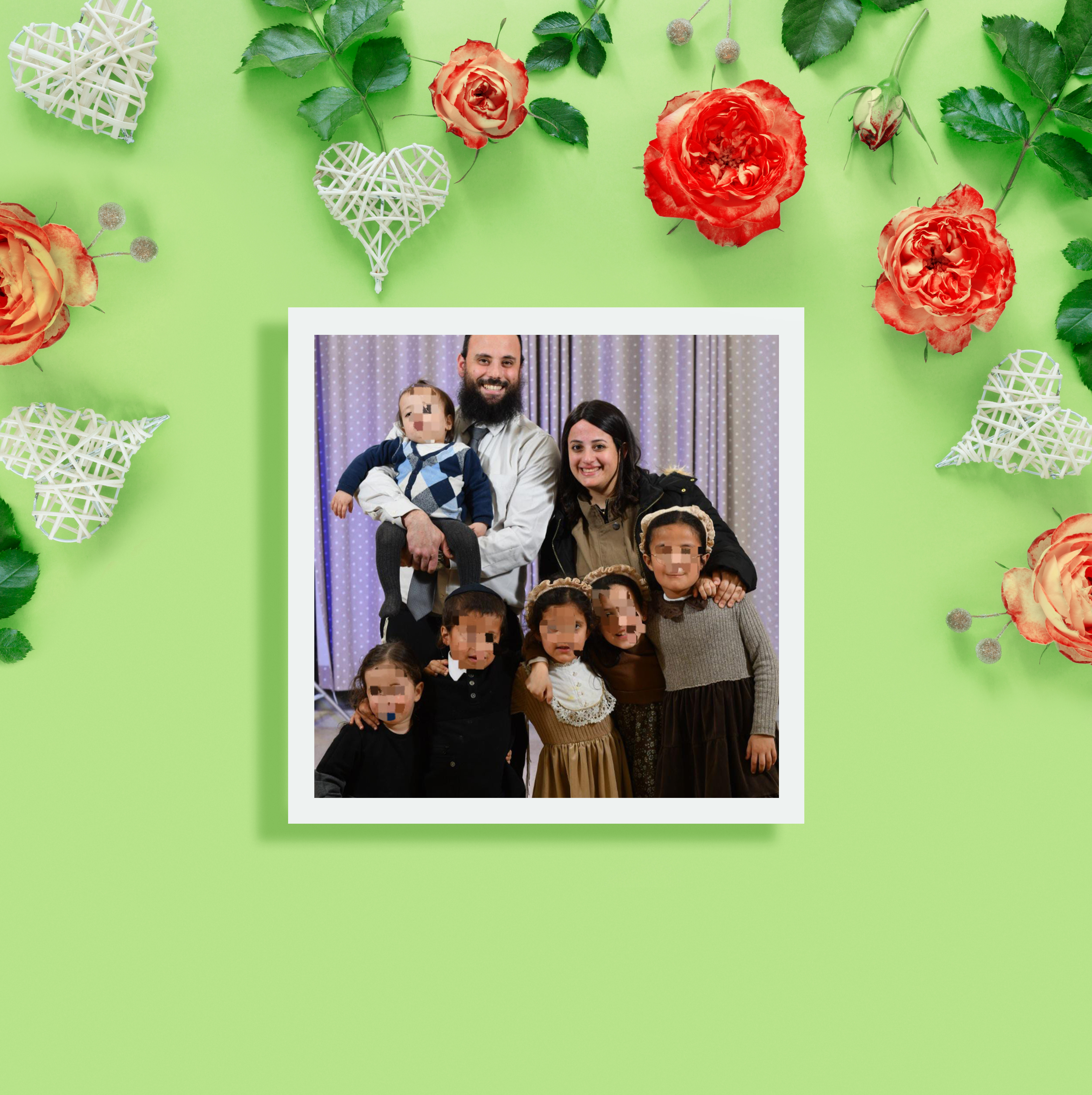 המשפחה של לימור זוסמן
“Today I know it was worth going through everything. I lived those experiences all the way, I didn’t run away, I didn’t give up on myself. I agreed to accept that inside me there’s a wounded little girl whose parents left her one day, and to accept everything I went through along the way.
“I also understood that this is the reality of my life, and that I – and only I – have to build my life, with no one around to tell me that. I also realized there’s no connection between the level of my faith and the wounded child inside me. I need to hug that place, not judge it.”
“The happiest day of my life was also the saddest”
At 19 and a half, Limor got married – the first of her siblings to do so.
“When we wanted to get married and had to open a file at the rabbinical court and present my parents’ marriage certificate, I came with my parents’ ketubah. But on my ID card the names written as my parents were those of the relatives who adopted me, and I explained. They still couldn’t accept it, and there was no one to talk to. My wedding date was already close. I looked up to the sky and said to God: ‘You took my parents and You gave me my husband – You are not going to leave me in this absurd situation.’
“Then we went to the rabbinate in another city, and there too they didn’t know how to help me. One of the clerks suggested I speak to a rabbi who was actually connected to the kashrut department, not marriages. When I told him my problem, he looked at me and started to cry. Then it turned out that he was the one who had married my parents, that he remembered them clearly, and that he was also a relative of mine. He knew the whole story, which meant he didn’t need to verify anything. He arranged everything in two minutes – and in the end, he was the one who married us.
“I was in shock. How did I get to the rabbi who had married my parents, and how did he end up marrying us too…? We were stunned, unable to speak. We felt an insane level of Divine providence. And that’s just one story out of many in which we feel, again and again, how watched over we are. In the end, it’s all about how we choose to see things.”
Limor will never forget her chuppah. “Basically, the happiest day of my life was also the saddest. To get married without a father and mother – that’s a pain you can’t describe. I have photos of myself under the chuppah, crying. Afterwards I asked myself why I cried like that, and why they weren’t there. On one hand I felt them, I believed they were there. But there was also the pain of their physical absence at such a big moment in my life. I felt sadness and joy together.”
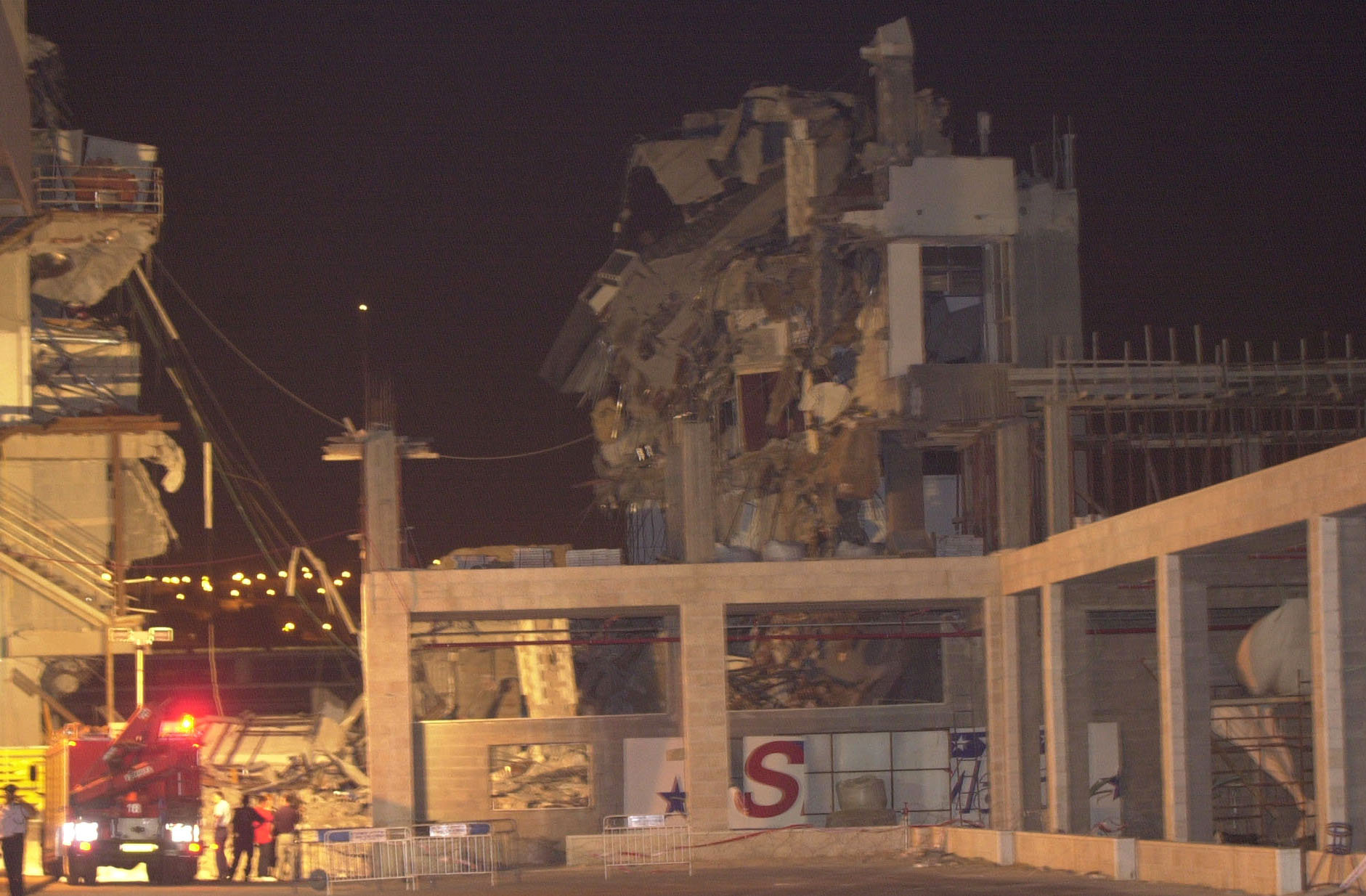 אולמי ורסאי בעת האסון (צילום: פלאש 90)
You describe a very early experience of losing trust in the world. On the other hand, you married at 19. How did you manage that?
“It was simply a matter of which need was stronger than the other. So despite the deep lack of trust, I knew I wanted a home, and I understood I would need o maintain that, completely on my own.
“There are still difficulties today, but there is also repair. A spouse can heal old scars – and also bring us face to face with them. It touches every layer.
“In the past, for example, if my husband was 15 minutes late coming back from prayers, I immediately thought someone was about to come tell me he’s not coming back. My ability to judge situations was damaged at a young age, and I couldn’t judge myself for it. I understood I had a lot of work to do with myself. Today, thank God, I’m in a completely different place.”
What is it like to be a mother today, when you lost your mother at six?
“I define myself as a ‘good enough mother.’ That is, I try to give my children what they need, but also to set boundaries. And I always have one eye on the outside, on the kids who don’t have.
“To see that at the end-of-year party all the mothers are there and there isn’t a single child dancing alone. To send my daughter to the kindergarten’s Passover party with an extra lettuce leaf and hard-boiled egg in case some child forgets. To hand the teacher a pack of pencils at the start of the year in case some child doesn’t bring.
“For me, being sensitive to someone else is my only way to fix the wounded little girl inside me. If God gave me this challenge, He gave me the repair that comes through it – which for me is being a good mother to my children, and also to the child inside me.”
Do your children know what you went through?
“Of course. They know that Grandma and Grandpa are in Heaven and that this is what God wanted, and that they’re in a good place. To the older ones I’ve also told that it wasn’t easy for me and that I raised myself. But I never go too deep into it, so they won’t develop separation anxiety and feel that Mommy and Daddy could disappear too. For them, at least there are grandparents on the other side of the family.”
Where does the disaster you went through show up in your marriage?
“When you get married, it becomes even clearer that there is no substitute for parents, that a spouse is not a father and not a mother – it’s a different kind of love.
“Accepting that there is no replacement for your parents – that was the hardest thing I experienced. The understanding that I’m not going to find a substitute. Subconsciously I was always looking, until I understood that there is no such thing as unconditional love like that.
“In the past I used to ask a lot: why does he have parents and I don’t? Why does someone have people to walk them down to the chuppah and I don’t? Eventually I understood that the fact he has parents is actually a gift for me. The fact that he didn’t experience such huge lacks like I did, and had mental stability – that is also my salvation, in what he brings into our marriage, because there really is no replacement for the presence of parents.”
In recent years Limor chose to study couples’ counseling and parenting guidance – specifically in order to give and to learn in the places she herself lacked.
“Over time I realized that God gave me a sensitivity to understand people. And as someone who only had a model of a mother until age six, I decided to study this in depth – for myself, and also so I can help others.
“I went to learn how to be a better mother and a better partner, and to help couples understand themselves and the place they’re acting from. To understand the other person’s needs, to connect a person to themselves and to their inner child.
“To this day, when people ask me what I ‘do for a living,’ I say that I work on myself. Only in recent years did I understand that I belong in the field of therapy. That’s my language. That’s my purpose.”
“Don’t pity us – we are not victims”
After the horrific Simchat Torah massacre on October 7, Limor decided to go public with her story and to strengthen the orphans of the attack through her own personal tragedy and the growth that followed.
As part of this, she sent journalist Sivan Rahav-Meir a letter of encouragement, dedicated especially to four-year-old Avigail Idan, who was kidnapped to Gaza and also lost both her parents who were murdered. The publication of the letter created a huge public echo and drew many emotional responses.
“When I sat as a child during shiva, I felt that everyone was busy with their own pain, and even when I ‘disappeared’ no one noticed me. To this day I feel a need to compensate other children.
“Through the letter I wanted to send a message about this place of so many orphans – how to cope, how to digest something like this, how to mediate it for them, and the need to pay attention to them.
“At the same time, I also wanted to say: don’t look at us as weak people or as victims, but as strong people. I wanted to cry out the orphans’ cry: let us build ourselves with courage.
“I recently wrote also to Tomer Zack, who lost her parents and brother in the Kfar Kissufim massacre, and was left just with her brother. I also reached out to the uncle of little Avigail Idan, who captured all of our hearts. I sent him the letter, and he thanked me and said he’d be happy to meet one day. I also got messages from many journalists and media people.”
What carried you all these years?
“The faith that things would be good. I kept telling myself: ‘Believe that the very best is coming to you – the most positive, the healthiest, the most accurate.’
“Yes, there are not-simple moments too, like the fact that there’s no one to be with me in the delivery room when I'm giving birth, or cook for me for Shabbat. But the light is much stronger than the darkness.
“A week ago, for example, I went by myself to the hospital because I had pneumonia. My husband couldn’t come with me because he had to stay home with the kids, and I was very upset. I lifted my eyes to Heaven and said: ‘Master of the Universe, the hospital is so close to my parents’ house, and they’re not here with me – but I know that what they can do for me from Above now is more than what they could do if they were alive.’
“To my surprise, throughout the entire hospital stay – which was right before the holiday – there was a woman named Rachel with me, whom I don’t know and had never seen in my life. She insisted she wasn’t leaving me, she came with me to all the tests, until they decided to release me. Even then, when the doctors decided I needed oxygen, she drove all the way to Shaare Zedek hospital for me and brought me back home. I didn’t ask her for anything. I couldn’t understand until the very last moment who she was or what she was doing there. God simply sends us messengers.
“When I gave birth, Rav Chaim Kanievsky appeared in the dream of the driver of his granddaughter, Rebbetzin Kolodetzky, and told her to go to the hospital and that there was a woman in labor there she should help. The driver knew me, knew I was pregnant, and asked me if by chance I had already given birth.
“When I said yes, she fainted, because she understood he meant me, since the Rav was very sensitive to orphans. She came to visit me, arranged everything I needed – a suite at Mayanei Hayeshua hospital, clothes and items for the baby. I was in shock. I said to her: ‘How did you know? Where did you come from?’
“There’s no one to pull strings for me, so God Himself, with miracles and wonders, shows me again and again that He never forgets me.
“Every day I say thank you for all the good. I don’t see darkness; I see miracles. I see a reality where all you can do is thank God. That doesn’t mean it’s not hard, or that there is no insecurity from what I lost, or that I don’t have to work hard – but there is also a positive, good side.
“At the same time, it’s important for me to say that we don’t judge people who choose differently, who have different strengths for their challenges.”
Do you ever feel anger?
“The groom’s mother, who was my mother’s friend, once met me at the cemetery on the memorial day at the grave, and she started crying and screaming that it was because of her that we are orphans, that it’s all her fault.
“I looked at her and said: ‘You know that if it hadn’t happened at the wedding, it would have happened on the way home? They had to go, so who are we to say anything?’
“Not only that. Some time before the disaster, my parents went to another event. There was a great rabbi there, and my mother asked my father to go ask him for a blessing. He blessed them with a blessing that at the time sounded strange: that they should not die a strange death.
“After the tragedy, my father’s sisters went back to him and asked him why he hadn’t prevented it and how he’d known. He said: ‘I only blessed. What God decreed is from Him. There are no mistakes from God.’
“So not only is there no anger – there was never anger. There is even gratitude that it’s specifically me, because today I know I have the strength. But I pray that others won’t go through this.
“When it happened, I pointed up to the stars and said: ‘Hashem gave, Hashem took; may the name of Hashem be blessed.’ My life is saturated with impossible miracle stories and with superhuman strength that He has given me in order to get through everything I went through. Over time, I can say that everything I asked from God has happened, and I feel that I have special protection. Only when I grew up did I learn how much power orphans have – they are the closest to God.”

