

Israel News
The Month of Marcheshvan: From Flood to Renewal
Why did the flood begin in Marcheshvan? This article explores the powerful lessons of this quiet month and how destruction can become the beginning of repair.
- Roi Samai
- | Updated
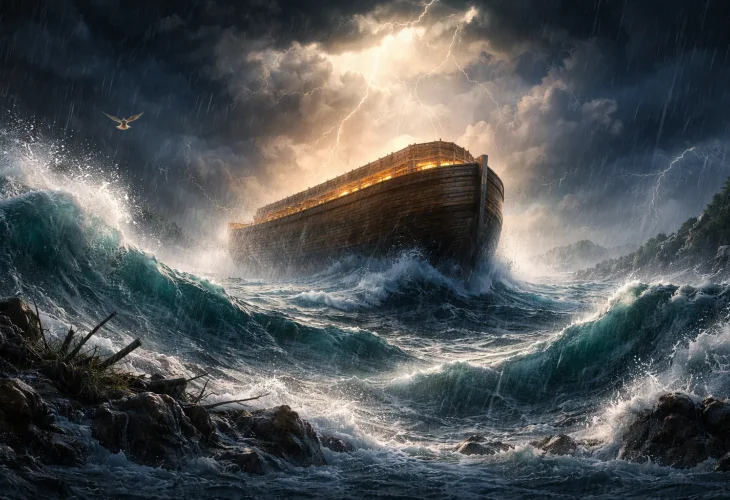
One reason this month receives special attention is that it has no holidays or outward expressions of joy, and it has been marked throughout history by various hardships for the Jewish people. Another reason is connected to water, specifically the rain that the world eagerly awaits during this time. In Hebrew, the word “Mar” carries two meanings. It can mean “bitter,” but it also refers to a drop of water, as expressed in the verse, “Indeed, the nations are like a drop from a bucket” (Isaiah 40:15).
A deeper reason is brought in the Talmud and Midrash, which teach that during this month, the flood began, destroying all life on earth except for Noah and his family. In the teachings of Kabbalah, the spiritual sign of this month is the Hebrew letter Nun.
The Lesson of the Flood
There is a powerful lesson hidden in this month, its symbols, and the events that took place within it. Our sages explain the verse, “For the earth was filled with violence” (Genesis 6:13), by teaching that the final judgment of the generation of the flood was sealed because of theft. Even though they were also guilty of immorality, theft was the decisive factor.
In Jewish thought, theft represents the destructive drive of taking from others. It reflects inner traits such as selfishness and a lack of kindness. Stealing is not just a social crime but a spiritual one.
Theft as a Spiritual Failure
Theft also reveals a lack of faith and fear of Hashem. A person who truly believes understands that their livelihood is determined by the Creator, and that no one can take what is meant for someone else. The thief therefore embodies two deep spiritual failures: a lack of faith and reverence for Hashem, and selfishness, which often appears as baseless hatred.
The corruption of the generation of the flood became so severe that it damaged not only human society but all of creation itself.
Why the Punishment Was a Flood
Because the damage spread throughout the entire world, the correction had to come through a flood. The world needed purification from the culture of taking that had penetrated its core. Water represents kindness and giving, which stands in complete contrast to theft and selfishness.
This is why the flood lasted forty days. The number forty corresponds to the forty se’ah of water required for a kosher mikveh, which purifies a person. In this case, the waters purified the entire world from its spiritual impurity.
The Letter Nun and the Power of Falling
So far, we have explained the events of the flood and their meaning. Now we can better understand the connection to the letter Nun and this month.
Psalm 145 is written in alphabetical order using the Hebrew alphabet, yet it is missing the letter Nun. The Talmud explains that King David omitted this letter because it represents falling. However, the very next verse hints to it by saying, “Hashem supports all who fall.”
Kabbalistic teachings explain that falling is not the end. From descent comes ascent. A fall is often necessary for growth, and from destruction can come rebirth and salvation. The letter Nun, which represents falling and also relates to taking or theft, contains within it the potential for giving and rebuilding.
From Decay to Growth
This idea is similar to a seed planted in the ground. It appears to decay and disappear, but from that decay emerges a strong and beautiful tree. In the same way, in the development of a person and the world, light can emerge from darkness, and renewal can come from ruin.
The message is clear. Through our actions, a person can elevate themselves and all of creation, but they can also bring destruction and harm.
Destruction as a Path to Repair
The generation of the flood chose to follow their desires and the corruption of their hearts. Their behavior damaged the world so deeply that the only correction was to erase the existing reality and rebuild it from the beginning.
It is awe inspiring to see how the Creator guides the world with wisdom and precision. Even though we cannot fully understand His justice, from what we are able to grasp, we see that His punishments are not meant to harm. They are meant to heal, correct, and repair the damage created by human actions.
Hope in Times of Collapse
In difficult times, when everything seems to be falling apart and chaos surrounds us, this perspective is essential. From destruction and ruin, rebirth and salvation can emerge. When it feels like we have no power to change what is happening, we must remember that our actions still matter. They can lead the world toward goodness, or toward the opposite.

