

Parashat Haazinu
Shai Golden on Faith, Childhood Trauma, and Inner Growth
Reflections on survival, Jewish roots, belief in God, and the quiet strength that shapes a life
- Hidabroot
- | Updated
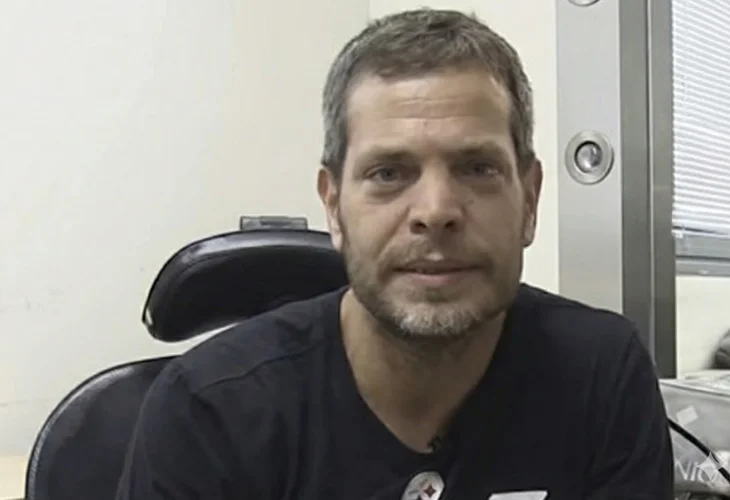 Shay Golden
Shai Golden is a radio presenter who has worked in a variety of senior roles at many newspapers, editorial desks, and different media channels.
A Spark of Nostalgia
“My early childhood years were spent in an orphanage. For six years I grew up there together with my brother Ran, who is a year older than me. I remember that on Shabbat, relatives of the other children would come to visit them, but no one ever came for us, because we simply had no family members who were interested in us. We were always alone, locked in our room, only looking out the window and watching all the other children with their families.
“Looking back, I think that it was in the orphanage that I made the decision to save my own life. Even then, with the mind of a four or five year old, I understood that every person has the ability to save himself — and also the ability to become a victim. The choice is in our hands.”
A Spark of Jewish Identity
“From the age of six I grew up in a completely secular home. My adoptive father defined himself as an atheist. We observed the Jewish holidays, but we never went to synagogue on our own initiative, never lit Shabbat candles, and did not keep mitzvot. If someone had landed in our house from outer space, they would never have known it was a Jewish home, because there was nothing in it that reflected Judaism.
“And yet, even as a child, I always felt that my being Jewish had meaning. There was a reason for it, it was not random. It was obvious to me that just as there is a sun and a sky — there is also God. I never doubted that. I knew it from somewhere deep inside. Judaism was always within me.
“That feeling is still with me today. It is absolutely clear to me that God watches over me — and I mean ‘watches’ in the deepest sense of the word. He does not only guard, He observes my actions, looks, examines, and evaluates. I know I am not alone.”
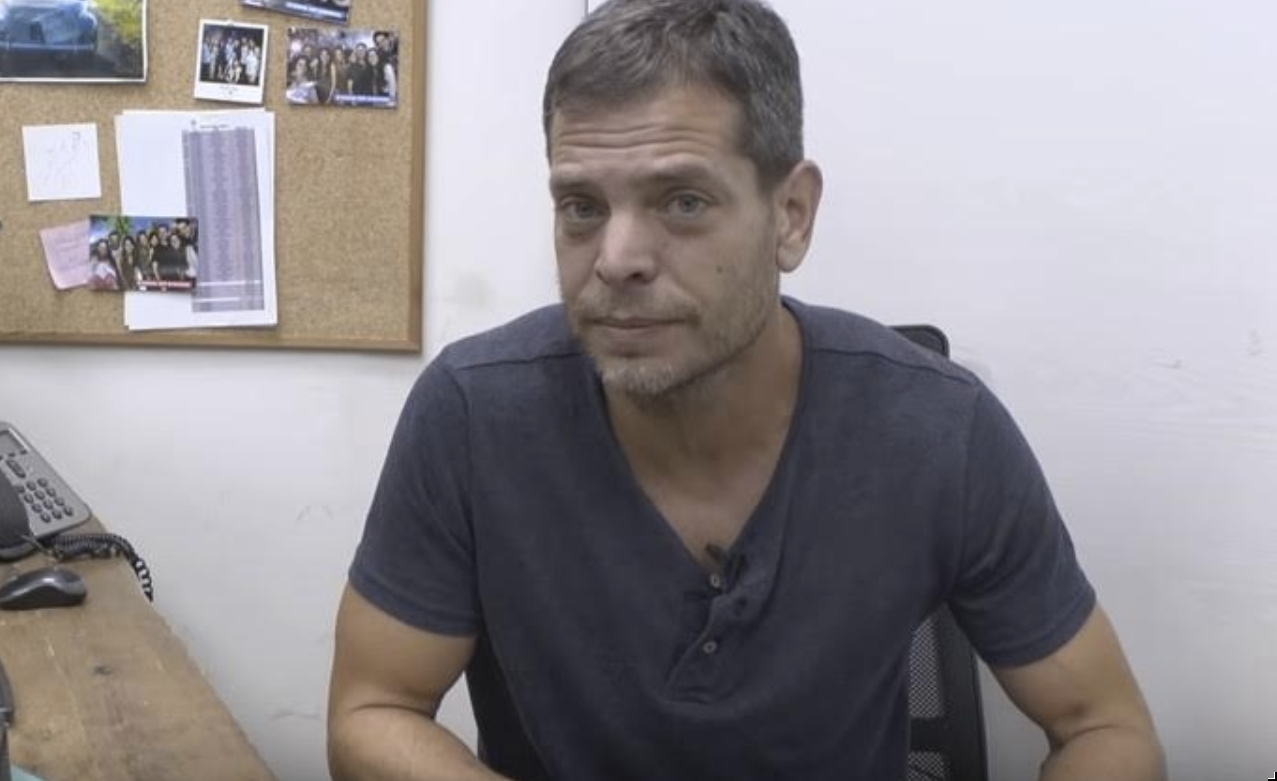 (צילום מסך)
A Spark of Understanding
“I feel that God is always with me and that He is constantly watching me. I have a dialogue with Him in my own way, and He responds and gives me signs. Sometimes, when I sin or make mistakes, He finds a way to hint to me: ‘I noticed — don’t think you slipped away.’ On the other hand, I also know that whenever I call out to Him, He listens. I remember myself as a young teenager, walking in a field with my dog and speaking openly to the Creator, literally talking to Him out loud, with full certainty that He was listening.
“I also know that God is not an ATM. Unfortunately, many people think the dialogue is one-sided: you put in a request, press a button, and receive happiness, health, joy, success. But they are mistaken. The relationship with God does not work that way. If you insert a card and ask for 200 shekels, it is not at all guaranteed that you will receive them — because to be worthy of receiving, you need to demonstrate love and show that you deserve it.”
A Spark of Roots
“My grandfather — my adoptive mother’s father, was a great rabbi in Romania. He fled together with his family, all of whom were great Torah scholars from Eastern Europe. The Germans captured them on the way, cut off their beards, and killed his brother, his father, and his uncle. He was the only one who survived.
“I asked him more than once: ‘How did you not lose your faith? You saw all your relatives murdered, then you were on the trains and hid in the forests — how did you continue believing?’ My grandfather gave me a sentence I will never forget. He said: ‘Listen, child, my faith did not come from choice. It comes from something internal and deep. I did not choose to start believing — it is something that is simply part of me.’
“Over the years, my grandfather also took me to synagogue, mainly on Rosh Hashanah and Yom Kippur. He also bought me my tallit and tefillin for my bar mitzvah.”
A Spark of Inspiration
“I was always drawn to the biblical patriarchs, and I especially connected to Yaakov. He seems like a fascinating figure — a deep dreamer, someone who takes the birthright from his brother, a bit naive, yet also the head of a family of twelve tribes. On top of that, he is also a man of great strength who knows how to ‘fight’. After all, he encountered an angel of God and prevailed, and that is how he received the name ‘Israel’, as it is written: ‘For you have struggled with God and prevailed.’ What courage. Today people talk about superheroes like Wonder Woman and Superman — but look at the hero of our people.
“I often reflect on the idea that a spark of Yaakov exists in each one of us and gives us the strength to overcome challenges.”
A Spark of Commandment
“My favorite of the Ten Commandments is ‘I am the Lord your God’, because it reflects what almost all of us experience. A person is constantly in conversation with God and asks: Who are You? Are You real, or are these just voices in my head? Atheists say You are an imaginary friend — maybe they are right? Do You have a beard? Are You physical? Can You be touched? What color are You?
“And the only true answer to all of these questions is: ‘I am the Lord your God’ — meaning, ‘I shall be what I shall be’ — and you do not need to know anything beyond that.
“This is a deeply complex struggle that we must face constantly, because faith is based on something intangible. If I hold a phone or a pen in my hand, I do not need to believe that it exists. But because God is not visible and we have no physical way to perceive Him, the only way to believe in Him is through faith itself.
“I admit, there are times when I almost say to God: Give me an image, a shape, an Instagram page — something solid to hold on to. And then I remind myself of Avraham, 5000 years ago. He was in a field, illiterate, surrounded by people who worshipped idols. And suddenly he comes and tells them: All of this — your statues and rituals, are nonsense. From now on, you must believe in an abstract idea. This is an almost impossible task — to convey an abstract thought to people who cannot read or write. And that is why Avraham is considered the first philosopher.
“I always remind myself that if God had wanted to, He could appear right now in Rabin Square and say: ‘Hello, nice to meet you, I am God. From now on, you all serve Me.’ And instantly, the entire country would worship Him. But God wants something else. He wants us to believe in Him even when He gives us no sign at all. That is the deepest form of faith, and that is what is demanded of us. That is also the meaning of ‘I am the Lord your God’ — you must believe in Me as I am, with no form, no color, nothing. And if you insist on all these things, you are worshipping idols.”
A Spark of Shabbat
“I love Shabbat very much. As a child I waited for it all week mainly because of the soccer games I watched. Today I love the sense of rest and calm. You do not need to be a religious person to understand that the one who said human beings cannot work seven days a week, was a genius.
“The genius of Shabbat is also that God demands complete rest — not only turning off the work computer but also the computer in your head. There is something very social, almost union-like, about Shabbat. God gathered us into what feels like a workers’ union and protects our right to rest. I find that beautiful.”
A Spark of Prayer
“From time to time I go to synagogue and pray, but most of my prayers are private — sometimes from a siddur, sometimes from Tehillim. I love to pray. It is my way of communicating with God, and I do it often.”
A Spark of Strength and Resilience
“My life was not easy. My childhood was challenging, and even today not everything is smooth. But I believe, from the deepest place in my heart, that even in the hardest times, God is with me. When I truly need Him, He always hears. That helps me in every struggle or difficulty.
“On difficult days, I simply lift my eyes to the heavens and say: ‘I lift my eyes to You, Who sits in the heavens’ — and then I know that there is a moment of grace between me and God.”
A Spark of Closing — After 120 Years, What Would You Want to Know You Left Behind?
“I do not have big ambitions, but if I managed to leave behind even a small drop of beauty, a small drop of goodness — in a world that sometimes has little beauty and not much goodness — if I did that through words or actions or anything else I was able to give, then I am grateful. I feel that I have been blessed.”

