

World News
From Fireball to Recovery: The Inspiring Journey of Eviatar Bashari
Severely injured in Gaza, Givati fighter Eviatar Bashari shares his powerful story of survival, recovery, and resilience, revealing how faith, strength, and kindness carried him through the darkest moments.
- Moriah Luz
- | Updated
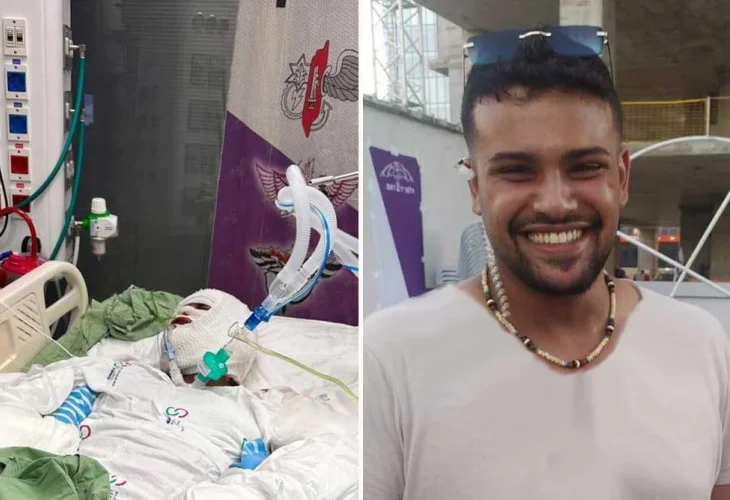 Eviatar Bashari in the hospital (left) and after recovery (right)
Eviatar Bashari, 23, holds a before and after photograph of himself. On the right, he stands tall and smiling in his military gear. On the left, he lies wounded in a hospital bed, his eyes closed beneath layers of bandages. He recounts the moment inside a mosque that changed his life in an instant, speaking openly about the pain, the strength he discovered along the way, and the dreams he still carries forward.
“I Thought My Purpose in the World Was Over”
The injury occurred four and a half months into the war. Bashari and his comrades from the Shaked Battalion of the Givati Brigade were operating in the Zaytoun neighborhood in southern Gaza City.
“We received information about a tunnel entrance in one of three buildings and were assigned to locate it,” he recalls. “We entered the first building and found nothing, then moved to the second, which was also clear. The third building was a two story mosque.”
The force split up. Part of the team cleared the upper floor, while the rest, including Bashari and his commander, Yitzhak Turgeman, searched the ground floor.
“I stood near a large window and covered it. I thought to myself that it wasn’t very smart because the window was big and I was exposed. I noticed a concrete pillar behind me and moved there, but it was too narrow to offer real protection. So I shifted again, this time standing next to a large wooden door leading to the mosque’s main hall.”
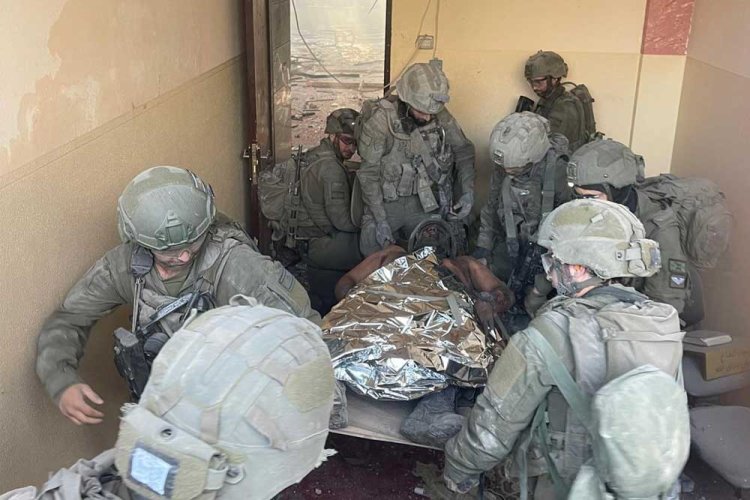 Fellow soldiers evacuating Eviatar after the injury
The sense of danger remained, and he moved once more to a corner wall. “That’s when Turgeman noticed a suspicious steel door behind me and wanted to check what was behind it. He was worried it was booby-trapped and brought an explosive frame to detonate it safely.”
“Just before he set the frame, a massive explosion shook the entire building and sent me flying. It felt like an eternity. While I was airborne, I thought that maybe my mission in life was over. I felt like I was inside a giant fireball, curled up inside it.”
Did you remain conscious?
“I probably lost consciousness almost immediately. It all happened in a split second that felt endless. I was sure I was dying. It felt like a black hole was swallowing me. There’s a gap I don’t remember, likely when I lost consciousness.”
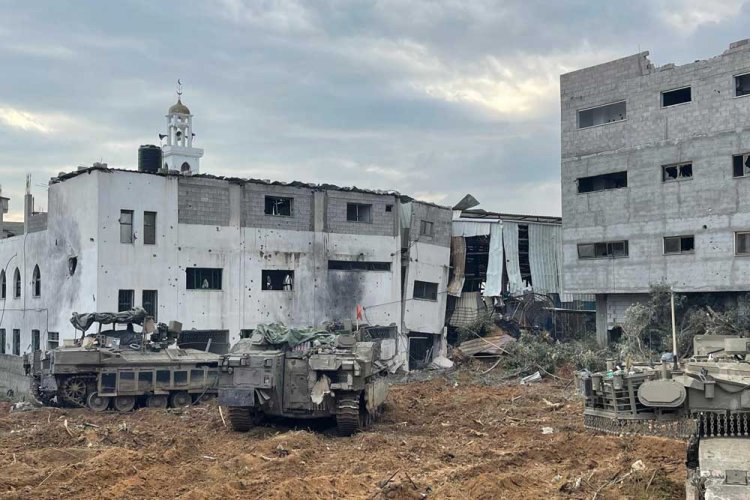 The building where the incident occurred
“A Great Miracle”
“When I woke up, I realized I was still inside the mosque. Everything was chaos. My ears were ringing, the place was destroyed, smoke and black ash were everywhere. I looked back and saw Turgeman lying behind me. I didn’t know if he was alive. I crawled toward him and shook him.”
“Turgeman woke up, looked at me, and said, ‘Bashari, you’re injured.’ I was relieved he told me, and to this day we laugh about it,” Bashari says with a smile. Later, he sent photos showing the extent of his injuries, especially to his face. There was no missing it.
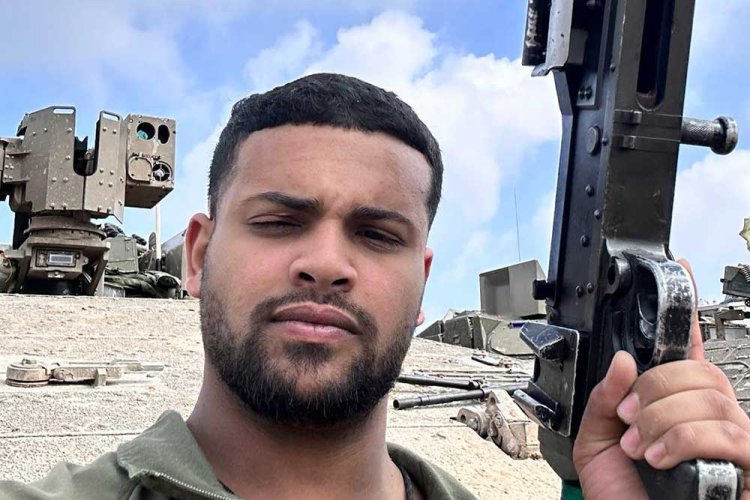 Eviatar before the injury
“I couldn’t stand up, so he helped me. I saw my hand bleeding heavily and chose not to look at the rest of my body. Supported by Turgeman, I made my way toward the exit. Along the way, we met the rest of the squad, who looked at me in shock.”
When they reached the building’s entrance, Bashari tried unsuccessfully to squeeze through an opening in the wall. Only then did he understand how serious his condition was.
“They opened a stretcher, laid me on it, and evacuated me to the regiment’s evacuation vehicle, which took me to the border. From there, I was airlifted to Sheba Medical Center.”
What caused the explosion?
“On the ground floor, near where I was standing, there was a large hole in the wall created by a bulldozer to allow entry into the building,” he explains. “Doors are often booby-trapped, so entry is done this way. The explosives were planted exactly in that opening.”
“It was a great miracle that they exploded only when Turgeman and I were there. If they had detonated earlier, the outcome would have been far worse.”
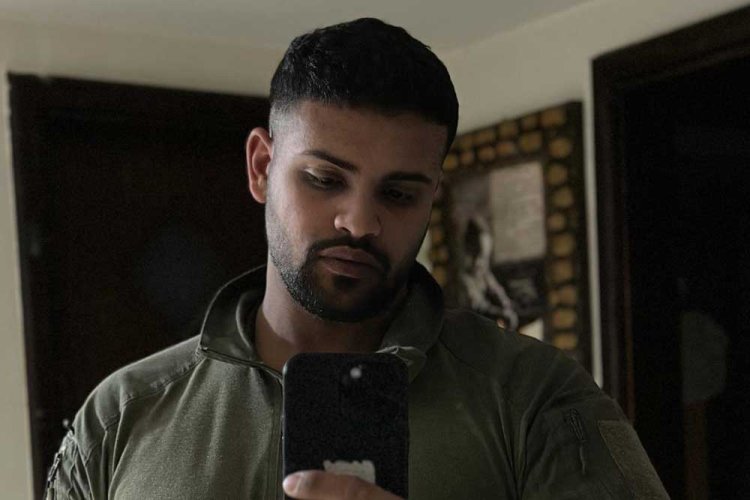 Eviatar before the injury
Bashari arrived at Sheba in critical condition, mainly due to smoke inhalation. Just before he was sedated and placed on a ventilator, doctors allowed him to speak with his parents.
“It may sound strange, but I asked to speak only with my dad. I knew he would handle it calmly. I didn’t want my mom to panic.”
“I didn’t understand how severe my condition was. Even when I spoke to my father, I asked him not to tell my mom. After the call, I was sedated. By the time my parents arrived, I was already unconscious.”
After two days, doctors woke him. Due to severe burns, he was heavily sedated. “For about a week, I was in a haze from the painkillers, and then they slowly reduced them.”
What was the hardest part of hospitalization?
“The treatments. Every morning I’d wake up for painful procedures. About a quarter of my body had burns. To allow the skin to heal, they had to remove damaged skin, apply ointments, and rebandage everything.”
“During treatment, I would scream from the depths of my soul, knowing there was nothing I could do. When it ended, I would thank Hashem that it was over.”
Another challenge was seeing the burns on his face. “Looking in the mirror was very hard. I would cry and wonder if I’d ever look like myself again.” Today, by divine kindness, no scars remain on his face.
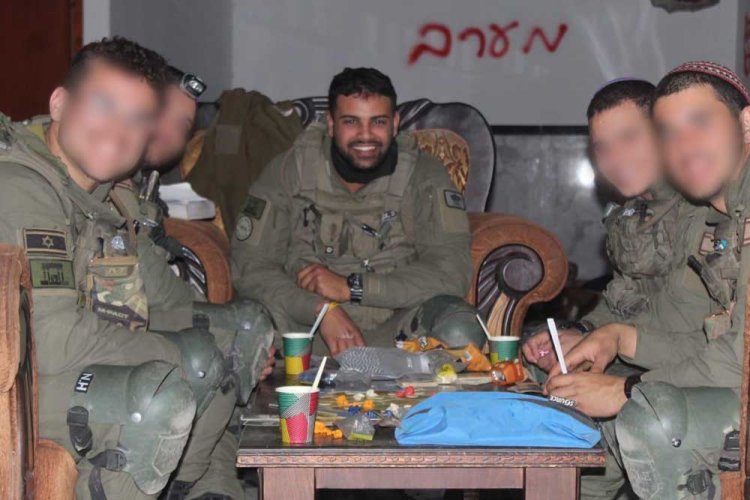 Eviatar and friends in Gaza before the injury
Strength From Others
After two weeks, Bashari moved to rehabilitation. “The skin healed at an unusually fast pace. A nurse with over twenty years of experience told me she had never seen anything like it. Being transferred to rehab after two weeks was nothing short of a miracle.” He spent about a month there.
What helped you cope?
“The people. So many good people came, talked, smiled, and gave. Endless kindness.”
And your faith?
“There were questions, some I still carry. Some were answered, others weren’t. I spoke to Hashem in my own words. Looking back, I see not only the pain, but also an overwhelming amount of goodness. I witnessed levels of kindness that most people never experience.”
What do you mean?
"For six weeks, everything around you, everything enveloping you, is just good. True, there are your struggles, but everyone around me were just good people. Even the Chief Rabbi of Russia spoke with me via video call and sent his son-in-law to visit me."
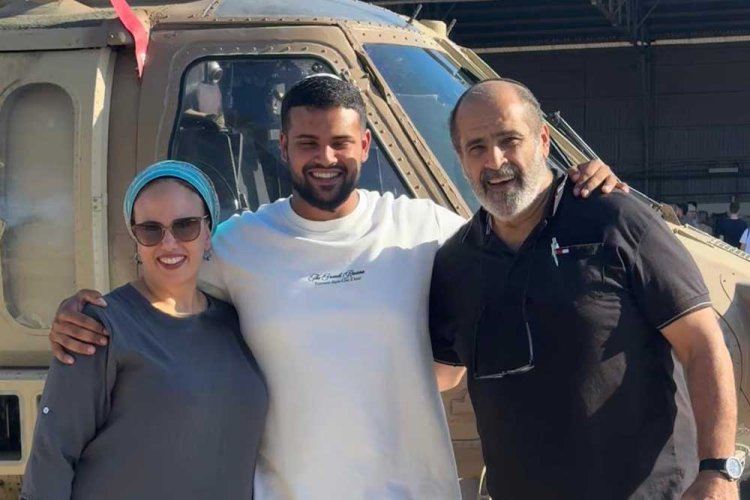 With his parents, next to the rescue helicopter
After your recovery, you held a gathering of gratitude. Can you tell us about it?
“When I was released from rehabilitation, my parents wanted to organize a gratitude gathering. I saw how much effort it took and wanted to ease the burden on them. I suggested reaching out to the people who had helped me.”
“I contacted Hanoch Daum, not asking for money or anything else. He wrote a post and included my phone number. Within minutes, calls started pouring in. People just wanted to help and give.” The gathering eventually included hundreds of participants.
Where are you today?
“I’ve completed my physical rehabilitation. Now I’m focusing more on mental healing.”
Plans for the future?
“I write songs and play music. I want to focus on music and become a singer. That's the direction.”
Is there a message you would like to share?
“The Jewish people are alive and strong. Look where we are today after everything that’s been done to us. Gaza has been dismantled, and every front that sought to harm us was struck. We continue to rise and grow stronger. Time and again, what seems meant to break us only strengthens us.”

