

Israel News
From Survival to Strength: The Inspiring Journey of Amichai Schindler
On October 7, Amichai Schindler’s life was nearly cut short when terrorists attacked his home. Despite devastating injuries, he defied the odds and continues to rebuild and thrive two years later.
- Moriah Luz
- | Updated
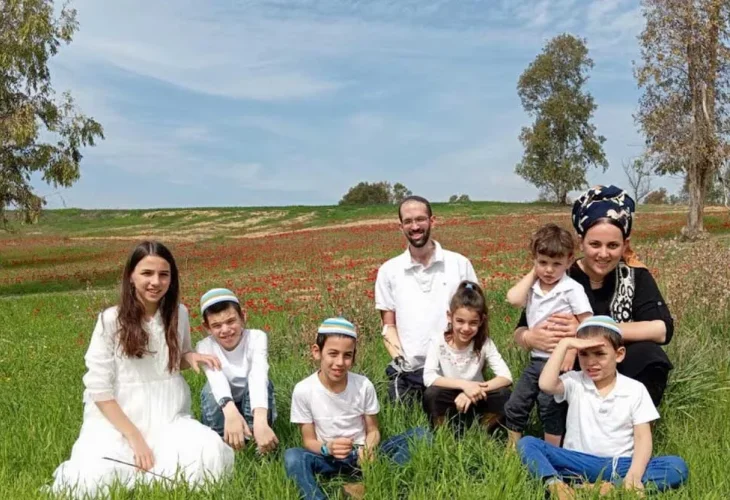 The Schindler family today
While chatting with Amichai Schindler during his commute, it’s hard to believe he is only partway through his recovery. Despite losing most of the fingers on his left hand, he lives independently: driving, cooking, washing dishes, and even bathing his children. Amichai, 35, lives with his wife, Avital, and their six children in Kibbutz Kerem Shalom near Gaza, where he works as a social worker in a local high school.
This conversation is not something to be taken for granted. Amichai survived a brutal attack on Simchat Torah in front of his wife and children, narrowly escaping death as medical professionals nearly gave up on him.
A Shared Community
What brought a religious family to a secular kibbutz?
Amichai explains that eight years ago, the kibbutz decided to establish a mixed community of religious and secular residents. “We’re all descendants of Abraham, Isaac, and Jacob, after all,” he says. The community works with patience and humility to find common ground.
“Of course, we didn’t come to give anything up,” he clarifies. “We didn’t come here to be less religious, to compromise on halacha, or to cut corners. The goal is to preserve our spiritual and religious character, and from there to understand that the Jewish people are growing and flourishing, and that there is far more that unites us than divides us.”
In 2016, the Schindlers moved from Elon Moreh to Kerem Shalom. They embraced kibbutz life, even amid the frequent gunfire that had become part of the region’s reality.
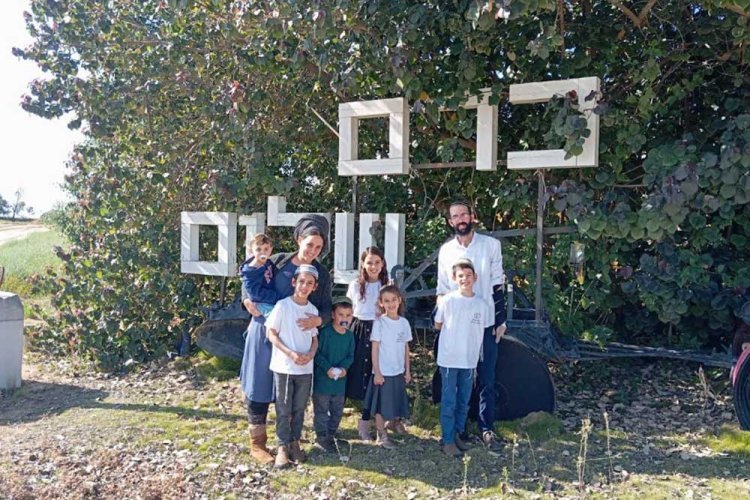 The Schindler family at the entrance of the Kibbutz.
 “Great Miracles”
“The morning of Simchat Torah began with prayers and kiddush, with mortars echoing in the background,” Amichai recounts. “We hoped it would end soon, unaware that terrorists had infiltrated the area.”
Unbeknownst to the residents, their relative calm was part of the miracles surrounding that day. Thirty terrorists stormed the kibbutz, with 200 more positioned nearby. Chaos ensued, yet they did not succeed in causing mass casualties, thanks to the bravery of the kibbutz security response team.
“One team member told me, ‘Every place we fought, Hashem was with us. And every place we didn’t fight, Hashem fought on His own.’” Amichai reflects.
At 10 a.m., terrorists breached the Schindler home. Disguised as IDF soldiers, they demanded entry into the safe room where Amichai and his family were sheltering. When Amichai refused to open the door, they detonated an explosive, severely injuring him.
Swift action by the response team prevented the terrorists from entering the home and forced them into combat outside. Two of Amichai’s close friends, response team members Amichai Yitzan and Yedidia Raziel, were killed in the fighting.
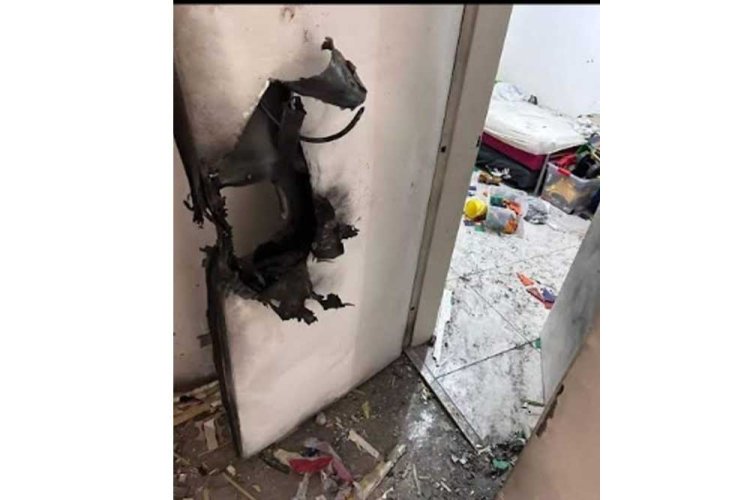 The safe room after the explosion.
Fighting for Life
During treatment, Amichai lost consciousness, and his memory erased the most traumatic moments. A couple from the kibbutz risked their lives to administer first aid amid the ongoing firefight.
“I asked the husband what made them leave their home and risk their lives to reach me. Unlike us, they knew what was happening in the kibbutz. A few months later, he answered me: ‘I thought a lot about your question, and my conclusion was: Do not stand idly by the blood of your neighbor. I knew there was a Jew here who needed help, and I couldn’t stand by.’”
They moved Amichai to the kibbutz office, where a visiting doctor improvised a makeshift clinic, saving his life yet again. “Some medical staff identified me as deceased at certain stages,” Amichai recalls.
After losing a tremendous amount of blood and with little hope for survival, he was airlifted to the hospital. “The person who put me on the helicopter to Tel Hashomer later told me, ‘I was afraid someone would call and yell at me for wasting space on a helicopter on a corpse.’ When I arrived at the hospital, the medical team debated whether it was even worth treating me. Thanks to Hashem, they decided to try, and here I am.” he says with a smile.
“We Weren’t Supposed to Be Here”
For a week, Amichai remained sedated and on life support. When he awoke, he was unable to fully comprehend or communicate the trauma he had endured. His wife reassured him, saying, "you don’t yet know what happened, but we were given life as a gift. We were not supposed to be here, and if we are, it means we still have a mission in life."
Throughout the ordeal, Avital served as an emotional anchor for the family with Amichai describing her as "truly the heroine of this story." She strengthened her children through Tehillim prayers, helping shield them from shock and fear.
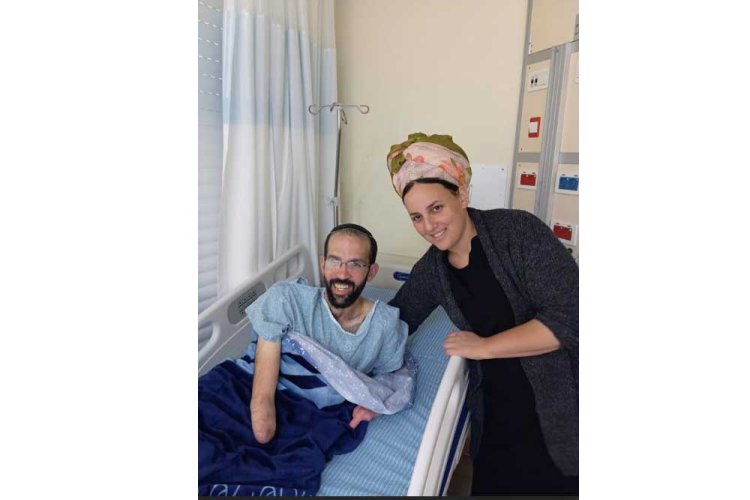 Amichai and his wife, Avital, at the hospital.
As Amichai slowly began reclaiming fragments of his life, his family gradually revealed the extent of his injuries. Initially unaware that he had lost his dominant hand, he faced the news with their support while undergoing rehabilitation and confronting the destruction of their home. He later learned of the deaths of his close friends.
What is the central challenge of the injury?
“There are many challenges, and they vary from person to person. For me, the main challenge was needing nursing care and assistance during the first months.
“But faith holds us constantly,” he immediately adds. “We didn’t choose this situation and would gladly have avoided it, but it didn’t happen by chance. There is Someone who leads the world, and we were chosen to be partners in the process of redemption that the Jewish people are going through. We grow stronger and draw strength from knowing we are part of something greater.”
This was not the first terror attack Amichai encountered. Fifteen years ago, he lost his brother, Avishai, in a shooting attack in the southern Hebron Hills.
“We joke that he stood in Heaven and kicked me so I wouldn’t be able to join him,” Amichai laughs. “My medical condition was very severe. When they were treating me at first, my wife told the medics, ‘He comes from a bereaved family. There is no way his mother can hear that another son was killed.’”
“It Was Clear We Would Return”
This past summer, Amichai and his family returned to Kerem Shalom, and he fully resumed his work. At this stage, their home is still unfit for living, and they are temporarily residing in another house on the kibbutz.
“It was clear to us that we would return,” Schindler emphasizes. “We just didn’t know exactly when. This is our home and this is our place. The terrorists’ goal was to drive us away, so the real response to terror is to return, rebuild, develop, and grow.
“I always say that if we remain exactly as we were before, then what was the point of everything we went through? We went through all of this so that we would grow, rise, and become better people.”
Did your children want to return?
“Very much. They kept asking when we would finally go back. Today they ride their bikes along the paths, play with friends, and are truly happy. There are explosions from Gaza, but we are learning to cope.”
Choosing Life
Through determination and faith, Amichai regained his independence. His prosthetic right hand and the two remaining fingers on his left hand allow him to perform daily tasks. “If you believe in your goals,” he says, “you’re capable.”
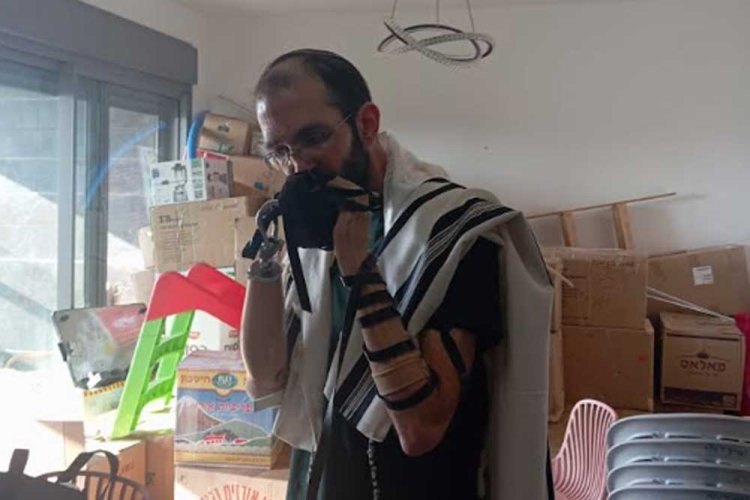
Reflecting on his journey, Amichai finds purpose in adversity, guided by the resilience of his faith. He emphasizes life’s unpredictability and urges a focus on the positive, creating a cycle of goodness.
“Every day, we choose to see the positives in life,” he says. “It’s a lesson that applies to everyone, no matter what they’re facing.”
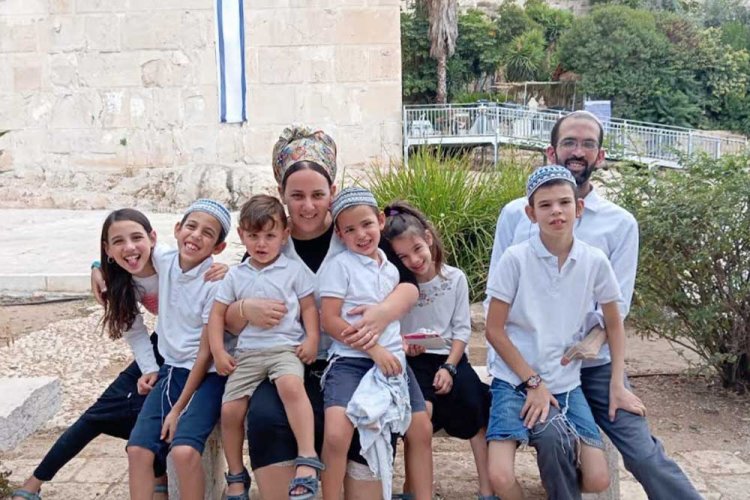 The Schindler family.
