

Magazine
Life as a Jew in Bahrain: An Exclusive Interview with Nancy Khadouri
Bahraini parliament member Nancy Khadouri opens a window into the life of the Jewish community in Bahrain, sharing its history, challenges, and hopes in the era of normalization.
- Chaim Gefen
- | Updated
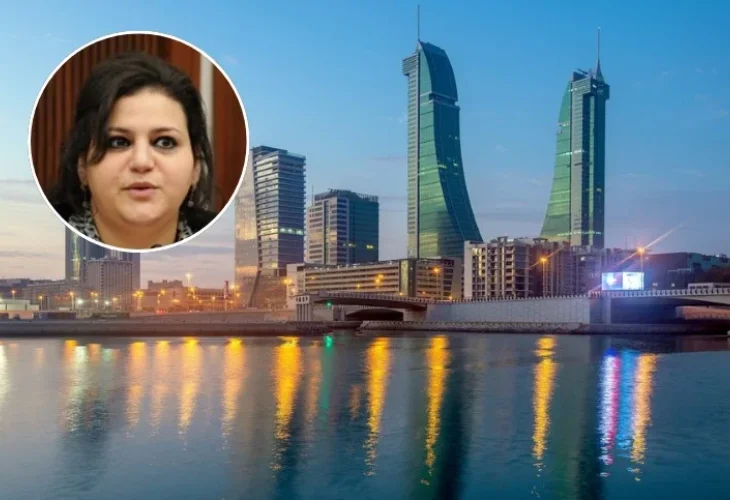 Manama, Bahrain's capital (Credit: Shutterstock). Inset: Nancy Khadouri (Photo courtesy of her)
Ibrahim Daoud Nonoo, head of Bahrain’s Jewish community, sounded more apologetic than ever. “You have to understand me,” he explained. “The situation is complicated in all Arab countries, and it’s really not a great time for interviews.”
Until the pivotal moment when the peace agreement between Israel and Bahrain was signed five years ago, brokered by the White House, Bahrain’s Jewish community had remained largely silent in the media. Community leaders kept their distance from journalists, avoided interviews, and shared little about their lives in the Gulf kingdom. This pattern is common in other Muslim countries where Jews reside, though few people are aware of their existence or daily lives.
Despite the normalization between Israel and Bahrain, public sentiment in Bahrain still reflects the broader hostility toward Israel found across much of the Arab world. “When things settle down more, I’ll do an interview,” Nonoo promised. “For now, we should wait.”
A Willing Voice
Ibrahim Daoud Nonoo, 65, was the first Jewish member of Bahrain’s parliament. After serving two terms, he was succeeded by his relative, Huda Nonoo, who later became Bahrain’s ambassador to the United States. Today, Jewish representation in parliament is held by Nancy Khadouri, 50, a businesswoman and author.
Unlike others, Khadouri agreed to speak. “I’d be delighted,” she said. “The story of our community is both interesting and historic, and there is much to discuss.”
When Khadouri says there is much to say, she means it. Few know the history of Bahrain’s Jewish community as deeply as she does, a knowledge she demonstrated in her book From the Beginning Until Today, which chronicles the community from its earliest days.
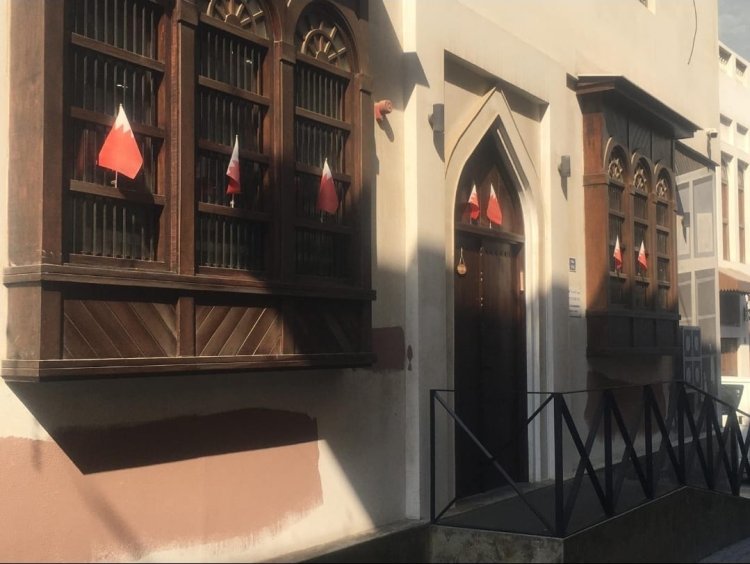 The synagogue in Bahrain, featuring flags of the kingdom
A Small Community With Deep Roots
Among Jewish communities in Muslim countries, Bahrain’s is the smallest, numbering only a few dozen people, most of whom live in the capital, Manama. The country’s only synagogue, Beit Aseret HaDibrot, is located on Sasa Street in Manama’s old commercial district.
“The Jewish community in Bahrain has a deep history spanning more than a century,” Khadouri explains. “Spiritually, the community continues to preserve its traditions. In recent years, Jewish life here has even experienced a revival, partly due to the renovation and reopening of the synagogue for prayer and community events.”
Despite its tiny size, the Jewish community has had representation in Bahrain’s parliament since 2001, by direct decree of the royal family. Khadouri currently serves on the Foreign Affairs, Defense, and National Security Committee, as well as the Human Rights Committee.
How can such a small minority be represented in parliament?
“Our presence has meaning beyond numbers,” Khadouri explains. “We are an inseparable part of Bahraini society. Bahrain promotes coexistence and mutual respect, and the king’s vision is for parliament to reflect the country’s social diversity. That is why the Jewish community is represented, even if it doesn’t make numerical sense.”
 The synagogue in Bahrain
Identity and Belonging
Aren’t you afraid of losing your Jewish identity while working alongside politicians from very different backgrounds?
“I’ll answer in one sentence,” Khadouri says. “I define myself as a Bahraini Jewish woman who embodies coexistence through peace. When you have an ideal you are working toward, it is hard to lose your identity.”
Is your Jewish identity known to everyone?
“Yes. It’s known to the government, my colleagues, my neighbors, and my friends. The royal family and fellow members of parliament are fully aware of my faith, and it has never limited my participation. On the contrary, it is respected.
“I’ve always received appreciation from society at large,” she adds. “That reflects Bahrain’s unique character. Diversity here is not hidden, it is visible, and people are not judged by religion or origin.”
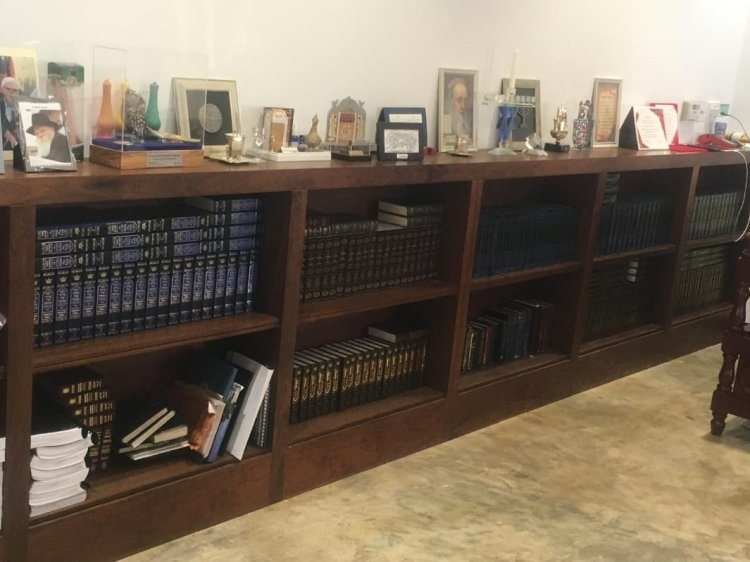 Judaica items from around the world on the synagogue's library shelf
The Abraham Accords and What Changed
At the end of 2020, the world closely followed negotiations between Israel and Bahrain. Mediated by U.S. President Donald Trump, a normalization agreement was signed, making Bahrain the second Gulf state, after the United Arab Emirates, to establish peace with Israel as part of the Abraham Accords. Morocco and Sudan later joined as well. Today, Israel and Bahrain maintain full diplomatic relations, including embassies in Tel Aviv and Manama.
Has the attitude toward you changed since the agreement?
“The attitude was always positive,” Khadouri says. “What changed were the opportunities. Dialogue, cultural exchange, and connection with Israel and the broader Jewish world expanded significantly, and we gladly embrace those opportunities.”
What reactions did you encounter?
“The reactions reflected serious discussion and genuine engagement,” she explains. “People understood that this step aligned with Bahrain’s long-standing commitment to dialogue and coexistence. The responses were mostly positive and sincere.”
A Vision for the Future
Under the leadership of King Hamad bin Isa Al Khalifa, Khadouri notes, Bahrain has consistently chosen dialogue over confrontation. This outlook also shaped public attitudes toward peace with Israel, viewing it as an opportunity for regional stability and cooperation.
Are you surprised that a Jewish woman serves in Bahrain’s parliament?
“No,” she answers. “Social diversity is part of Bahrain’s identity. My role is not unusual but a continuation of the country’s tradition of respecting all communities. What matters is contribution, integrity, and commitment. Those are values that unite us.”
What is your relationship with the king?
“Like other members of parliament, my relationship with the king is built on loyalty, appreciation, and shared responsibility. His approach toward the Jewish community is one of genuine inclusion. We feel valued and fully part of the national fabric.”
What is your dream for the future?
“Our community is small, but it is an integral part of Bahrain. My hope is that we continue to grow and contribute positively, together with all citizens of Bahrain, toward a shared and prosperous future.”

