

Magazine
The Battle of Tel Saki: 'The Syrian Soldier Aimed and Fired at Me'
52 years after helping save 30 soldiers at the Battle of Tel Saki, Yitzhak Nagerker recounts the harrowing drama, eight months of captivity and torture in Syria, and the moment he returned home to learn his bunker comrades had survived.
- Michal Arieli
- | Updated
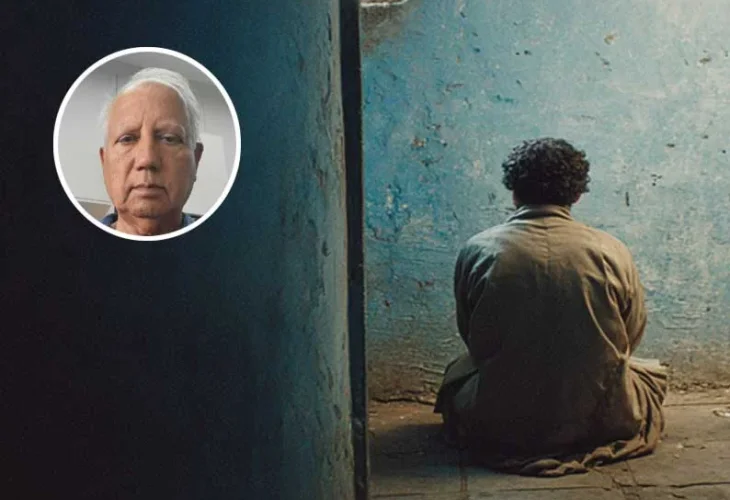 Illustration. Inset: Itzhak Negraker
“Their goal was to conquer our settlements in the Golan Heights: Ramat Magshimim, Haspin, Katzrin. On the face of it, nothing stood in their way. We had run out of ammunition and had only a handful of tanks, while they arrived with hundreds of tanks and armored personnel carriers. I heard them shouting, ‘Tel Aviv khalas, khalas Tel Aviv.’ And yet here we are. Alive. And the State of Israel still exists.”
These words are spoken with emotion by Yitzhak Nagerker, who fought in the Yom Kippur War with the 188th Armored Brigade and was captured by Syrian forces while trying to rescue soldiers hiding in a bunker at Tel Saki in the Golan Heights.
“We were under heavy fire, and the commander of the Tel Saki outpost said, ‘Anyone who can go out and tell them we are surrendering should go.’ No one could stand. Everyone was wounded. So I went out,” he recalls.
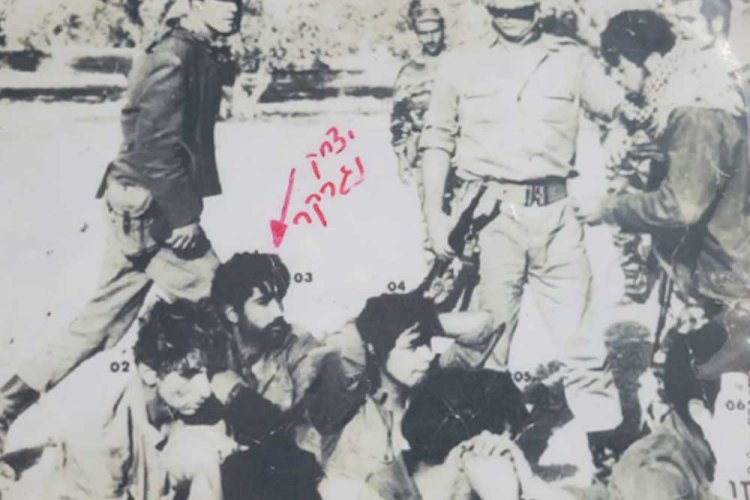 Yitzhak Nagerker in captivity.
Before the War
“I served in the 188th Brigade, and in the months before the war we were responsible for the Golan Heights sector. We were sent home only once every two or three months, and only briefly,” Nagerker says.
“On the eve of Rosh Hashanah 5734, we were released home, but soon recalled due to rising tensions. We shot down thirteen Syrian aircraft while losing only one of ours, whose pilots survived. It was a major blow to Syria, but we all felt it wasn’t the end. We knew retaliation would come.”
Why Were You Afraid?
“We could see their preparations across the border: tanks, bulldozers digging positions, and a level of readiness that left no doubt.
“We reported everything. An intelligence officer briefed us, speaking of hundreds of Syrian tanks expected in the southern Golan alone. He reassured us we would manage. We were skilled, but most of us didn’t believe we could withstand such numbers. We comforted ourselves by thinking we’d soon be discharged and leave the sector.”
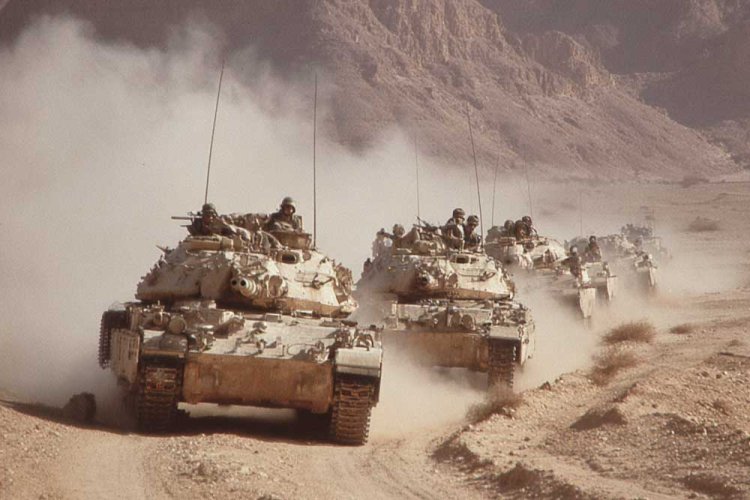 Illustration
When the war broke out, the situation quickly became catastrophic. The unit was attacked from all sides, with little hope of survival.
The turning point came on October 7, 1973, inside the Tel Saki bunker.
“Yes, I was also taken captive on October 7,” Nagerker says. “Our tank was hit by an RPG and disabled. We were ordered to evacuate to the bunker. At first we refused, preferring to fight from the tank, but we had no choice.
“Inside, we found wounded soldiers and treated them. I tended to a fighter with a severe abdominal wound. Our beloved commander, Yoav Yakir, lay there lifeless. He was killed fighting face to face with the enemy.”
“I Told Them: ‘I’m Surrendering’”
“The bunker was filled with dead and wounded. The tension was unbearable,” Nagerker recalls. “The commander, Menachem Ansbacher, despite being badly wounded, radiated calm. He took out a Book of Psalms and read aloud. He promised that when the war ended, we would all meet in Tel Aviv for a celebration. It sounded unreal.
“Then a grenade exploded at the bunker entrance. Everyone dropped to the ground. I was the only one still standing.
“Ansbacher said, ‘Whoever can go out and tell them we are surrendering should go.’ When no one moved, I put my weapon down and went out with my hands raised.”
Nagerker describes narrowly escaping being shot twice and deliberately understating the number of wounded soldiers inside to prevent a massacre.
“They took me into their armored vehicle. Only then did I feel the pain. My ankle was shattered. They kept shouting ‘tayyarin’ (pilots) because my protective jumpsuit made them think I was one.”
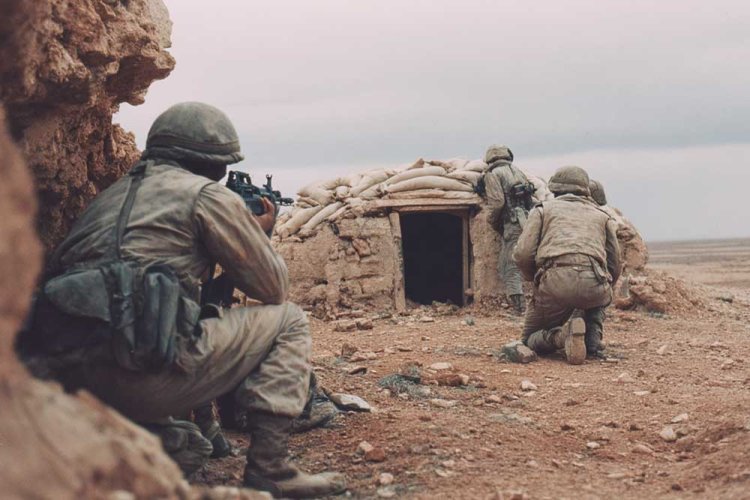 Illustration
Captivity and Interrogation
That night, he was interrogated by a Syrian officer fluent in Hebrew.
“When I said I was a tank crewman, he told me, ‘If we had known, we would have killed you. We need pilots, not tankists.’
“They insisted Israel no longer existed and that we had nowhere to return. I fainted several times from pain, but they got nothing from me.”
After months of harsh conditions, subtle changes appeared: showers, mattresses, disinfected cells. Negotiations were underway.
When another captive entered his cell, Nagerker recognized him immediately. It was the wounded soldier he had treated at Tel Saki.
“When he told me everyone else was killed, everything went dark.”
A Turning Point
The next day, guards ordered them outside. For the first time, they saw sunlight.
“In the courtyard stood Red Cross representatives. A Syrian officer told them, ‘The IDF is 36 kilometers from Damascus.’ That was the first time I understood Israel was fighting back.”
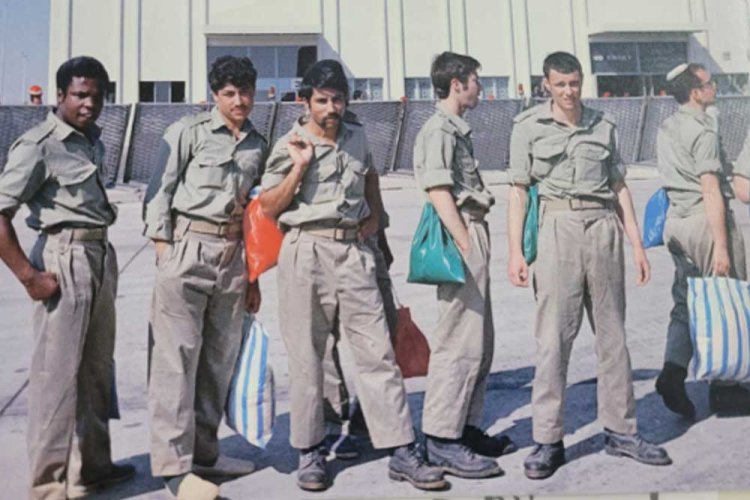 A photo taken during the Red Cross visit: “They wanted to show the conditions were good.”
Coming Home
After eight months in captivity, release finally came.
“I was convinced I would be punished for my decision at Tel Saki. Instead, we landed at Ben Gurion Airport to singing and dancing.”
After security questioning, Nagerker reunited with his family. Then came the final shock.
“A man from Tel Saki told me everyone had survived. You saved them, he said. They were waiting for the celebration Ansbacher promised.”
At his home in Yavne, his comrades were waiting. They had survived until rescue forces arrived the next day.
Nagerker was never punished. A month and a half after his release, he married Ilana, a nurse who treated war casualties. A year later, their first son was born and named Yoav, after their fallen commander.
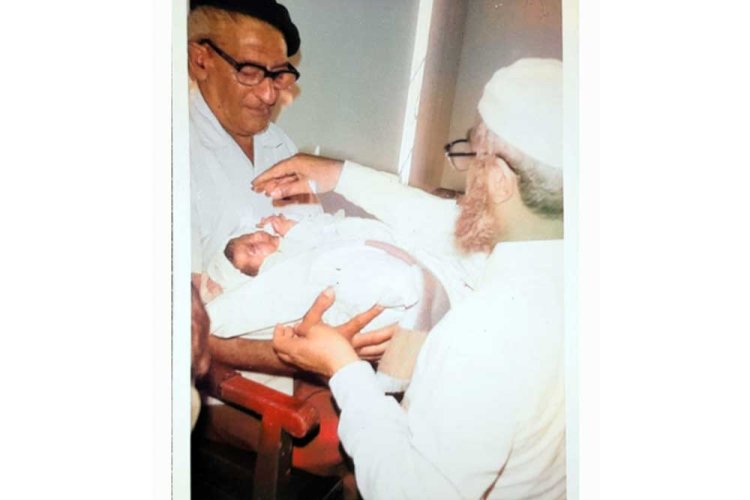 The brit milah of his firstborn son, Yoav, named after Yoav Yakir.
He later returned to live in the Golan Heights and today resides in Katzrin. For years, he has shared his story with soldiers and young audiences.
“There is immense power in understanding how close we were to destruction and recognizing the miracles we witnessed, despite the enemy’s overwhelming advantage. I believe we are still capable of great victories. We must believe and trust.”

