

Magazine
One Man’s Mission to Reunite People with Their Lost Belongings
A forgotten camera, a thousand irreplaceable memories, and one man who refuses to let loss have the final word. Discover the thoughtful and creative ways Baruch Katz helps reunite people with belongings they believed were gone for good.
- Michal Arieli
- | Updated
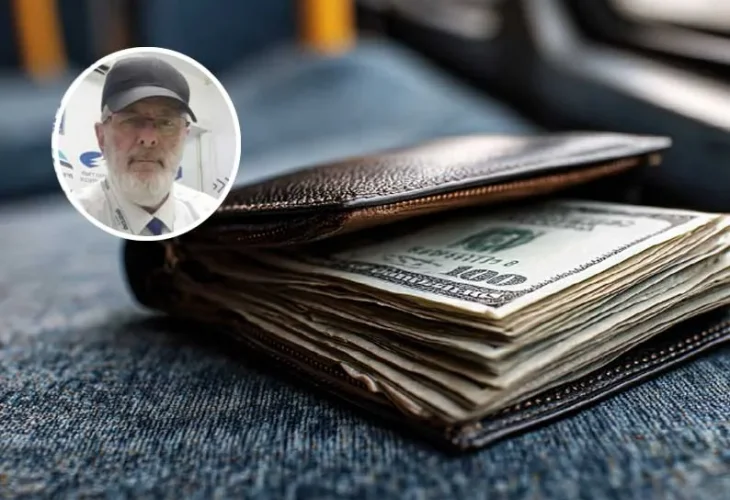 (Inset: Baruch Katz)
The tale you're about to read is entirely true. It unfolded last summer amidst countless vacation stories, centering on one Orthodox Jewish family. It all began during a delightful day trip to the Nachal Kibbutzim area. At the end of the day, as some family children sat on a bus stop bench waiting for transportation, the family's camera was mistakenly left behind.
It wasn't long before the family realized the extent of their loss. The shared disappointment was immense: the small memory card held over 1,000 treasured family photos, documenting priceless moments, including those from the very trip, yet to be backed up. In their despair, they didn't even attempt to reclaim it. They accepted the reality that those memories were lost forever.
Then, unexpectedly, about two weeks later, the phone rang. On the other end was a man named Baruch Katz, an employee at "Superbus," living in Kiryat Tiv'on. To their amazement, he informed them that he had their camera. For the family, the surprise and relief were overwhelming, and they asked how he found them. His answer unraveled an extraordinary detective story.
It turned out that as soon as the camera reached Katz's hands, he opened the memory card and sifted through the pictures. Most were family photos without identifying features, but then he stumbled upon wedding photos the family had attended. By chance, the band's phone number was displayed on a sign on stage. Katz didn't hesitate. He contacted the band, inquired which family hosted the event on that date, received the details of the newlyweds, and one of them recognized the family from the photos. Thus began a complex search that ultimately reunited the family with their memories.
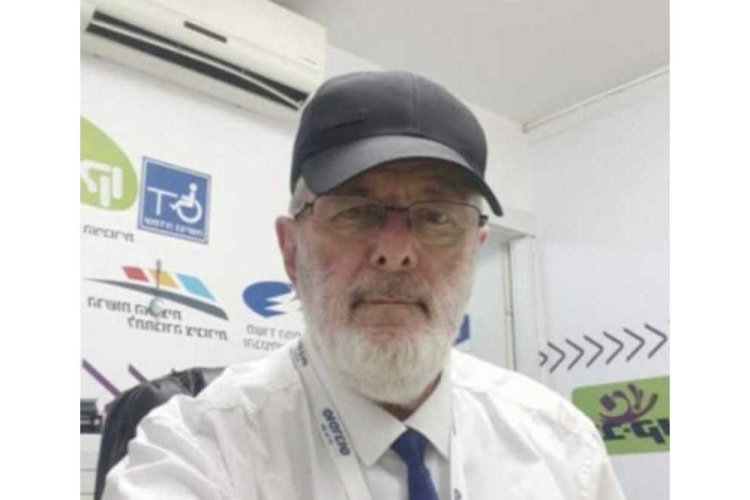 Baruch Katz
The "Detective" of Lost Items
Meet Baruch Katz, a resident of Afula, whose age is nearing 80. However, his prowess in locating lost items is that of a young man, and it seems there's no avenue he won't pursue to help people reclaim what they've lost.
"I was fortunate to return to observant Judaism in the late 1980s, thanks to young people who came to my home ahead of elections," he shares. "During those days, the Degel HaTorah party was established, and they wanted to speak with me about it. Somehow, we connected, and later I got to know several families from the nearby settlement of Rechasim, who recommended I attend a seminar for returning to the fold. After a not-too-long process, I returned to religious observance and got married. Today, thanks to Hashem, I have children and grandchildren who observe mitzvot and bring me great pride and joy."
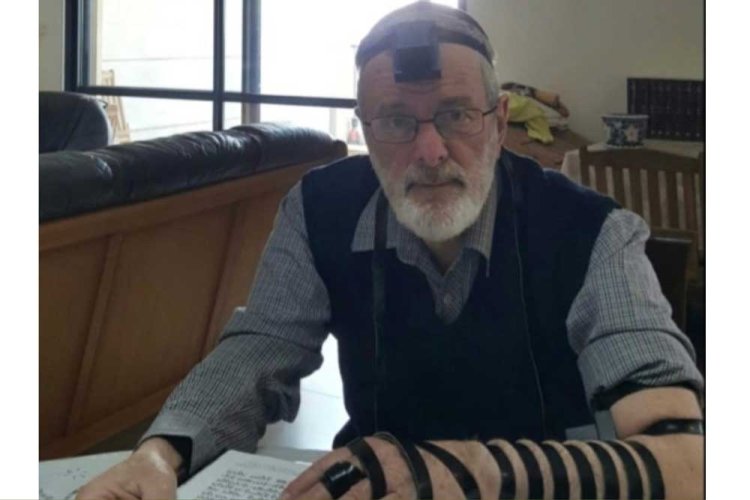 Baruch Katz
Katz worked most of his life as a technician at the nuclear medicine institute at HaEmek Hospital. Upon retirement, he began attending Torah studies. "At some point, I realized financially I needed extra income," he explains. "That's how I found a job at Superbus. I worked initially as an inspector boarding buses across the north, and later, I moved to service positions issuing Rav-Kav travel cards."
"In my role at the service desks, I often encountered drivers bringing in lost items found on buses, requesting we hand them to the company according to procedures. The company collects these items, waits a few months for someone to claim them, and if no one does, they're usually discarded or donated."
"I often felt a pang in my heart. There were objects that seemed so valuable and important to their owners, and it pained me that they wouldn't be returned. I asked the company for permission to handle lost items, and since then, I occasionally receive bags full of items found on buses; usually cell phones, earphones, and wallets, sometimes cameras, and lots of keys."
"I try to be proactive; instead of waiting for people to reach out, I attempt to contact them myself. Sometimes it's easy when contact details and phone numbers are written on the item, but other times it's more challenging, like with dead cell phones or wallets without any identification."
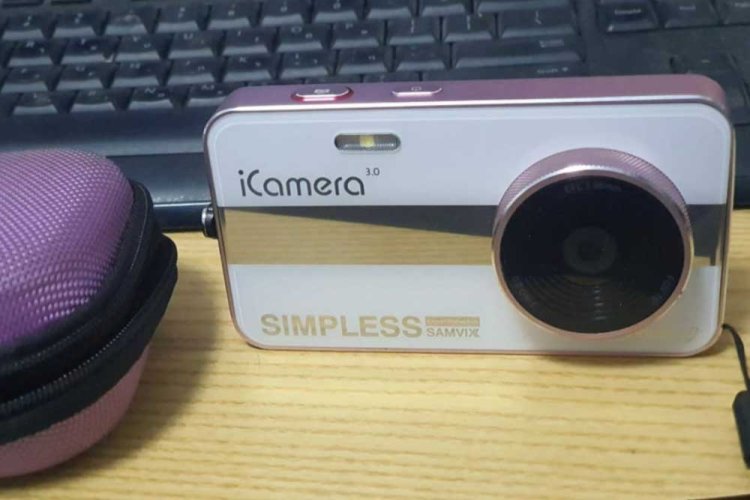 A lost camera yet to be returned to its owner.
Creative Approaches
Katz never gives up, striving to reunite lost items with their owners through creative methods. "Once, a wallet was found in Tiberias with a booklet containing phone numbers, something now uncommon. I tried calling one of those numbers and found out the wallet belonged to an important rabbi who was delighted to get it back."
"When it comes to wallets, they often have credit cards with the owners' names. If the name isn't common, I sometimes find them on 144 or Facebook. In many cases, it's a very common name, but even then I manage to crack the mystery, for instance, when I identify the owner's bank branch area through the last digits of the number, allowing me to make contact."
"Unfortunately, both banks and health funds refuse to provide contact information, so even when I have people’s names, including their ID numbers from the cards, it's not enough to find them."
Do you find money in wallets?
"Sometimes there are coins, but usually not significant amounts. I don't know if that's because people take them out, or they were never there to begin with."
"One day, a wallet with 1,400 shekels came my way. It had a name on it, and I managed to locate the owner using 144, getting the address and phone number, but when I tried to call, there was no answer. Since he lived in the Hadar neighborhood of Haifa, about a half-hour's drive from my home, I decided to make a special effort and drove up. Upon arrival, I found an old, very dilapidated building. At the entrance, a neighbor confirmed the man lived in the building, on the top floor. I climbed up, knocked on the door, and a very elderly, solitary man opened up, explaining his mobile had fallen into water, leaving him cut off for weeks. When I returned his money, he was genuinely happy, and we even took a picture together."
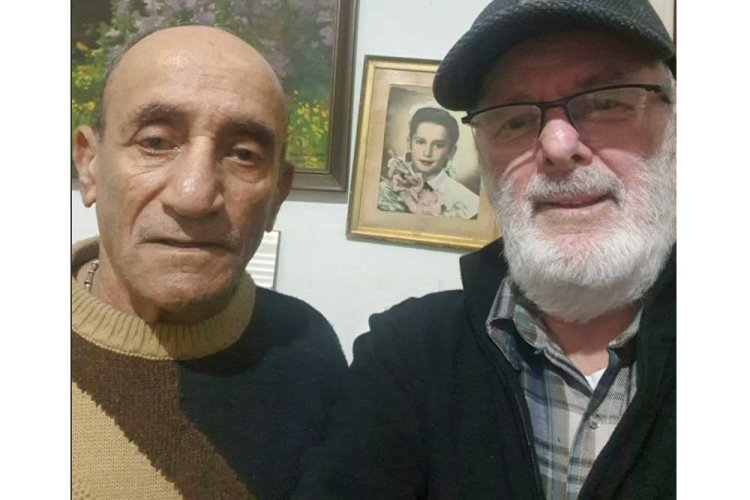 Personally returning lost money to its owner.
 Unexpected Surprises
Another kind of lost item is keys of all types and sizes. "The big problem with keys is they usually lack identifying marks, making it hard, or almost impossible, to find their owners. Here, I'd mention there's a simple accessory sold in stock stores; a tag that can be filled with personal details and attached to a keyring. This can greatly aid in safeguarding keys. When people express concern about posting personal details, fearing break-ins, I reply that, from my experience, most people are honest and use identification details to find owners, not to rob them. Anyway, if worried, they can write a relative or friend's details and inform them should anyone call."
"Once, I found a key ring with ten different keys, from all kinds and sizes, at a central station. Initially, it seemed there was no chance of tracing the owner, then I discovered a detachable disk attached to them, with a picture of a person I personally know living about 100 meters from the central station. Of course, I contacted him and delivered the keys."
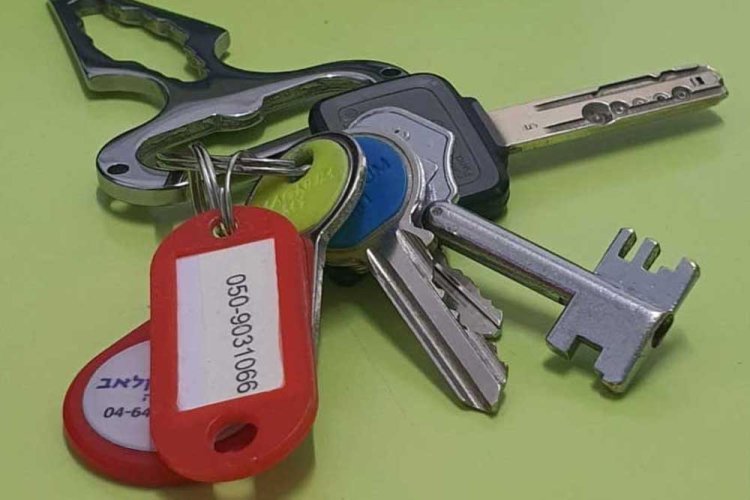 Attach a tag to your keys, and they'll be returned to you
"Another method I occasionally use to find people, when I have an address but no phone, is by locating a nearby business. I contact them, asking if someone could drop by the address to find the person."
"There was a time I found a girl's wallet from Jerusalem, with an unknown street address. While I couldn't find her phone number, mere minutes later, I discovered another item from someone living on the same street. It was such a rare occurrence, like winning the lottery. This item had a contact number; when I called to arrange the return, I inquired if he knew the girl. He didn't, but agreed to visit her house and let her know I was looking for her. The next day she reached out, and of course, got her wallet back."
How do you return the found items to their owners?
Katz is thrilled to explain how much the Jewish community loves to help. "Almost everyone I contact turns out to have an acquaintance or relative in the north happy to coordinate a meeting place and pick up the item from me. I see so much divine assistance when people say 'we have a wedding in that area,' or 'we need to be there next week,' illustrating how everything happens with private supervision."
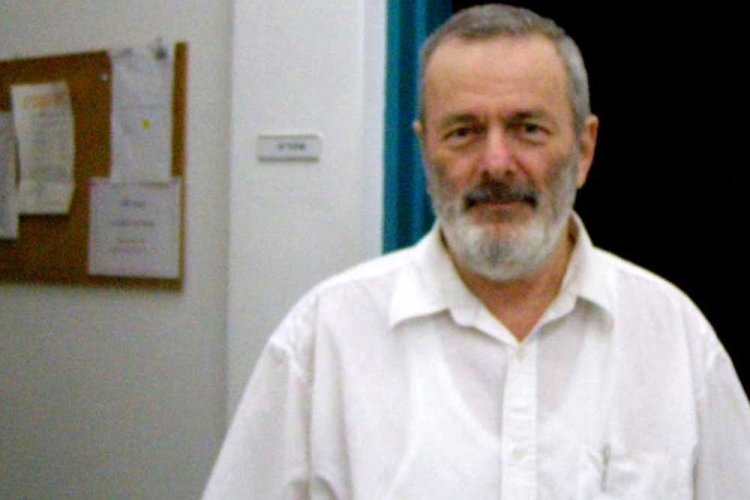 Katz during his work at HaEmek Hospital
What happens to items whose owners can't be found?
"I return them to the bus company, and they donate them, but the person who lost them remains with a bitter taste and a sense of loss, which I find very hard to bear."
This motivates him to transmit a crucial message: "If you have belongings dear to your heart, don't neglect them, and simply label them with a name and phone number. You can even stick a name and another relative's or family member's number on phones or enter them as an emergency contact and note whose they are. While we're all confident 'we'll never lose our stuff,' unfortunately, it happens more often than we realize. Trust me, people are always happy to help and return your things; you just need to make an effort on your part."

