

Magazine
Rediscovering a Hidden History: The Yemenite Village Lost to Time
Why did Yemenite Jews come to live among the rocky hills of Jerusalem, and what forgotten documents surfaced in a dark basement decades later? Gadi Bashari, chairman of the Kfar Shiloach Council, guides us through the village’s hidden history.
- Chaim Gefen
- | Updated
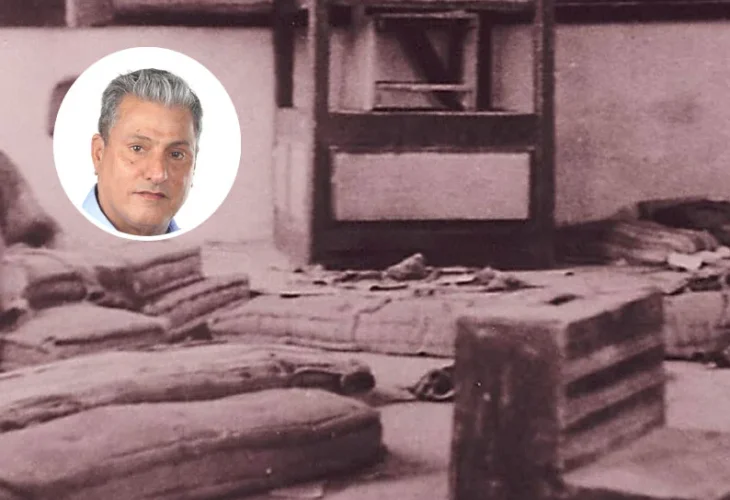 The synagogue in the Yemenite Village post-1938 riots. Inset: Attorney Gadi Bashari
In East Jerusalem, within the neighborhood of Silwan, lies the Yemenite Village. Along winding slopes and deep valleys stand the ancient houses once inhabited by the elders of the Yemenite community. Surrounded by the neighborhood of Ras al-Amud on one side and Jabal Mukaber on the other, the village rests deep within the mountain, as if safeguarding historical memories that were nearly lost over the years.
Since attorney Gadi Bashari assumed his role as chairman of the Council of Kfar HaShiloach, he has made it his mission to tell the story of the Yemenite Village. “This was the first Yemenite neighborhood established in Israel, yet it vanished into the pages of history, to the point that it is almost entirely absent from the Zionist historical narrative,” he says with pain.
Living in Caves
The story of the neighborhood begins in 1881, with the first immigration of Yemenite Jews to the Land of Israel, known as the “A‘aleh BeTamar” aliyah. At first, they lived in Jerusalem’s Old City, but their dire economic situation did not allow them to purchase homes or even continue renting them. As a result, they were forced to leave and head into the unknown. When they reached the slopes of the Mount of Olives, they discovered caves and hollows carved into the mountainside and, with no alternative, moved into them.
“At that time, Jerusalem was under Ottoman rule, and the authorities would go from house to house, forcing Jewish residents to enlist in the army. Living in caves was born of economic hardship, but it also spared them from forced conscription into the Turkish army,” Bashari explains.
“Life in the caves was extremely difficult. They were damp, with almost no air, yet families had to maintain normal household life within them. One can imagine how, at night, darkness enveloped the entire area and the caves became frightening and threatening. But the yearning of Yemenite Jews to live close to the site of the Temple overcame every hardship and obstacle. This was the yearning that brought them to the Land by any means necessary, and the same yearning that led them to endure lives of suffering, as long as they could be as close as possible to the place of the Temple.”
Do those caves still exist today?
“Today, the entire area has changed completely. Silwan expanded, and its Arab residents built many homes there. In the past, the area was entirely mountainous, but as construction spread, it covered more and more of the caves. That construction essentially buried the history, and to this day, no documentation of even a single cave has been found.”
Forced into Exile
A few years later, when pioneers of Jewish settlement in the Land of Israel, led by Israel Dov Frumkin, became aware of the harsh conditions endured by the Yemenite immigrants living in caves, they established a neighborhood for them to settle in. It was called the Yemenite Village, more commonly known as Kfar HaShiloach.
“The village continued to develop and fill with residents until more than one hundred families lived there. The residents enjoyed a calm and close-knit communal life, and the village became the central residential hub for Yemenite immigrants in Israel in general, and in Jerusalem in particular.”
During the Arab Revolt of 1936–1939, Arab rioters destroyed many Jewish neighborhoods in Jerusalem and throughout the country. The residents of the Yemenite Village also suffered from local Arab violence, during which Shlomo Madmoni z"l, was murdered while attempting to save the community’s ancient Torah scroll. On the orders of the British authorities, who refrained from protecting the village’s residents, the Jews abandoned their homes and property and scattered in all directions.
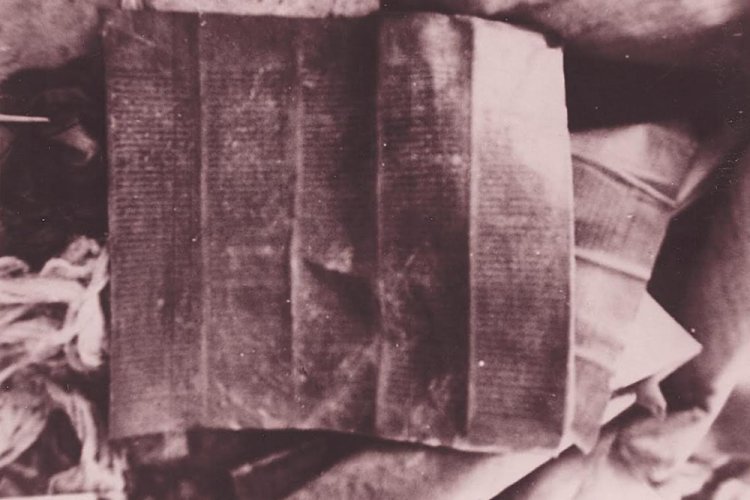 Desecration of the ancient Torah scroll
“Some moved to other neighborhoods that were being established in Jerusalem, while others relocated to developing settlement points in central Israel.”
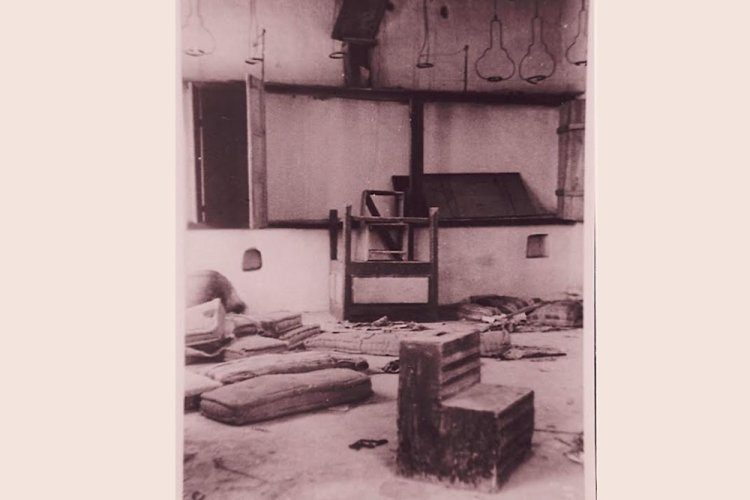 Destruction of the synagogue by Arabs in 1938
That was a return to exile.
“Exactly. At that time, there was still no other place in the country with a concentration of Yemenite Jews, and they were forced to integrate into different communities that were foreign to them and their traditions. This occurred even before the establishment of the state, when Yemenite neighborhoods such as those that exist today had not yet been founded. In this way, one of the largest Yemenite Jewish communities in Israel effectively disappeared.”
The Shofar Sounds in an Arab Village
In the heart of Silwan, within the Palestinian neighborhood of Batn al-Hawa, stands the ancient synagogue of the Yemenite community. The synagogue was destroyed and looted during the Arab Revolt, and its ancient Torah scroll was desecrated. In the years that followed, an Arab family from the village infiltrated the building and lived there. In 2015, after a lengthy legal process, the court ruled that the synagogue be returned to its Jewish owners. Thus, 77 years after it was abandoned, it returned to Jewish hands.
“This is the only neighborhood synagogue that remains from that era,” Bashari says. “In recent years, Jewish resettlement has been renewed in the area, and as part of that process new synagogues and study halls were established, but the Yemenite synagogue is the only one from those days that still exists.”
Are Yemenite traditions preserved there?
“That is a painful question. From the time the Yemenite Jews left until today, regular prayers in a distinct Yemenite rite have not taken place there. Recently, however, we launched a moving initiative: an annual Selichot event attended by many members of the community, with piyyutim and melodies according to the Yemenite tradition. At the conclusion of the Selichot, the traditional shofar blast is sounded, and many participants take out the shofar they brought with them and join together in a long, rising blast.”
Bashari notes that due to the area’s complex security sensitivity, the annual event takes place with a heavy police presence. “Even entry into the village is done via bulletproof buses, which transport participants in and out safely.”
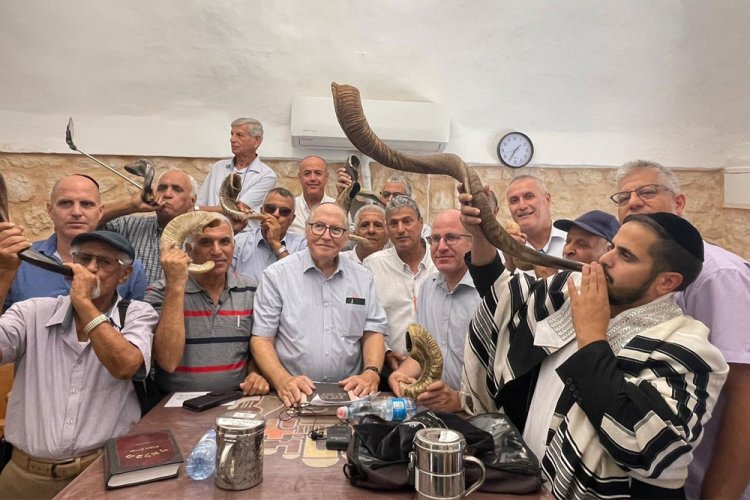 The annual Selichot event in the Yemenite Village
Documents in a Basement
As part of the activities of the public council of Kfar HaShiloach, headed by Bashari, many heritage events are held throughout the year. One of them is a memorial event for Moshe David Gaon, the father of singer and creator Yehoram Gaon, who in his public roles persuaded the British administration to protect the property of the neighborhood’s residents from Arab looting. Prominent rabbis and public figures take part in the annual event.
Another recent event was an exhibition of documents documenting Jewish life in the Yemenite Village. “These are historical documents containing reports and certificates related to the Jews of the village, most of them signed by the village mukhtar, who in practice led the community both spiritually and administratively.”
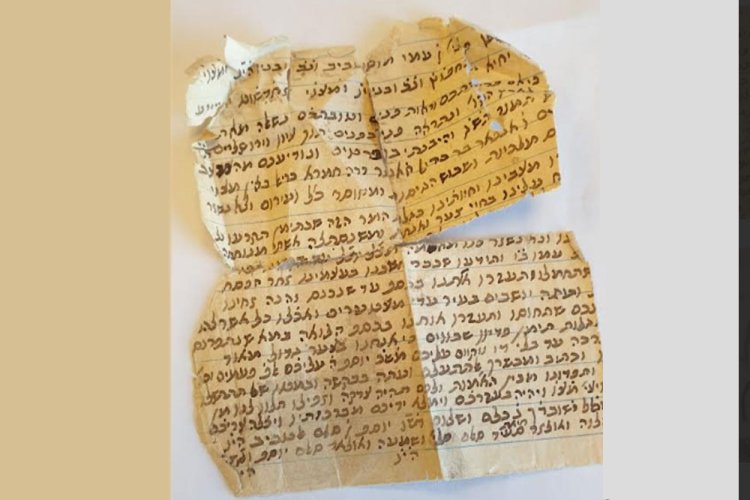 A document on Jewish life discovered in the Yemenite Village
Where did you find these documents?
“By chance, a Jerusalemite family contacted me and told me they had found a box filled with old documents in a dark, gloomy basement. When I was exposed to them, I discovered authentic testimonies of Jewish life in the village. It was deeply moving and surprising,” Bashari recounts. “In order to preserve the heritage, we displayed them in a special exhibition, so as to remember and not forget the Jewish lives of Yemenite Jews in the village, lives that once were and are no more.”
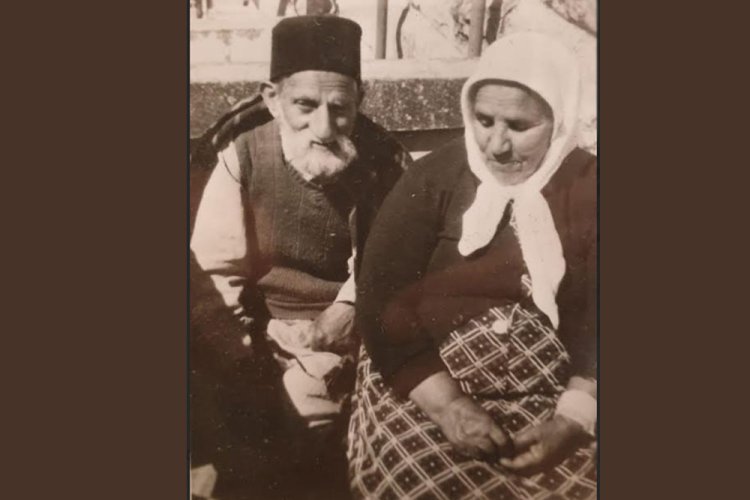 The elders of the Yemenite Village
