

Magazine
From Romanian Christian to Biala Chasid: The Incredible Journey of Ilan Blumenfeld
After learning he wasn’t Jewish, Ilan embarked on a long spiritual search — from army service and exile abroad to conversion, marriage, and a life of deep Torah study
- David Fried
- | Updated
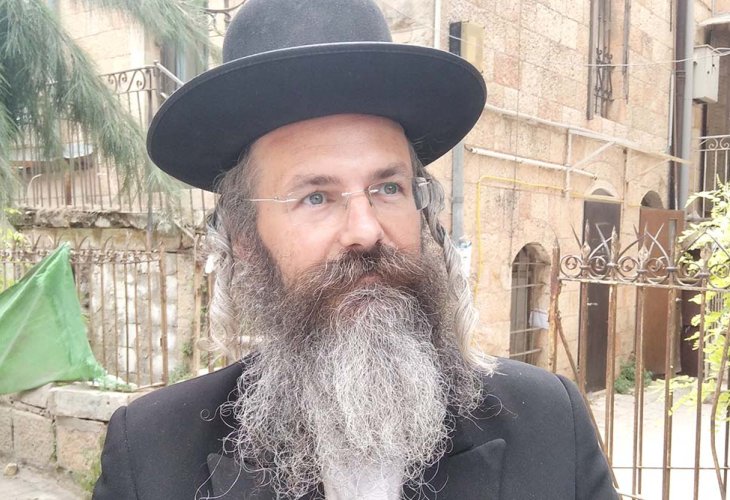 Ilan Blumenfeld
Ilan Blumenfeld speaks in a quiet, noble tone. It’s hard to believe that this man, whose speech is full of quotes from the Sages and Midrash, did not grow up most of his life as a Jew. Even his close acquaintances have trouble believing he wasn’t born Jewish when they first discover it, as he himself tells us. It is even harder to believe when you see his daily schedule: a diligent kollel student who learns Torah day and night and lives close to his great Rebbe, the Rebbe of Biala.
We sit down with him for an interview in which he agrees to share the story of his life.
“I was born in Romania,” he begins. “My parents and I immigrated to Israel when I was about three years old. We used my father’s Jewishness to obtain Israeli citizenship. For us, coming to Israel was purely a practical decision. At that time, Hungary was under communist rule, and life in that Eastern European country was unbearable.”
For his parents, the simple solution was to move to Israel, where they were received with open arms thanks to the father being Jewish. Or, in Ilan’s own words: “God arranged that we would come here.”
A Chilling Discovery
In Israel, young Blumenfeld entered the secular school system, and there was no visible difference between him and his classmates.
“Unfortunately, in the general education system they don’t really build a Jewish identity,” he says. “So I grew up with almost no real connection to Judaism. Here and there they taught us some Jewish concepts, but it’s doubtful you could call that ‘Jewish studies.’ We knew that on Chanukah you light candles, on Shavuot you splash water, and somewhere in between there’s Purim where you wear costumes. Lots of folklore; very little of the deep content the Jewish people actually has to offer.”
During all that time, Blumenfeld had no idea he was different from his Jewish friends.
When he turned 16, he found out in the most unexpected way.
“I came, all excited, to the Ministry of Interior to get my identity card,” he recalls. “In the middle of preparing the documents, the clerk in front of me muttered something under his breath, then said while typing: ‘Religion: Christian.’ At first I was sure I hadn’t heard correctly, and I asked him just to be sure if he was writing down that I’m not Jewish. To my surprise, he said yes. I was in shock. When I asked why, he answered that it was because my mother is not Jewish.”
Even after all these years, Blumenfeld can’t forget that moment. “It was a real trauma. It’s hard for me even to describe what I felt then. As a secular kid I didn’t really know Judaism up close and I didn’t know what I was missing. But still, to discover in the middle of life that you’re different from all your friends, that you, who grew up thinking you were a regular Jew, are actually not – that was anything but simple.”
At that stage, Blumenfeld decided he wanted to understand what this Judaism was – the Judaism he formally did not belong to. He wasn’t thinking about conversion, but about understanding.
It was before the modern digital age, and he didn’t really have where to look things up. “Today,” he says with a smile, “the picture is completely different thanks to the big Jewish site ‘Hidabroot’, which is full of content – and which helped me a lot later on. I owe Hidabroot a great deal for all the help they gave me, and for me this conversation with you now is a kind of closing of a circle.”
At that time, however, the “Hidabroot empire” didn’t exist yet, and Blumenfeld decided to make use of the fact that he lived in the city of Rechasim to gather information about Judaism.
“At that time, the city was filling up with Haredim, and I, like many other secular residents there, looked very negatively at the growth of the Haredi public. I saw them as parasites and weirdos, exactly as the mainstream media presents them day and night. But at some point I realized they could be a learning resource for me – because who knows what Judaism is better than they do?”
“I started asking questions, wondering, trying to understand. It was very unusual – this connection between me, the non-Haredi young guy, and the Haredim in a city that was going through battles: from burning tires in the town square to loud demonstrations against the Haredi public. There were scenes of secular youth coming every Shabbat near the synagogue and honking in provocation. Back then I supported this; today I shudder just thinking about it.”
“The secular people who did this felt very angry about being pushed out because the Haredi public was growing in the area. I, at first, was on the secular, protesting side – but later, as I said, I began to take an interest in Judaism. I worked with a Haredi man in a carpentry shop, started connecting with Haredim to better understand what Judaism is. My new friends directed me to a rabbi who works with youth who want to get closer. Ironically, I started to keep Torah and mitzvot, according to my very limited knowledge – even though I wasn’t Jewish. But since I hardly knew anything, I didn’t really keep the commandments properly. I accidentally desecrated Shabbat. As a side note, only later would I understand that in fact I was required to desecrate Shabbat, since I wasn’t Jewish. But at the time, I tried to reinvent the system, and to keep a kind of Judaism without converting.”
A Family Burden and an Impossible Choice
One day, one of his new friends suggested he join a yeshiva so he could deepen his knowledge of Judaism. But Blumenfeld knew immediately he couldn’t do it.
“In my teens, there was a period when my family and I moved to the United States,” he explains. “During that time my mother got divorced. It was just me, another brother, and two sisters – and we came back to Israel. During our return to Israel, my brother died from addiction to dangerous substances, and I remained the responsible adult who protects and supports my mother and two sisters. Because of that, the option of going off to a yeshiva simply wasn’t on the table for me at that point.”
In the Army With a Rifle
When Blumenfeld reached draft age, like all his friends, he joined the army.
“In the army I became much weaker in my search for truth. After I later entered the Haredi world I understood those who say the army is not suitable for Haredim. Even I, a non-Jew who was chasing after Judaism, grew weaker during my service.”
But while he drifted away spiritually, in the military sphere he succeeded greatly.
“I served in Battalion 50 of the Nahal Brigade,” he says. “At that time we were in Gush Katif and its surroundings. It was relatively quiet, but there were definitely incidents and shooting, and I integrated very well into the army.”
Blumenfeld served as a sniper, providing cover from a distance.
From his service near the Gaza Strip, he remembers very well one incident where he almost shot a Palestinian Authority force.
“I was covering our troops from a nearby rooftop when a Palestinian police patrol approached them. Both sides – Israeli and Palestinian – started arguing and pointing their weapons at each other. The Palestinian policemen had no idea that I was backing up the Israeli forces on the ground. I could have taken them down in a second, before they managed to do anything, and I did lock my sights on them. Luckily, after a few moments that felt like an eternity, both sides lowered their weapons.”
Later, Blumenfeld was transferred to the Lebanese border.
“There, we did less operational activity and more exercises preparing for a possible confrontation on the border. The elite units did most of the field work.”
Even so, most of his service was in Gush Katif and the area around it. “From time to time we were required to carry out arrests of terrorists there,” he recalls, “but it was very different from what we see today in Jenin, with the intense clashes happening there. Back then it was simpler.”
Interestingly, even though his spiritual search was weaker, Blumenfeld still held on to certain Jewish practices in the army.
“I ate kosher food in the army, because that’s what’s served there, but I also put on tefillin and prayed every morning, even though not all the soldiers around me did that. I still had that searching drive within me, and once I understood that this was God’s will – I decided that’s how I would behave. I wasn’t Jewish yet, but I already saw myself as a Jew,” he emphasizes.
From Parties to the World of Torah
After finishing his military service, the young Blumenfeld decided, like many others, to travel abroad on a post-army trip.
“Unlike many of my friends, that trip was for me part of my ongoing search for my purpose in life, and came from the feeling that I needed, at that stage, to distance myself from Israel.”
Without thinking too much, he boarded a flight to Canada. The reason for this unusual choice, while his friends chose the Far East, was that his mother’s brother (his uncle) lived there, which made it easier to settle in.
Blumenfeld would later learn that everything that happens in this world is guided from Above. It turned out that his uncle lived in an area with a significant community of Haredi Jews. The next step was his integration into the local Jewish community.
“I started making a living as a baker in a bakery owned by a local Haredi Jew. He welcomed me with open arms when he heard I was from Israel, and I, for my part, served him faithfully for five and a half years.”
At this point came a period Blumenfeld would rather erase from his memory.
“At that time I met other Israelis and we decided to start ‘enjoying life’ – in the way I then thought enjoyment was – before I knew Judaism and the true pleasure of a Jew in this world. We became very close. We had a friend there who was a musician, we started going to parties, and unfortunately we drifted far from anything with even the faintest Jewish spark.”
“One time I was walking with my friends through the forest, just before another party. I was happily thinking that God was walking beside me and guarding me, and that very soon the Messiah would come and redeem us – all while I was on my way to this party. Then I suddenly stopped my thoughts and challenged myself with a question: ‘Why are you so happy, if this is what you’re doing now and these are your friends? Is this how you prepare for the Messiah’s arrival? What about a family? What about children? You haven’t even fulfilled the basic mitzvah in the Torah yet...’
That inner voice was stronger than me and echoed in me the whole time I was with those friends. They didn’t understand what was going on with me, but I had already made a decision.”
“A few days later I was already on a plane heading back to Israel. I was full of determination and understood that until now I had wasted my life, and that the time had come to pull myself together. At that stage, the Hidabroot organization entered the picture and gave me a lot of valuable information that helped me greatly. There were also rabbis I remembered from my time in Rechasim, and I reconnected with them.
I understood that I had to disconnect from my old friends and moved to live with my mother in Haifa, where I found work as a baker.”
Beginning the Conversion Process
Right around then, Blumenfeld began the process of conversion.
“My friends from the Biala synagogue, where I had been praying as a non-Jew, looked at me as if I had dropped on them from the sky when one day I asked them to come and testify for me in the rabbinical court as part of my conversion process. They had never known that I wasn’t Jewish, and honestly, they had no way of guessing that the man who had been praying next to them every morning was not a Jew…”
Blumenfeld’s connection with the Biala Chassidim also brought him into contact with the Rebbe of Biala, after one of the Chassidim made a family celebration and the Rebbe came to spend Shabbat in Haifa to participate.
“I had the merit to accompany the Rebbe on his way back to his lodgings, and for about half an hour I told him my story. Afterwards, the Rebbe invited me into his room and, with his far-reaching vision, instructed me to move to Jerusalem and join a yeshiva there so I could learn Torah.”
Like a true Chasid, Blumenfeld obeyed without hesitation and moved to Jerusalem that very week. That was also the beginning of his personal salvation, after the mashgiach (spiritual supervisor) in the Jerusalem yeshiva suggested a match.
“It was a woman who had come to Israel from China to work with a child suffering from muscular dystrophy. She took care of him, and during that time he told her many stories about Judaism and the Jewish people. After five years the child passed away, and she decided to deepen her Jewish studies and converted. The yeshiva’s mashgiach immediately understood that this suggestion was meant for me from Heaven. After we met, we decided to move forward.
We got married – but not before I did an additional, more stringent conversion (‘giyur l’chumra’) under Rabbi Brandsdorfer so that the Rebbe of Biala would agree to serve as the officiating rabbi at the wedding.”
After their wedding, the couple continued to live in Jerusalem, with his wife serving as head nurse / coordinator in the eye surgery department at Shaare Zedek Hospital in the city.
“She works very hard,” he says. “Her workday starts at 8:00 in the morning and ends at 8:00 in the evening. She does all this so that I can sit and learn,” he adds emotionally.
And while his devoted wife works herself to the bone in the eye department, helping restore physical sight to her patients, her husband sits and learns Torah with great diligence, helping to “open the eyes” of the Jewish people spiritually.
“Today There Are No ‘Captive Children’”
Today, 42-year-old Ilan Blumenfeld looks back on his years of searching and does not regret a thing.
“It was all for the good,” he says from his home in the Tzephania neighborhood of Jerusalem, from where he walks every day to learn at the ‘Torah VeEmunah’ kollel. In between, he cares for their three children while his devoted wife supports the family.
From the perspective of someone who went through a long journey to join the Jewish people, he believes that the conversion reforms being suggested by various elements, in and out of the government, are very dangerous.
“This is something that must not happen. The reform could seriously damage the integrity of Jewish identity. Even as things stand, anyone who converts has to have full documentation proving that they converted in the strictest and most halachically valid way – otherwise they and their family will encounter many difficulties.”
As a closing message, Blumenfeld wants to clarify, as someone who came from “out there,” that today there is no such thing as a “tinok shenishba” (a “captive child” who never had a chance to know Judaism and therefore is not responsible for their distance).
“There is no such thing in our generation of knowledge,” he insists. “If someone in the non-Haredi public will just show a little interest or ask a bit, he’ll reach the truth very quickly. Today there are enough places and people where you can find answers to the hard questions. Just as I said to myself that it’s impossible that so many Jews sit and learn day and night for nothing – after all, they are the ‘People of the Book’ – and that insight led me to the truth, so too anyone can and is able to reach the truth.”
“And to my Haredi brothers,” he adds, “I want to say that after I entered the Haredi world I discovered that some people look at the secular public and think they’re out there having fun and enjoying life. But those who think this way don’t understand that it’s simply not true. When you live without Torah and mitzvot, you are in a state of emptiness. Even if you have some small pleasure, it’s completely momentary. When a person has no inner meaning, his life are empty of content.
I discovered this on my own flesh – and only when I came into the Haredi world did I feel that I was finally being filled with real content.”

