

Magazine
Life on the Streets of Jerusalem: Inside the Hidden World of the City’s Homeless
A social worker from Jerusalem’s Street Dwellers Unit explains how people end up living on the streets, the social and emotional realities of homelessness, and the long, complex path to rehabilitation and hope
- Efrat Talia Cohen
- | Updated
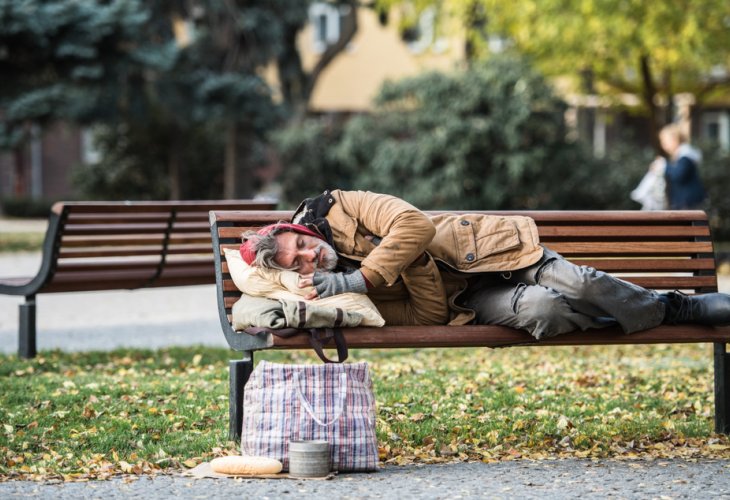 (Photo Illustration: Shutterstock)
In almost every city there are people you see from time to time, who are often hard to miss. They find themselves living on the streets, sometimes sleeping in public parks, in abandoned shelters, or on benches. Many of them have no one in the world besides the few other people they get to know over time. Some have families they left behind — sometimes even children — and in most cases, they are completely disconnected from them.
Nobody is born on the street. Every person has a story about how they ended up there.
“The most unbelievable story I remember is about a professor who had a respected academic career,” says social worker Itai Shay. “Under certain circumstances his financial situation collapsed, and he eventually found himself living on the street. When we first met him, we had no idea who he was.
On the street, people tend to look very similar… after weeks without showering, growing long hair and nails, wearing the same clothes — you look just like everyone else around you.”
Shay has been working for about a year as a social worker and team leader in the Street Dwellers Unit of the Jerusalem Municipality. We speak at the end of another long day for him, somewhere between putting his kids to bed and dealing with daily life. Still, he makes time to talk — because this work is deeply meaningful to him.
Alongside him work seven other social workers, a department director, and a field counselor — all sharing one powerful mission: to save the people living on Jerusalem’s streets.
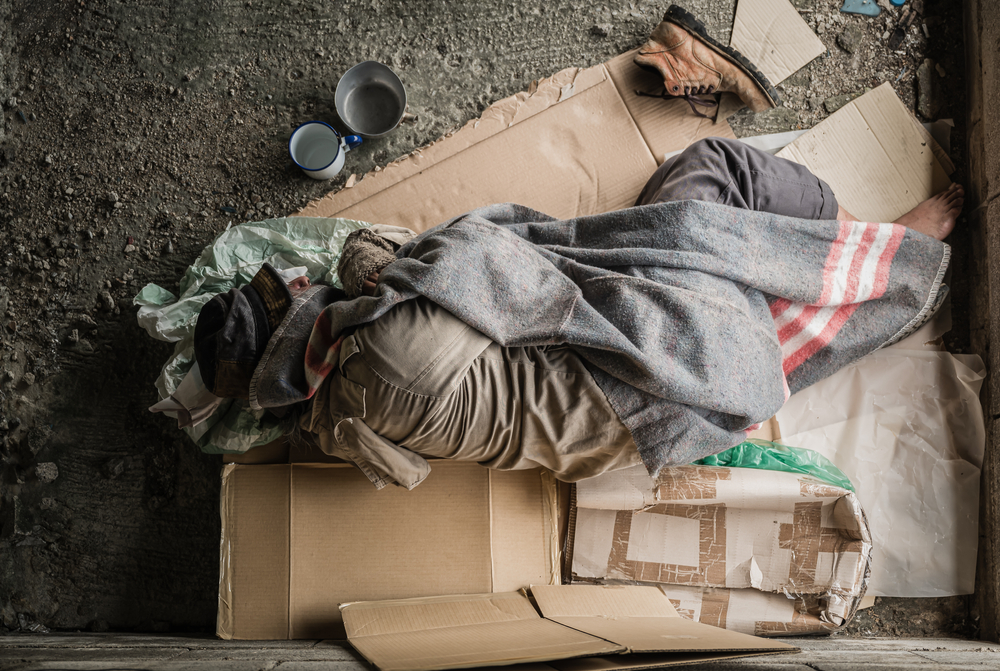 (צילום: shutterstock)
How does someone end up living on the street?
Shay gives a painful but honest answer — one that reflects how deeply human connection matters.
“In general, people become street dwellers when they distance themselves — or become completely disconnected, from the people around them. This can happen because of addiction, untreated mental health issues, paranoia, or other complex situations. Little by little, even their connection with family disappears.
A person struggling with addiction, for example, often reaches a point where they choose the addiction over their family relationships.”
There are also people who are completely “normal,” he says, who sadly end up on the streets after an economic collapse — though that is less common.
“For example, someone who owned property and lost everything — through divorce, financial failure, or losing a steady job. After a while, they have nowhere to live. Rental prices are extremely high and keep rising — and sometimes the ‘choice’ becomes simply sleeping wherever possible: in the street, in abandoned houses they turn into makeshift shelters.
Slowly they drift further away from society. People stop being able to reach them. Their phone gets stolen. They’re pulled into a totally different reality of street life.”
 (צילום: shutterstock)
Why would someone stay on the street?
It’s hard to understand from the outside, but there is also a psychological pull.
“As strange as it sounds, there is something that can feel ‘comfortable’ about the street,” Shay explains. “You have no bills, no rent, no responsibilities. You live day-to-day.
Some even manage to work a little, although that’s rare. It’s hard to hold a job when you wake up each morning not knowing where you slept the night before. Employers don’t want to hire you if you smell bad, haven’t showered, or look neglected — and people living on the street often have nowhere to wash or groom themselves.”
Over time, the emotional and social disconnect deepens. “People fall into severe distress. They feel rejected by society. They lose trust in others — and in institutions, and that’s how many ultimately end up on the street.
Some people think street dwellers are tough or aggressive — but many are actually anxious, deeply distressed, and struggling with serious mental health challenges.”
Survival — food, clothing, and dignity
To survive, many rely on support systems including:
soup kitchens
charity donations
public mikvahs used as makeshift showers
clothing drives and coat distributions run by the unit
And surprisingly, there’s also cultural support.
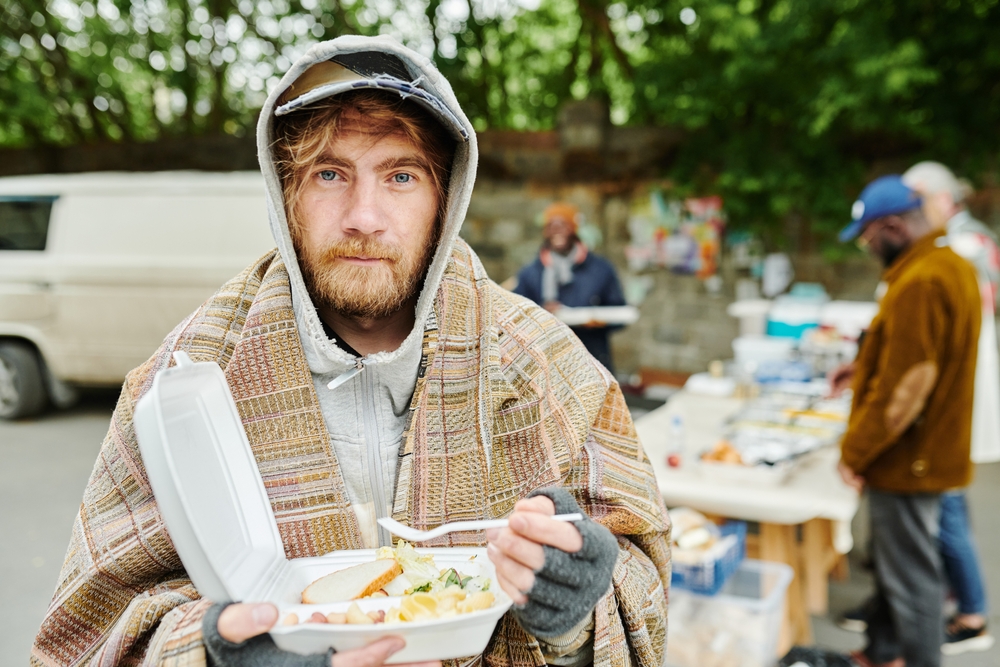
“Once a week we run a day center for street dwellers from all over Jerusalem,” Shay says. “They get breakfast, group activities, music and drumming workshops — and holiday events like Chanukah celebrations or New Year gatherings.
The goal is to gently reconnect them to more ‘normal’ aspects of life.”
 (צילום: shutterstock)
“The street is like nature — there are powerful people and those who are vulnerable”
Street life has its own social structure. “There are stronger figures — often criminal — who dominate others,” Shay explains. “They may drive weaker people away, steal their shoes or coats while they sleep — items that are incredibly valuable on the street — or exploit them.
At the same time, there is also compassion. Many street dwellers support one another. They recognize each other. They seek companionship. Even in the hardest situations, there is still a deep human longing for connection.”
Most people living on the streets, he notes, are men. Many are immigrants from the former Soviet Union who struggled to integrate and fell into poverty and addiction. Women exist on the streets too, but in far smaller numbers.
Families, he emphasizes, do not usually end up living on the streets in Israel — unlike in some countries, because welfare systems intervene when minors are involved.
 (צילום: shutterstock)
The obstacles to rebuilding a life
Even for people who want to leave the streets, the path is incredibly difficult.
The state offers limited rental assistance — but the amounts are small and don’t match rising housing costs. Landlords are often afraid to rent to former street dwellers.
“Will they pay? Will they damage the apartment? Will it be impossible to evict them if needed? All of this makes rehabilitation much harder.”
The unit tries to help:
placing people in basic housing or shelters
referring those ready to rehab programs
assisting with employment and benefits
supporting elderly street dwellers into care homes
running night patrols to locate and engage people
Those unwilling to enter programs are still given coats, blankets, socks, and warm drinks — sometimes simply to help them survive another night.
“It’s like trying to save someone who doesn’t always want to save himself”
The process, Shay says, can be slow, emotional, and often heartbreaking.
“Sometimes we place someone in rehab — and they leave a week later because it was too hard. Or they complete treatment and relapse. Statistically, the first attempt doesn’t always succeed. It takes patience.”
Trust must be earned gently. I try to come from a place of understanding rather than judgment. We may want something better for them — but everyone has their own pace. We respect their choices while staying present so that when they are ready, we’re there.”
What about extreme weather?
In winter — especially during snow — the team intensifies outreach, offering shelter and temporary housing. But many resist.
“After so long alone, the idea of being around people — or inside a structured environment, can feel threatening. Even standing in line is hard. Sometimes they choose the familiar cold street over the unknown.”
Should we give money to people begging on the street?
“There isn’t one right answer,” Shay says.
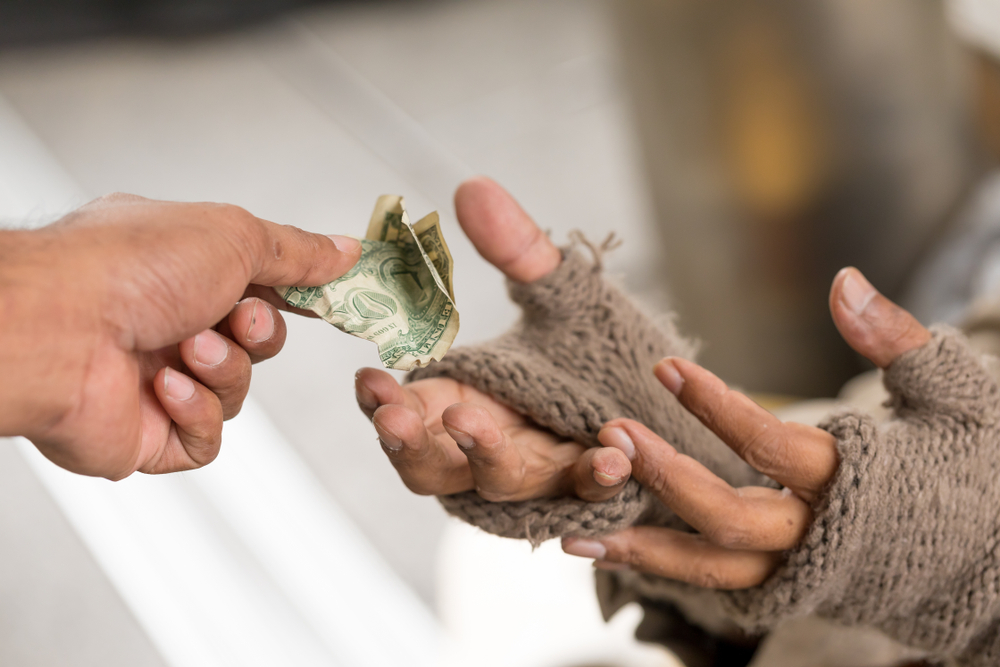
Some beggars are not homeless. Some homeless people use donations for alcohol or drugs, while others save money to rebuild their lives.
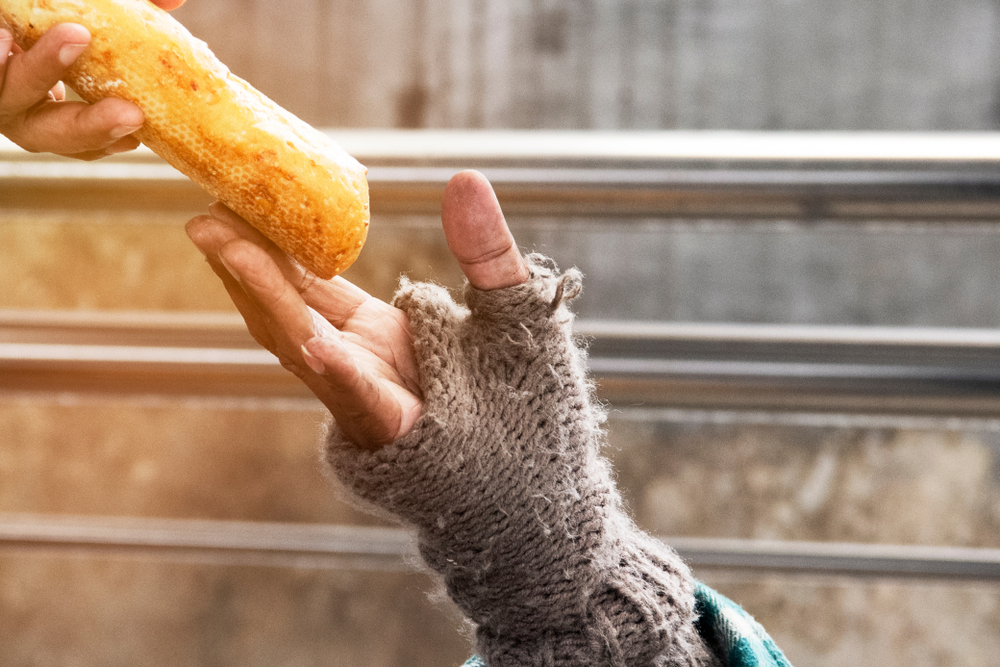
“In general, if you want to help, it’s better to buy food rather than give cash.
But more than anything, they are grateful when people see them, talk to them, and show care.”

