

Magazine
Turning Diagnosis into Direction: Living with MS
After being diagnosed with multiple sclerosis in her early thirties, Reut Rivka Fima’s life took an unexpected turn. She reflects on learning to live openly with illness, redefining strength, and finding new direction and meaning beyond the life she once planned.
- Michal Arieli
- | Updated
 Inset: Reut Rivka Pima
“Each of us walks our own path and knows only the basket we carry in our hands. Sometimes we try to measure whether a friend’s life is better or worse than ours, but we can never truly know the answer, because we have never lived any life but our own.”
Reut Rivka Fima says this with a smile. “I probably sound very philosophical, right? But the truth is, I’m really not a philosophical type at all. If you had met me a few years ago, you would have seen a regular, cheerful woman trying to conquer the world with a successful career in finance, a wide circle of friends, and a loving family. I had never dealt with serious illness or health challenges. All in all, my life was good.”
Then, six years ago, Reut faced the greatest challenge of her life. She was diagnosed with multiple sclerosis, and everything she knew changed completely.
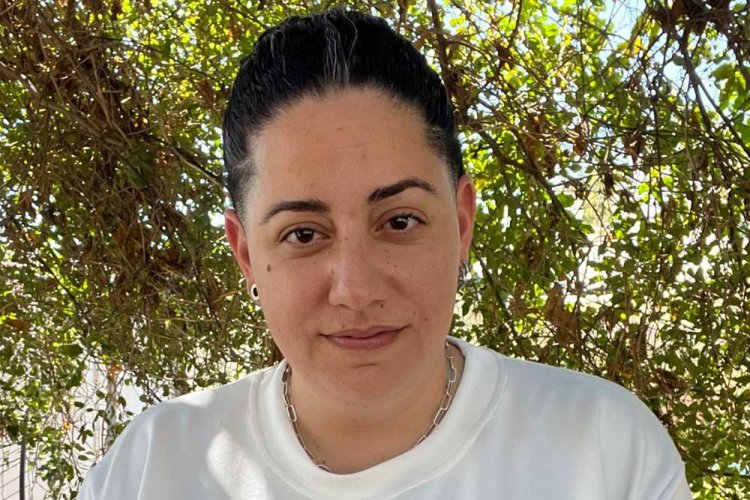 Reut Rivka Fima
The Diagnosis: Multiple Sclerosis
“In my case, it was a sudden flare-up, although in hindsight I realize the warning signs began about a year before the diagnosis,” Reut explains. “One morning I woke up with ringing in my left ear. I went to an ENT specialist, who suspected sudden hearing loss. Of course, it was terrifying. I was only thirty-two, completely healthy. Hearing loss? How could that be?
“Three days later, another frightening symptom appeared. I woke up with half my body numb. It wasn’t paralysis, but there was tingling and stiffness. I still remember taking an ice cube and running it along my leg to check whether I felt the same sensation on both sides, just to see if I was imagining it. I quickly realized there was a significant difference and made an appointment at my health clinic. I was calm and didn’t imagine it could be anything serious. Why would I?
“But the response at the clinic was completely different. The doctors were alarmed and immediately referred me for urgent tests at the hospital. Because of the severity of the situation and concern it might be a stroke, everything moved very fast. Within four days, I received the diagnosis: multiple sclerosis.”
How did you feel? Did the sky fall?
“Actually, no. I was at home getting ready for a friend’s wedding when the doctor called and told me over the phone, very matter-of-factly. I know it sounds strange, but I felt relief. I now understand that many people feel the opposite, but compared to the other possibilities they raised, like a tumor or a dangerous brain infection, I told myself that multiple sclerosis was the lesser evil. I wasn’t relieved exactly, but at least the condition had a name, and that gave me some understanding of what I was facing and what might lie ahead.”
Life After
How do you cope with the transition from being healthy to living with multiple sclerosis?
“The beginning was very hard,” Reut admits. “From the very first moment, my life changed completely. I stopped working, and the day I had the flare-up ended up being my last day at work. I went through endless hospital tests, hospitalizations, steroid treatments, and medical procedures of all kinds. I felt as if I had aged twenty years overnight.
“My daily routine changed entirely. There was constant physical difficulty, exhaustion, and weakness, along with a realization that slowly sank in: this condition wouldn’t improve. It might only worsen, and there was no way to know what the future would bring. Multiple sclerosis can develop in many different directions and affect the body in unpredictable ways.”

How did the people around you react?
“My surroundings were incredibly supportive,” Reut emphasizes. “Friends and family were there for me constantly and truly went above and beyond. But it didn’t really comfort me. As the days passed and reality sank in, it was very hard. I felt deeply lonely. I knew that even though everyone cared, no one could truly read me or understand what I was going through.
“Some people were overly protective, while others tried to treat me as if nothing had changed. Neither extreme was right for me, because nothing truly matched my situation. On top of that, I carried the pain of my parents and family, because it’s incredibly hard for them to see me in such a weakened state.
“And yet,” she adds, “in the middle of all the confusion, darkness, and chaos, I had a deep and calming sense that everything would be okay. I can’t explain it. I’m a very logical, practical person, but I felt a kind of spiritual presence, something beyond nature, watching over me. It was such a powerful and comforting feeling of a higher force protecting me, and to this day I sometimes long to feel it again.
“That faith helped me accept myself and those around me. I realized that anger wouldn’t help, not toward myself and not toward others. Being angry at someone who doesn’t understand my new reality is like being angry at someone for speaking Chinese instead of Hebrew. It makes no sense. There’s no reason for anyone else to understand me if I don’t yet understand my own needs.”
“The Cane, My Best Friend”
In recent years, Reut has been facilitating support groups for people living with multiple sclerosis and has also become a social entrepreneur working to strengthen the MS community. “Another hat I wear is leading workshops and courses on coping with change or crisis,” she says. “I try to teach people how to move forward or how to live alongside difficulty. I went through a medical crisis, but there is a wide range of crises people face, and they can be just as profound.”

How do you actually cope?
“For me, a huge relief came from openness and not hiding,” Reut explains. “From the very beginning, I decided to use a cane and not hide the reason for it. I believe it was a very accurate and healthy decision. Along the way, I’ve met many people who make enormous efforts to hide their condition, especially at the beginning when the illness isn’t outwardly visible. Maybe it spares some awkward moments, but the emotional cost is enormous and simply not worth it.
“On top of the illness itself, the physical sensations, and the changes your body goes through, you’re also expending extra energy trying to hide it. That’s unjustified.
“I decided early on to be fully open: here I am, I have multiple sclerosis, and that’s okay. I’m not going to invest energy so others feel comfortable or don’t pity me. I don’t pity myself, and if someone else does, that’s their business, not mine.
“Still, the first time I left the house with a cane was traumatic. I chose to go through that day with a close friend who supported me. We went to a café together. When the hostess rushed to open the door for me, I realized people were looking at me differently. I was different now. I belonged to another community. I was now disabled. I noticed the looks around me and understood that I no longer appeared the same. I had a new companion: the cane.
“To this day, the cane goes everywhere with me. Sometimes I want to throw it away and forget it exists. It’s like an iron ball chained to your leg. It will always be there. But over time, I also developed positive feelings toward it. When I say ‘my cane,’ it feels almost like part of my body. And when it’s not there, I feel like something is missing.”
Coping and Overcoming
After six years, are there still challenges?
“Absolutely,” Reut answers immediately. “I face difficult moments almost every day. Each time it’s a new challenge, and it’s not always predictable. Sometimes it’s pain, sometimes exhaustion, lack of concentration, or constant thoughts about what the future holds. I can’t plan ahead because I never know how I’ll feel or what awaits me.
“But even then, I try to remind myself that these are the cards I was dealt, and with God’s help, I will win with them. I also try to see the good in life, and there is a lot of good. I allow myself to be patient with myself, to look reality in the eye, to break down and say, ‘I’ve had enough.’
“Of course, I wouldn’t have chosen this challenge, but since this is my reality, I have to admit there are also positive aspects. Multiple sclerosis led me to a new path of self-discovery, in my education and in daily life. For the first time, I stopped and asked myself what I like, what I want, what makes me feel good and what doesn’t. I began attending interesting workshops and doing things I never had time for before.
“I also built deeper connections with family and people I love, connections that weren’t possible during my intense career years. I learned to enjoy small moments, spending time in nature, drinking coffee in the garden, reading simply for pleasure.
“My new career is completely different from my previous one, yet it doesn’t contradict it. I always loved guiding and teaching, and now I guide people living with multiple sclerosis, trying to help them from within the difficulty. I try not to overburden myself, I work only within my limits and on my terms. And I can say honestly: I am much happier on the inside than I used to be, and that is the true measure.”

