

Magazine
Yasmin Levy: A Journey of Ladino Music, Faith, Family, and Healing Through Love and Tradition
The internationally acclaimed singer shares her Jerusalem roots, childhood memories, struggle with fear-based religion, rediscovery of faith through love, and her deep connection to Ladino heritage and Jewish song
- Avner Shaki
- | Updated
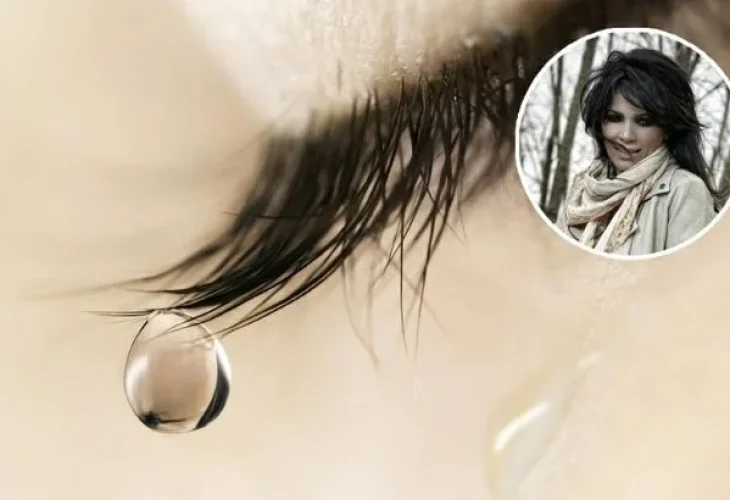 Inset: Yasmin Levy (Photo: Ali Tashkiran)
Yasmin Levy is married and a mother of two. "I’m a singer and songwriter. I sing in Ladino, Spanish, and Hebrew. I am Jerusalemite in every fiber of my being. Unfortunately I made the mistake of moving to Tel Aviv, but my heart knows that one day I will return to Jerusalem… even if only to die there.”
A spark of nostalgia
“My mother, Kochava was widowed at the age of 31, as a mother of four children. The eldest was 11, and I, the youngest, was a year and a half old. My mother raised us with tremendous difficulty, and yet she always made sure to smile, to laugh with us, to radiate strength and resilience.
“One night, when I was eight years old, I got out of bed and noticed that the kitchen light was on. I peeked inside — and I will never forget what I saw. My mother was sitting alone at the kitchen table, crying. It was the first time I had ever seen her cry. In that moment I understood that every day she waited for the moment she would finally be alone… so that she could fall apart. She did everything she could so that we would never see how hard it was for her.
“That night I grew up by several years. I went from being a little girl to someone whose only desire was to protect her mother and take care of her. Today, my mother is my best friend.”
A spark of roots
“Sadly, I never had the chance to know my grandparents — except for my father’s mother, Grandma Bechora of the Abastado family. My father Yitzhak was her eldest son, the crown on her head. When he passed away, she lost the joy of life. It was as if she was simply waiting for the end.
“I have only one clear memory of her from childhood. We were sitting together in our kitchen, eating. We sat around a long brown wooden table that I can still picture perfectly to this day. There was a period in which she lived with us, as though trying to touch her son, through us. I remember her with silver hair, dignified, sitting silently across from me.
“At some point I got up from the table and went to the living room. My mother was shocked and asked me, ‘How could you leave Grandma sitting there alone?’ I’m telling this story now — and it still feels as if it happened yesterday.”
A spark of faith
“My connection to God and to mitzvot began at a young age, and I loved it deeply. But after some years, something changed. I realized that the way I was experiencing this connection was not healthy. A relationship with God is incredibly important — and it must be a relationship that strengthens and uplifts a person.
“The problem was that over time I became a prisoner in a cage I built inside my own mind. My faith became rooted only in fear of punishment and reward. I reached very extreme places of self-denial and self-blame. Religion became the source of all my suffering — of course, not because of the religion itself, but because of how I related to it.
“This continued for years, until at age 38 I collapsed. One day I met a dear friend who had become religious and she gave me a religious book as a gift. I read it obsessively. Gradually, anxiety and fear completely took over my life. I became like a robot that could no longer think for itself.
“Every movement, every word, every thought in my mind, turned into reward or punishment. Every tiny action became a harsh spiritual accounting between myself and God. There was nothing else left — no love, no compassion, no forgiveness.
“With time, I realized that I was even performing mitzvot only in order to be rewarded in the next world — not out of a sincere desire to give, to love others, or to serve God out of love. That realization broke my heart. I remember turning to God in tears, begging Him to release me from the fear, from the terror that ‘if I do this, something bad will happen.’
“Today, thank God, my relationship with the Creator is healthier and truer than it has ever been. It is a connection free of fear-based bargaining, and grounded in love. I now understand deeply that we are small, we are limited — and all I truly want is to be a good person who spreads kindness and love from the heart.
“Today, I believe in God more than I ever did before. I take responsibility for my actions, and I speak with Him constantly — like a daughter speaking to her Father.”
A spark of creation
“God is present in everything I do. When I compose a song, I know it was given to me from Above. There is no other explanation for a melody suddenly appearing in my mind while I’m washing dishes.
“I didn’t sit at the piano. I didn’t work on it. It simply arrives — buzzing inside me like a living being with a world of its own — refusing to leave until I play it and give it life. Only then does it go out into the world and bring joy to whoever finds beauty in it.
“So yes — I know that melody was meant for me — I was simply the person chosen to carry it into the world.
“In addition, one of the languages I sing in is Ladino, which is deeply tied to my family’s heritage. I am descended from Jews expelled from Spain. My late father, Yitzhak Levy, was a cantor and singer who dedicated his life to preserving the songs of Sephardic Jewry.
“The secular songs of Sephardic women were passed down from mother to daughter while cooking and cleaning at home — that is how I learned them too, in my mother’s kitchen.
“But the sacred songs were passed from fathers to sons in the synagogue. This is how both the sacred and secular traditions survived for centuries.
“My father understood that if these songs were not documented, they would disappear. So he devoted his life to preserving them — publishing ten volumes of liturgical music and four volumes of Sephardic romances. Since most of these works were written in Ladino, my connection to the language is deep and emotional.”
A spark of happiness
“Recently, my son Michael was playing table-football with his friend Rafael. They were competing for a prize of twenty shekels, offered by Rafael’s father to encourage them to take a break from their phones.
“Michael is naturally afraid of failure and usually avoids competitions. But this time, he agreed. The game was whoever scores 20 goals first — wins.
“After the game, Michael came into my room, Rafael behind him. ‘Mom… I won,’ he said, but his face was lowered, and he didn’t look happy.
“‘Yes, he won,’ Rafael continued, ‘but right after that, Michael suggested we split the money — ten shekels each.’
“It was one of the happiest moments of my life. Knowing that we did something right — that my husband and I raised a child who understands kindness and generosity, filled me with joy.”
A spark of fear
“Above all, I fear for the people I love most — my family and my children. Sometimes that fear is so strong that I silently ask their forgiveness for bringing them into this world.
“I also fear the possibility of one day becoming completely dependent on others — unable to move, needing constant care, and not being able to release them from that burden. I want my loved ones to live their lives. I never want to be a weight upon anyone.”
A spark of mitzvah
“I feel deeply connected to the mitzvah of hospitality. For many years I have felt a special bond with it. For example, I would never shop only for my immediate family before Rosh Hashanah or Passover. On those holidays, every Jew is part of my family.”
A spark of awakening
“God is present in the sound of my husband’s breathing as he sleeps, in my daughter’s smile — in everything in this world.”
A spark of closure
“After 120 years, I would want to know that perhaps I brought goodness into the lives of even one or two people — or to an animal, or even to a tiny ant I try to save when I find it drowning in my sink.
“And beyond that, I would want to know that I belonged to those ‘who are hurt, yet do not hurt others in return.’ To be someone who suffers, but does not cause suffering. That, to me, is one of the greatest spiritual virtues.”

