

Magazine
A Legacy of Kindness: Remembering Eliav
Eliav Astioker's family shares stories of his compassion and bravery, revealing why they founded a special center for young men in his memory. "It was simply who he was," says his father, Yaakov.
- Michal Arieli
- | Updated
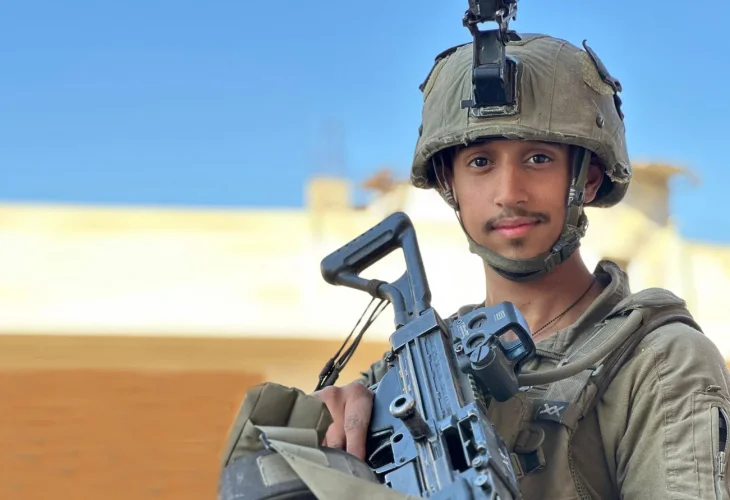 Eliav Astioker z"l
“We were exposed to many stories about our Eliav after he was killed in Gaza a few months ago,” says Yaakov Astioker, Eliav’s father. “Most of them we didn’t know, because Eliav was not someone who talked about himself or shared much. But there is one story that entered our hearts deeply, because it captures exactly who Eliav was.”
He pauses for a moment. The longing is unmistakable in his voice. Only half a year has passed since his son was killed, leaving behind a long trail of memories. “Eliav’s high school homeroom teacher told me that one day they noticed food was being stolen from the school cafeteria. He planned to install a camera to catch the thief. When Eliav heard about it, he asked, ‘Why a camera? Maybe whoever is taking the food doesn’t have any.’ He then suggested, ‘Let’s set up a table with prepared sandwiches and write that it’s for anyone who forgot their lunch or didn’t bring food.’
“The teacher said he adopted the idea and even received a budget from the administration to make it happen. From that day on, the thefts stopped. And all of it was thanks to Eliav, who never even mentioned that it was his idea and carried it out quietly and modestly.”
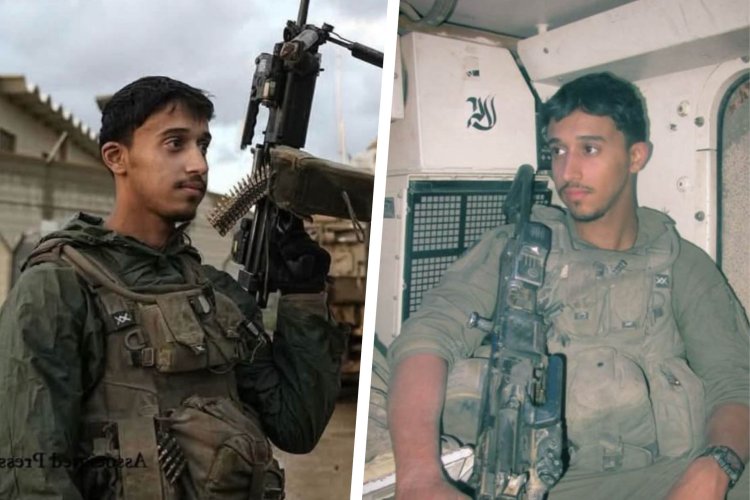 Eliav Astioker z"l
![Eliav Astioker z"l]() Eliav Astioker z"l
Eliav Astioker z"l
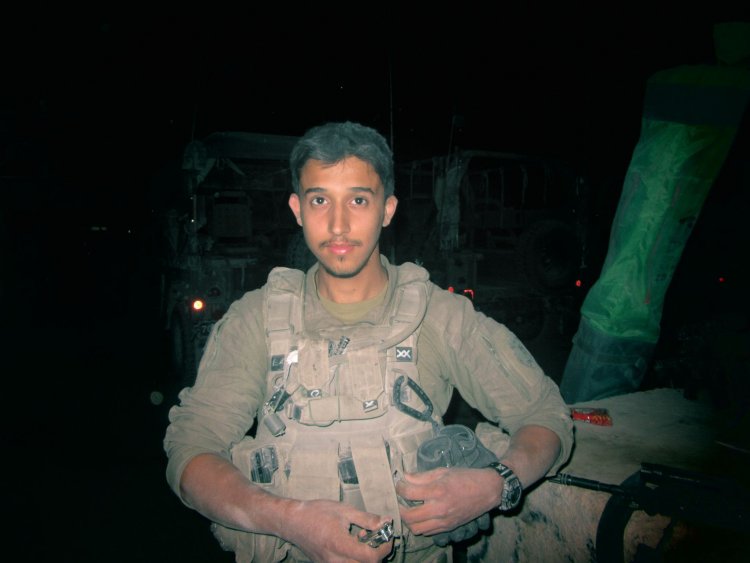 Eliav Astioker z"l
A Child of Giving
“Eliav studied at a large high school with many students,” Astioker continues, “but as his friends and teachers told us later, he always stood out. He united people and brought joy. I remember attending a parents’ meeting when the teacher told me that Eliav was ‘the quiet leader of the class.’ That’s how he described him.
“In class, he was always ready to help everyone. Outside of school hours, he volunteered with various organizations, organizing food packages for families in need and helping wherever he was needed. He also had strong technical skills and was always helping others in that area as well.
“He had a special sensitivity toward children who were academically or socially weaker. He spoke to them at eye level, took them out for coffee, and became a close friend. I heard all of this later from other parents, because as I said, most of it was completely unknown to us. Eliav was such a good and quiet child that we were never called to school for problems. I don’t recall speaking to teachers outside of scheduled meetings, and he himself hardly ever shared anything.”
When Eliav joined the army, it was important to him to serve in a combat unit. He was accepted into the Nahal Brigade, and after completing a heavy weapons course, he became a Negev machine gunner, carrying a weapon that weighed around 15 kilograms. He loved his role in the army and never complained, even after a full year of fighting in Gaza. He went through nearly all of his training and operational service in Rafah.
“He was also the first to volunteer for anything,” his father says. “That’s how it happened on Shabbat morning, Parashat Vayechi, at ten o’clock, Eliav volunteered to accompany a battalion commander on a route toward Jabalia. Several other soldiers were with them. During that mission, an incident occurred in which four soldiers were killed, including our Eliav, and fourteen were wounded to varying degrees.
“I later met the wounded soldiers at Tel Hashomer Hospital. Each one told me, from their own perspective, how much strength Eliav gave them in those moments. They understood they were in danger, and Eliav knew it too. When terrorists appeared, he immediately charged forward to protect the commander, who was indeed unharmed. One soldier told me, ‘I was a meter away from your son, and when I saw him leap forward with such courage, it gave me strength too.’
“Eliav was the only one of the four who passed away from his wounds while still in the helicopter. The medic who treated him told me, ‘He recited Shema Yisrael, smiled a faint smile, and passed away.’ The other three soldiers succumbed to their injuries later in the hospital.”
When was the last time you spoke with Eliav?
“The incident happened on Shabbat morning. Our last phone call was Thursday evening. Eliav asked me, ‘How are you, Dad? What’s going on?’ He didn’t complain, but he sounded tired and said they hadn’t slept all night. I told him, ‘Don’t worry, Hashem is watching over you and all your friends. Be strong.’ Then I added, ‘Don’t forget to call Mom.’ He did call her, and because of that, she too was able to speak with him about a day before he passed away.”
Small and Great Gifts
At this point in the conversation, Yaakov pauses and gives the floor to his wife, Hannah, who is not Eliav’s biological mother but has raised him since he was eight years old.
“I want to share an incredible story,” she says. “A few months before Eliav was killed, it was the eve of Sukkot and he came home on leave after 28 days in Gaza, during which he hadn’t showered. I was busy with holiday preparations and planned to buy a freezer, but it felt overwhelming and I had no one to carry it for me.
“Eliav came home, saw me upset and frustrated. He was covered in grime, and his uniform, which hadn’t been washed in a long time, was stiff like cardboard. When he heard what was bothering me, he immediately said, ‘What’s the problem? I’ll bring you the freezer.’ He left the house and rushed to the store. Within five minutes he was back with the new freezer, and only then did he allow himself to shower properly. His respect for his parents was remarkable. I don’t remember a single time he ever refused a request from his father or from me.”
How do you go on from a place like this, when Eliav left such a huge void?
“That’s exactly it, the void is enormous,” Hannah agrees. “But faith is what holds us. We know there is a Creator who does only good for us, and that is our comfort. Eliav is in a good place now.
“Not long ago I had a dream where Eliav came into the kitchen. I was crying and sobbing, and he was dressed in white, smiling at me and saying, ‘I’m here, don’t worry.’ Even that dream, which I understood to be a good one, gives us strength, like a message of reassurance.
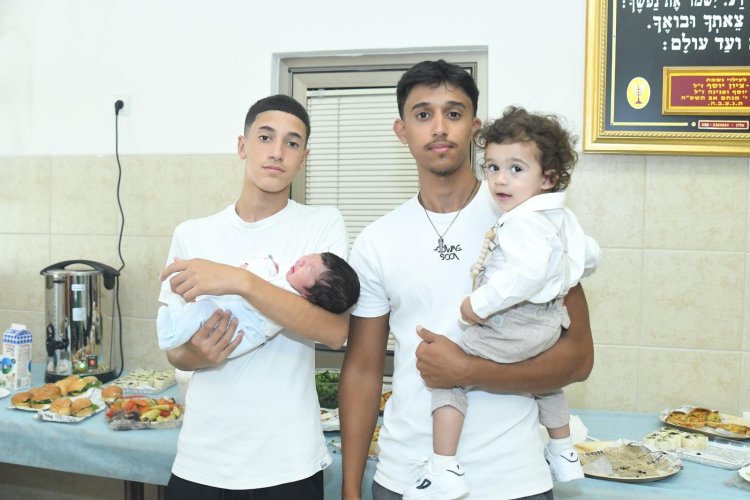
“In addition, about three months ago we were blessed with a new baby in the family. Of course, the birth and the circumcision were filled with mixed emotions, great joy alongside immense absence. We felt the same mixture when we celebrated a haircut ceremony for another son who loved Eliav deeply. To this day, he walks through the house looking for him. Once again, joy and mourning were intertwined.
“They say that when a son is born, the family begins to heal. We truly feel that Gabriel Eitan, our new baby, gives us strength. Even his name carries meaning. Gabriel symbolizes the strength of a mighty hero of Israel and contains the letters of the name Eliav. We added the missing letter Aleph through his second name, Eitan, which also represents strength and resilience. The small and great gifts that Hashem sends us along the way remind us that He is always with us, giving us the strength to continue and to choose life, just as Eliav would have wanted.”
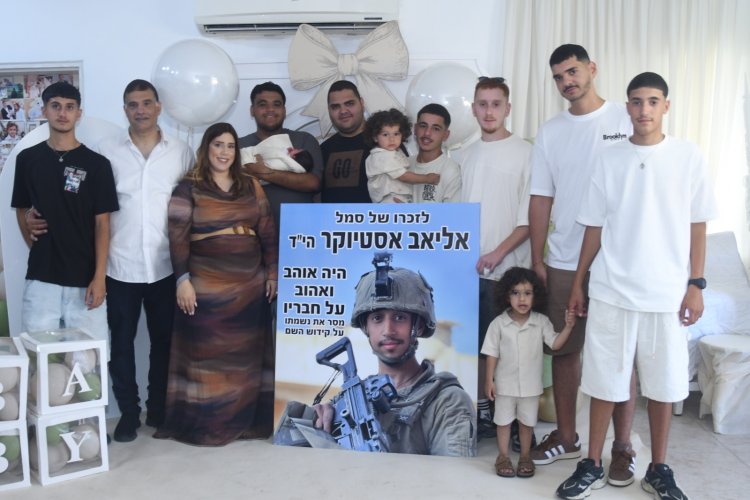 The Brit Milah of Eliav's Nephew
![The Brit Milah of Eliav's Nephew]() The Brit Milah of Eliav's Nephew
The Brit Milah of Eliav's Nephew
 The Brit Milah of Eliav's Nephew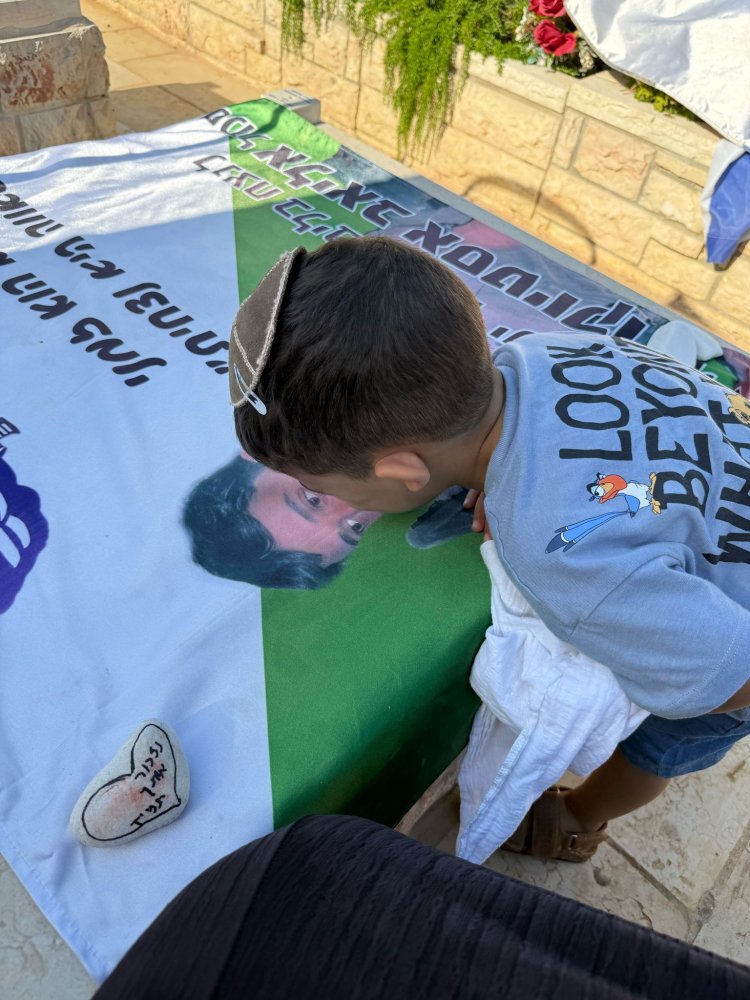
Carrying Eliav’s Spirit Forward
There is something else that gives them strength. Yaakov explains, “Shortly after we rose from shiva, an organization approached me and told me about a special home in Ashdod, very close to where we live, that supports homeless youth. They invited us to see it, and when my wife and I arrived, we were deeply moved.
“About fifty homeless boys live there, some of whom ended up on the streets, including two with special needs. They receive full support, meals, help, laundry services, everything, completely free of charge. It is pure kindness from the heart. They also stay there on Shabbat, with people who sing with them and hold Shabbat meals together. Some of the boys are even helped to get married.
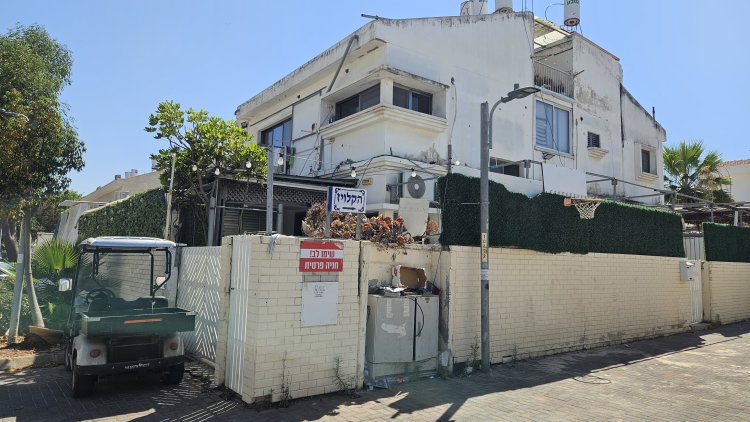
“The people who run the place asked if we would want it to be named after Eliav. I immediately said yes. I know without a doubt that if Eliav had known such a place existed, he would have volunteered there every day. And so it was decided that the home would be called Beit Eliav. Today it stands in his merit.
 Beit Eliav
“I visit there personally, try to recruit donors to help sustain it, because budgets are always lacking, and above all, I’m inspired by the strength of these young men. I tell them about our Eliav. I feel that his special spirit has attached itself to them as well, creating a kind of continuation of his life.”

