

Magazine
Crafting Hope: Women Weaving Curtains for the Third Temple
"These are not the typical synagogue curtains but something entirely different," says Arna Hershberg, an artist from Itamar, highlighting the unique mission she and her colleagues have undertaken.
- Michal Arieli
- | Updated
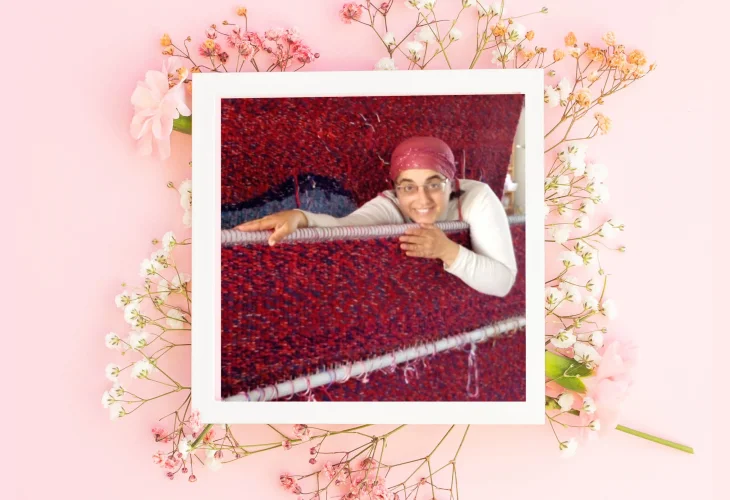 Arna Hershberg
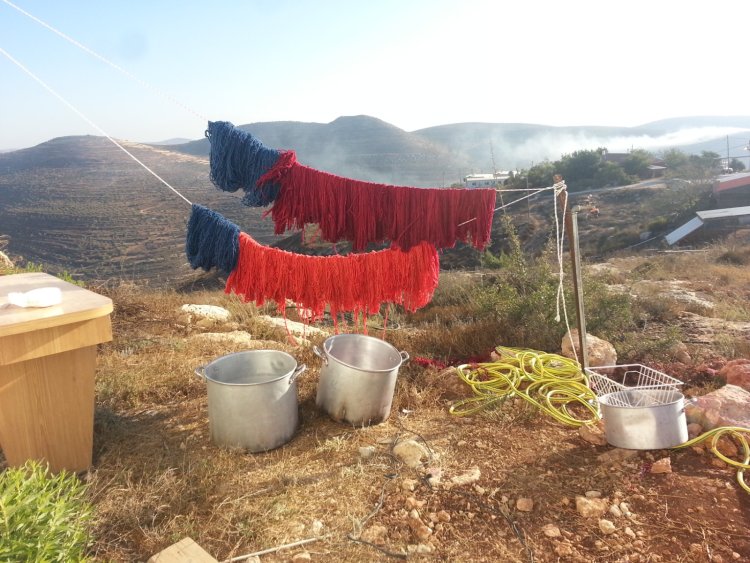
"I wanted to add spirituality and depth to my art, never imagining that one day I would be weaving curtains for the Temple," says Arna Hershberg, an artist from Itamar who has dedicated recent years to practicing, studying, and creating these curtains. "These are not the usual synagogue curtains, which are relatively easy to make, but something entirely different," Arna clarifies. "Unlike synagogue curtains which are sewn from threads, the Temple curtain is a woven masterpiece, involving us as artists in the entire process, including dyeing and preparing the threads, doing everything from start to finish."
The Aim: Instilling Hope
"It all began when a friend told me about a special course that included a lesson on 'weaving the Temple curtain,'" shares Arna. "The idea immediately resonated with me and enchanted me. I had been involved in art for years, but I always sought something that would touch my heart and soul. The chance to weave a Temple curtain moved me to tears, and without knowing any more details about the course, I decided to join."
"I started learning in a course provided by the 'Temple Institute,' alongside Maayan Ayesh, another creative artist interested in this type of craft. We attended the course with other women, delving deeply into the study. We learned precisely how to produce the curtain, what materials it requires, and what the writings of Rambam say, among other topics. At the end of the lessons, we wished to start weaving, but we were told that hands-on practice was not part of the course. At that point, Maayan and I offered the Temple Institute that we would conduct the practical course, teaching women from the art field how to embroider the Temple curtain."
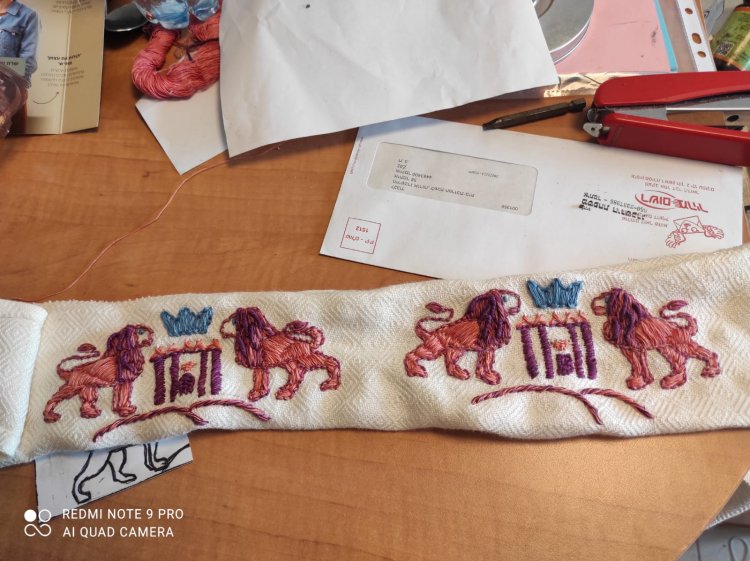
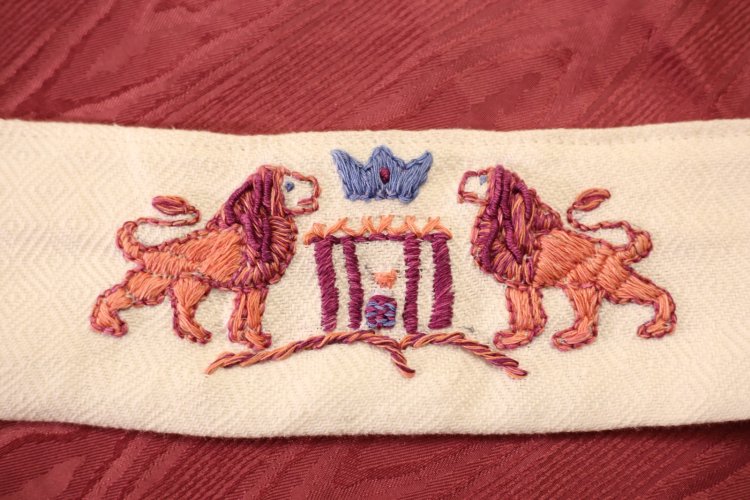
This was the beginning of their major work in this domain. "Over three years, we shared this unique idea with many women, aiming primarily to train them so that they would be ready to create the real curtain when the time comes. Additionally, through this endeavor, we hoped to lift spirits and instill hope."
"We taught the women practical lessons in weaving, coloring, and embroidery. At the same time, since it was important for us that they be 'wise-hearted' and not just artists, we also provided theoretical content and deepened their understanding. During those days, we collaborated with experts like Prof. Zohar Amar from Bar-Ilan University who helped us understand how to derive the 'scarlet' and 'techelet' colors based on both Torah and scientific research. He identified the 'scarlet worm' as the source of the orange color, and we learned how to collect it from oak trees. There was a time when we had thousands of volunteers across the country gathering these worms for us."
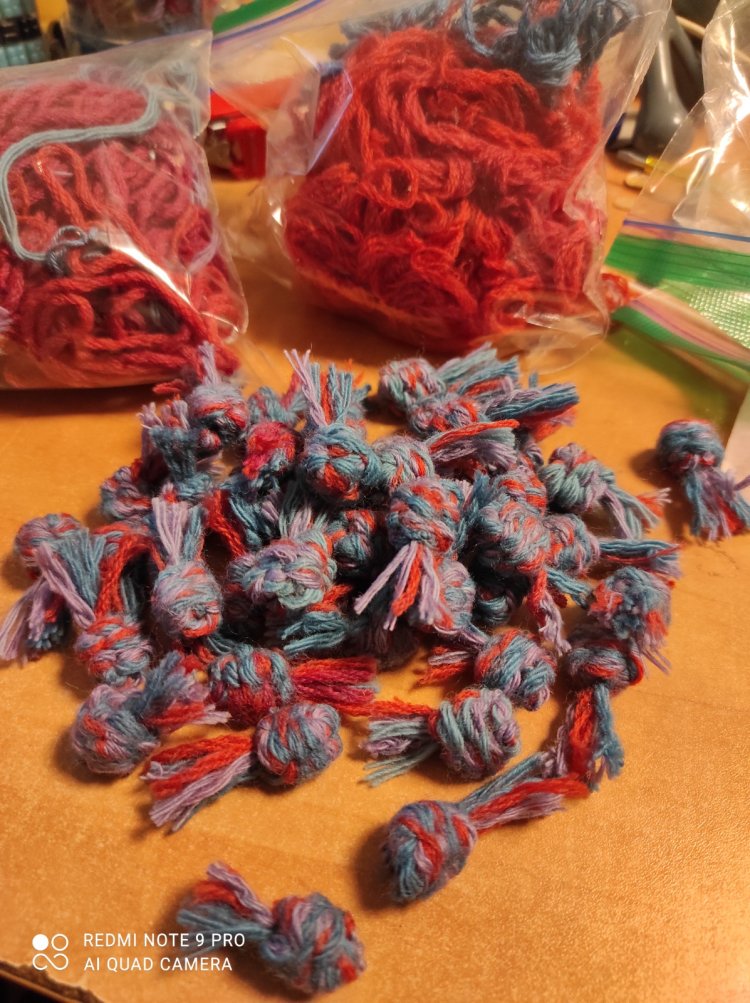
Not everything was simple. For example, when they wanted to use linen threads for weaving, as per traditions, they faced a problem. "First of all, flax is no longer produced in Israel today," Arna explains, "unlike during the Second Temple period when Israel was a flax powerhouse, especially in the Beit She'an area. In our generation, it's impossible to get linen threads locally. Also, since we use wool for the curtain, there was a concern about sha'atnez. While it was permitted in the Temple, unfortunately, we are still only training for the Temple curtain, not weaving the real one yet. So, we decided to use cotton threads, which are very similar to linen."
Hoping Every Day
The buzz about the 'Curtain Weavers' has spread, and Arna and her colleagues found themselves hosting many visitors in their studio and being invited to bat mitzvah events, lectures, and workshops. "I saw this as a mission; to prepare women for this important mitzvah," she notes.
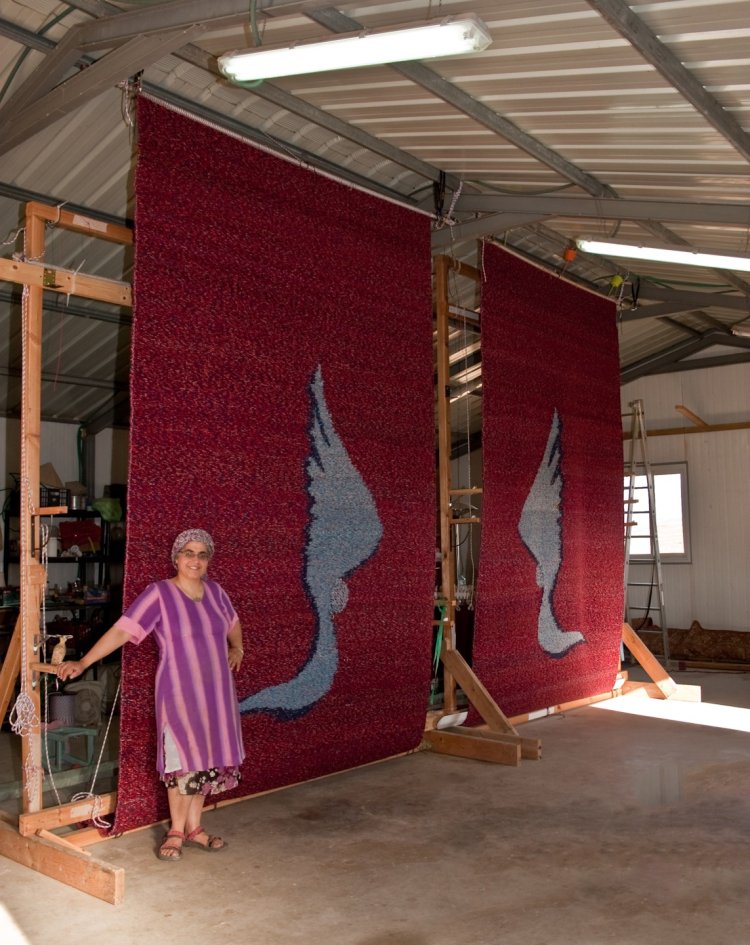
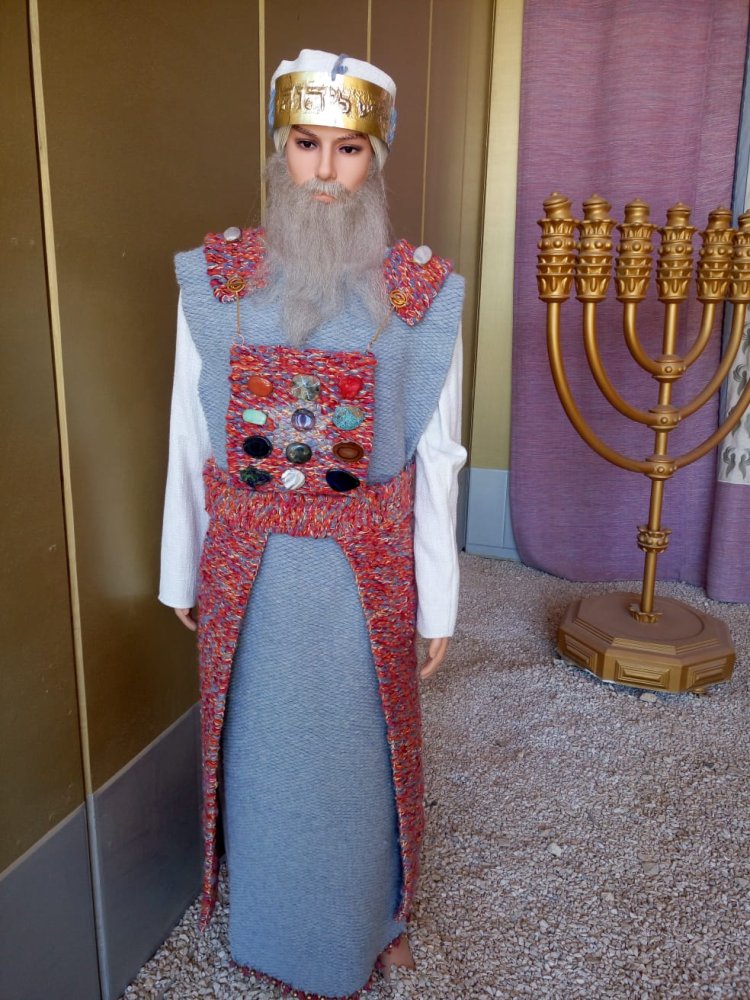
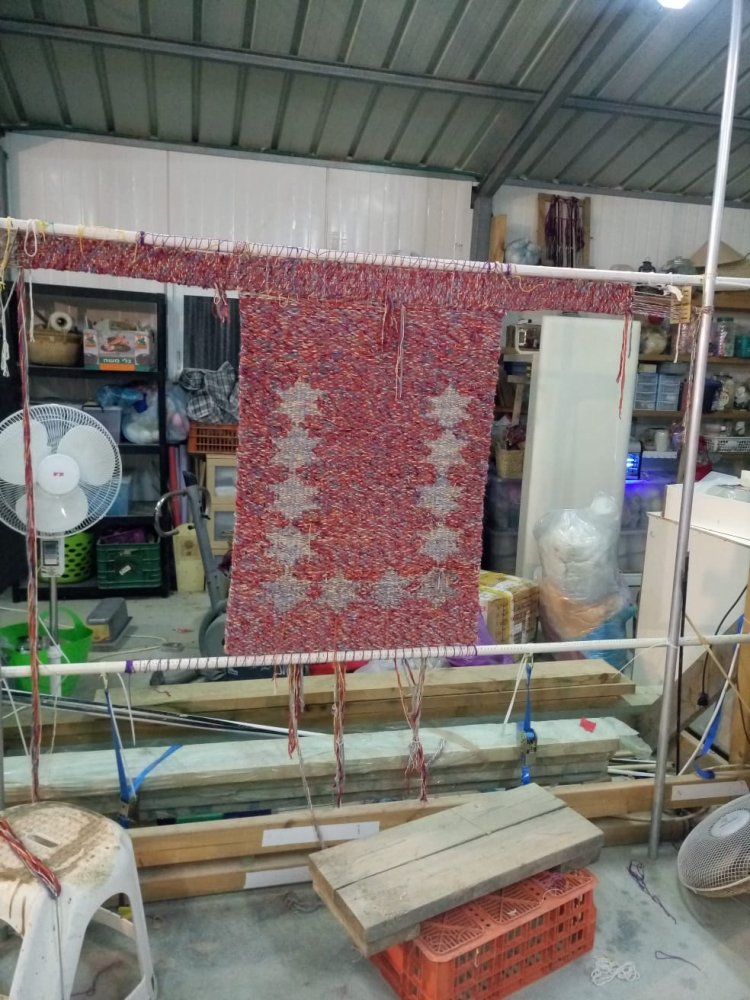
When a Jewish man from abroad who built a model of the Tabernacle for a museum asked Arna to create curtains for it, she eagerly accepted, and the project took on new dimensions. As a result, she set up a small workshop near her home with a large weaving loom. For more than half a year, Arna and her students worked tirelessly on a complex curtain. "This is a double-sided curtain, just as described in the texts, and it's vast, exactly the right size," she shares with excitement. "Today, it is displayed in a museum abroad, telling the story of this unique curtain. Over the years, we have created additional curtains for various museums, made belts for priests, and even crafted one of the Tabernacle's covers."
The creation process is incredibly moving. "Every day, to this day, I wake up each morning and ask myself: 'What am I doing today to advance the building of the Temple?' Sometimes I also experience guilt for perhaps not doing enough. If we have not yet merited it, surely we can do more and more."
"In recent years, I've noticed I'm not alone in this activity, as more and more women and men are preparing very tangibly for the building of the Temple. Some are making special oil for the Temple after researching how to do it. Some are preparing wine, while others are researching techelet and the offerings, making perfumes and jewelry. I even heard about a woman who established a ranch for red heifers. My feeling is that we are more prepared for redemption every day, and there's no way we won't soon witness it. We are, after all, almost ready."

