

Magazine
From Dharamsala to Jerusalem: Rabbi Dror Shaul's Journey Back to Judaism
Once a seeker in Eastern monasteries and Himalayan trails, Rabbi Shaul recounts how unexpected encounters, crisis, and inner searching led him from Buddhist study back to Jewish faith, Chassidut, and a life of spiritual outreach in Dharamsala
- Hidabroot
- | Updated
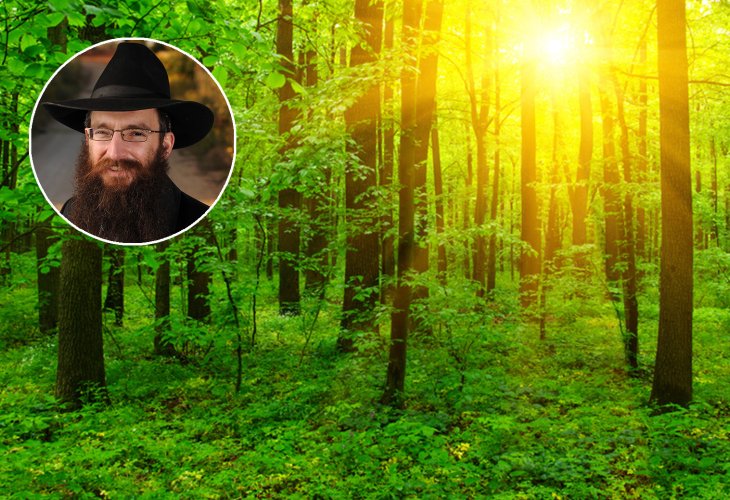 Inset: Rabbi Dror Shaul (Photo: Shutterstock)
“It is hard to find someone who had a childhood more disconnected from Judaism than I did,” says Dror Shaul when he speaks about his early years. For those who know him today, it is hard to believe, because Dror has gone through a complete transformation. Yet as a child, he was totally distant and disconnected.
“I grew up in the Beit Hakerem neighborhood of Jerusalem,” he relates. “My childhood years were spent in very non religious schools. It is hard for me to say it, but that was the reality. In those years there were many clashes between charedim and secular people over opening cinemas and roads on Shabbat. Personally I was very involved. Anything that looked like religious coercion really bothered me, and I definitely joined protests and demonstrations.”
At the same time, and without any contradiction, Dror says that for as long as he can remember he was very interested in spiritual topics and read many books on psychology and religions. Still, it never crossed his mind that the Jewish religion had anything to offer him. “At the age of 18 I travelled for four and a half months to the Far East,” he says. “I visited India, saw idolatry in all its forms, and I must admit that it really pushed me away. Yet something in my heart told me that if a billion people are dealing with spirituality, there must be a spiritual Being that is meant to be served. What they do is surely a mistake, but a spiritual entity must exist. That was my way of looking at things.”
“Grandma lit candles and cried”
Dror pauses for a moment and moves on to speak about his family.
“My father grew up on a kibbutz and was completely disconnected from Judaism, and my mother is an only child of Holocaust survivors who also did not pass on to her any real knowledge of Judaism. My parents are wonderful people who always educated me to love the Jewish people and to genuinely care for Am Yisrael, but when it came to Judaism they simply had nothing to give me.
“The only one from whom I could receive anything was my grandmother. She tried to light Shabbat candles every Friday evening, and each time she would burst into tears from the memories of her family, all of whom were murdered in the Holocaust. I also have a memory of my grandparents making a Seder night in their home, but it is very blurred, because after my grandfather passed away, that custom did not continue.”
Dror tried to satisfy his spiritual thirst by searching far away.
“After I travelled in India, I flew to Nepal. I wanted to climb Everest up to the highest point possible for a non professional trekker. As we know, the ascent must be done gradually and very carefully. If you climb too fast, you can suffer from altitude sickness. Although I knew the rules very well, I wanted to progress quickly. I skipped the required stops on the way, and at a certain point, when I reached 4,300 meters, I began to have severe symptoms of altitude sickness: strong headaches, dizziness, loss of balance and lack of appetite.
“Within a few hours I became very sick. I knew that one of the symptoms of altitude sickness is loss of sound judgment, and I understood that I was in real danger, but I still decided to keep going up. With great difficulty I managed to climb to about 5,000 meters, where I reached a lodge. Apparently I looked terrible, because everyone there was sure I would die within a few hours. The lodge owners said to me directly: ‘Now it is night and we cannot help you go down, but write your personal details so we will know where to send the body.’
“At first I tried to protest. ‘No way, tomorrow morning I will get up and continue climbing.’ In the end I was persuaded and left my details.
“The next day, despite all the dire predictions, I woke up and asked to continue going up. The lodge owners and several European trekkers did not allow it. They ordered one of the staff members to take my backpack down the mountain and made it very clear that I had to walk down after him. That is how my life was saved.”
Dror explains that after what happened on Everest, he began to understand how far he sometimes pushes himself beyond normal limits, in a way that is irrational and can be dangerous.
“I began to see that there is something inside me that is very strong but also destructive,” he says. “Today I know that this is called inner pride, or in short, ego. That same trait showed up again many times later, among other things during the years I served as head of navigation training in the army. In practice I was responsible for survival, escape and evasion from enemy territory. I led very challenging courses for soldiers. Needless to say, there was no Jewish content in those courses at all. I did not even mention the name of God. In my eyes, nature was what ruled the world, and our goal was to make the mind rule over the heart. That was the entire story.”
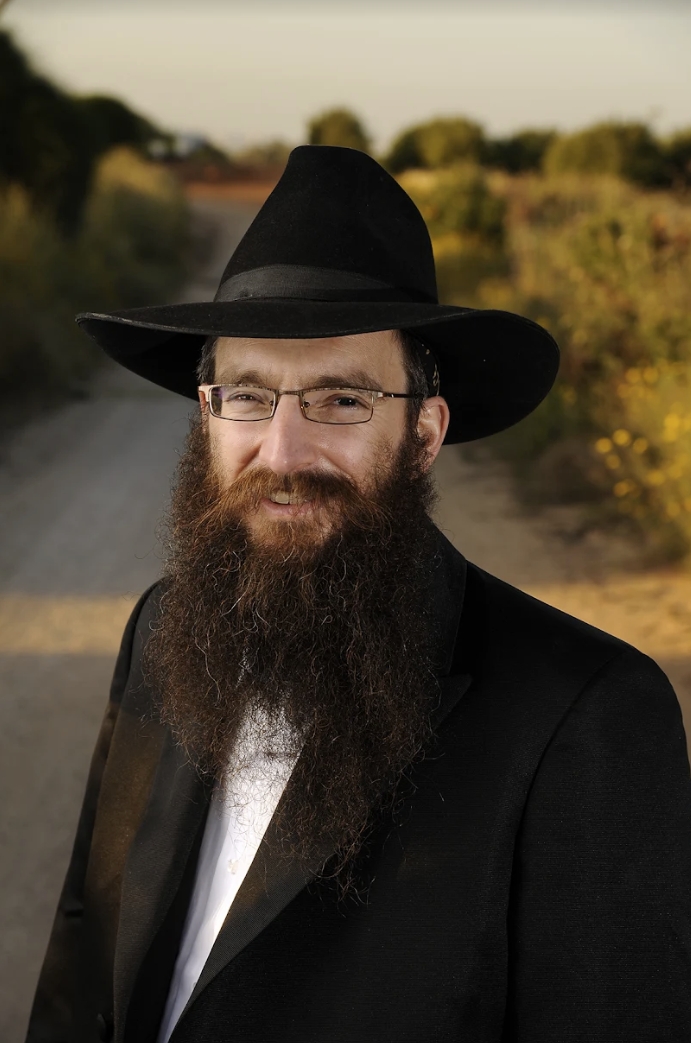 הרב דרור שאול
 “A Jew is a Jew”
After finishing his army service, Dror found himself travelling to India again, this time for a longer trip.
“After a few months in the mountains, during which I went through quite a few life threatening situations, I arrived at the city of Dharamsala, where there are famous Tibetan monasteries.
“I entered one of the well known monasteries and began very intensive study, from four in the morning until late at night, learning the entire path of monastic life. I studied from books, did many meditation exercises and learned from monks and Tibetan teachers. Day by day the decision formed in me that I was going to become a monk. That was my aspiration. By the way, I shared my room with a nice Jew named Itzik. Today he is known as Rabbi Yitzchak Fanger.”
One day Dror noticed that next to the little statues by Itzik’s bed there was also a picture of a rabbi.
“I did not know who that rabbi was,” he says, “but it shocked me, and I asked Itzik, ‘How can you mix things like that, and who is this person anyway?’ Itzik explained that on the way to the airport in Israel, someone stopped him and gave him a picture of the Lubavitcher Rebbe, telling him he was a great tzaddik. That was the first time I heard of the Rebbe. I never imagined that in the future he would become part of my life.”
For eight months Dror studied in the monastery. Then a series of events shook his inner world. He describes several of them.
“One day I was sitting as usual and writing down summaries of what I had learned. A student came over, looked into my notebook and said in English, ‘I see you are writing from right to left.’ I nodded. I did not know him personally, but I knew he was German and I had no idea what he wanted.
“‘What language are you writing in?’ he asked. I answered, ‘Hebrew.’ He did not stop there and continued, ‘Where are you from?’ I said I was from Jerusalem, while thinking to myself, ‘What does this Nazi want from me?’
“Then he said a sentence that shook me completely: ‘If you know Hebrew and you are from Jerusalem, you are certainly Jewish. If so, I am telling you that you are not in the right place.’
“I was stunned. He then told me about himself. He said he had searched for spirituality all over the world until he reached the conclusion that the deepest and highest spiritual path is the study of Kabbalah. For five years he tried to learn Hebrew so he could study Kabbalah, and when he realized it was too hard, he broke and decided to move to a second option, to study with the Tibetans.
“‘But you are Jewish,’ he told me, ‘so what are you doing here? Go to Jerusalem and study Kabbalah.’
“I was embarrassed and definitely in shock,” Dror admits. “If I had heard those words from a Jew, I would have brushed him off immediately. But because they came from such a distant and foreign place, I told myself that it was worth thinking about.”
Meanwhile something else happened, this time in the library.
“During the many months I spent in the monastery I had already read all the books on the shelves. I wanted to see if I had missed anything, so I ran my hand along the tops of the shelves and suddenly felt some thin booklets. When I pulled them down I saw that they were written in Hebrew. One was titled ‘Masa’ and the other ‘Simchat Olam’. On the cover I saw the words ‘LAHAV – Learning Judaism in the light of Chassidut’. I remember feeling great anger. How could charedim chase us all the way here and try to force religion on us?
“I took the booklets intending to burn them, but on the way I met another Israeli. When I told him angrily about the booklets that had been placed in the library, he did not understand what I wanted. ‘Are you saying you are afraid of what is written there?’ he asked. That question really challenged me. I was used to saying I was not afraid of anything, so I could not admit that the material in the booklets threatened my whole being. He teased me, ‘If you are not afraid, then read.’
“I was trapped. I could not retreat. So I sat down and read the booklets.
“I started with the first one, which contained Rabbi Nachman’s story ‘The Rav and the Student’. I read the story and suddenly burst into uncontrollable tears. I could not understand what was happening to me. I had gone through so much in the army, accidents and other events, and I had never expressed any emotion, and now I was reading a simple story and crying like a baby. I began to understand that there was something here beyond the words, something that was piercing into my life.
“Then I opened the second booklet, which was more like a teaching text, but it was also very interesting. When I finished reading I told myself honestly, ‘Regarding the first booklet, you must admit that there is something in it that touches you. Be brave and check what is there.’ About the second booklet, which explains Chassidut, I told myself, ‘It is fascinating. It is so small, yet it contains more truth than all the books in this library together.’ That understanding shook me very deeply.”
The third event made him finally decide to leave the monastery.
“The main guru’s translator, an older woman of English origin, met me one day and asked, ‘Are you from Israel?’ I answered yes. She then said quietly, ‘I am Jewish too.’ That surprised me, because one of the basic principles they teach in the monastery is that there is no difference between people, animals or even plants. Everything is the same. When she told me that, I began to understand that even she, as a teacher, did not really identify with the teachings.
“Then, one Friday afternoon, we left the monastery and this teacher suddenly turned to me and asked, ‘Can you please wish me gut shabbos?’ I was completely shocked. At home I had been taught that Yiddish died in exile, and here in a monastery the teacher was asking me to speak Yiddish.
“After I wished her in English, ‘I wish you a good Shabbat,’ she burst into tears and said, ‘A JEW IS A JEW.’ At that moment I also broke. I understood that I had to run away from the monastery. If there is such a veteran teacher who still says that a Jew is a Jew, then I have nothing more to look for there.”
Alone in the forest
In Dror’s heart a decision formed to go on a month long trek in the mountains and do deep personal seclusion to understand where his life should go.
“I took equipment and food and went into the Himalayas. I pitched my tent in the middle of the jungle, where there was not a single other soul, and began intensive meditation exercises. It was a very serious process. After 25 days of these exercises, I felt like I was losing my mind and decided to leave the area.
“On the way back I had to cross a certain glacier. Because of the melting and shifting of the ice, the glacier had completely erased the path, and I lost the way.
“I found myself deep in the forest on a route with no clear exit. The food I had brought was finished, my body was very weak, and I knew that if I made one wrong step and broke a leg, everything would be over, because I had no idea how I could be rescued. True, my professional specialty was survival in harsh terrain, but I still felt that I was in great danger.
“When evening came I set up the tent and began to think in the most honest way: ‘What do I do now?’ I quickly realized that all the wisdom I had learned would not help me in that moment. So what could help?
“Only then, as a 24 year old, for the first time in my life, I managed to bend my ego and finally turned to God. I said, ‘God, if You save me from here, I promise I will go to the Western Wall and recite Birkat HaGomel there.’ I felt that was the most honest commitment I could take on myself. It was a very sweet surrender.
“I went to sleep, and when I woke up the next morning, I found hunters’ traps, which proved that there were people in the area. I started walking along the line of traps and dismantling them, because I was a vegetarian, until I reached the edge of a cliff, which allowed me to see the forest from above. I scanned the whole forest looking for any sign of life, and suddenly I saw a thin column of smoke, which clearly meant there were people there. I began walking in that direction until I reached an Indian tribe living deep in the forest. They gave me food and showed me the way out.”
Dror kept his promise completely.
“After reaching the edge of the forest, I took a bus to Delhi and bought a plane ticket back to Israel. When I landed, it turned out that it was exactly Shavuot. I went home from the airport and arrived at five in the morning. After greeting my shocked parents, I told them I had urgent business to take care of at the Kotel and that I would be back. I took my brother with me and together we walked on foot to the Kotel, me in Indian clothes, with a beard and long hair.”
At the Western Wall Dror asked to recite Birkat HaGomel and was surprised to hear that all he needed was to say a short blessing in front of ten Jews.
“I blessed, ‘Who bestows good upon the guilty, for He has bestowed every goodness upon me,’ and in my heart I thought about the word ‘guilty’. It was clear to me that I owed something to God, and I felt that the time had come to find out what I owed.
“When we left the Kotel and started walking up through the Old City, a group of men wearing tallit and black hats came down toward us. I said to my brother, ‘Look at the clothes of the Jewish people. These are the real garments, not monks’ robes.’”
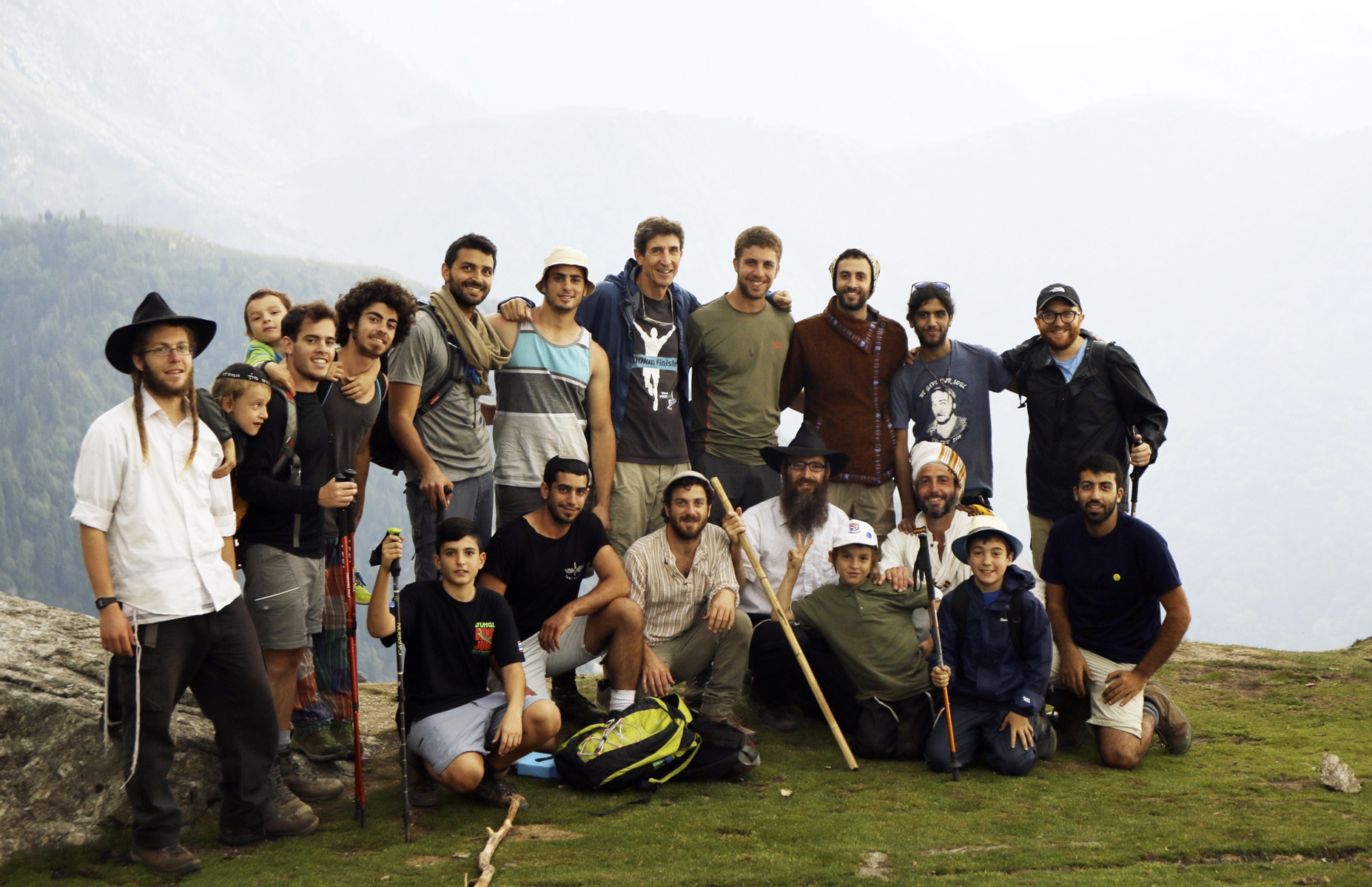
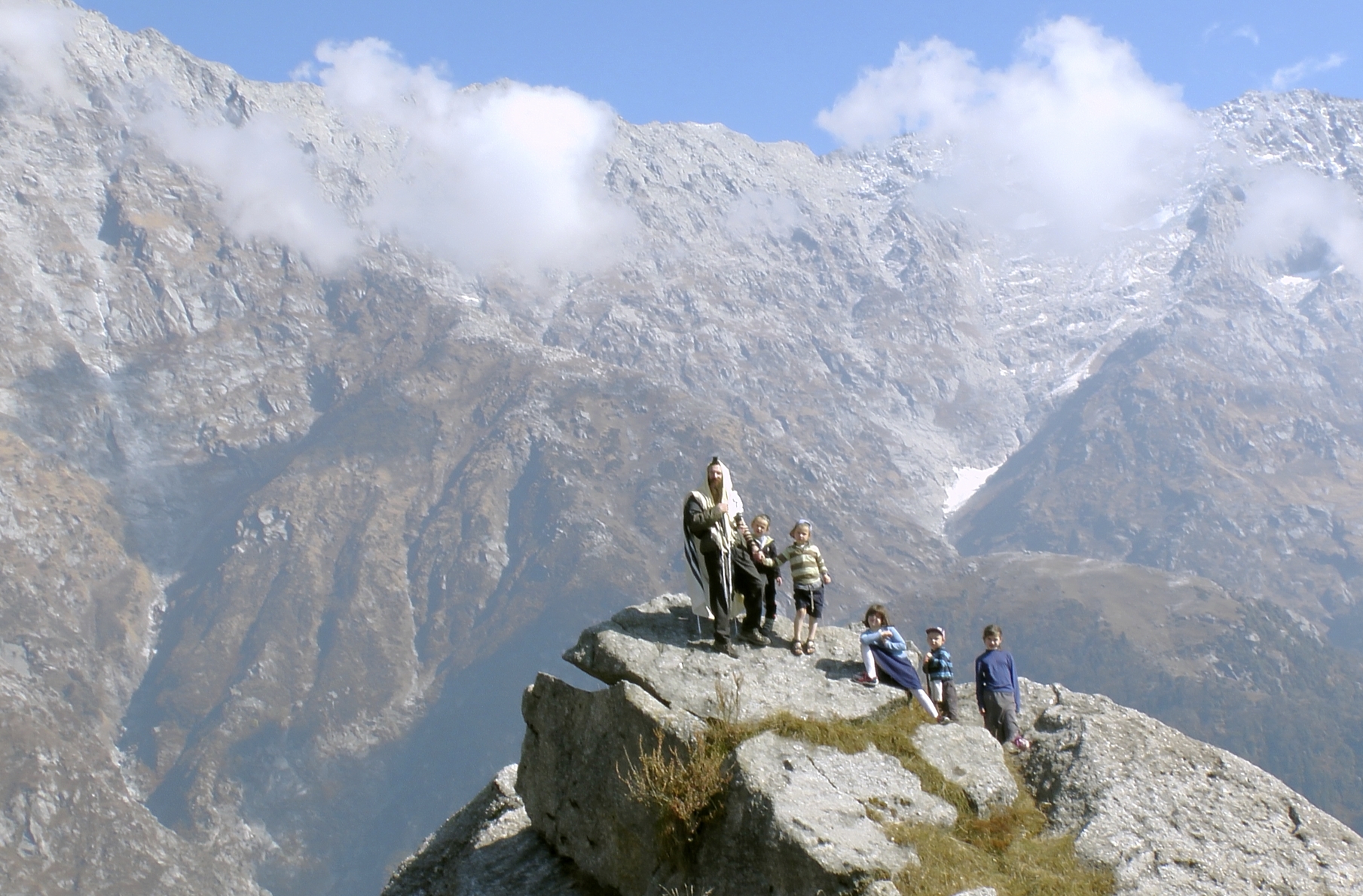 טיול משפחתי לטריונד
Slowly but surely
The process that Dror went through from that point on was gradual and did not happen in a single moment.
“At first I went to study Kabbalah at a Kabbalist yeshiva in Meah Shearim, as the German in the monastery had suggested. Then I was exposed to Breslov Chassidut, and later I met Rabbi Yitzchak Ginsburgh, who brought me very close. After three years I was already keeping Torah and mitzvot, and I felt that I was finally living a life that has real life in it.
“It was not an easy process,” he emphasizes. “I deeply appreciate the rabbis who did not give up on me, but accompanied me the whole way and invested their time in me. That is what ultimately helped me break through and begin to keep mitzvot.”
One day, after he already saw himself as a believing Jew, Dror brought a bold request to Rabbi Ginsburgh: “I want to open a Chabad House in India.”
“The rabbi looked at me with a smile, pointed at the holy books in the bookcase and said, ‘First fill yourself up with Torah. Then we will talk.’”
Returning to India as an emissary
Dror put the dream aside for a while. In the meantime he met his wife Michal through a shidduch. Together they drew close to Chabad Chassidut and built their home.
“A year after the wedding, Rabbi Ginsburgh approached us and asked, ‘What is happening with the Chabad House in India?’ At that time we were already busy with other things, but the rabbi did not give up and asked, ‘Who will take care of the Jews in India?’
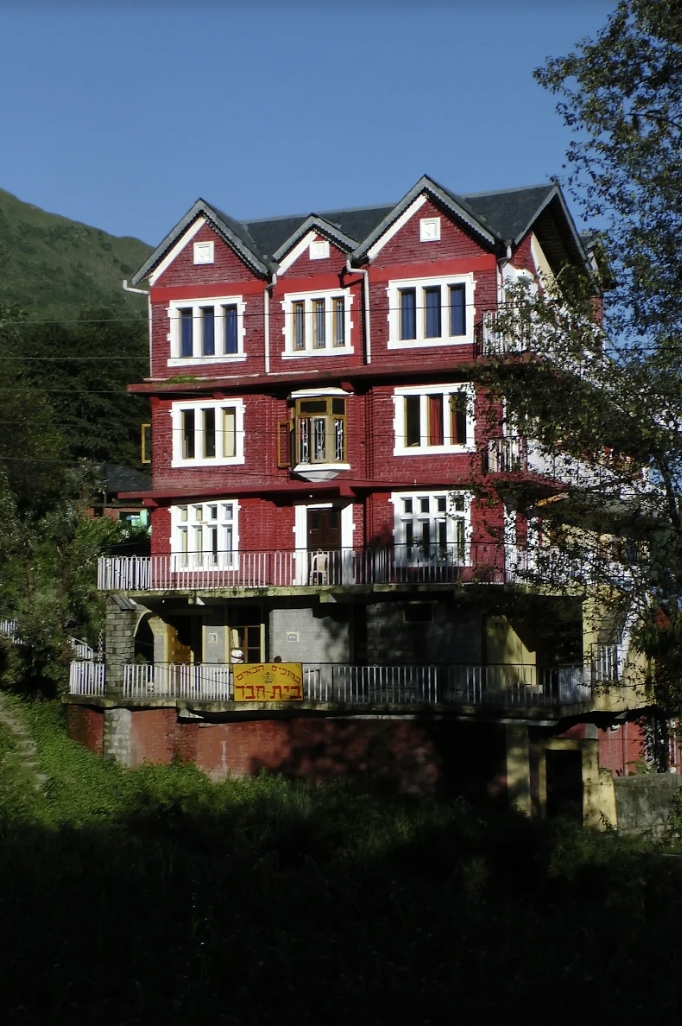
“That is how I accepted the mission. Five years after I had come back from India, I flew there again, this time with my wife. We established the Chabad House in the city of Dharamsala, exactly in the place where I had once travelled and studied in the monasteries. We arrived there on the eve of Pesach, and already that year we held a Seder with 120 Jews, which showed us how deep the thirst is among the travelers.
“As we sat at the Seder table, I could not help remembering the first ‘Seder’ I had made in Dharamsala. It was with Itzik and four other guys. We tried to read a page and a half of the Haggadah. We did not have wine or matzah. It was impossible to compare the two nights.”
Since then Dror has continued to work extensively in Dharamsala and the whole region.
“Thank God many Israeli backpackers pass through here,” he says. “Many of them later did teshuvah and established families in Israel. Today I divide my time between Israel and India, and in recent years I began writing and documenting the stories of the baalei teshuvah who passed through us and the unbelievable inner journeys they went through.”
He is now publishing these writings as a unique and fascinating book titled “Lech Lecha Dharamsala,” which includes no less than six hundred pages.
“The point of the book is not only in the moving stories themselves,” he explains, “but mainly in the attempt to understand how a person's life story is connected to his inner personality and how Divine providence led him on a specific path toward his soul’s rectification in this world.”
Inner work without leaving Israel
Dror and his wife Michal also run courses and workshops in Israel on deep inner Jewish self reflection.
“These are real inner processes that the soul goes through,” he says, “and my message to all participants is that you do not need to go as far as India in order to experience spiritual processes. It is possible to go through them here in Israel.”
How did your parents react to your journey?
“My father is a person with a spiritual pull, and he supported me right from the start. My mother was afraid she would lose me, but when she understood the true meaning of teshuvah, the fears disappeared. Over the years she came many times to the Chabad House in India and helped us a lot.
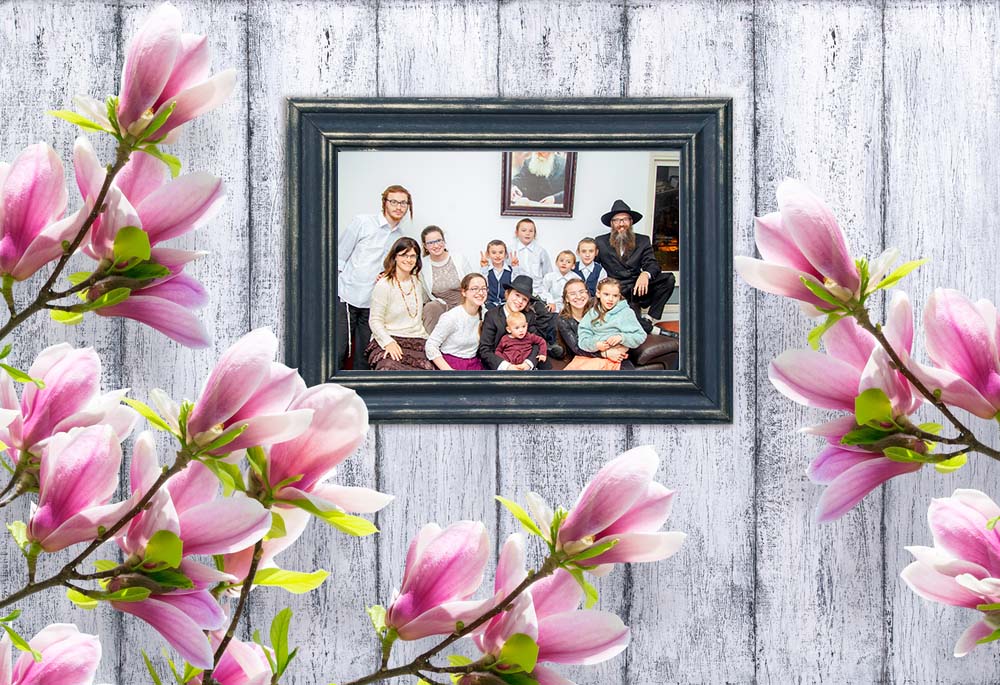
“Today, when she meets our eleven children, may they be healthy, and loves them so much, she is only happy and grateful. Thank God my parents have a lot of nachat from the family I built, and I am very happy and thankful for that.”

