

Magazine
A Rabbi’s Dangerous Quest to Preserve Jewish Heritage
Disguised at times as a sheikh, Rabbi Yisrael Meir Gabay recounts his daring journeys through hostile Muslim countries, admitting, “I’m not even sure I should be telling this story.”
- Chaim Gefen
- | Updated
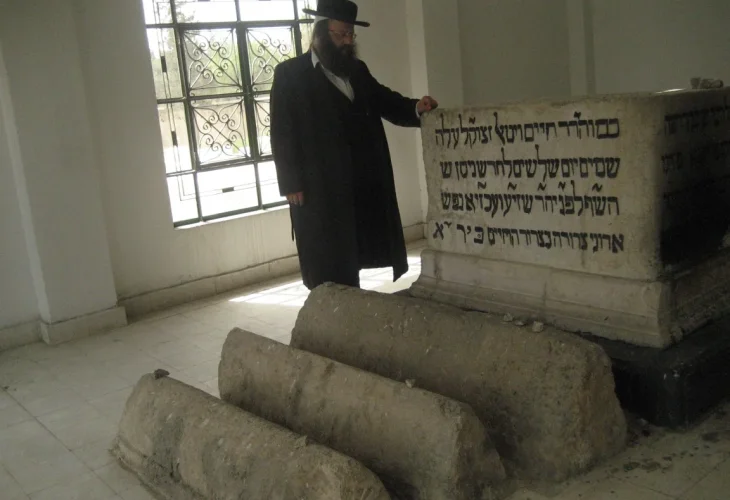 Rabbi Gabay at the grave of Rabbi Chaim Vital in Damascus
The sun was setting over Iran as Rabbi Yisrael Meir Gabay entered Qazvin. The Subaru taxi sped through the dark alleys and halted near an ancient, mysterious building resembling a mosque. "This is it," the driver whispered in a heavy Persian accent before speeding off.
Rabbi Gabay exited the cab, glancing around nervously. His map suggested he stood before the graves of the biblical figures Hananiah, Mishael, and Azariah. "Who knows when the last time a Jew prayed here was," he muttered to himself as he cautiously stepped into the building.
However, inside awaited a startling revelation. "It turned out the place had become a sacred site for Muslims," he recounts. "Many Muslims were inside, clutching their Korans and bowing on prayer rugs. I entered in conspicuous Jewish garb, and as everyone turned to look, an intense fear gripped me."
For agonizing minutes, Rabbi Gabay nervously scanned the room, then sat to pray. Suddenly, a local sheikh signaled him over with a menacing glare. Rabbi Gabay approached slowly, and the sheikh scowled, hissing, "Leave immediately and don't dare return."
A Light in Iran
Through the "Ohel Tzadikim" association he founded, Rabbi Yisrael Meir Gabay, an Israeli with foreign citizenship, has restored many graves of righteous figures in Israel and abroad. Some he discovered, others he renovated, installed signage, and facilitated visits. His journeys took him beyond tourism hotspots to perilous, hostile Muslim countries like Lebanon, Syria, Yemen, Iraq, and Iran.
A decade ago, Rabbi Gabay ventured to Iran. To obtain an entry visa, he traveled to France, whose citizenship he holds, and approached the Iranian embassy in Paris. "When I entered the embassy in my Hasidic attire asking for a visa to Iran, they looked at me with suspicion," Rabbi Gabay recalls in an interview with Hidabroot. "They began questioning my purpose in Iran and what I planned to do there."
Did they know you were from Israel?
"Not at all. In fact, they informed me that to obtain a visa, I must have an Iranian citizen request the Revolutionary Guard's approval for me. I contacted an Iranian Jew and asked him to undertake this task for me. If the Revolutionary Guards knew I was Israeli, there's no way they would grant me the visa."
With the visa facilitated by the Iranian Jew, Rabbi Gabay flew directly from France to Iran. He landed at Tehran's Imam Khomeini International Airport, where the same Jew was awaiting to escort him to a synagogue in the capital's outskirts. Rabbi Gabay planned to pray, rest, and then catch an internal flight to the city of Shushan. "I needed a local to accompany me who spoke Iranian, but none of the community's Jews agreed. Despite my pleas, they were too afraid. Eventually, after much persuasion, one finally agreed."
Ready to depart, an unexpected turn occurred: "My companion received a call from an unrecognized number. He answered anxiously, and I watched as his face grew pale. At that moment, I didn't understand what was happening. He began trembling, stammering that the Revolutionary Guards summoned him for questioning."
Were the Revolutionary Guards monitoring you?
"I am certain," Rabbi Gabay affirms. "Even if I had any doubt, at that moment, I got proof. My companion hurried out to the synagogue courtyard, burning all his personal belongings and documents to destroy evidence. He later told me that during the interrogation, the intelligence agents ordered him to warn me not to communicate with anyone in Iran."
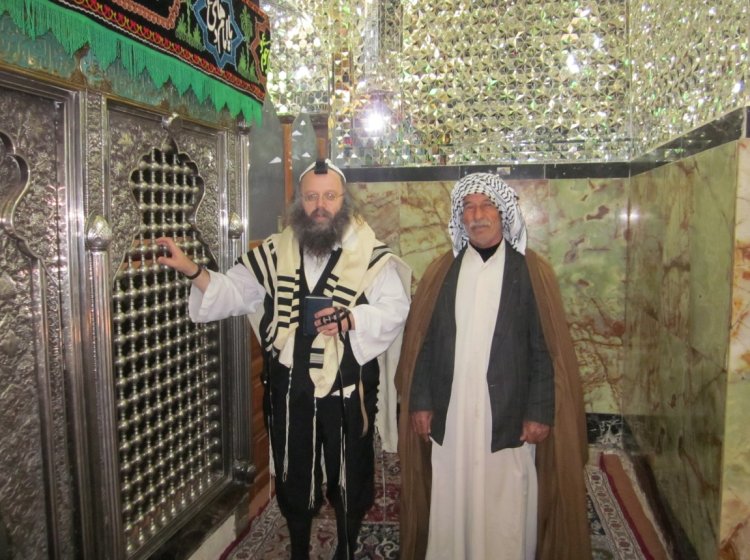 Rabbi Gabay at the Tomb of Daniel
In Shushan, Rabbi Gabay visited the Tomb of Daniel, noting debates over its location, but the most reliable tradition points to Shushan. He spent a night in the city, then took a bus to Hamadan the next day. "The journey was long, with many stops. It was a profoundly emotional moment entering Mordecai and Esther's tomb, where I prayed for hours before seeking a local hotel for me and my companion. I planned to spend Shabbat in Hamadan."
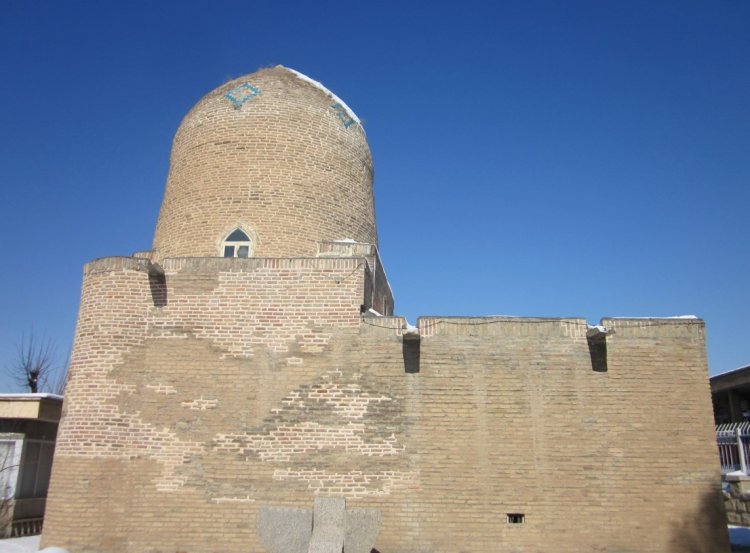 Tomb Complex of Mordecai and Esther in Hamadan
Was the tomb complex open? As far as I know, there are no Jews in Hamadan.
"Indeed, there are no Jews there today, but I met a very elderly Jew, the last to reside there. He accompanied me to the complex and opened the closed gates for me. When I finished praying, I asked him to open the complex again for Shabbat. It's a privilege to pray at the graves of the righteous on Shabbat."
During Shabbat, Rabbi Gabay left the hotel and walked the streets of Hamadan in his Hasidic attire. "My companion, an Iranian Jew, tried to stop me. He yelled at me, saying it was extremely dangerous to walk the streets of Hamadan visibly Jewish. Nevertheless, I went out, but he was too frightened to join me and stayed locked in his room all Shabbat."
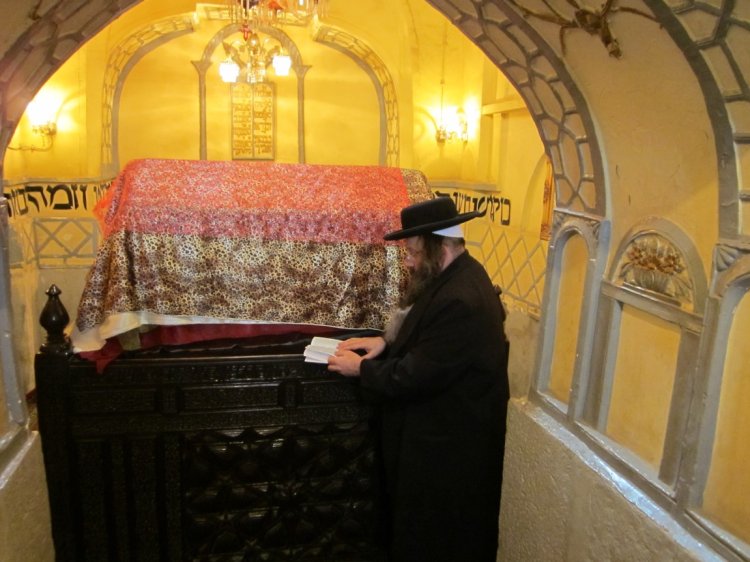 At the Tomb of Mordecai and Esther
Our Man in Damascus
Unlike his extensive visits in Iran, Rabbi Gabay's trip to Syria a decade ago focused solely on Damascus. Visiting Iran required flying to France for a visa from the Syrian embassy. "They asked me if I'd ever been to the occupied Palestine," he recalls. "I told them I'd never been to the occupied Palestine, but I've certainly been to Israel."
Despite the embassy's antipathy towards Israel, Rabbi Gabay received an unexpected surprise: "They informed me that since my entry purpose was to pray, I didn't need to pay the visa fee." With the visa secured, he flew to Turkey and then took a direct flight to Damascus International Airport. "Before boarding, I discarded all my belongings from Israel to avoid suspicion of espionage."
His freedom to wander Syria came with Syrian intelligence approval. "The Mukhabarat had a special department that only monitored Syria's Jews. At that time, a small Jewish community with a minyan still existed. The community leader met me upon arrival and hosted me at his home because I feared staying in a hotel."
Did you roam the streets alone?
"Yes, but only because the Jewish department in the Mukhabarat assigned a plainclothes officer to accompany me. He wore civilian clothes and externally seemed unconnected to me. He walked with me, traveled with me on buses, and generally followed me everywhere."
In Damascus, Rabbi Gabay prayed at the grave of Rabbi Chaim Vital, renowned student of the Ari. He also visited Elijah's Cave in Jobar's Damascus suburb. "It's a deep cave above which a splendid synagogue was built. I descended the dark stairs underground, filled with awe to enter. History tells of Elijah the prophet hiding in this cave."
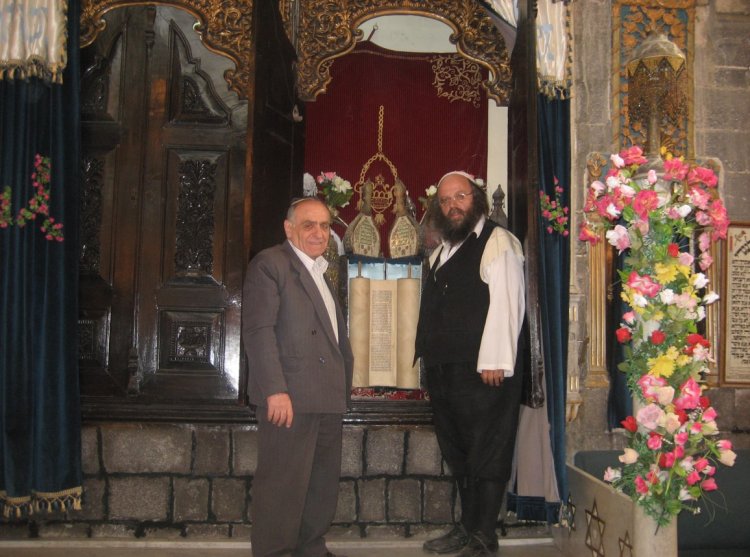 Above Elijah's Cave in Jobar, Syria
Alone in Yemen
Rabbi Gabay also reached Yemen, praying at the tomb of the poet Rabbi Abba Shalom Shabazi in Taiz and installing elegant new signage at its entrance. "Near the tomb flows a miraculous spring, and among Yemen's Jews, there's a tradition that its waters cure all illnesses," he narrates. "During my visit to Yemen, a few Jews remained, but there wasn't a single Jew in Taiz. The Muslim neighbors maintain the tomb, considering it a holy, miracle-working site."
During his days at Rabbi Shabazi's tomb, engaged in renovations, local Yemenites gathered, observing him curiously. "They weren't hostile; they even took photos with me as a memento," he recalls, smiling. He also drew water from the spring, leaving Yemen with a full jug headed for Israel.
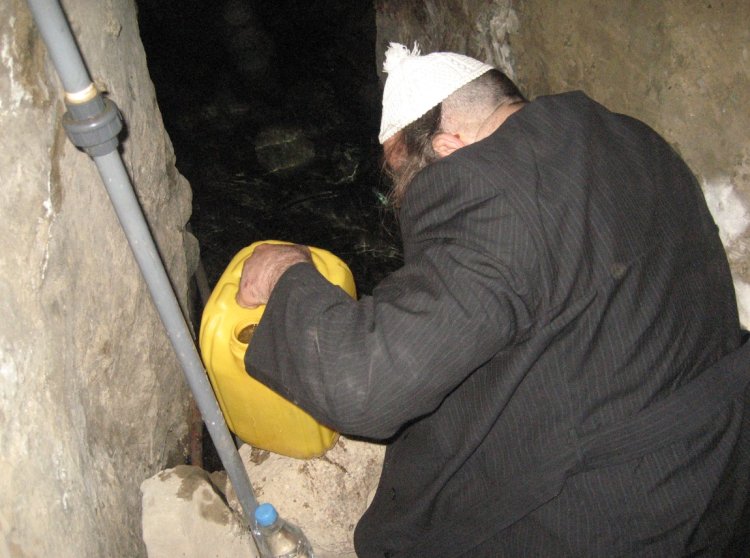 Drawing Water from the Taiz Spring
In Disguise as a Sheikh
The most adventurous of Rabbi Gabay's journeys occurred about a decade ago. About five years ago, he embarked on another trip to Iraq. Upon landing at Baghdad's international airport, he realized the timing was unfortunate. "On that very day, the U.S. eliminated Qasem Soleimani, the commander of the Quds Force of Iran's Revolutionary Guards, near the airport in Iraq. A sense of war hovered," he describes. Rabbi Gabay took no chances, roaming Iraq's streets disguised as a sheikh. "I bought a long white robe and wore it the entire time I was there."
In Iraq, Rabbi Gabay noted he wasn't alone: "I hired local armed escorts who drove me around and accompanied me. It cost a significant amount, but it's a matter of life and death to wander Iraq without security."
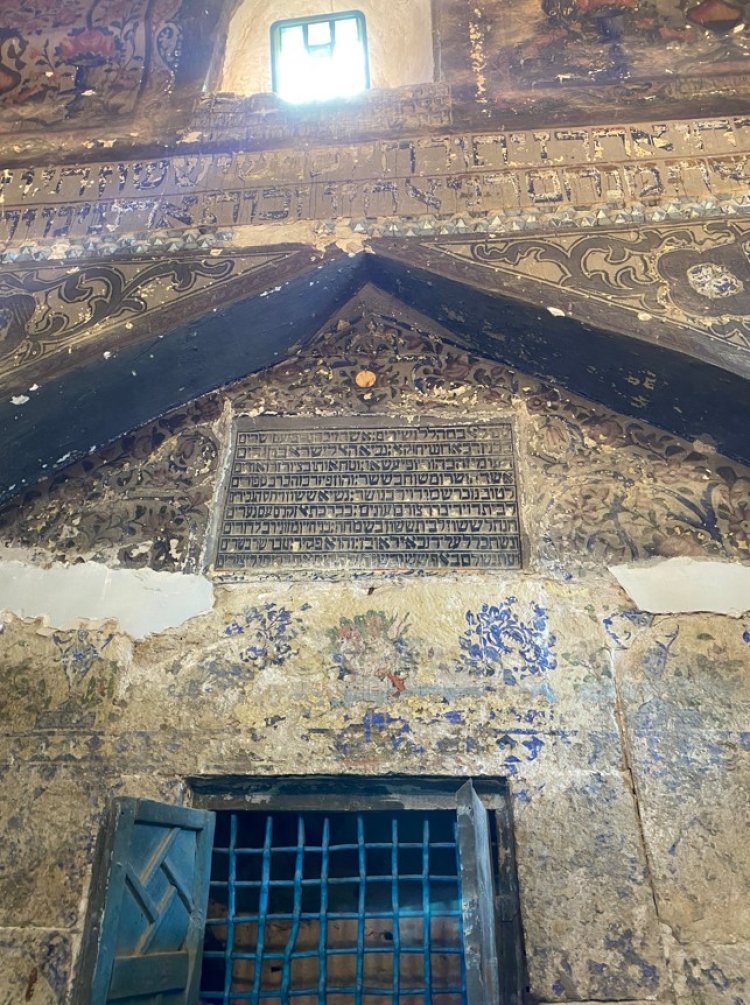 Prophet Ezekiel's grave in Iraq: converted to a Mosque, yet Hebrew inscriptions remain
In Iraq, Rabbi Gabay prayed at the graves of Israeli prophets buried in the cities and villages. His main stop was in Baghdad, where he prayed at the tomb of Rabbi Yosef Chaim, author of the "Ben Ish Chai." Amidst Baghdad's Jewish quarter's alleys, he documented the world's oldest synagogue, "Shaf Vethiv," built by Jews exiled from Jerusalem to Babylon after the First Temple's destruction. "The synagogue is entirely made of mud and clay, and it's a wonder it still stands," he remarks.
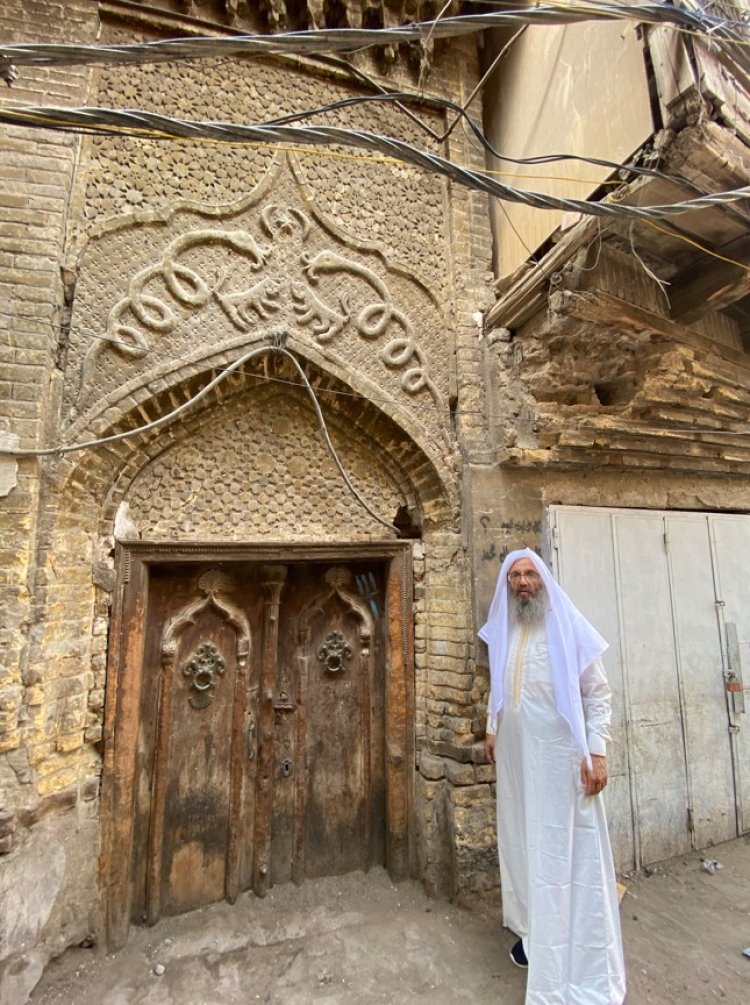 Standing by the world's oldest synagogue
On a Military Jeep in Lebanon
Despite numerous entries in Rabbi Gabay's passports, you won't find a Lebanese border control stamp, although he's been there. The reason is simple: he infiltrated quietly. "It happened during the First Lebanon War," he recounts. "I've always dreamed of slipping across the border to Lebanon to pray at Issachar and Zebulun's tombs in Sidon, and the war provided the opportunity."
Rabbi Gabay prefers not to disclose the route he took into Lebanon. "I'm not sure if I'm allowed to share this," he admits. What can be revealed is that amidst the war, he found himself standing on Sidon's main streets. "Violent explosions tore the sky," he describes. "To this day, I recall them and shudder."
Rabbi Gabay recalls swiftly moving through Sidon's alleys. South Lebanon Army soldiers patrolled back and forth while IDF forces raced on military jeeps. He quickly entered Issachar and Zebulun's tomb, praying deeply. "When I came out, a military jeep offered me a ride to Israel," he concludes. "Without questioning or interrogating, I returned to Israel and thanked Hashem for the privilege of praying at the holy tribes' graves."

