

Magazine
From Monastery to Music of the Soul: Ariel Lewis and His Father’s Return to Judaism
How a world-class musician left the global stage, discovered Chabad, rebuilt his life in Israel, and inspired his son to become a master craftsman of rare handcrafted flutes and sacred Jewish music
- Hidabroot
- | Updated
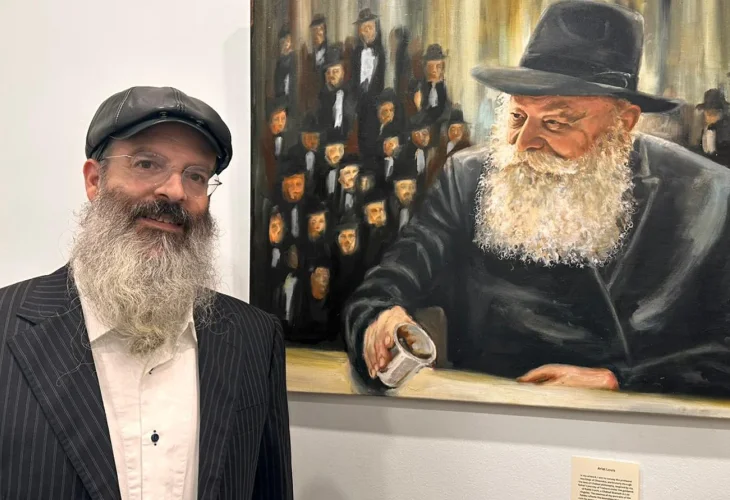
When Ariel Lewis was a child, he knew his father was a gifted musician. He also knew that his father had once played in some of the most prestigious orchestras in the world. But as a boy growing up in a Chabad family in Kiryat Gat, he did not truly understand what that meant.
His father, who viewed raising his children and sending them to Torah institutions as his highest priority, rarely spoke about his musical career. Still, day after day he would sit and play a variety of instruments at home — mainly as a hobby. He also played at events and weddings, and he painted.
“Only when I grew older did I come to learn my father’s remarkable story of teshuvah,” Ariel says. “That was also when I finally understood his deep connection to musical instruments. I realized for the first time that they were not just tools for music — they were what brought him back to Judaism.”
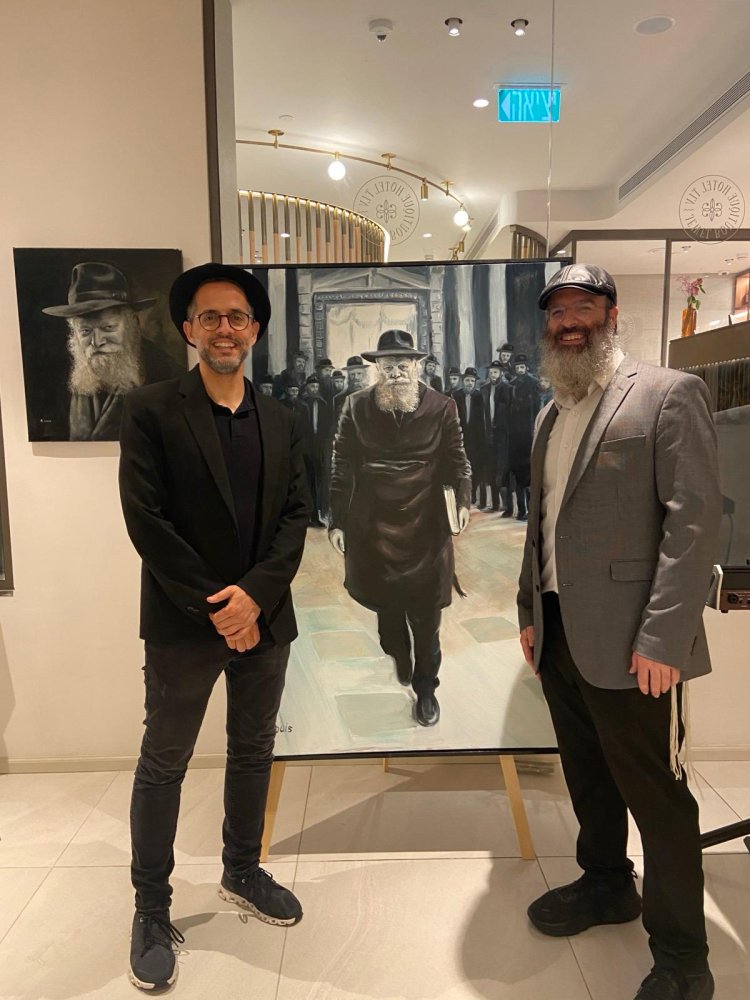 מציורי השמן של לואיס
From the Monastery to the Yeshiva
“My father was born in America, and for years he traveled across the United States searching for spirituality,” Ariel explains.
He knew he was Jewish, and when he turned thirteen he even had a bar mitzvah — but it was held in a non-kosher restaurant, without any real Jewish meaning or observance. In practice, he grew up with no connection to Judaism.
One day he happened to visit a monastery in the United States. Because he was already a professional trumpeter, they asked him to join the monastery’s musical ensemble. He agreed. But at some point, a nun showed him a Christian book that contained an illustration of the “Divine Chariot” — interpreted through Christian imagery.
He did not know exactly what it was, but something inside him burned. His blood boiled. In that moment he decided to leave immediately and never return.
From there he flew to Los Angeles, where he received major offers to perform with leading musicians, and he felt he was finally finding his path.
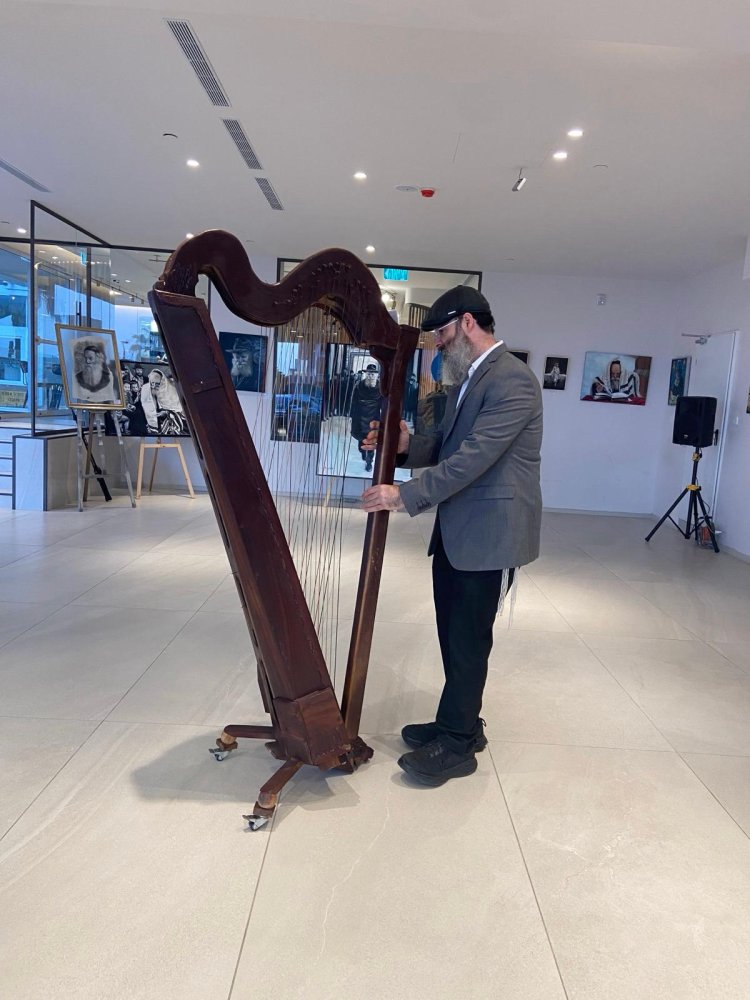 נבל שייצר מוצג בתערוכה
A Providential Encounter with Chabad
It was in Los Angeles that his story became intertwined with Chabad.
“By clear Divine Providence,” Ariel says, “my father happened to walk down a street where a Chabad House was located. He met the shliach, Rabbi Cunin, and saw the tzitzit hanging from his garment. The sight stirred something in him. He remembered a painting that had hung in his parents’ home of Chassidim dancing — with those same tzitzit visible.”
He asked about it, and Rabbi Cunin invited him to the synagogue.
“That was the beginning of his journey back to Judaism,” Ariel says. “It eventually led to his marriage to my mother, their aliyah to Israel, and the building of our large family, thank God.”
 בהופעה עם אביו ז"ל
A Life Filled with Music and Faith
“Before his teshuvah, my father was connected with one of the biggest touring bands in the United States,” Ariel continues. “After he changed his life, concerts remained only in his memories. Instead, he devoted himself to building our family. Alongside that, he poured his energy into art and music.”
His father especially loved learning about the music of the Beit HaMikdash, and spoke about it often.
“As a child, I remember that life was not easy for him. Israeli culture felt foreign to him. His creativity and music were always pushing to burst out. But raising us within Torah-true and Chassidic frameworks was more important to him. We didn’t know the world he came from.
Yet even so, the father we saw at home was not an ordinary, quiet father. He was full of passion and intensity. It confused us sometimes — but it also filled us with admiration.”
Torah Study and Music Hand in Hand
Although the family was Chabad, Ariel’s father chose to send him to study in the Lakewood Yeshiva. “He always said, ‘We need Chassidic light — together with Lithuanian tools,’” Ariel recalls.
His father had personally met Rabbi Shneur Kotler, the Rosh Yeshiva of Lakewood, and hosted him during his early years of teshuvah.
At the same time, he noticed Ariel’s interest in music and encouraged it strongly. He taught him guitar and clarinet, and even brought him along to join him on performance tours across the United States.
“Our show was called ‘Chassidic Exile.’ We performed with our instruments in Jewish communities throughout the world. We told Chassidic stories full of struggle and inspiration. It was fascinating.”
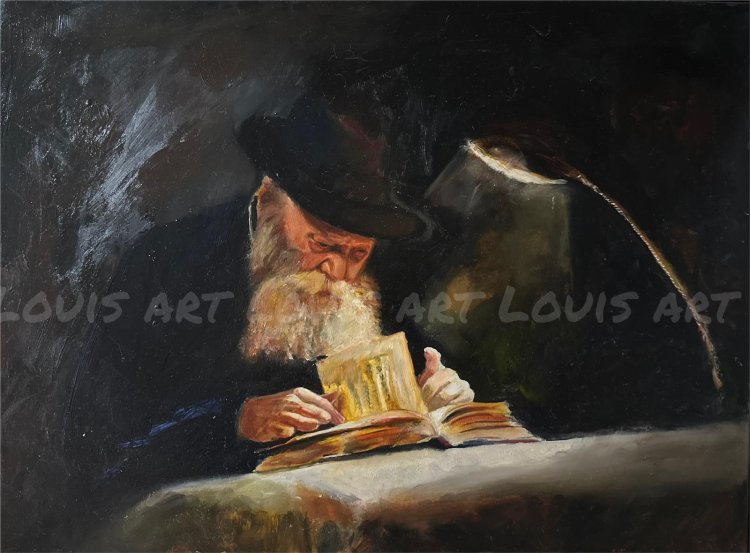
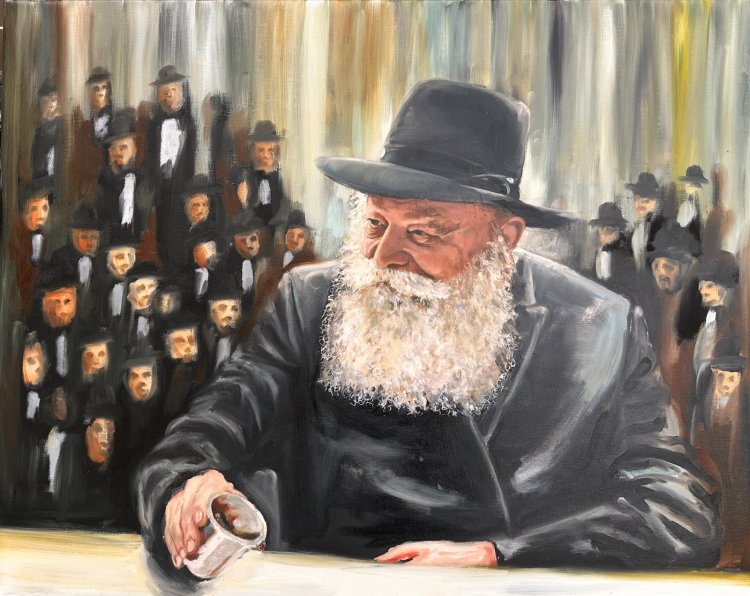 ציור שמן שצייר לואיס
A Gift That Became a Turning Point
“One day,” Ariel says, “I bought my father a gift — a special blues-style guitar. I was sure he would love it, since it reminded him of his youth.”
But a few days later, his father told him to return it. "I was shocked and he told me, ‘Sell the guitar — and buy special wood so you can make me a flute.’”
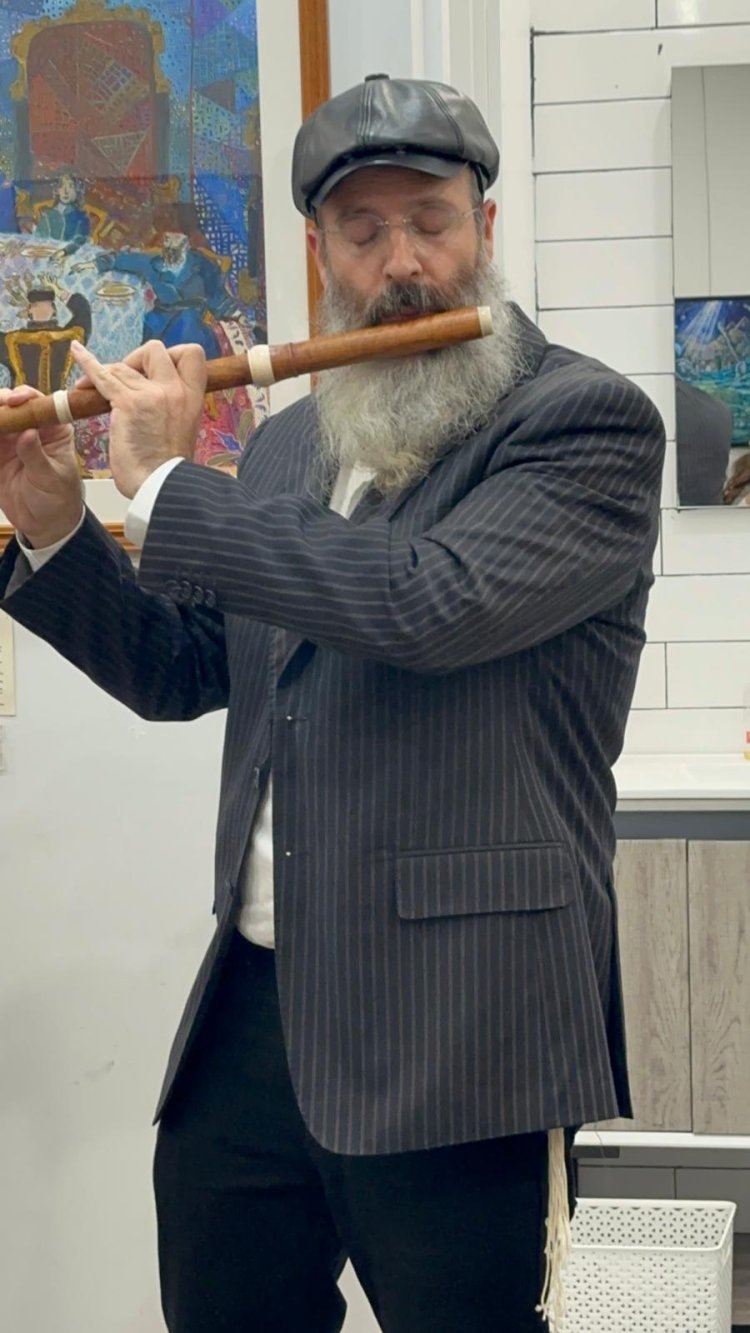
Ariel immediately understood what that meant. His father did not mean a simple store-bought flute — but a handcrafted baroque wooden traverso flute, a type of instrument he had dreamed about his whole life.
Ariel is largely self-taught and had already developed many skills over the years. His father believed he could do it, but Ariel did not know where to begin.
He started researching wood types, but soon gave up — and instead began building harps. Those harps eventually gained popularity and were purchased by Jewish communities worldwide.
His father encouraged him, but did not forget his dream. “Again and again he told me, ‘Buy wood for the flute and start.’”
Eventually Ariel agreed. He purchased rare wood from a Jewish wood merchant in Alon Shvut, brought home dozens of expensive pieces, and after great effort finally crafted a beautifully artistic flute.
“But when my father played it, the highest octave was off-pitch,” he recalls. “I was crushed.”
His father, however, refused to give up.
In the end, he located a leading master flute-maker in Europe who agreed to guide Ariel personally. With his help, Ariel succeeded in creating a perfect handcrafted flute — exactly as his father had dreamed.
“The joy on my father’s face was indescribable,” Ariel says.
From that moment, his father was renewed with life. He began composing classical and Chassidic music — some of which is played today among Chabad melodies.
“We would sit together and play,” Ariel shares, “imagining the music of the Beit HaMikdash and the pieces we would one day merit to play there.”
Ariel also paints oil paintings, another creative legacy he shared with his father.
Becoming a Master Flute-Maker
Today Ariel describes himself as a flute craftsman — but not of simple instruments. “I create fine, professional flutes,” he explains. “I work with rare woods that dry for many years.”
Some come from around the world. Others, like a massive olive tree branch he rescued near the Old City of Jerusalem, he dried for eight full years before carving into two exceptional instruments.
His flutes are not only made of rare wood — many are inlaid with gold, silver, or even diamonds, in the style of Renaissance instruments. As a result, each flute can cost up to 8,000 shekels.
People from all over the world seek his work — Jews and non-Jews alike.
“They are always surprised,” Ariel smiles, “to discover that behind these instruments stands a Charedi Jew with a long beard and nine children. But I see it as a shlichut. People around the world see what we create — and how it expresses the honor of Hashem.”
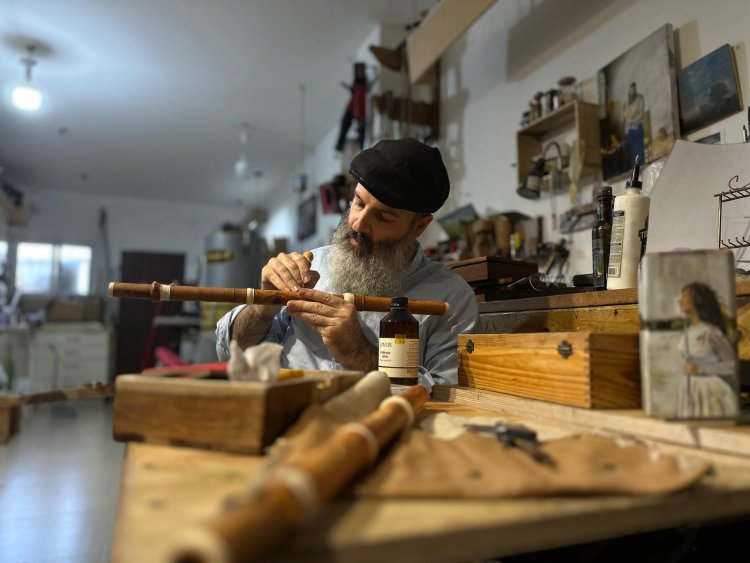 תהליך של ייצור
Can you recognize one of your flutes by sound?
“Absolutely,” he says. “A handmade flute has a unique voice. My goal is to give each instrument exceptional musical depth — something that inspires the soul.”
He uses wood aged more than eighty years, shapes it entirely by hand, and drills its core to microscopic precision.
“This sound,” he says, “can only be made by the trained hands of a craftsman — never by a machine.”
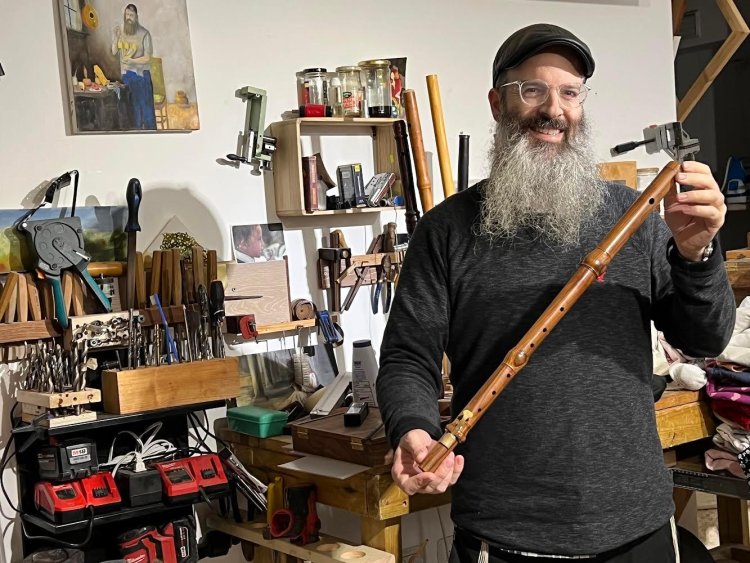 החליל הנדיר שייצר
What became of the flute you made for your father?
“The flute is still with me,” Ariel says softly. “I feel a deep connection to it.”
It was crafted from rare African wood traditionally believed to be the same species used for the Mishkan. “I cannot sell it,” he says. “It belonged to my father. It has a place in my soul.”

