

Magazine
From Jenin to Faith: How Journalist Tzvi Yehezkeli’s Encounter with Terror Led Him Back to Judaism
The veteran Arab-affairs correspondent shares how a life-threatening interview sparked a journey of spiritual awakening, courage, and exploration of global Islam and Jewish identity
- Nadav Gdalia
- | Updated
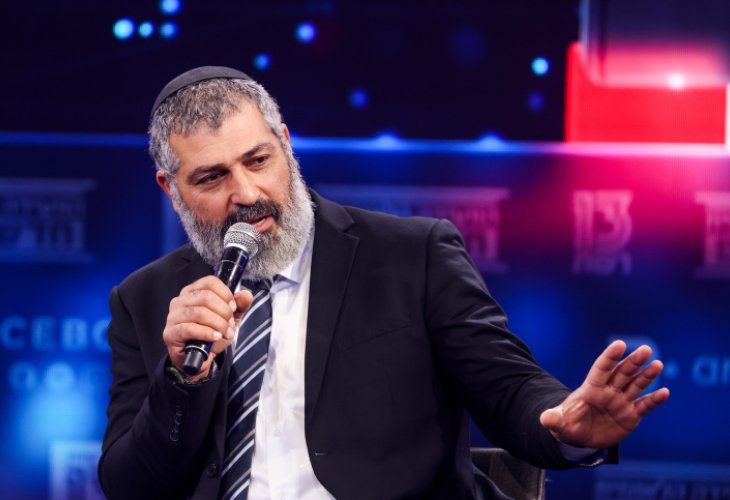 Tzvi Yehezkeli (Photo: Yonatan Sindel/Flash 90)
When the terrorist Zakaria Zubeidi decided to kill the first Israeli journalist he encountered — as revenge for the killing of his deputy — he came across Tzvi Yehezkeli, who had arrived to interview him. Yehezkeli, a veteran Arab affairs reporter and analyst on Channel 10, was already deeply “embedded” among the wanted men of Jenin, and he couldn’t understand why Zubeidi suddenly fired a burst of bullets over his head. “Later he said he regretted it, and we sat down to talk,” Yehezkeli recalls. “That was the conversation in which I understood that I am a Jew.”
So a terrorist and mass-murderer brought you back to religious observance?
“I was never an atheist by definition, but I also wasn’t a believing person. I grew up in a non-religious home and I didn’t deal with God. He didn’t interest me and wasn’t relevant to my life. In the conversation with Zubeidi — after he tried to kill me — I started having thoughts of teshuvah (spiritual return). He asked me how I define myself, and I told him that I define myself as ‘Israeli.’ He asked: ‘And what are you beyond being Israeli?’ I said: ‘Arab.’ I said that I don’t define myself in any way as ‘Jewish,’ that I don’t feel any connection to the term ‘Jew.’ And then he told me that I should define myself as a ‘fool’ — because if he was going to kill me for being a Jew and I’m denying it, then I’m a fool. That bothered me. I was already popular and successful, 37 years old, feeling like I had fulfilled all my dreams. I said: Wow… maybe I should start examining things differently? The moment I loosened my grip, an entire world of Judaism opened up before me — a world that I am now connected to.
“Suddenly I understood why, during the disengagement, I felt pain for the Jews even though I was part of the media — where the settlers were portrayed as ‘the problem’ — and I also thought that way. I truly believed that the Arabs wanted peace.”
Today Yehezkeli thinks differently.
“Let the Palestinians take responsibility for their own mess,” he says. “They don’t want peace, and I’ve finished covering the Palestinian world. Now I cover Islam across the world — that’s what interests me.”
As part of his research into global Islam, Yehezkeli has produced a variety of documentary series in recent years, such as Allah Islam, in which he disguised himself as a Muslim traveling across European countries and documented the Islamization of Europe through interviews with European Muslims. Later he created the series The ISIS Threat, in which he tried to understand what motivates modern young people to join the murderous organization. That series led to ISIS: The Next Generation and Confessions from ISIS, where he managed to engage in conversations with people deep inside the organization that terrified the West.
He also appears in the series Undercover Identity, in which Yehezkeli tries to understand the ideology and global agenda of the Muslim Brotherhood — the movement seeking to impose extremist Islam around the world. The series includes five episodes in which Yehezkeli moves through mosques and Muslim communities in Syria, Turkey, Europe, and the United States.
Yehezkeli adopts the persona of a Muslim sheikh: Khaled Abu-Salem, also known as “Abu Hamza,” a Jordanian businessman and CEO of an import-export company who is traveling to the West to raise donations and form business connections. For the sake of the perfect “undercover” portrayal, Yehezkeli studied precise Arabic pronunciation with a professional undercover operative, and from a Muslim cleric in Abu Ghosh he learned the full structure of mosque prayer rituals.
Each episode of the series focuses on a different Western region. For example, in the first episode filmed in France, “Abu Hamza” attempts to infiltrate the Muslim Brotherhood under the pretense of donating money toward Islamic education. He looks for banned extremist books and even manages to enter the traditional Friday prayer inside a mosque.
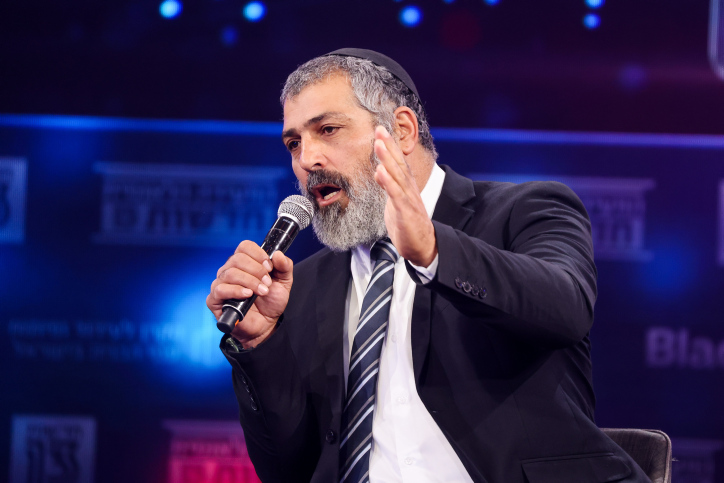 (צילום: יונתן סינדל / פלאש 90)
Scary? Returning to religion is also scary
Accompanied by director Ohad Gal-Oz, hidden cameras, disguises, and a false identity, Yehezkeli tries to reveal the frightening story of radical Islam spreading throughout major Western centers.
“Part of my job as a journalist is to identify future trends and bring them to the viewers,” Yehezkeli explains. “For years people have been talking about jihad taking over the West, so we decided to examine it and see what’s happening on the ground. The conclusion is that Islam has discovered that the easiest arena to operate in is within democracies. Their stated goal has always been world domination — but under the protection of democracy, they’re actually able to advance that goal.”
Will Islam take over the world?
“In my estimation, a complete takeover won’t happen in our lifetime — but in twenty years you’ll see Islam becoming a dominant force in places like France, Denmark, and Belgium. There is huge financial investment in Islamic education — and it seeps in slowly, with the backing of democracy. The real battles are happening quietly… just like in the spiritual life.”
So should Israelis be worried?
“In Israel they have less of a chance,” Yehezkeli reassures. “Right now we have nothing to fear — but the rest of the world absolutely does.”
You took a huge personal risk.
“I was afraid to do it, no doubt. It was scary. But returning to religious observance is also scary. Still — I have a mission. If I don’t go in, who will? No one. We weren’t put into this world for nothing — we’re here to tell a story that helps people understand who they are and what their purpose is. If God wanted otherwise, I wouldn’t be a journalist. The fact that He left me in journalism even after I became religious means this is my role.”
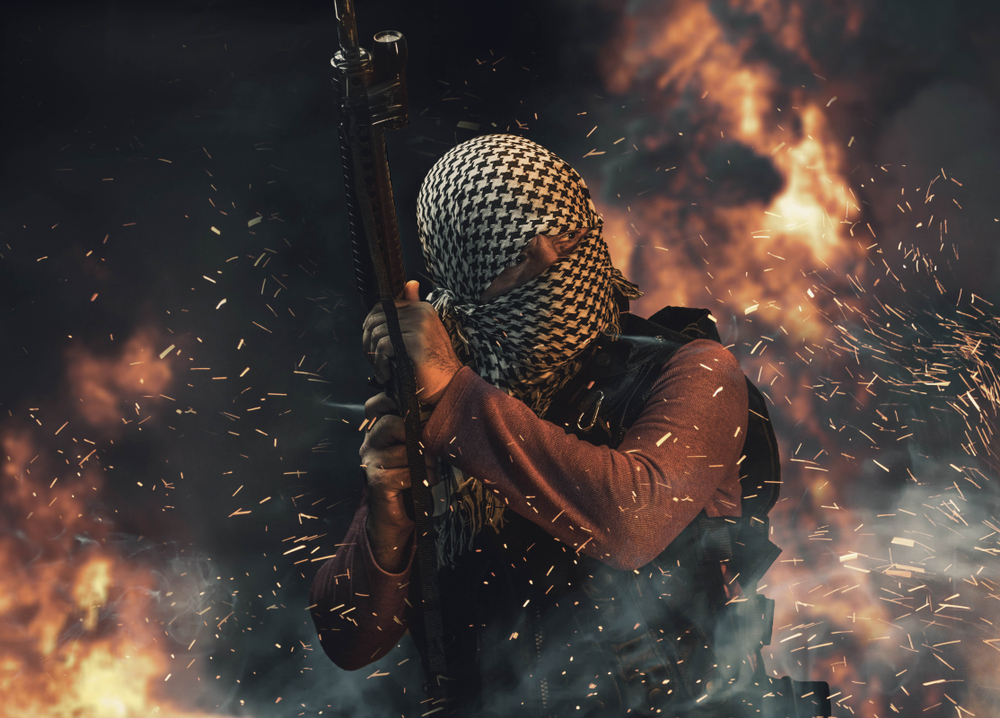 (צילום: shutterstock)
And your wife isn’t bothered by the danger?
“She understood that it wasn’t ego or a stunt to get a scoop — it was professional necessity.”
Were there moments when you felt real danger?
“Yes. We were detained by Turkish authorities who thought we were terrorists, and I prayed they wouldn’t discover the hidden cameras and forged passports — otherwise we would have been finished, and all our footage lost. But we didn’t take unnecessary risks. We used highly sophisticated hidden cameras, smaller than a pinhole. We also had a rabbi accompanying the production, advising on halachic and ethical questions both beforehand and while we were in the field.”
“Look,” he adds, “television sometimes looks scarier than reality. On screen it’s dramatic — but on the ground, a lot of it is routine, even boring. That’s the job of the director — to shape the story so people understand its meaning.”
How is making television different now that you’re religious?
“Mostly the ego. All my life I lived with the idea that I am the center. A kind of refined loneliness. When I returned to religion, I moved fast spiritually — but letting go of ego takes time. Faith is training. It’s the hardest work I’ve ever done — harder than the army, harder than journalism.
“The work itself is the same, but the approach is different. You can make the same series, but instead of putting yourself at the center, you give the credit to God. When they applaud you, you say to yourself: Step back. Without Him you wouldn’t be here.”
When the first episode had very high ratings and the next fell sharply: “That’s the message — God wants you humble and praying.”
Do you have a problem interviewing terrorists as a believing Jew?
“I’ve interviewed every kind of murderer. People who openly said they want to throw us into the sea. But if we don’t understand what goes on inside their minds, we’ll keep deluding ourselves that they’re peace-loving Scandinavians. When a terrorist tells me he’ll kill Jews even if he gets all the land back — that’s something important for the public to hear.”
Have your religious beliefs made you politically right-wing?
“I’m not right-wing and not left-wing,” Yehezkeli says. “I’ve studied the Arab world my whole life — and I’m telling you clearly: they don’t want peace. Neither the right nor the left understands them.”
Which schools do your children attend?
“My dream is that my kids will be happy, and that they won’t get emotionally crushed by the school system. Some are in home-schooling, some in Chassidic institutions. Call it whatever label you want — I just want them to receive Torah with joy.”
Aren’t you worried they’ll be confused?
“They know they’re not part of just one box. They see me everywhere — in media, in Torah classes — and they understand that the world was created for them. Whatever path they choose, I love them.”
Background and personal journey
Tzvi Yehezkeli lives in Bat Ayin with his wife Meital and their five children. He was born in Jerusalem to Iraqi-Israeli parents, served in an elite IDF unit, later worked in the Shin Bet, studied media, and eventually became one of Israel’s leading Arab affairs correspondents.
When he began becoming religious, he would remove his kippah before entering the studio to avoid triggering viewers — but after four years decided to appear as he truly was: “It felt absurd to live a life of Torah and not show it.”
The one secular hobby he kept is riding his large motorcycle. “On the bike I clear my head — but faith is always there.”
He speaks openly about ongoing spiritual struggles: “Baal teshuvahs want to become the Messiah after five minutes. But life is a constant inner workout. I just thank God that I reached Torah, even if late.”
Do you miss anything from your secular life?
“Not really. I thought Shabbat would be hard, but after one Shabbat I couldn’t understand how I ever lived without it. Yes, sometimes I miss the carefree emptiness of time… but give me half a day of that and I’ll be bored,” he laughs.
Alongside his journalism schedule, Yehezkeli keeps a daily hour of secluded prayer (hitbodedut): “It keeps me alive,” he says.
He also joins spiritual learning initiatives and Torah programs, which he views as his “tithe of time” to others.

