

Magazine
Turning the Home into a Canvas: Finding Art in Everyday Spaces
Artist Mati Dushinsky turns her home into a living studio, creating art among kitchen spices and wine bottles, and finding inspiration in the most unexpected places.
- Miriam Salomon
- | Updated
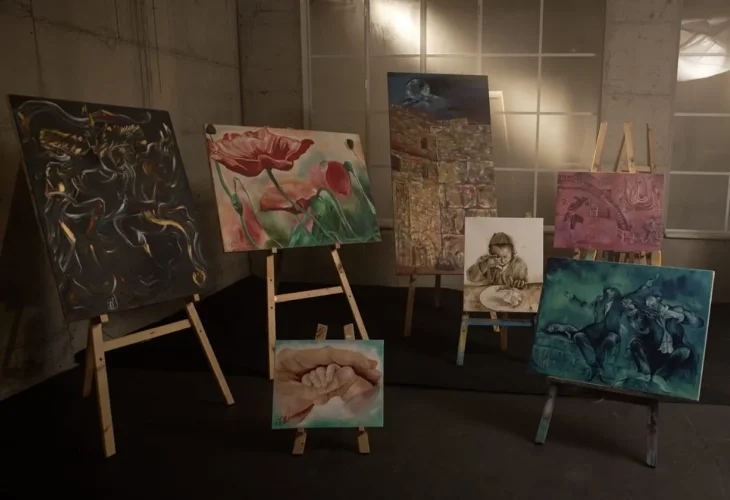 Photos courtesy of Mati Dushinsky
I meet Mati Dushinsky in the middle of her painting process. In her world, there is no other way. She sits comfortably in front of a stretched canvas, brush in hand, her palette resting on the kitchen table beside her.
“Why the kitchen?” I ask.
She laughs. “I paint everywhere. My home is my studio. I don’t have a designated painting space or workroom. I paint on the floor, the kitchen counter, and the table. Honestly, among the pots and spices, my most beautiful works come to life, especially on Friday mornings while cooking for Shabbat.
“It does have its downsides,” she adds with a smile. “Just yesterday, I noticed a paint stain on my husband’s suit that wouldn’t wash out. But that’s the reality when your entire house is your art studio.”
And how do your children feel about all this?
“My paintings are a family experience,” Mati says. “The kids know not to touch my work, but they follow the progress with sweet involvement. They constantly beg to paint too. My seven-year-old knows exactly which paints I use and won’t settle for anything less than quality materials. Honestly, her work is excellent, so sometimes I let her use my paints and delight in the results.”
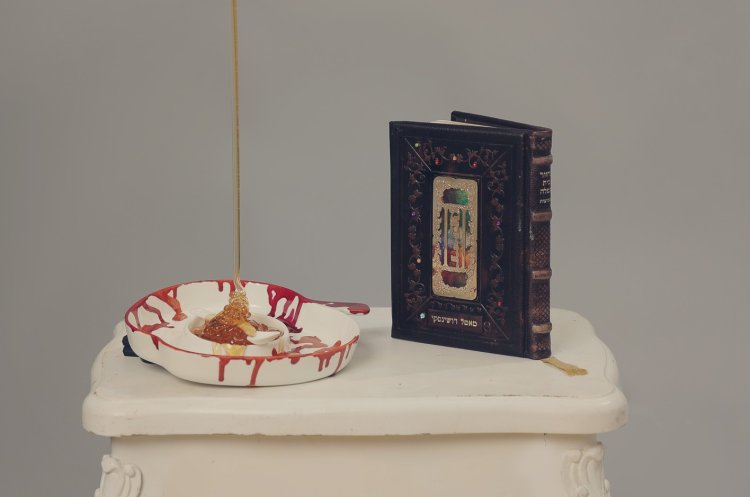
Making Space for Creativity
What about other times?
“For years, I often had to refuse. I didn’t like them touching my materials, mixing my colors, or interfering with my paintings. But I regretted not letting them create freely.”
Two years ago, she found a solution.
“I decided to dedicate an entire wall to the kids’ art. A living room wall where they can draw and paint freely, without worrying about paper or floors. I give them acrylic or gouache paints just for them, dress them in work clothes, or wrap them in a big apron I made from a trash bag.”
She smiles. “They love that wall. They write messages to each other, draw images filled with love, add symbols from their imagination, and enjoy every moment. It has become our family therapy. The wall is packed now, and anyone who wants to add something simply paints over what’s already there. There are layers upon layers of creation, and I will never repaint it. It is their studio and my wall of joy.”
“It’s moving to see that my art doesn’t live behind studio walls. My whole family shares the journey.”
The Business of School
“Let me tell you something else,” she adds. “Ironically, my biggest artistic breakthrough came from the kitchen, through bottles, spices, oil, and sugar.”
How do spices and sugar connect to art?
“I’ll go back a bit,” she says. “I didn’t always have a gallery selling my paintings. For years, I never imagined making a living from art. I painted purely for joy, whenever I could steal a free moment.”
As a sensitive child, Mati struggled within the rigid structure of school and escaped into drawing and painting. “In classes where teachers let us keep busy, they were rewarded with my quiet presence in the back row, endlessly cutting, coloring, gluing, and creating.”
“Schoolwork and exams were exhausting. Art and crafts classes were my refuge. My friends noticed my work and asked for help with embroidery, knitting, or gluing projects. Even then, I had a business instinct, bartering my skills with deals like, ‘You do my history or algebra homework, and I’ll embroider your pillow.’”
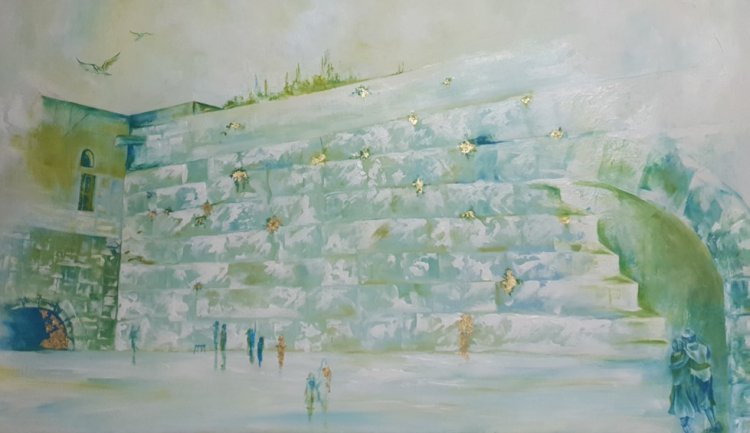 The Western Wall
Art Without a Plan
As she grew older, Mati never stopped creating. Art became part of her, even though she never planned to become a professional artist. After marriage, she worked as a shoe store saleswoman, painting at night and in spare moments. Later, she became a full-time homemaker, continuing to paint between raising her children.
Painting was her emotional outlet. When a fire broke out in their home and destroyed everything, she painted flames to release her grief. When she longed to study ballet but could not find a suitable class, she painted enormous ballet slippers. After visiting the Western Wall, overflowing with emotion, she poured her feelings onto the canvas in a powerful painting.
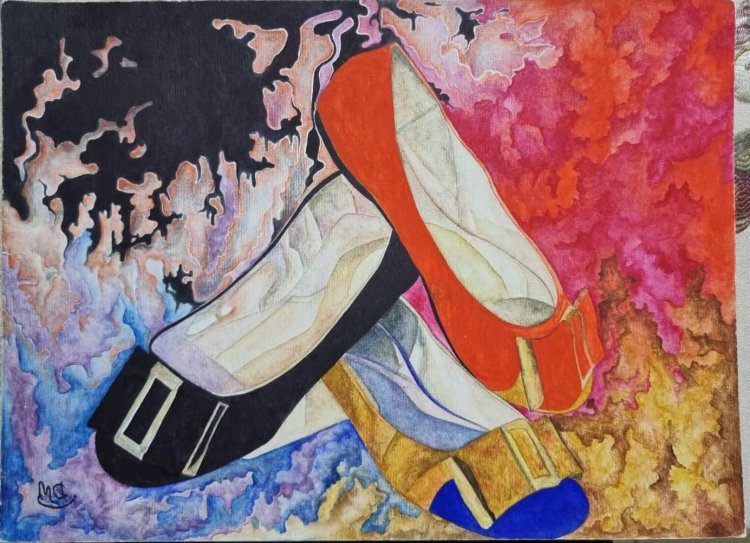
Creating from a Different Angle
Her creativity continued to take unexpected paths.
“Years ago, during the month of Elul, I ran out of watercolor paper. As I was about to throw away the cardboard packaging, I suddenly felt like painting on it. I spread modeling paste, cried, painted, prayed, and colored. The result was The King in the Field, a painting that still moves me.”
“For me, every painting session is quality time. It is reflection, listening inward, and private conversations with Hashem. I pour my heart out in gratitude for the gift of painting.”
“I also have a series I love, all centered on one theme: Jerusalem, the holy city. While there are countless paintings of Jerusalem, I feel mine are deeply personal and distinctly different. They present the city through an intimate lens, bursting with an authentic essence etched into my heart since childhood.
As a former Jerusalemite, I endlessly miss the ancient walls, narrow alleys, tall stairways, the crisp air, and even the cats casually strolling across the Jerusalem stones as if the city belongs to them. All of this finds its way onto my canvases, captured from a slightly different angle, and I feel a deep connection to these images.
By the way, cats are a quiet motif in many of my works. I feel they add a lively touch and a hint of a smile, and I enjoy weaving them into my creations.”
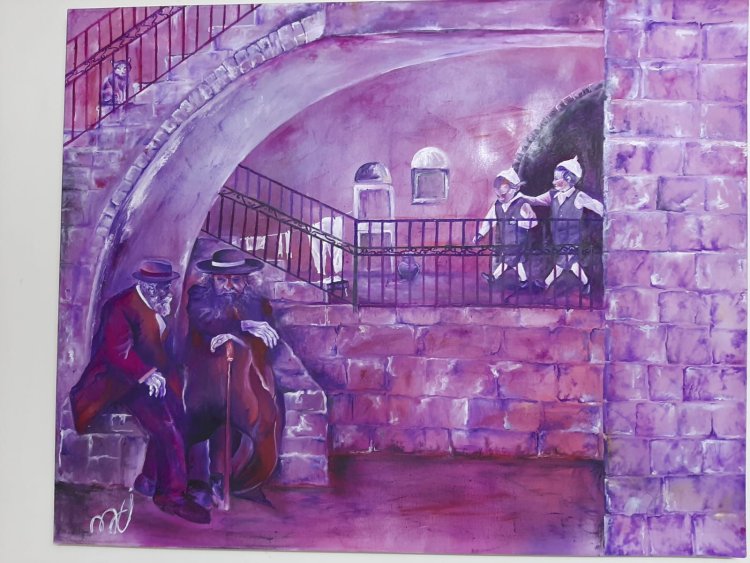 Jerusalem
From Paintings to Bottles
Years went by, and Mati kept painting and advancing, becoming a high-level multidisciplinary artist. Yet her works remained unseen by the public eye, hidden within the walls of her home and among friends and relatives.
Did you ever think of selling your paintings?
“For years, the thought didn’t even cross my mind,” Dushinsky shares. “Painting was my personal gift from Hashem, a space for expression and release, nothing more. But over time, more and more friends told me there was a demand for artistic work and that I might even be able to earn from it, so I decided to give it a try.
I researched how to sell paintings and contacted various gallery owners, but for some reason, they weren’t interested in my work. I was deeply disappointed, feeling like a failure again, echoing those gloomy school days. I kept trying, approaching gallery after gallery, until one finally agreed to display my paintings. Then COVID-19 struck. Exhibitions were canceled, galleries closed their doors, and I was asked to come collect my work.
It felt as though every door was closing on me and my creations. I regretted the moment I tried to turn my precious hobby into a commercial venture, and those attempts only discouraged me further.”
And how did everything turn around?
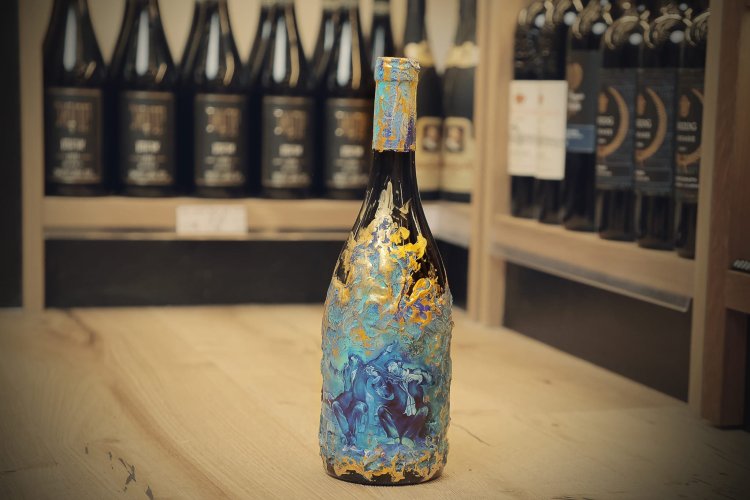
“Everything began two and a half years ago, when my fourth child was born. A second son, after two daughters and another son. Returning home from the brit, I faced a small dilemma. Our family follows a custom of opening a new bottle of wine for the brit, making l’chaim, and saving the bottle for the child’s bar mitzvah, and later, please Hashem, for his wedding. It’s a tradition rooted in hope and faith.
Standing in the kitchen with the open bottle in my hands, I wondered how I would distinguish it from his older brother’s bottle years from now. As always, my paints were on the counter, brushes and palette beside the sugar jar and oil bottle. On impulse, I picked up a brush and wrote the baby’s name, ‘Dubeleh.’ Once I started, I couldn’t stop, and soon I was painting directly onto the bottle.
When I finished, I felt a spark of excitement. A thought crossed my mind: maybe I could sell painted bottles for brit ceremonies.”
“I called my husband, thrilled, but he wasn’t convinced. ‘Who would buy a painted bottle?’ he asked. ‘People pay for paintings, not bottles.’”
“For some reason, I was convinced the idea had potential and refined it with another spark of inspiration. ‘Purim is coming,’ I thought. ‘Maybe people will want painted bottles for Mishloach Manot.’
My husband remained skeptical but, as always, agreed to go along with my ‘crazy’ ideas. I asked him to buy a few wine bottles. At the time, we were in a difficult financial situation, in the midst of the COVID-19 period, shortly after I had retrieved my paintings from the gallery without a single sale. He went out and bought two simple wine bottles for fifteen shekels.”
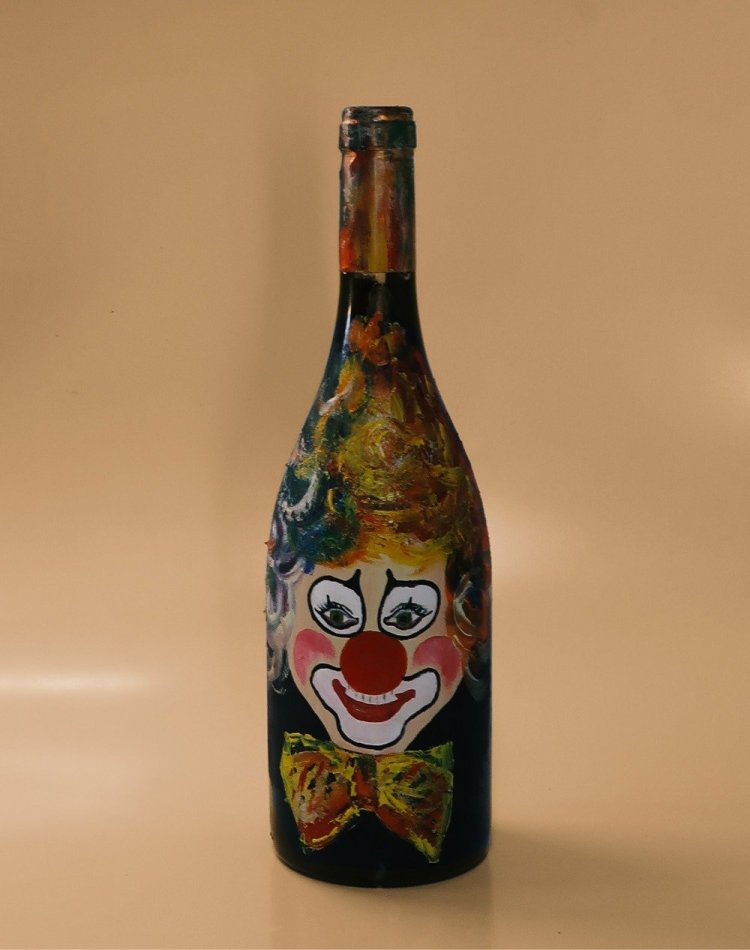
“I eagerly sat down to paint clowns on the labels. We placed a small ad in a newspaper, and within two days both bottles sold, each for 145 shekels. The profit was enough for a Purim feast and Mishloach Manot. The unexpected success filled me with satisfaction and hope.
Right after Purim, we bought more wine bottles, and once again I sat down to paint. This time, I painted designs unrelated to the holiday, added blessings, and layered them with color. With no money for advertising, I asked friends to spread the word about my unique creations. By Hashem’s grace, those bottles sold just as quickly, and we suddenly realized that a new gate had opened for us, in a direction we never could have imagined.”
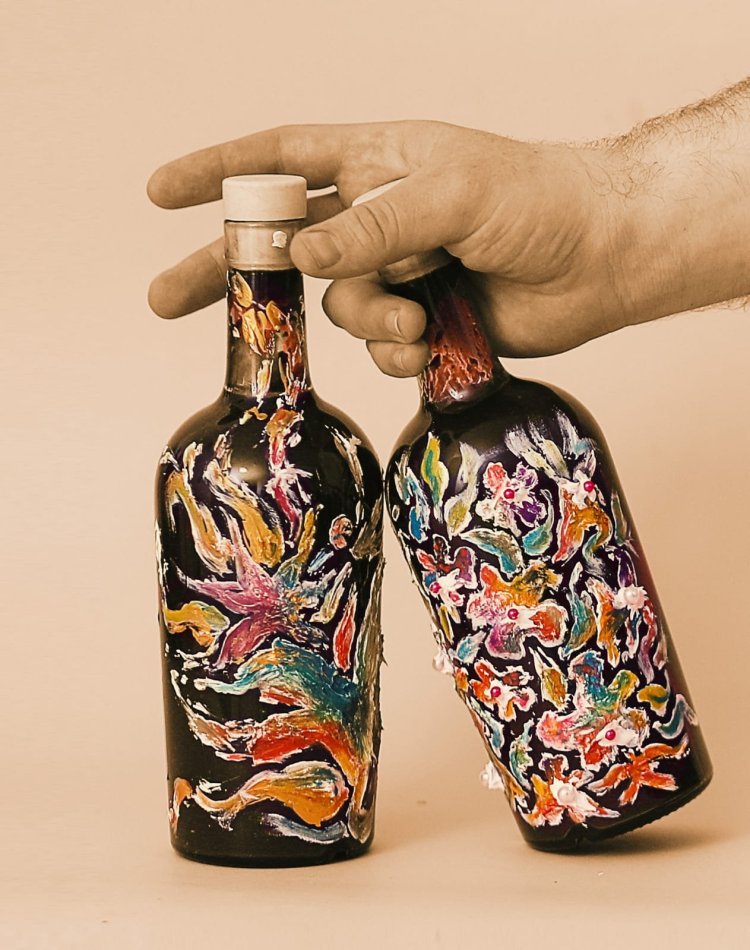
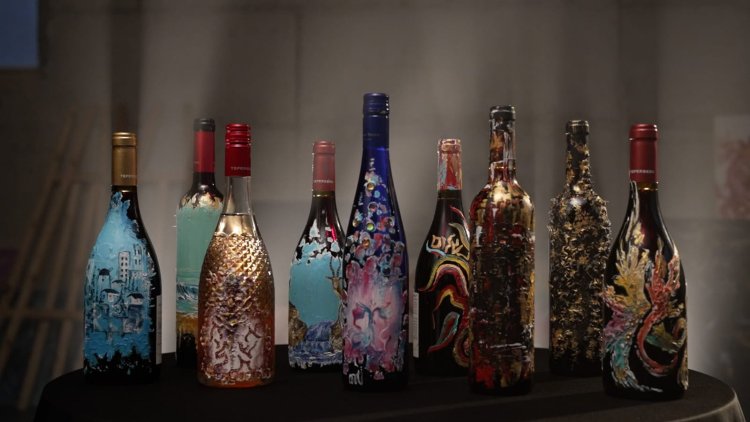
“Initially, I painted only on the bottle labels, but I soon felt constrained by the small space. I need freedom when I paint. I stepped beyond the label and began painting the entire bottle, but the colors would not hold or stand out on the dark, smooth glass. Acrylics, oils, gouache, watercolors. Nothing achieved the result I envisioned.
“I wanted the painting to truly take shape and come alive on the bottle, so I began experimenting. I mixed paints with raw materials from whatever I had on hand, even baking and cooking ingredients from my kitchen shelves, refining the mixture day by day. After a year of painting, mixing, and experimenting, I finally reached, with G d’s help, the perfect secret recipe. The colors now last for years, though I am still improving it. It is part of the thrill for me.”
Mati shows me the decorated bottles. Symbols, familiar landmarks, well known logos, vivid characters, and rich backgrounds layered with detail. Jerusalem’s walls appear again and again, as do cats peering out from the glass. The bottles have become her flagship product, and over time she opened an online store dedicated to them. Alongside the bottles, her paintings and other artistic creations, stones, porcelain plates, leaves, and even dried fruits, have also found eager buyers.
“The bottles are a special gift from Hashem,” she says. “Through them, we found our livelihood. They taught me there is no room for despair in this world. Even the paintings that no gallery once wanted are now displayed in my own gallery and highly sought after. For me, it is a visible miracle I thank Hashem for every day.”
Now that your art provides an income, do you still feel connected to your creations?
“Absolutely,” Mati answers. “I may paint commissions during the day, but I never stopped painting my dreams and emotions. Mornings are for orders. Nights belong to my soul. As evening approaches, my fingers feel the urge to dance across the canvas. Once I have poured myself into a painting, I have no trouble letting it go. The act of painting itself fulfills me.
“When a painting speaks to someone and they connect with it, that excites me. Art is not just decoration. It is a connection to the soul, an inner expression of spirit and emotion. Something no amount of money can measure.”
Her gallery has gained recognition, and two years ago one of her works was selected for an international exhibition at the State Comptroller’s Office. Other pieces were displayed at a major exhibition in Binyanei HaUma. Still, fame holds little appeal for her.
“I have been offered TV interviews more than once and always declined. I have also been asked to switch to a non kosher phone for broader exposure, but I will not give up my values. No amount of recognition is worth more than my principles and my connection to Hashem through art.”
Are your children involved in the bottle creations as well?
“Very much so,” she smiles. “Just last week, my daughters pulled out a Shabbat wine bottle and an olive oil bottle, peeled off the labels, and begged to paint with me. I could not say no. I gave them my secret paint mix, and they dove right in. Watching them paint was pure joy.
“When they finished, the younger one proudly declared, ‘Mine is much prettier than yours,’ and her sister quickly replied, ‘Yours are beautiful too.’ I just smiled. I was not offended at all. On the contrary, I want them to paint better than me. I only wish I had that freedom as a child. I might have been even more connected and confident today.”

