

Magazine
Aleph Institute: The Hidden Lifeline for Jewish Prisoners in America and Beyond
Inside the worldwide Chabad led network providing kosher food, tefillin, spiritual support, and legal aid for thousands of Jewish prisoners and their families
- Shalom Pekasher
- | Updated
 Photo credits: Aleph Institute
In many countries across Europe and America, Jews can find support from a Jewish infrastructure, even if it is often not visible to the eye. Jewish life is possible as long as it is connected to a community. Things look different when Jews are serving on army bases, hospitalized in hospitals, or serving prison sentences. In such institutions, their religious needs are rarely recognized, and certainly not properly addressed.
Meet the Aleph Institute, the organization that currently operates hundreds of rabbis who visit prisons every week. It is the official body appointed by the United States government to care for Jewish inmates, and it has succeeded in bringing hundreds of Jewish souls closer to Judaism, as well as saving Jews from death sentences.
After many years of wide-ranging activity, often with prisoners serving heavy sentences in third world countries, they managed to turn the concept of a “Jewish prisoner” into something meaningful and special. Together with a team of top tier lawyers, and with burning faith, they inject rays of light into the prisoner’s life and illuminate for him the straight and true path.
A man of action
The Aleph Institute was founded in 1985 by Rabbi Sholom DovBer Lipskar, in order to provide humanitarian aid and religious services to Jewish prisoners in prisons across the United States, and to Jewish soldiers serving in the country’s army.
“We traveled, my wife Chani and I, to Florida as the Rebbe’s emissaries in Miami Beach,” he recounts. “At the time the Rebbe gave us incredible blessings and said to us in Yiddish, ‘Ich fahr mit aych’ — I am traveling with you.”
In the capital city of the European Union, Rabbi Lipskar chose to deal with a problem that accompanies Jewish prisoners over the broadest possible geographical scope. In 1982 he founded the Jewish community in the prestigious neighborhood of Bal Harbour, and was appointed as the community’s rabbi. Over the years he established a magnificent Jewish center on the neighborhood’s main street, at a cost of more than ten million dollars, and also founded separate Jewish educational institutions for boys and for girls from elementary through high school age. In addition, he saw to the establishment of strictly kosher restaurants and a Jewish event hall.
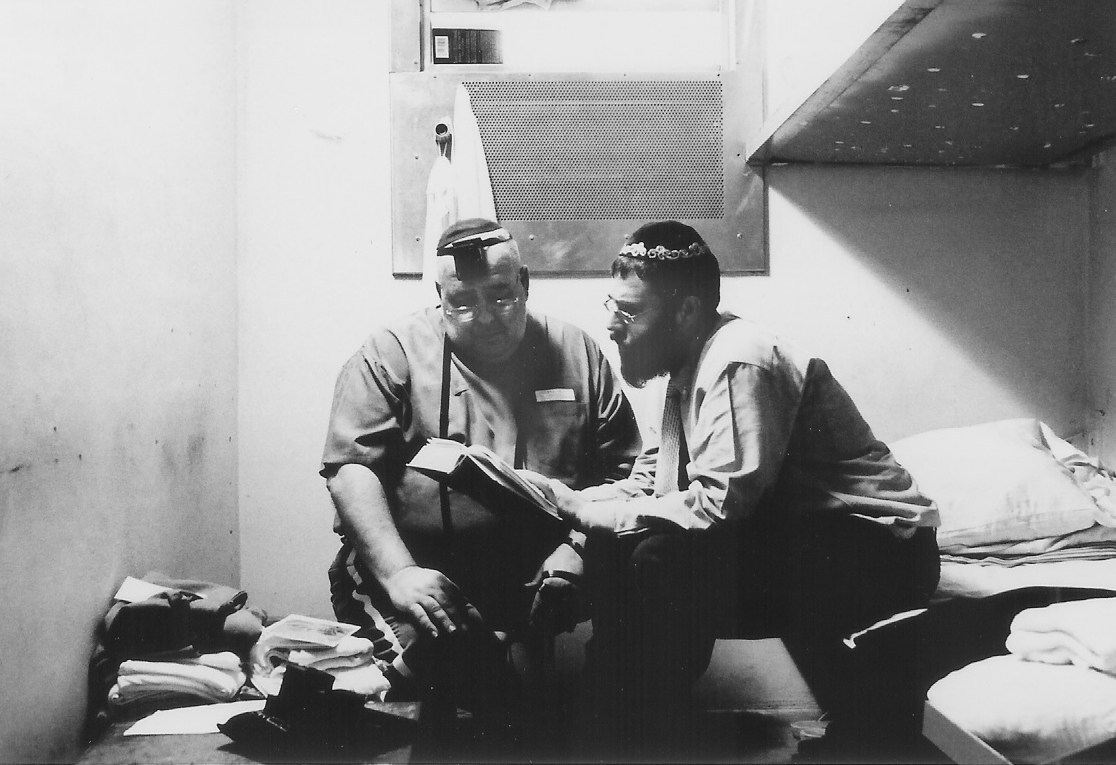
How did you come up with the idea to found an organization that would help Jewish prisoners?
“It all began at a farbrengen of the Lubavitcher Rebbe, where he emphasized the need to bring rays of light and joy into the lives of Jewish prisoners sitting in jails. The Rebbe asked then that we do everything so that these Jews would hear the Megillah and merit to give gifts to the poor. I gathered my courage, went in to the Rebbe, and told him that I was going to do what he had asked. At that moment the Rebbe took out three thousand dollars and said: a thousand should be for matzot, a thousand for tefillin and a thousand for other things. At that moment the Aleph Institute was founded. It was in a small and hidden format, but even he did not know where this would go and how it would develop.
“We started with one prison, and after Purim we tried to see how far we could expand the activity. Interestingly, in that place there were forty Jewish inmates, and one clear day the administration decided to scatter them all to forty different prisons throughout America. From that day we became an organization operating in forty states, and we began personal contact and the supply of tefillin and kosher food to each and every one of the prisoners.
“This is a very complex project,” Rabbi Lipskar adds. “There is, of course, the logistics, as well as the cost of kosher food, which can easily reach three times that of a regular meal. Ideally, we would expect the prisons to supply the inmates with kosher and appropriate food, but since this does not happen, we take upon ourselves the costs that rightfully the states should have been covering themselves.”
Thousands of Jewish prisoners
Rabbi Menachem Mendel Katz, one of the heads of the Aleph Institute in Florida, describes the unique activity: “The organization provides social services for the prisoners and their families, works for the rehabilitation of the inmates and grants them assistance with the religious needs required by them. Regarding the prisoners’ future, there is a reentry project that works with them after their release, helps them reintegrate into the community and accompanies them on their new path.”
The reason why a particular prisoner is serving his sentence in a given prison does not interest Katz. “I never ask about that, because it could harm my desire to help that person. What is clear to us is one thing: we must support the prisoner, because the prison term on its own does not make him a better person. If we do not help him now, he may repeat his actions.
“We are also the recognized body on behalf of the prison authorities, so it is easier for us bureaucratically. Jewish prisoners and their families turn to us with all sorts of problems or complaints, for a Jewish prisoner, immediately upon his arrest, needs things like kosher food, or a special permit to keep tefillin in his room, since in prisons it is forbidden to keep strings. He needs visits, and there are many prisoners who are serving their sentence very far from home. That is where we come into the picture,” says Rabbi Katz, who has already been working in the organization for 25 years and more than 5,000 inmates have become part of his life.
The population of observant Jewish prisoners in jails throughout the United States is perhaps tiny, but when it comes to keeping kosher behind bars, the number is many times higher. Secular Jews, Black Hebrews, and alongside them prisoners with no Jewish background at all, all ask to eat kosher.
Rabbi Katz estimates that in the 400 prisons scattered throughout the United States there are about 5,000 Jewish inmates, around 300 of them women, some of whom are in federal prisons.
“We begin preparing for Passover already at Chanukah, and even earlier,” he says. “We make sure to send matza, grape juice, and a Passover kit that also includes a Haggadah and charoset to every Jewish prisoner in every one of the prisons. It is not easy, and I am not talking only about the complicated logistics, but also about the bureaucracy. Every state prison service in the various states in the US has its own laws and regulations. If we want to transport kosher meals, for example, in one state we will need a special permit, and in another state they will throw obstacles in our way. We have to deal with every prison separately.”
The layers of the Aleph Institute’s activity are very varied, from providing kosher food and tefillin to fulfilling the last wishes of life sentence prisoners. “Over the years we have been privileged to witness bar mitzvah events that we managed to arrange with the participation of the father who is a prisoner, as well as unique weddings held in the prison yard to the joy of parents who could participate in the emotional occasion. Lifers who were convicted of very serious crimes and are serving all their years in prison ask us for only one request: ‘Bury us in a Jewish grave.’ We promise and we keep that promise.”
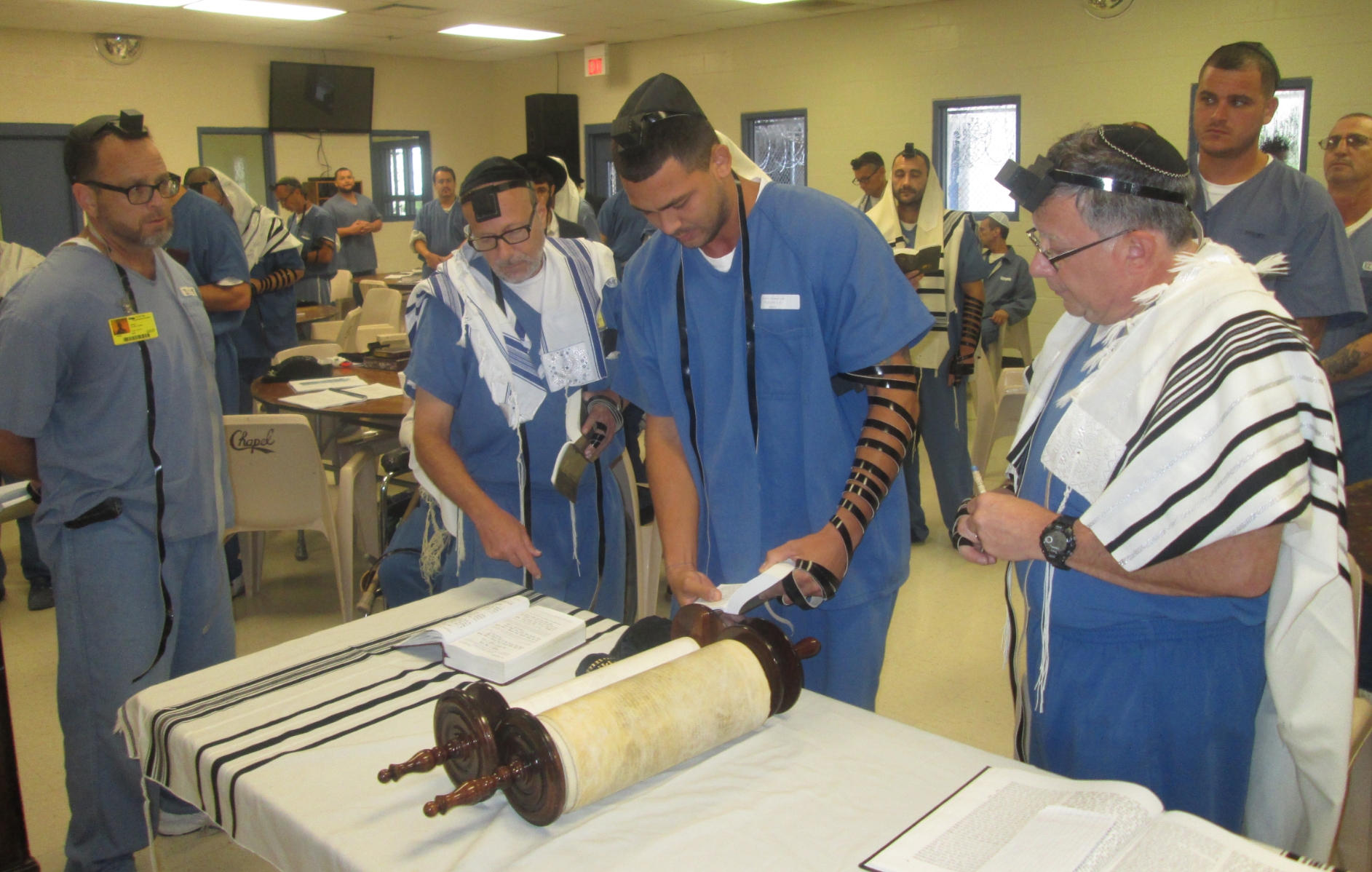
The results of this activity are enormous. Prisoners who left jail under the Aleph Institute’s care came out as completely new people. More refined, more thoughtful, and most importantly, more Jewish. “Right now I have just finished talking with a former inmate,” Rabbi Katz relates. “A prisoner whose father is a non Jew and whose mother is Jewish. When he entered prison we began to draw him closer, we put tefillin on him and he took part in all the activities we held. After he was released he called me and asked for tefillin. Of course we got him tefillin, and he began to put them on. A few months later I called again to ask how he was, and I discovered an almost completely religious man. Recently he also married a religious woman and he observes Torah and mitzvot fully. This is just one example of what we manage to bring about from a few years of sitting in prison.”
“During the corona period we succeeded in releasing more than 2,000 Jews from prison. All those whose release date was approaching, we managed to move their release earlier. Yesterday a prisoner we helped free called me, and he had one request: tefillin for the rest of his path. His knowledge of basic Jewish concepts was very weak. Tefillin, he thought, are put on before going to sleep. After I guided him and taught him all the laws, he changed his ways and now he is on the road to keeping Torah and mitzvot.”
It turns out that prison sometimes becomes an extremely important station in life. “Prison, on the one hand, closes gates on a person, but on the other hand, at the same time it opens the gates of the heart and mind to absorb true values, honest ways and better behavior,” Rabbi Katz describes. “We provide the inmates with booklets of encouragement with which they strengthen themselves, read about faith and receive answers to their questions. Jews who did not know at all that they are Jews suddenly discover an entire world of values and laws, concepts and Jewish guidelines. In prison the heart is more attentive, a person has nowhere to run, he has nothing he has to get done, and we use the time and the opportunity to instill Jewish values.”
Rabbi Katz also adds a personal note: “During Purim I stayed in New York to arrange the food kits for prisoners for Passover, and there I caught corona. When I returned to Miami — where I live, I immediately went into isolation until full recovery. Here in Miami the situation is much better. You hardly hear about fatalities, thanks to strict adherence to the guidelines. During the serious outbreak in New York I had, unfortunately, to pick up the phone every week to one of my classmates who lives in New York and comfort him. It is very sad that this is the situation, and I hope it will improve.”
Even during corona, when there is no access to prisons due to fear of infection, the Aleph Institute does not rest. “We started a project of distributing tablets and players through which the prisoners can hear Torah classes and be strengthened by words of encouragement. We are in phone contact with each one, checking on his condition and mood and trying to encourage as much as possible from afar,” says Katz.
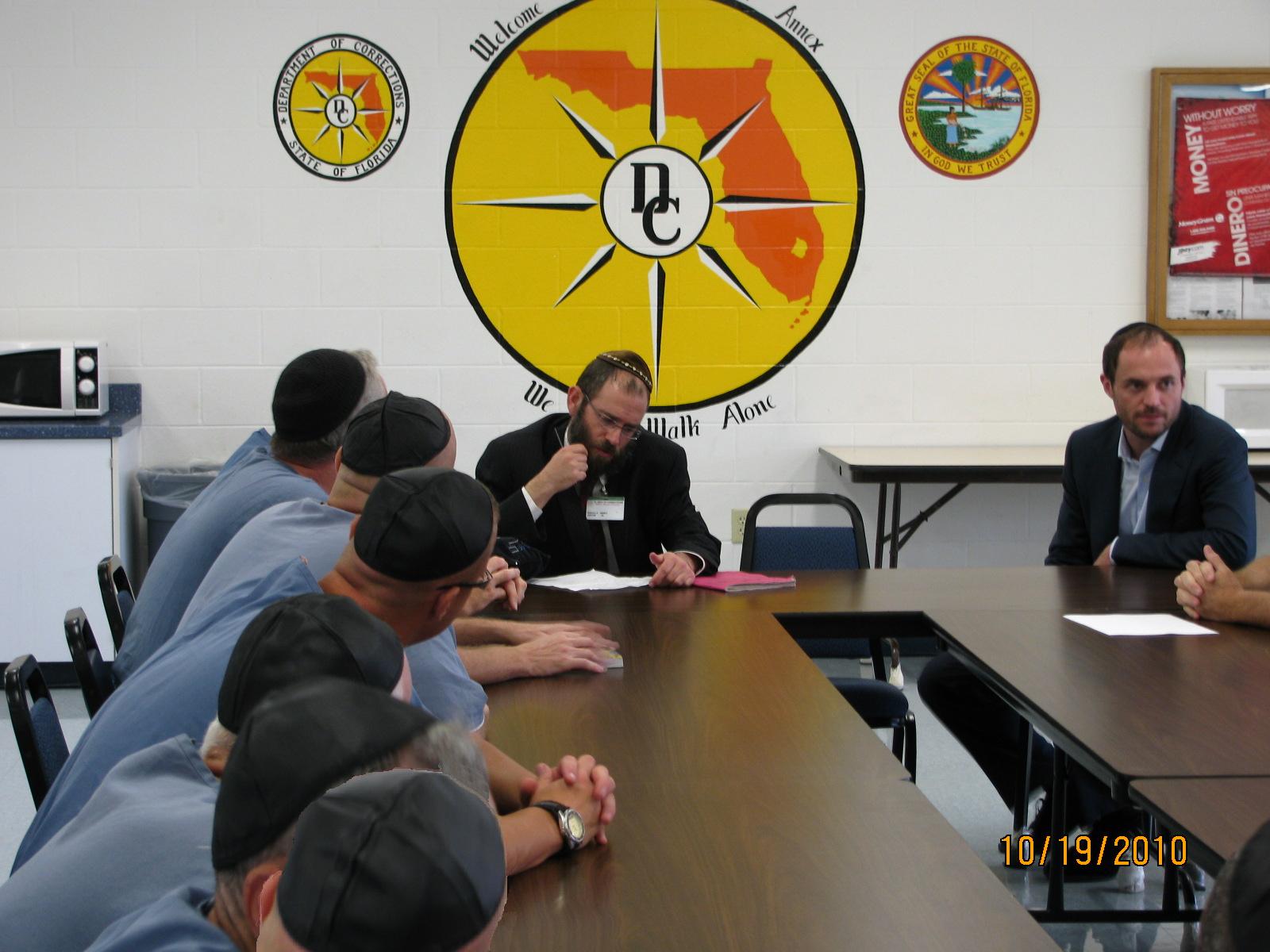
Where do you usually meet the prisoners?
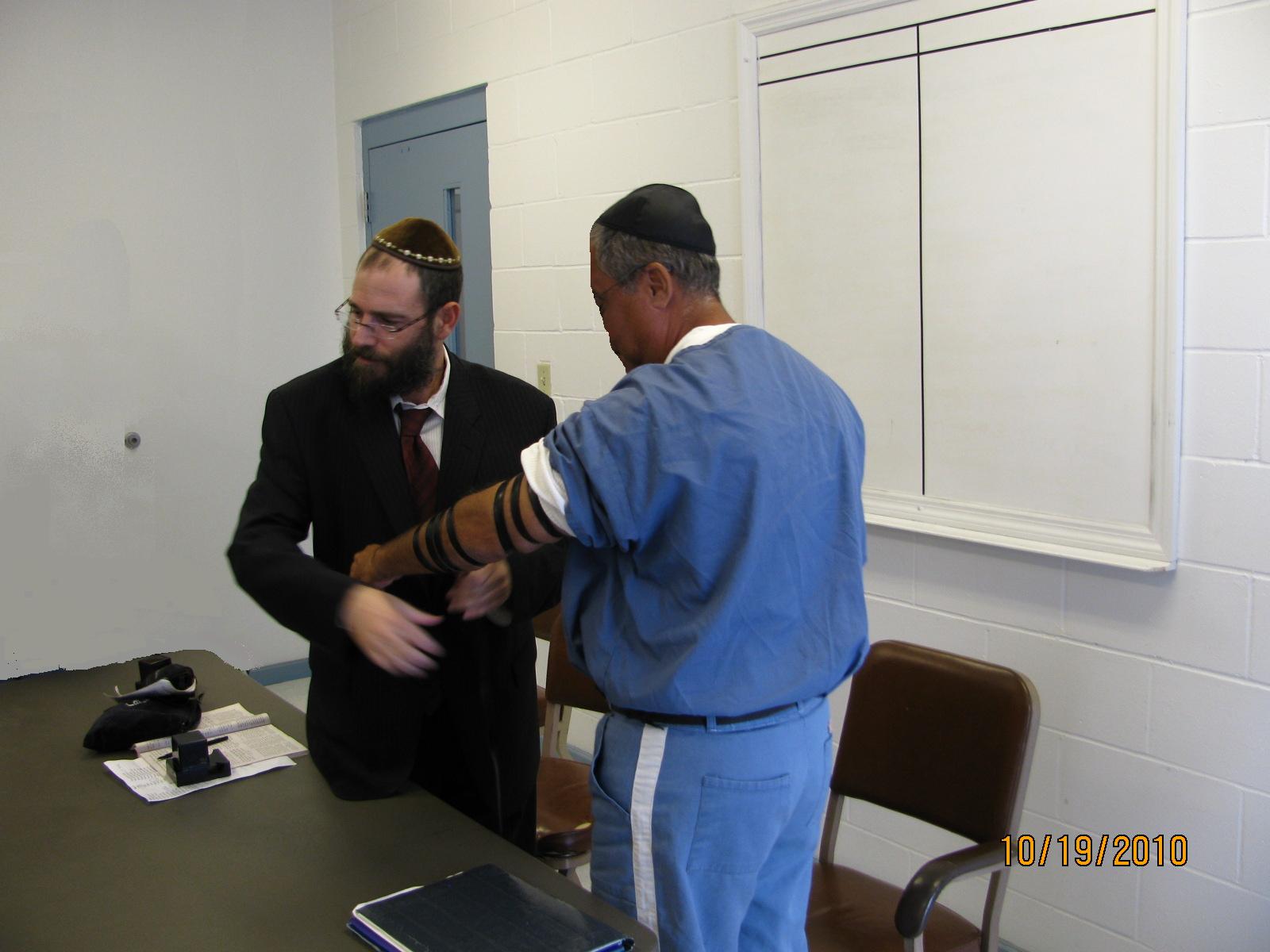
“I come to the prison and I meet them in the room designated for visits with family members. I bring with me reading material, Jewish newspapers and everything that is permitted to bring to a prisoner, and mostly I bring a lot of encouragement and human warmth, because that is what the prisoners need. There are prisoners who do not have tefillin, or are not allowed to keep tefillin, so I bring tefillin with me, put them on with them and say Shema Yisrael with them. These are Jewish people who never knew what tefillin are or what Shema Yisrael is, but when they are in prison they cling to religion, and it helps them survive.
“In addition to putting on tefillin and taking care of kosher food, we also organize talks and Torah and Judaism classes in the prisons. We have about 40 rabbis who operate throughout the United States and always go in pairs. There are times when they drive many hours to a remote prison in order to make a ten minute visit to a Jewish inmate. Someone who does not work in this field does not understand what is involved, because it is not just a visit. The rabbis lend a listening ear to all that these prisoners are going through, from complaints about food to the soul pain they suffer from the fact that their families have cut off contact with them. We have a prisoner who has been sitting five years for robbery, and his dream is to speak on the phone with his mother, who has refused to accept his calls since he was incarcerated. Such stories and others are the daily bread of the rabbis who visit the prisons.”

A brit in prison
Beyond that, these prisoners are also threatened by isolation. Many of them have no contact with their families, and prisons are often located far from Jewish communities. In such situations the Aleph Institute arranges visits by rabbis or by volunteers from its network, which currently numbers nearly 500 people. Rabbi Katz and his team also help establish contact with lawyers and psychologists. The needs are many, because there is no other organization that cares for this target group. “For many,” Rabbi Katz says, “there is only one hope, and its name is Aleph.”
“Not long ago,” he recounts, “we held a brit milah within the prison walls. It was for a Jew whose father is a complete non Jew and whose mother is Jewish. One day he came to us with a firm statement: ‘I am not continuing my approach to religion until you circumcise me.’ To our astonishment, he explained that that morning he had read in the Torah the verse ‘and no uncircumcised person may eat of it,’ and it jarred him so much that he decided to take a brave step, to fulfill the mitzvah of circumcision and circumcise himself. We connected him with the Brit Yosef Yitzchak organization, which specializes in circumcisions for adults, and after a week, to our great excitement, in the presence of a prayer quorum in the prison, this man merited to undergo brit milah as a full fledged Jew.”
Another special chapter in the Aleph Institute’s activities is devoted to saving Jews from life sentences in third world countries, where there is a real danger to the prisoner’s life. Hundreds of global, hair raising cases are filed in huge binders in the organization’s offices. “We have many times encountered cases of Jews who get into trouble with law enforcement in countries where the law is not really a guiding light. The immediate danger is to the prisoner’s life itself. Sitting in prison together with despicable murderers steeped in severe antisemitism sometimes reaches a point of life threatening danger. Here the legal department comes in with full force, making use of philanthropists, activists, heads of state, businesspeople and top tier lawyers worldwide. Over the years we have used bold ideas in order to achieve the releases. These are special operations that are better done in silence,” Rabbi Katz reveals.
One of the dramas that became public and received headlines was the release of Rabbi Rubashkin. Against all odds, facing an anti-Semitic lead prosecutor whose entire desire was to drown the family meat plant, the Aleph Institute, together with a special worldwide campaign, succeeded in obtaining for Rubashkin a commutation from President Donald Trump.
There was nothing that did not happen there. Secret talks between judges and investigators to coordinate testimonies, blocking the possibility of selling the meat plant to cover the exaggerated fines the authorities imposed on the Rubashkin family, a tainted trial that was fixed in advance. When it seemed that all the gates had closed, precisely then a shining opening appeared in the figure of the president, who paved the way for the surprising release.
Are there also moments when you feel that you failed?
Rabbi Katz is silent for a moment and then recalls, with a sigh: “A few years ago, a Jewish man in the US was sentenced to death. We sent a letter signed by a hundred famous rabbis and rebbes in the US asking that he be granted another hearing and that the death sentence be commuted to imprisonment, but to no avail. I visited him in prison several times before the sentence was carried out, and I remember to this day, with pain, his last day. I came to him in the prison, put tefillin on him, we said together the vidui (confession) and acceptance of the yoke of Heaven, and we spoke for a long time about matters of faith and trust in God. It was unbearably hard. It drained all my emotional strength. To stand before a person who consciously knows that in a few minutes he will no longer be alive. This is a situation that demands great emotional resources, and it remains engraved in my soul to this day.”

