

Magazine
Remembering Elijah Bernstein: A Mother's Story of Loss and Hope
Elijah Bernstein z"l, 19, was tragically killed at the Nova festival. One year later, his mother shares memories of his life, his light, and the meaning he left behind.
- Efrat Talia Cohen
- | Updated
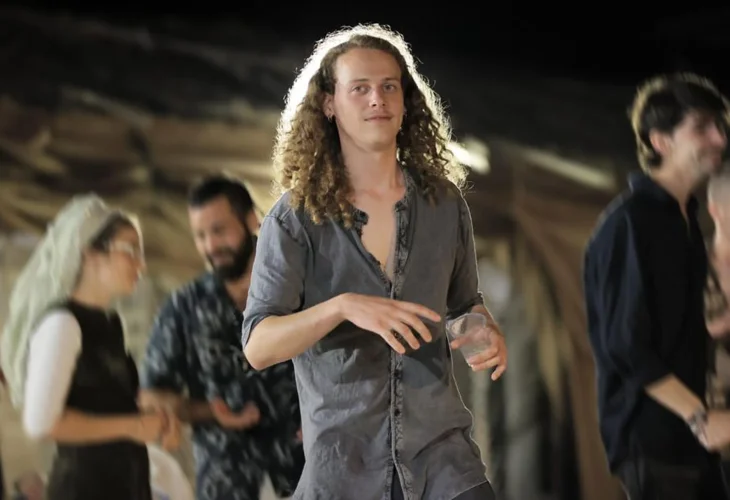 Elijah Bernstein z"l
The previous year, during the holiday of Sukkot, the Bernstein family gathered joyfully under the sukkah. Together with Elijah, they sang and played music, surrounded by a diverse group of guests. Some wore festive hats and suits, others were Elijah’s friends dressed casually in jeans. Some wore kippas, others did not. Yet all were united under one roof, engaged in conversations that moved naturally between Torah, faith, and deep reflections on life, all infused with warmth and humor.
Simchat Torah arrived, and despite his mother’s pleading to stay for the meal, Elijah chose to leave for a party in Re’im, unaware that this would be their final meeting.
What Kind of Child Was Elijah?
“Elijah was our firstborn, one of ten children,” recounts his mother, Hadassah Bernstein. “From birth, he was special, incredibly gifted. By eighteen months, he recognized letters and numbers. We only realized how unusual that was after having more children. He was gentle, sensitive, and pure, a child who wouldn’t harm a fly.
“In talmud torah, he excelled and learned independently at a young age. He was sociable and artistically gifted, drawing from early childhood with remarkable ability. I often told him that everything he touched turned to gold, like the story where straw and chaff become precious metal.
“He also discovered a deep love for music. He had an exceptional ear and played beautifully, even during his yeshiva years. I was so impressed that I saved some of his exams.”
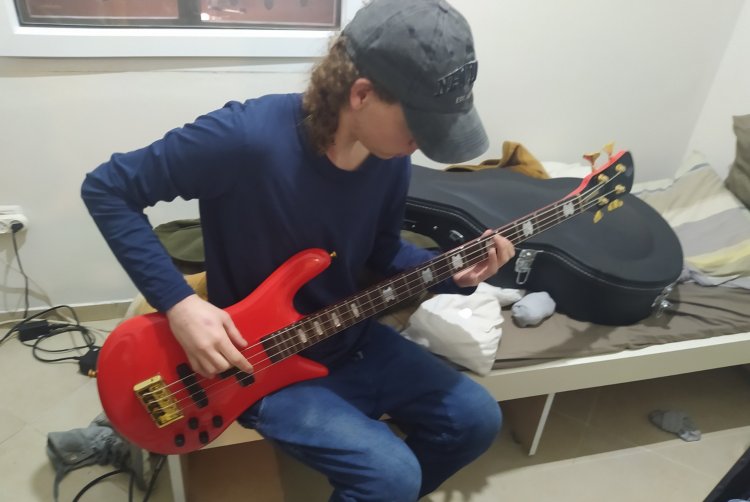 Elijah Bernstein z"l
 Elijah Bernstein z"l
A Soul in Search
Around the ages of thirteen to fourteen, Elijah began a personal journey of self-discovery. He moved between yeshivot and eventually left formal frameworks altogether. His guiding principle was not to learn within systems.
At the same time, his connection to music deepened. He often told his mother, “Mom, I’ll return to Gemara and learning when I truly feel the desire.” Still, he remained connected to Jewish life. When he engaged in Torah discussions, he was completely present.
Elijah was sincere and deeply allergic to hypocrisy. His friends saw him as a source of light, glowing with inner clarity and purity that was evident to all.
Musically, his tastes were wide-ranging: Israeli music, classical, jazz, rock, and old Hebrew songs. Independently, he immersed himself in electronic music, mastering complex software in English, despite never formally studying the language. His room echoed with everything from trance music to childhood melodies.
His social circle reflected the same diversity. Some friends had long hair and earrings, others wore peiyot and kippas. This diversity became especially visible during the mourning period, revealing how many different people were touched by his presence.
“Elijah never judged people by appearances,” Hadassah says. “He saw character. He taught us, his parents, to look beyond the outer layer and see the Jewish soul within every person.”
 Elijah z"l with his mother, Hadassah
A Family Journey
Hadassah and her husband Aviada also walked a personal path. Hadassah grew up in Hararit in the Galilee and spent years in New York studying art. Today she works as a graphic artist. Aviada, raised on Kibbutz Moran, embraced religious life together with her. They married and built their home twenty-two years ago.
For twelve years they lived in Rabbi Auerbach’s community in Tel Aviv, later moving to Jerusalem. Aviada now coordinates Bar Mitzvah programs at the Western Wall Heritage Foundation, often introducing Jewish life to participants for the first time.
Since the war, he has encountered families of hostages, evacuees, and mourners, drawing on their own experiences of loss to offer strength and support.
Did Elijah Live with You Despite the Differences?
“Absolutely,” Hadassah answers. “There were tense times and sleepless nights, worrying where he was. But Elijah always knew he was deeply loved.”
How Did You Handle the Gap?
“At first, it was frightening. A teenager’s search often feels like an exit movement. Leaving mitzvot, changing appearance. It’s painful and alarming. But over time, we understood he was searching, even if that meant encountering difficult experiences. He was seeking truth and authenticity, and eventually, connection with Hashem.
“He didn’t want external gestures without inner intent. So I wouldn’t say he chose a different path. He was in a process.
“As he matured, we still disagreed at times. But our relationship was never defined by externals. We began seeing beautiful changes. Parenting is always evolving. The picture you imagine for your child shifts as they grow. We loved what we saw in Elijah exactly as he was. There was comfort in witnessing his purity and rare sincerity. We were proud of the swan he was becoming.”
“I believe today’s youth seek authenticity. They cannot be deceived. If something feels false, they search further. This, I think, is deeply connected to redemption. These young souls teach adults authenticity, kindness, and true connection of the heart.”
“Hashem Cherished Those He Called Back”
When the time came for military service, Elijah and his parents realized the army was not the right fit, and he received an exemption. He worked, created, and immersed himself in music and art.
Then Simchat Torah arrived.
Despite their closeness, filled with love and laughter, Elijah chose to attend a party. It was unlike him, especially on a holiday. Hadassah tried to persuade him to stay, but he insisted. He had helped organize the event, something she later understood as divine providence.
Their final words were simple. “Mom, see you.” But they never did.
 Nova Festival grounds (Photo: Yaniv Nadav/Flash90)
The Last Moments
He left on Friday, after a joyful Sukkot filled with music in the sukkah. Two days before Simchat Torah, friends from Tel Aviv visited. “I remember telling them,” Hadassah recalls, “‘You have six days to do as you please. Keep Shabbat for Hashem.’”
During the holiday, sirens sounded across Jerusalem. News of kidnappings filtered in. Knowing Elijah was in the south, concern grew, but they struggled to connect the full picture.
By Saturday night, he was unreachable. His cousin could not contact him. The magnitude of the catastrophe began to sink in.
What Do You Know About His Final Moments?
Today, they know Elijah and a friend were likely heading toward Tze’elim when they were shot on the road. A close friend later shared that, in the hours before the massacre, Elijah encouraged her to maintain a good relationship with her parents.
As the danger escalated, everyone tried to find their group. Elijah and this friend parted ways. She survived. He did not.
At 8:15 a.m., Elijah sent a message saying they were heading home. Fifteen minutes later, all communication ceased.
“At that same moment,” Hadassah says, “I awoke to the first siren in Jerusalem. Hashem woke me. Not just from sleep, but spiritually. I understood that Jewish life allows no complacency. Faith demands engagement, even through immense pain.”
Living with Uncertainty
“Our son was missing for a week. Each day was preparation for accepting Hashem’s decree. Psalms, prayer, and faith built the strength to face whatever awaited us.”
Faith After Loss
“I told myself that eternity does not belong to this world. Whether one lives nineteen years or a hundred, all suffering comes from mercy. Within judgment lies kindness. We cannot grasp eternity, but we prepare our vessels for it.”
“Hashem cherishes those He calls back. Elijah was chosen to sanctify His name. That is an unfathomable honor.”
Quoting Rabbi Ashlag, the Baal HaSulam, Hadassah reflects that pain comes from failing to recognize divine providence. One day, she believes, the connection between suffering and redemption will be revealed.
“Like Rabbi Akiva smiling at the ruins of the Temple, seeing destruction as a sign of future rebuilding, we hold onto faith. Where pain exists, hidden goodness exists too.”
Elijah loved learning at the Galil Yeshiva in Nachlaot, a place open to all backgrounds. There, over half a year, he completed Masechet Makkot.
A fellow student once said, “During Simchat Torah, we were closest to Hashem. Leaving the sukkah’s protection, rejoicing with Torah, these youths sought truth and connection. Hashem used them to reveal His sovereignty.”
“Even now,” Hadassah concludes, “our role is ahavat Yisrael. This is not someone else’s pain. It belongs to all of us. ‘A time of trouble for Jacob, yet through it, we will be saved.’”

