

Magazine
Healing Beyond the Plate: Shahar Smit’s Journey with Food and Faith
Seeking distance from her family’s growing faith, Shahar Smit found herself far from home, quietly battling an eating disorder. What she encountered there became the beginning of healing beyond food.
- Tamar Schneider
- | Updated
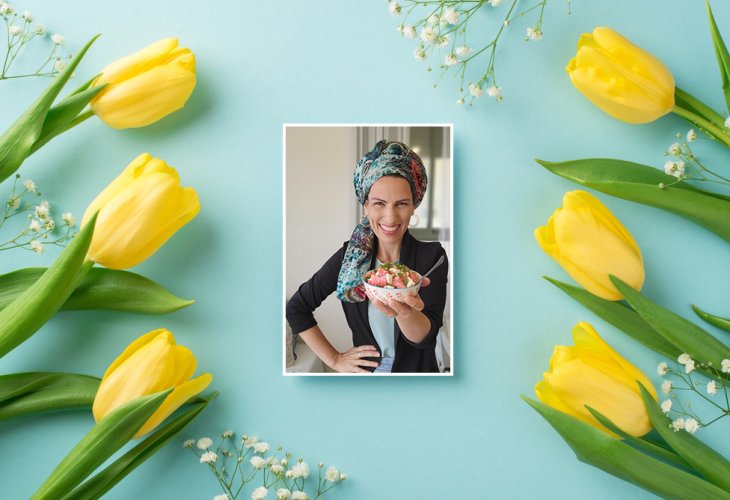 Shahar Smit
Today, it's hard to believe that Shahar Smit, a mother of seven and a nutrition and healthy weight loss coach, has such a tumultuous backstory behind her career choice. The healthy, beautiful meals she teaches others to prepare and the dozens of women who've transitioned to healthier lifestyles with her help, stand in stark contrast to her past. For eighteen long years, Shahar battled an eating disorder in secret. "It was only during my third pregnancy that I realized I needed to overcome it to be there for my children," she recalls. But before her healing journey with food, another unexpected process unfolded - a deeper connection with Hashem.
Deceiving on All Fronts
"I was born in the secular Kibbutz Yehiam in Galilee," Shahar begins. "The only connection to Judaism was through my mother's family, who became observant. We visited them occasionally and learned a little about Judaism from them. But my upbringing in the kibbutz was consciously secular."
At thirteen, a significant shift occurred in her life. "I started comparing myself to other girls and the models in teen magazines only reinforced the pressure. I decided to lose some weight, following a magazine's simple advice: cut out bread and add salads."
This small diet quickly spiraled into something destructive. "Within two weeks, I was in a cycle of fasting for days and then binge eating uncontrollably," Shahar describes. "Each time it happened, I sought guidance again from my 'oracle' - the teen magazine, searching for ways to dive deeper into the disorder."
Was there a psychological background that led you there?
"I never pinpointed a significant reason for what happened. Maybe it's my personality type, inclined to extremes. Despite the natural challenges every teen faces, as I mature in faith, I see it as the path Hashem intended for me."
Her parents soon discovered her condition. "My mother, deeply concerned, sought help from doctors, dieticians, psychologists. But I was an expert at hiding the truth. I assured them I'd stopped, and from the outside, there were no signs like extreme thinness or hair loss because my binge eating sustained me somewhat."
Her secretive mechanisms were robust. "Occasionally, my mom caught on, but I'd convince her it was a one-time slip. I managed an entire web of deception. Even during a volunteer service year, living with friends, they remained unaware. Later, in officer training, I went through numerous assessments, yet nothing was noticed."
Religious Influences Everywhere
Alongside the eating disorder, another journey began. "At 16, my parents moved to a less secular kibbutz where my mom started her initial steps back to Judaism," she explains. "When my family moved again, my mom's observance accelerated."
The family's evolving observance impacted each member differently. "My dad supported her and gradually joined, along with my younger siblings. My grandparents, prominent in the original kibbutz, weren't thrilled. They were bothered by the new restrictions, like keeping kosher."
'My mom's transformation was tough for me,' Shahar describes. 'With great love for my family, I found their new religious path hard. Upon enlisting in the army, I requested a distant base to limit home visits.
Her first arrival in Gush Etzion shocked her. "I expected a few tents, but instead saw thriving communities with flourishing gardens and well-kept homes. The second shock was the outbreak of a second intifada," recalls Shahar. "I experienced the conflict firsthand, realizing that there's more to the political narrative I grew up with."
As an officer, her role involved interacting with many of these communities. "I was surprised by their kindness and saw they were not at all like the extremist image portrayed to me. These encounters challenged deeply-rooted stereotypes about an entire group of people."
A Leftist Keeping Shabbat
Shahar emphasizes the importance of behavior. "Our actions, in public or private, can significantly influence others. Simple acts of kindness shine brightly."
But what led you to keep mitzvot?
"Values weren't lacking in my upbringing. But I found the values from Gush Etzion residents stemmed from a different source, challenging everything I'd heard about religious Jews. This made me curious."
"As my journey progressed," Shahar continues, "I marveled at the wisdom in our tradition," noting her excitement upon discovering ancient Jewish insights related to modern science or ethics."
The practical change began in the army, during a seemingly regular Shabbat. "My mom suggested lighting Shabbat candles over the phone, something she often mentioned," Shahar recalls. "This time, it struck me differently. I lit the candles, then went to the base synagogue, feeling a profound inner light."
Over time, Shahar increasingly immersed in observing Shabbat traditions. A fellow officer, noticing her efforts, guided her in properly understanding Shabbat laws and encouraged her exploration of faith, leading to her eventual marriage with him after the army.
Revolutionary Food Experience
Turning back to her eating disorder: "I suppressed it for years," says Shahar. "The destructive habit became overwhelming, but with pregnancies, I grasped the urgency to change. I sought online counseling and was referred to a naturopath and emotional therapy."
Did your husband know?
"We didn't discuss it initially. As a military officer, he was often away. It felt like a private matter, seemingly affecting no one. However, once I decided to address it, I shared it with him, and he was extremely supportive."
Meeting the naturopath was transformative. "I received a simple, clean diet plan, enabling me to eat normally for the first time without guilt or purging. Inspired, I delved further into nutrition, determined to regain control over my eating habits through a deeper understanding of my body."

What empowered such change?
"During that era, I was strongly connected to Hashem. Without smartphone distractions, prayer became my anchor. Understanding it as my personal challenge, I leaned on faith and education. Despite setbacks, emotional support and divine guidance were constant companions."
"I'll never claim it's entirely behind me," Shahar concludes. "Yet, with the right tools, I maintain self-awareness to stay healthy. Helping others today in their journey also supports my own growth and healing."
Your view on body image today?
"Today's world offers both improvements and challenges around body image. The focus has shifted from mere dieting to an overall healthy lifestyle. However, the thinness ideal persists. It's essential to impart healthy messages about appearance without pressure. By living as examples, demonstrating love and respect for our bodies, we convey these values effectively to our daughters."

