

Magazine
Idan Yaniv on Faith, Music, and Personal Growth: From Childhood Talent to Spiritual Journey
The Israeli singer shares his roots, connection to tradition, Shabbat observance, and how challenges shaped his music and character
- Avner Shaki
- | Updated
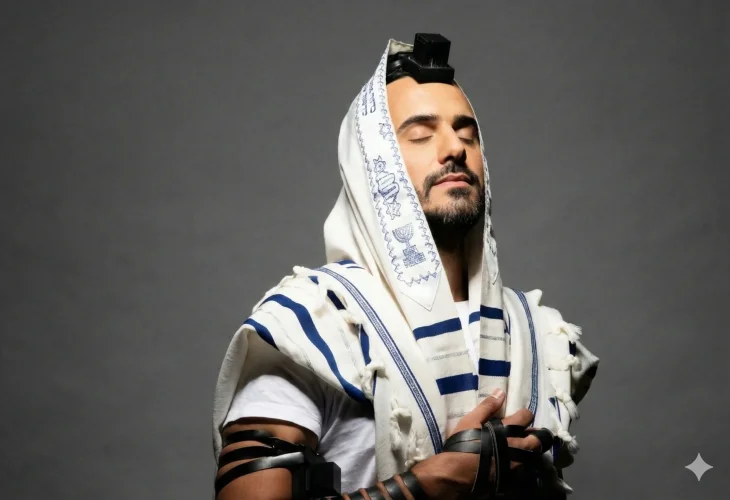 Idan Yaniv. Photo by Ronen Akerman
Idan Yaniv is a singer and songwriter who lives in Tel Aviv.
A Spark of Nostalgia
“Around the age of 14 my voice changed. Until then I would sometimes sing as a hobby at school ceremonies and family events — and I was really upset when my voice shifted. I got used to hearing myself a certain way, and suddenly everything sounded different. It bothered me so much that one day I told my parents I didn’t want to sing ever again.
“Two days later, in the last pages of a weekend newspaper, there was a small black-and-white ad announcing auditions for a song contest. My father and I debated whether he should register me, but he said: ‘You said you don’t like how you sound anymore and that you don’t want to sing,’ so we dropped it. What I didn’t know was that on Saturday night he called the production team and scheduled an audition for me.
“The competition took place a few months later, and I won first place with the song ‘HaPerach BeGani’. I was up against many singers — I was the youngest there — and it was the first time I had ever sung onstage with live musicians. The night I won, I began to understand that, thank God, there is something meaningful and special here.
“As I said, there was a time that I thought about leaving music, but today I understand that a person needs to follow his calling and not run away from it. You can’t really run away from your mission in life — each of us has ours.”
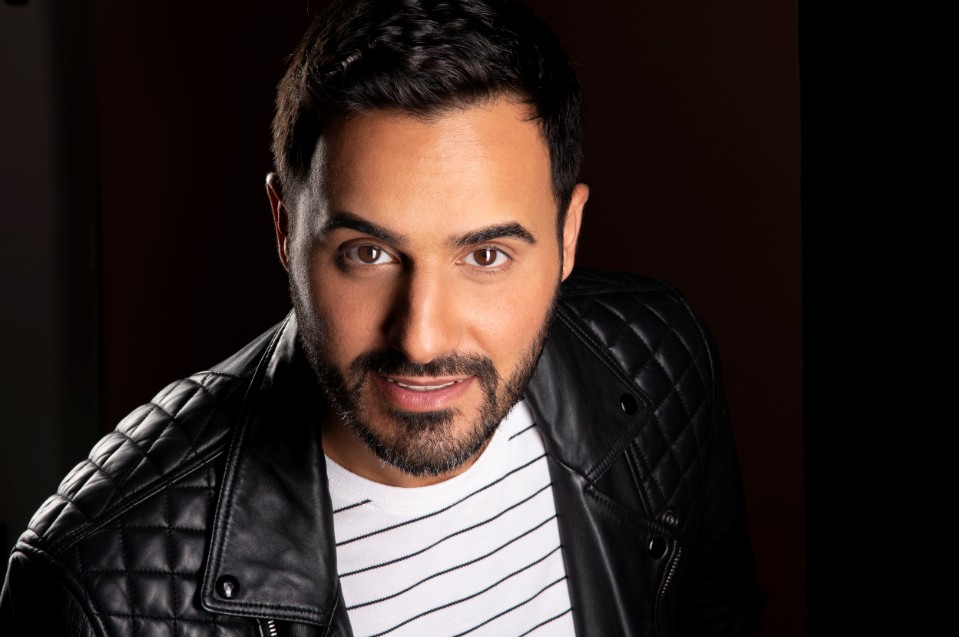 צילום: רונן אקרמן
A Spark of Roots
“Thank God, I was raised in a traditional Jewish home, and the values I absorbed there still influence me today. We make Kiddush and celebrate the holidays, we keep kosher, we honor our parents, and so on. I put on tefillin every day. We also live next door to my grandparents on my father’s side, and our relationship with them is very close.
“A few months before my grandfather passed away, I began studying ‘VeTen Chelkenu’ — which is a daily learning program including Talmud, Mishnah, and Halacha. A friend of mine had just become more religious and started learning with Rabbi Kowalsky from Meorot HaDaf HaYomi, and I told him I wanted to join — so he connected us.
“This learning really speaks to me, because I want to learn Talmud, which of course has enormous spiritual value — but for someone who grew up traditional and did not study in yeshiva, it is not simple. The program presents it in a very accessible way, with explanations, and that allows me to understand it.
“My grandfather and I were extremely close, so his passing was very painful for me. It was the first time I lost someone so beloved and close. After he passed away, I began keeping Shabbat, and I continued for a year and a half, because six months later my grandfather on my mother’s side also passed away, and I wanted to keep Shabbat as part of the mourning year for him as well.
“I took it on both to elevate their souls, to honor their tradition and my parents, and also because I truly wanted to connect to Shabbat. It really did me so much good.
“Someone who comes from a traditional or secular background and never fully kept Shabbat may be afraid to start — they worry they’ll miss their phone, TV, or other things. But I want to say that when I began keeping Shabbat, those things simply didn’t feel missing at all. I also went to all the prayers, and it only felt uplifting. I very much want to build a home founded on Jewish values.”
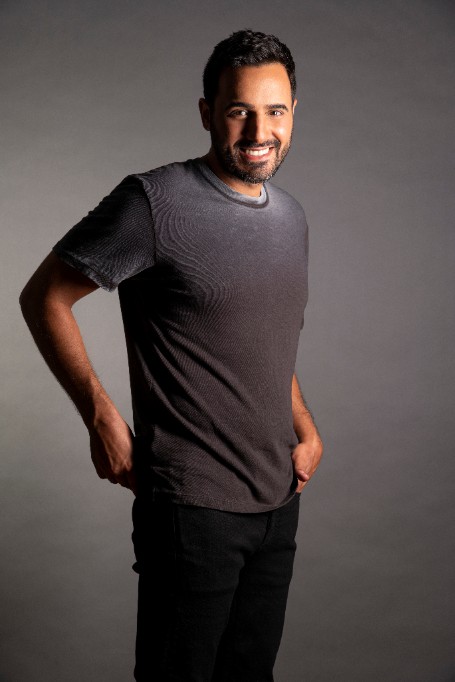 צילום: רונן אקרמן
A Spark of Inspiration
“I really love Kohelet, Chapter 12, Verse 13 — and I feel deeply connected to it: ‘The sum of the matter, when all has been heard: Fear God and keep His commandments — for this is the whole of man.’
“King Solomon had everything — wealth, wisdom, power — and if after all of that he concludes with such a statement, it shows how there is really only one thing that truly matters in this world.
“At the end of the day, we are here to do as many mitzvot as we can. Yes, we live surrounded by many distractions, by materialism and desires — but that is exactly the challenge: to overcome what pulls us away from God and from doing His will.”
A Spark of Purpose
“I feel strongly that there is Divine intervention in my creative work, and that I also have special Divine protection. Beyond that — I want to bring people closer to God through my songs, and thank God, it’s happening.
“For example, in the song ‘Matchilim MeChadash’ (Starting Again), which I took part in, my line is: ‘Give me the strength to be a little weak, so I can let go.’
“There is great value in reaching a place where a person recognizes his smallness and vulnerability — where he lets go of ego and self-importance. From that place it becomes easier to yield, to act with modesty and humility. We must know that it’s okay to let go — we don’t always need to fight and push — because God watches over each of us with personal Divine providence. He knows what is best for us — and that is exactly what we will receive.”
A Spark of Mitzvah
“Recently I’ve been feeling a special connection to Netilat Yadayim (ritual hand-washing). After Modeh Ani in the morning, I try my best to wash my hands right away — and I feel that it brings blessing, abundance, and purity into my life. I can’t fully explain it — but that’s what I experience.”
A Spark of Prayer
“Thank God, as I said, I put on tefillin every day. Many times I also manage to daven Shacharit properly — and in any case, I always pray in my own words for good things for my family and for all of Am Yisrael. Before every performance, I always say Shema Yisrael. There is no such thing as going onstage without it.”
A Spark of Challenge
“Everyone faces challenges in life, and I try very hard to pray to God about the difficult things I go through, and of course also to thank Him.
“One of my challenges happened a few years ago: I recorded a full album over two years — some singles were released — but I decided to shelve the rest of the songs. That caused a number of difficulties, including financial ones. Artistically, it felt like a black hole, because suddenly there’s a big gap between what you did and what comes next — and professionally and personally, you feel like a failure.
“Even so, I tried to turn it into something uplifting and meaningful. Those months forced me to take my foot off the gas pedal and listen to what God was trying to tell me through what happened. It helped — and a few months later I returned to the studio, worked on new material, and it succeeded.
“A few days ago I learned in a class about Yosef HaTzaddik. The rabbi explained that Yosef overcame his trials because he knew that everything that happened to him was ultimately for his good — every setback, every fall.
“We all have moments where we feel disappointed in ourselves — where we think we didn’t do enough, or we want something and don’t receive it. In those moments, we must believe that everything is for our good, thank God for everything, and wait patiently for the great and precise blessing that, with God’s help, will one day arrive.”

