

Magazine
“The Soul Within Me”: Motty Steinmetz on Music, Pain, Faith, and the Power of a Jewish Song
A remarkable story of prayer, compassion, spiritual strength, and songs that brought people back to Judaism
- Avner Shaki
- | Updated
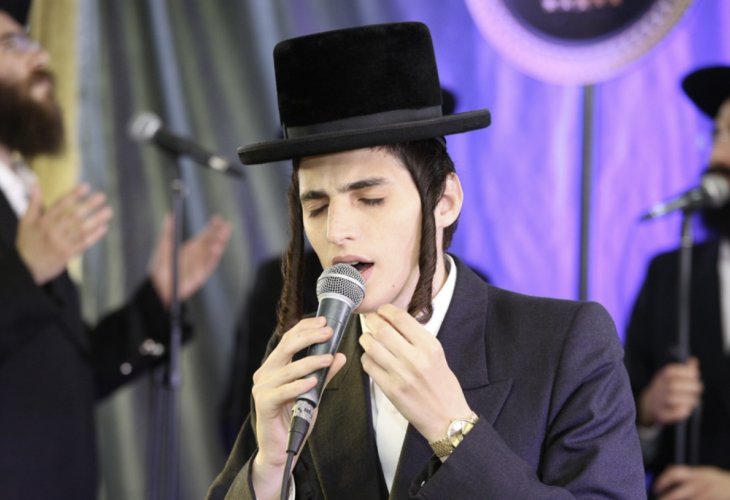 Motti Steinmetz
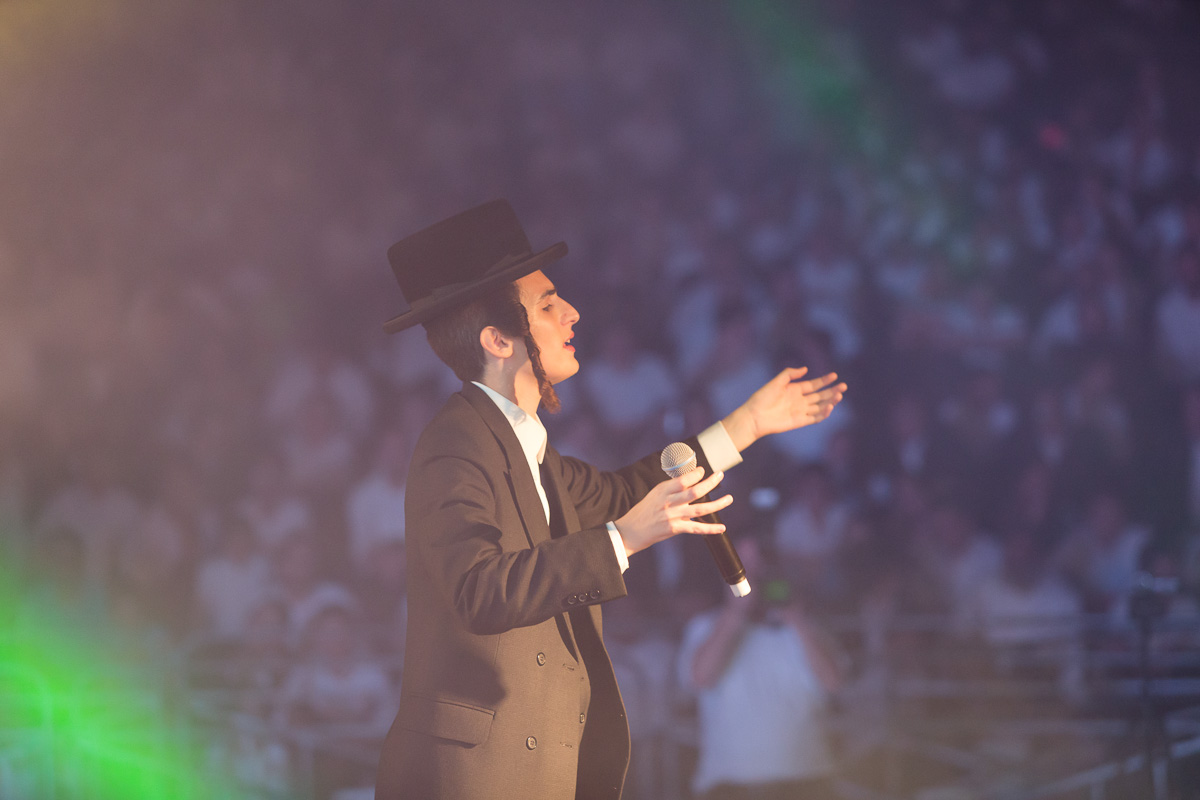
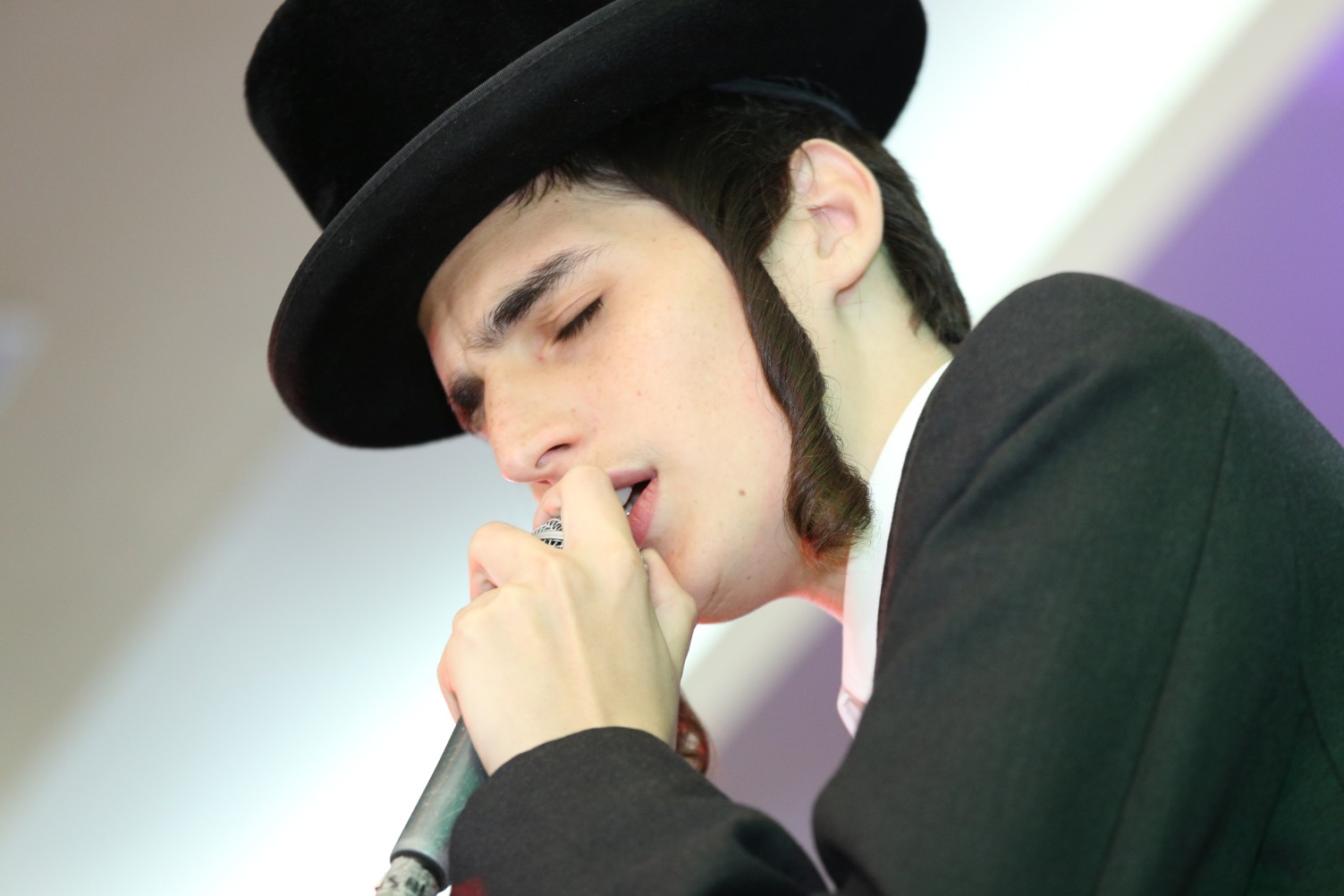
Motty Steinmetz is a Chassidic singer and a leading voice in Jewish music.
A childhood story that has stayed with you?
"I always had a deep passion for music, and I always knew and felt that I had talent — but the environment didn’t recognize it. One of the most painful memories I still carry is from when a Vizhnitz choir album came out when I was a child. The boys who sang on it were children from our own community, kids I knew — but I wasn’t included. To this day I remember the sting in my heart from not being able to sing with them."
A Jewish idea you personally connect to?
"That’s an easy one — the High Holiday prayers with the Rebbe of Vizhnitz, with the special nusach and the deeply emotional melodies. It’s something I wait and long for all year. I sit in the prayers next to my father — a truly righteous and G-d-fearing Jew, who sits and learns Torah all day and never takes vacations. He is, for me, the symbol of an authentic Jew. Sitting beside him during those prayers magnifies the experience immeasurably."
What is Judaism to you?
"In my eyes, Judaism is a light unto the nations — a model and example. A wondrous way of life that shows and teaches how a person should live in the very best way. And only the Creator of the world could design such a perfect path. Judaism is the real thing."
A mitzvah especially close to your heart?
"‘And you shall love the convert.’ Most people don’t encounter this mitzvah very much, but because of my father-in-law’s work, I come across it often, and I love it deeply. My father-in-law is a dayan in the Beit Din of Rabbi Nissim Karelitz, and he is responsible there for the area of conversion. He is also the rabbi of the ‘Chanechei HaYeshivot’ community in Brachfeld, Modi’in Illit. Converts are usually very lonely, and we must make every effort to draw them close."
A holiday you especially love?
"Passover. It is the holiday when we became a nation — a formative moment in our history, and in human history as a whole.
A meaningful story happened to me one Passover, when my grandfather fulfilled an old dream, to conduct the Seder in Meron. And when I say ‘in Meron,’ I mean literally in Meron — inside the gravesite of Rabbi Shimon bar Yochai, inside the burial cave itself.
It was seven years ago — we received special permission, and we conducted the Seder right inside the holy site. I will never forget the emotion that overwhelmed me there, especially during the passage in the Haggadah: ‘We cried out to the Lord our God.’ We literally shouted those words out loud.
In Vizhnitz, the Seder night is always a powerful experience — and that year, we experienced it in an especially deep and unforgettable way."
How present is G-d in your life, and how does that influence your work?
"G-d is very present in my life — at every stage and in every matter. For example, before I go up on stage, I try to recite a chapter of Tehillim: ‘A Song of Ascents — I lift my eyes to the mountains…’
Beyond that, I believe that G-d has guided my life every single moment, and will continue to guide it.
When I was 14, a Holocaust survivor made aliyah to Israel, and I knew him well. He had been in Auschwitz, and after immigrating, he went through a very deep personal crisis. Children would tease him and mock him, and he would run after them shouting. All that time, I tried to push them away and help him.
Gradually, through that experience, I learned to be resilient in the face of what people say, and that helped me tremendously in my career. More than that, I learned that what a Jew truly needs most is love from those around him. I try to live by that — to love every Jew."
A biblical figure you would like to meet?
"Definitely King David. I think King David was the first and greatest master of Jewish song and music — and truthfully, most of my songs are based on his words. I feel a special connection to King David, the ‘Sweet Singer of Israel.’"
An interesting meeting or conversation you once had?
"In one of my special conversations with the Vizhnitz Rebbe, he told me that he had heard that I sanctify Heaven’s Name in public — through my choice of songs, and through the fact that I do not perform before mixed audiences.
In response, I told him that I feel that a yeshiva student who stands and prays near the Rebbe simply cannot behave otherwise. I saw on his face how much he appreciated that answer."

A meaningful story you experienced?
"This is the first time I am sharing this story. It’s a bit long — but I believe it’s worth it.
About two weeks ago, a woman called my manager, Ruvi Bennet, and asked to tell him a story.
She began, very emotionally, and said that as a child both of her parents became ill and passed away. They were a regular charedi family, and suddenly this tragedy fell upon them. Naturally, she felt completely alone in the world. She lived for a time with relatives, but ‘it just wasn’t home.’
After a few years, she decided she no longer had the strength to remain there, and she wanted to leave everything behind. Somehow she ended up in the United States, in a forgotten place, and eventually found herself in a government-run institution connected to a monastery — essentially a closed facility, where leaving was nearly impossible.
After about a year and a half there, during a very difficult period, she decided to end her life.
Shortly before carrying out her plan, she wanted to repay some debts she owed people. She opened the computer in the monastery to check her list, and suddenly a YouTube link popped up with my song ‘Veyihyu Rachamecha’ (‘May Your Mercy Come Upon Us’). It’s a very emotional and touching song.
After that, YouTube automatically played another one of my songs: ‘Elohim, Al Domi Lach’ (‘O God, Do Not Be Silent’).
She said that these songs — with all the pain in them, made her think that surely the singer also has struggles, yet he still speaks to G-d — and if he can do that through hardship, then so can I. She believed she still had Someone to speak to.
She listened to the two songs the entire night, and they literally gave her the strength to live.
A few days later, she decided to return to Israel and rebuild her life. She joined a ba’alot-teshuvah program and began her life anew.
Then, one day, she received a call from some of her old friends from that same institution — they told her they were now in Israel and wanted to meet.
She agreed — she really missed them, they were like family to her — and they arranged to meet in a large shopping mall.
It took her several moments to recognize them as they were all dressed like regular charedi women.
After the excitement calmed, they told her that after she had suddenly disappeared, they entered her room searching for clues — and they found the music on her computer — the same songs she had listened to.
The songs spoke to their hearts and penetrated their souls — and that is what led them to begin exploring Judaism.
After a long process, they immigrated to Israel, and converted.
One of them just got engaged this week, and they invited me to the engagement celebration. I am very moved and truly looking forward to seeing them — those young women whose path to Judaism began through songs I sang."
Professionally, are you where you once imagined you’d be?
"In my wildest dreams, I never imagined I would reach where I am today. God runs the world. I always had the voice and the passion, but it didn’t happen earlier. I desperately wanted to study voice training, but my parents didn’t want to, and financially it wasn’t possible.
I truly believe, with complete faith, that God decided when it would break through, and He will decide when it will end."
Where would you like to be in ten years?
"I would love to do a concert tour throughout the entire Jewish world — and to have released at least three more good, high-quality albums."
What do you think about ba’alei teshuvah? Do you feel connected to them?
"Our Sages said: ‘In the place where ba’alei teshuvah stand, even the completely righteous cannot stand.’ What more is there to add after such a powerful statement?
It always amazes me anew, the incredible strength it takes to make such a massive life change. It requires enormous inner courage — and I admire anyone who undertakes that journey."
A life lesson you’ve learned?
"One of the greatest lessons I’ve learned is what our Sages taught: ‘Everything the Merciful One does — He does for the good.’ It isn’t always easy to see — and sometimes we don’t understand how certain things could possibly be for the best, but it is always true. I have seen it come true before my very eyes, in many areas of life."
Tell us about your new album.
"This album was created following great demand from the audience. An album is, in essence, the artist’s identity card — so we invested a lot in it. We worked on it for nearly four years. I recorded all the vocals three separate times — and there is a great deal of thought behind every detail.
The album is very unique and diverse, also in terms of the composers and arrangers. I personally chose the album’s name: ‘HaNeshamah Bekirbi’ (‘The Soul Within Me’), and not by chance.
In this album — I placed my soul inside."

