

Magazine
A Heartfelt Gift: How One Mother Saved a Child's Life
What drives a mother of eight to make an extraordinary, life-saving choice for a child she had never met? Bat Chana Sarig reflects on faith, courage, and the quiet fulfillment that came from giving life.
- Michal Arieli
- | Updated
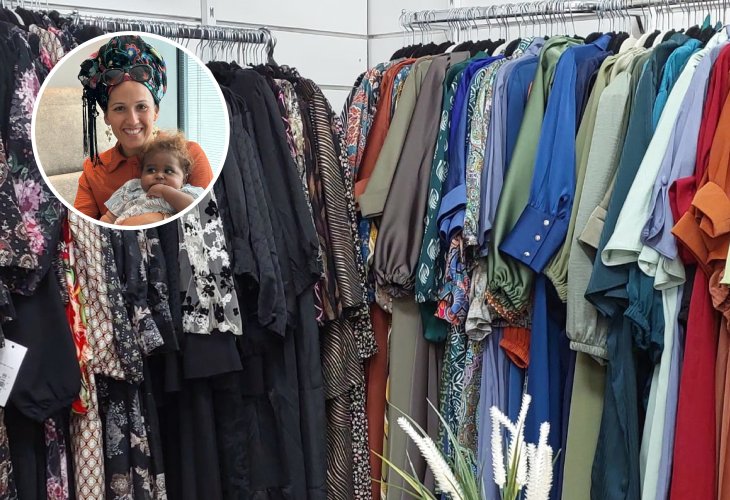
Last week, in the midst of the month of Shevat, Bat Chana Sarig, owner of a modest fashion boutique, received an invitation to a thank-you party for a small, adorable baby. At first glance, it looked like an ordinary invitation, but for some reason, it sent a shiver down her spine.
“I suddenly remembered what we went through almost a year ago,” Bat Chana shares. “I thought about the liver donation I made for that baby and the privilege of being a messenger for such a profound, life-saving mission. I knew that without the donation he wouldn’t have survived, and when I arrived at the event and saw him laughing and smiling, I couldn’t hold back my tears.”
“Why Wouldn’t I Donate?”
Bat Chana takes us back to the beginning.
“It all started on a wintry Saturday night. I opened Facebook and saw a post urgently searching for a liver donor for a baby with a specific blood type. Since my husband had previously donated a kidney, I’m part of the Matnat Chaim donors’ Facebook group. The first thing I did was share the post there. Not because I thought someone there could donate, as kidney donors can’t donate a liver, but because I knew they’d know how to spread the message to reach the right people.”
She was right. “Others had already posted about it half an hour earlier,” she recalls. “They sent me screenshots of the responses pouring in. I watched with tears as people who had already donated kidneys volunteered again, even though it wasn’t possible. That’s when I thought: they can’t do it, but I can. I have the right blood type, and I’m not pregnant. Why not check if I’m a match?”
In those moments, she wasn’t thinking about her business or the pain involved. “I did think about my husband and our children, who would need to manage without me during my hospitalization and help care for me during recovery.”
“I called my husband and told him,” she says. “He supported me completely. Then we spoke to our two oldest children, fifteen-year-old twins, and asked what they thought. They weren’t worried about the responsibility and simply said, ‘If you want to do it, go for it.’”
A Journey of Tests
Bat Chana didn’t hesitate. The post about the helpless baby touched her deeply, and she felt that time was critical. Through Matnat Chaim, she received the doctor’s contact information and sent him a message.
“I sent my details and said I wanted to check compatibility for a liver donation. Even though it was close to midnight, he called me back, asked a few questions, and said it sounded promising. I’m not very large, the baby needed a small portion of liver, and I sounded healthy. We agreed to speak again in the morning from the hospital.”
The next day, Bat Chana left her home in Yitzhar to work in Beit El. Five minutes after arriving, she received a call from Beilinson Hospital asking her to come immediately. She dropped everything and headed straight there.
“They told me the situation was extremely urgent,” she says. “Shortly after the post was published, the baby’s condition had worsened.”
From that moment, an accelerated series of tests began, tests that normally take months but were completed in a single day. That night, she returned home, with instructions to come back the next morning to meet the liver specialist for final approval.
Didn’t you fear the donation, especially with everything happening so quickly?
“The truth is, I didn’t have time to be afraid,” she admits. “Between the tests, I was on the phone with my employees and my kids at home, handling logistics. There was no space to dwell on fear.”
“But something else stayed with me,” she adds. “That same day, a shooting took place in Hawara, where Hillel and Yigal Yaniv, may their memories be a blessing, were murdered. I know their mother personally, and it was devastating. During the tests, I kept thinking that this donation would be in their memory.”
In Memory of the Brothers
Bat Chana returned home around 10 p.m., and immediately received another call from the hospital. The head of the national transplant center, Professor Tamar Ashkenazi, felt it was unusual for someone to decide overnight to donate part of a liver and wanted to meet her on Zoom.
The next morning, Bat Chana returned to the hospital. The liver specialist reviewed the tests, and she then met with Professor Ashkenazi and underwent a psychological evaluation.
“At the end,” Bat Chana smiles, “she said I might be a little crazy, but that I fully understood what I was doing.”
What were you really getting into? How does a liver donation work?
“A liver donation is much more complex than a kidney donation,” Bat Chana explains. “The surgery involves opening the abdomen, removing the gallbladder, and separating the liver lobes. It’s a long and delicate operation that can last about six hours. Recovery is harder, but there are no long-term consequences, because the liver regenerates itself. Today, I can do everything, including having children, without any added risk.”
Before surgery, Bat Chana also had to appear before a Health Ministry committee to ensure the donation was voluntary and uncompensated.
“They asked difficult questions,” she recalls. “They accused me of being irresponsible and of abandoning my eight children. I stayed calm and explained that just as someone who travels for a week isn’t abandoning their children, neither was I. I told them I understood the risks, but statistically it’s more dangerous to cross the street in Hawara, which I do daily. And above all, I believe Hashem protects those who act as messengers for good.”
Approval came shortly afterward. That Wednesday evening, Bat Chana was admitted to the hospital. Beforehand, she visited the Yaniv family to comfort them and told Esti, the boys’ mother, that the donation would be in their sons’ memory.
“She was the only one who knew,” Bat Chana says. “We didn’t tell our parents until after the surgery, so they wouldn’t worry.”
Giving Life
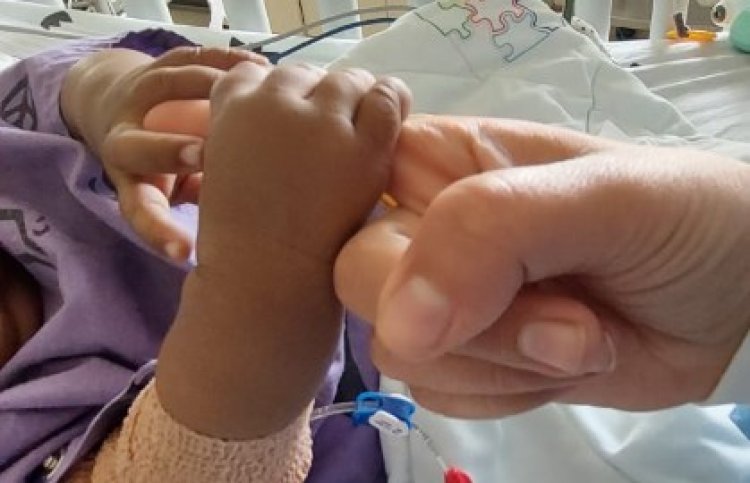
The most emotional moment came a few days after surgery, when Bat Chana and her husband met the baby’s parents and saw the infant.
“The mother kept saying, ‘He’s your child,’” Bat Chana recalls. “But I told her, ‘He’s entirely yours. I was simply privileged, with Hashem’s help, to give him a piece of liver.’”
The baby was six months old at the time. “His recovery was harder than mine,” she says. “Even today he’s very sensitive and needs close supervision, but thank G-d he’s developing like any other child. I believe that as he grows, he’ll grow stronger.”
Liver donations are rare in Israel. Do you think your story will inspire more people to donate?
“I’m not sure,” she says honestly. “Liver donations are uncommon because the state rarely allows them. For adults, only family members can donate. With children, only if no family member is compatible does the option open for an altruistic donor. I was the fifth altruistic liver donor in the country.”
And how did your business manage while you were away?
“I own a modest women’s and girls’ clothing store, along with a silver and gold-filled jewelry studio. It was just before Passover, the busiest time of year. The store was closed for a few days, but that didn’t matter. When you’re saving a life, everything else becomes secondary. Livelihood comes from above. Hashem has many ways to send abundance.”
Bat Chana concludes with a message close to her heart:
“Let’s remember that we are one people, all brothers and sisters. We don’t need tragedies to remind us. Let’s choose to be there for one another, to give, respect, and love, even when we are different.”

