

Magazine
Declared Dead: Shai Reller’s Journey Back to Life
Pronounced dead after a horrific accident, Shai Reller defied grim predictions. This is the story of how he returned from the abyss and rebuilt a life filled with purpose, family, and hope.
- Michal Arieli
- | Updated
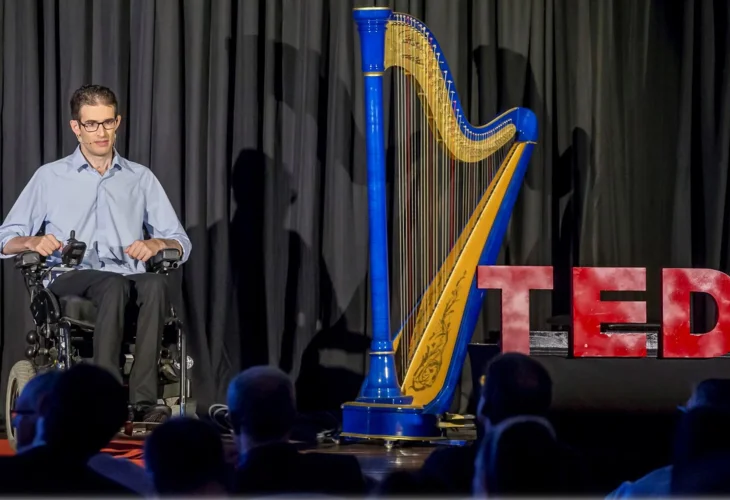
The moment the bus Shai Reller and his friends were riding in veered off the road and plunged into the abyss, falling some 25 meters, marked a clear division in Reller’s life.
This happened nearly twenty years ago. Fresh out of the army, Reller had set out on a post-service journey to the East, spending two months in India and a month in Nepal. “In Nepal, we boarded a regular passenger bus on the way to Kathmandu,” he recalls. “About an hour and a half into the ride, the driver lost control, and the bus veered into the abyss.”
The consequences were devastating. “Fifteen passengers were killed, and many others were injured to varying degrees. Traveling with me were close friends from home, along with another Israeli boy and girl we met along the way. Thankfully, all three were only lightly injured. I was the one who was critically hurt.”
Because his friends were not seriously injured, they managed to pull him up from the valley to the roadside. “This was twenty years ago, before mobile phones were common,” Reller explains. “We couldn’t call rescue services. Eventually, a vehicle passed by and took us to the hospital. I was conscious the entire time but had lost a massive amount of blood. One of my friends kept giving me mouth-to-mouth resuscitation on the way. He quite literally saved my life.”
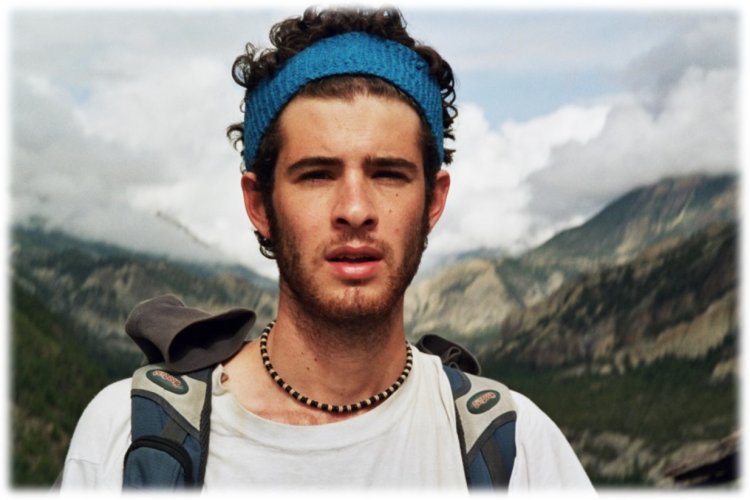 Before the accident
Grim Statistics
Despite his critical condition, Reller remained aware through much of the ordeal. “I remember arriving at an old hospital,” he says. “Then everything went dark, and I lost consciousness.” Later, his friends told him what had happened next.
“They admitted me to intensive care and asked my friends to wait outside. After two minutes, the doctor came out and told them there was nothing more to be done. He had declared me dead. My friends rushed back into the room and saw me lying there, blue-faced and motionless. Like something out of a movie, one of them stood beside me and forcefully pressed on my chest. At that moment, I took a deep breath and opened my eyes. The doctors froze in shock, then immediately resumed efforts to keep me alive.”
Reller was classified as critically injured. The Foreign Ministry was notified, and his parents were contacted in Israel. “My parents flew to Nepal with two Israeli doctors,” he says. “Their goal was to understand my condition and stabilize me enough to bring me home.”
He remembers their arrival at the hospital, though he was heavily sedated and attached to a ventilator. “I couldn’t speak or move. The only way I could communicate was by blinking my eyes. It was incredibly frustrating. After three days, they managed to stabilize me enough to fly me to Israel. From the airport, I was taken straight to intensive care at Tel Hashomer.”
There, his parents received the first devastating prognosis: he was expected to remain completely paralyzed, dependent on a ventilator, and unable to speak or communicate for the rest of his life.
What did the doctors base this conclusion on?
“Statistics,” Reller says. “They told my parents that people in my condition don’t improve.”
Did you hear this prognosis yourself?
“No,” he replies. “They said it to my parents privately, and I’m endlessly grateful they didn’t tell me. Not knowing saved me. At that stage, I was still optimistic and believed I would recover.”
After about a month in intensive care, Reller was transferred to a respiratory rehabilitation unit to begin the process of weaning him off the ventilator. “It took time,” he says, “but after two and a half months, I was finally breathing on my own again. That moment changed everything. I could finally speak instead of communicating only through blinking.”
Next came neurological rehabilitation, where the focus shifted to preparing him for life with a severe disability. “I also underwent spinal fusion surgery for the broken vertebrae,” he adds.
Dreams Coming True
Reller describes the rehabilitation period as a roller coaster, swinging between hope and despair, success and failure. “I slowly realized I couldn’t perform even the simplest tasks: showering, eating, using the bathroom. It took time to grasp how dramatically my life had changed.”
He spent a full year in the hospital. Although doctors were surprised he survived and retained his ability to speak, the realization of his limitations was overwhelming. “The hardest part was feeling like a burden,” he admits. “My mother left her job to be with me during the day. My father worked nights so he could be at the hospital. My sisters barely saw our parents. I felt guilty, as if my trip had frozen everyone else’s life.”
Yet his family became his greatest source of strength. “They gave me reasons to get up every morning. Friends came, supported me, and helped lift my spirits.”
When he was finally discharged and returned home, Reller found that stage even harder than hospitalization. “In the hospital, I was constantly surrounded by people. At home, the reality hit me. This was permanent. Loneliness and fear crept in.”
At that point, he realized the choice before him. “I could stay in bed and mourn my fate, or I could move forward with what I had. I chose to move forward.”
He enrolled in economics studies, relearning how to study without the ability to write. “I dictated everything to a mentor,” he says. “It was incredibly demanding, but I completed my degree in four years instead of the six I expected, then went on to earn an MBA with honors.”
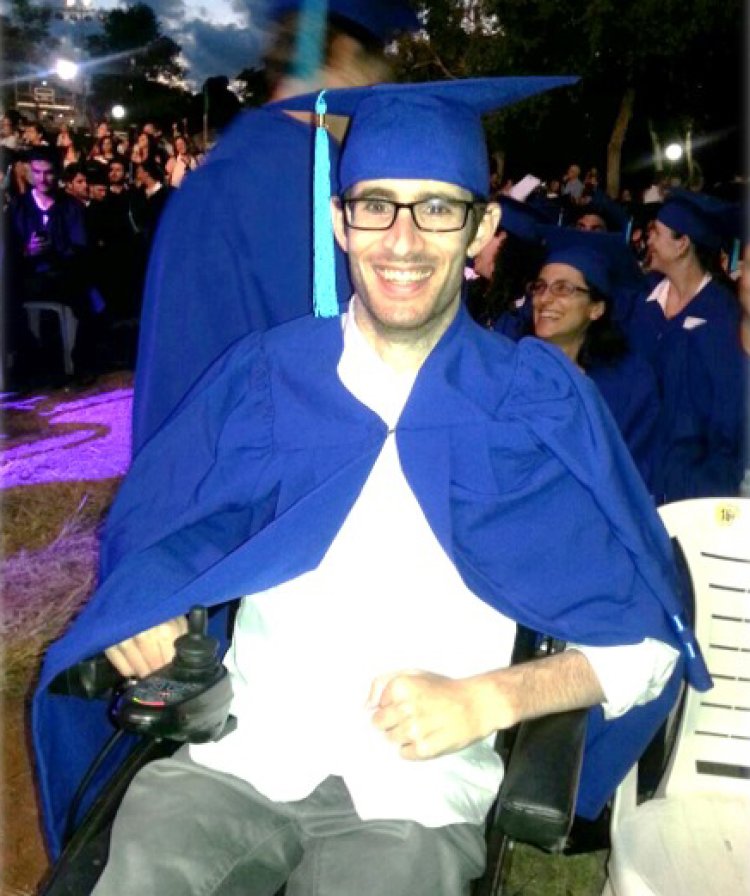 Shai's graduation
Making Lemonade
With two degrees behind him, Reller entered the workforce as an analyst. “That success gave me the courage to dream again,” he says. “This time, the dream was marriage.”
Dating was not simple. “Some women, disabled or not, quickly realized my physical limitations weren’t right for them.” Then he met Idit through a dating site. “At first, I didn’t tell her about my condition. When things became serious, I told her everything. She said, ‘That sounds intriguing. Let’s meet.’”
They married, and recently celebrated eight years together. “Our chuppah had a ramp. I sat beside Idit and looked out at the crowd. I felt a sense of victory. Despite everything, I had built a home and fulfilled my greatest dream.”
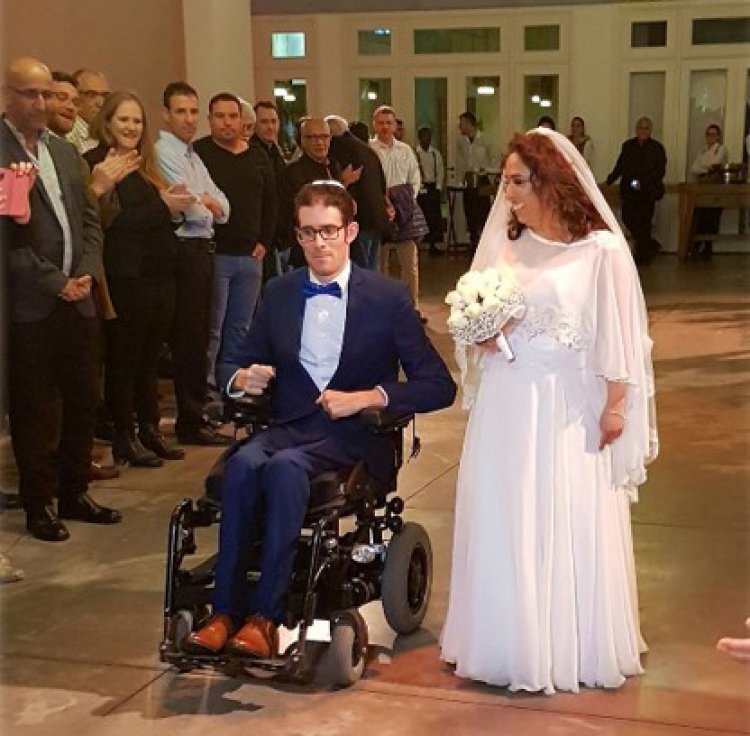 Shai and Idit's wedding. Photo: Eran Chen
A year ago, another dream came true with the birth of their son, Lavi. “The road to parenthood was long and painful,” Reller says. “We went through years of fertility treatments, miscarriages, and even a stillbirth. And then, finally, Lavi arrived. Today, we’re celebrating his first birthday.”
Over the past decade, Reller has shared his story across the country in lectures titledFrom the Abyss and Back, including a TED talk. He also mentors individuals facing personal crises, helping them find tools to move forward.
“My goal,” he says, “is to empower people where they are. Everyone faces limitations at some point. What my father told me from day one stayed with me: ‘Learn to make lemonade.’ What happened to me wasn’t random. Even from the deepest abyss, it’s possible to extract meaning and growth.”

