

Magazine
Eden Harel on Judaism, Family, and Returning to Faith
Childhood struggles, faith, Jewish identity, and the story behind her shared stage show with husband Oded Menashe
- Avner Shaki
- | Updated
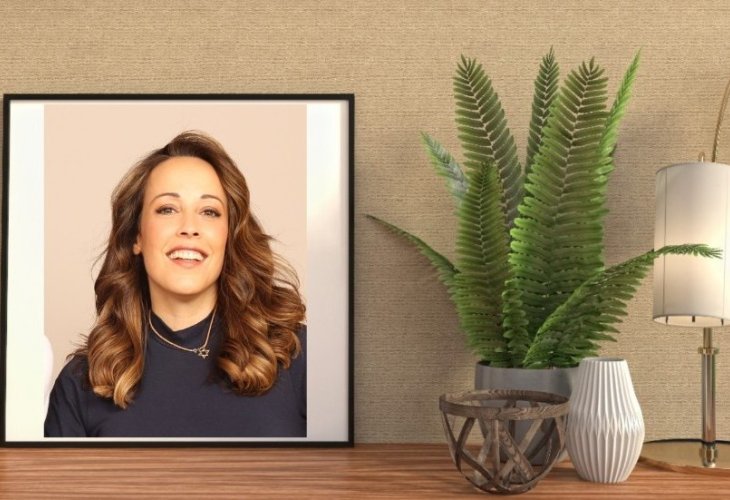
Eden Harel is one of the most well-known baalei teshuva in Israel.
A childhood memory that has stayed with you?
“I grew up in Eilat, and shortly before first grade I moved with my mother to Haifa. My parents were already divorced by then. In Eilat we didn’t really walk around in shoes — and that’s how I wanted to go to my first day of school in Haifa. My mother told me that in Haifa you can’t walk around barefoot and insisted that I wear sandals. The moment I walked out of the house, I took them off and went to school barefoot. I still remember so clearly how everyone laughed at me when I arrived.”
A Jewish value or idea that you personally connect to?
“I feel very connected to the message of unity — Ahavat Yisrael, helping one another, caring for each other. These are such central and important messages in Judaism.
“There was a time when I saw the religious world in a distorted way. I thought religious people were taught to separate themselves from the rest of the Jewish people — to be anti, to disconnect. But today I know that the real idea is to unite and to feel like one person with one heart. Once I understood that, it connected me deeply to Judaism.”
A Jewish figure who inspires you?
“Devorah the Prophetess. She was strong, wealthy, blessed with Divine inspiration, and she judged Israel. To me, Devorah represents true femininity as it should be — powerful, active, capable, leading.
“I also love that she judged the people while sitting under a tree — in an open public place, so she could preserve modest boundaries with men, without being alone in a closed space with them. It teaches that we don’t need to suppress or erase anything — we just need direction and balance. Also, I would absolutely love to have Divine inspiration like she did.”
What is Judaism to you?
“Judaism, to me, is everything — from the smallest detail to the greatest. From me and God in the most private and intimate places of my heart, to how I act out in the world in everything I do.
“Judaism is how I bring God into my life — how I remember that everything is from Him, everything is ultimately for the good, and that it is only our actions that block our ability to connect with Him. He is only good and always does good.”
A mitzvah that is especially meaningful to you?
“Washing hands (Netilat Yadayim). I really love that feeling — especially in the morning. It’s very powerful for me. Maybe I’m so connected to this mitzvah because I learned about it more deeply. I feel clearly that I am washing off something that ‘stuck’ to me during the night.”
Your favorite holiday?
“It’s really hard to choose, but if I have to, I really, really love Chanukah. I’m crazy about that holiday. There is something about that light — it just lifts me up. And I also really love sweet things… and that happens to come along with it.
“I also absolutely love Sukkot. I’m the kind of person who’s happiest when you just put me in a tent and let me relax — I’m in heaven. And there’s this surrounding spiritual light of the sukkah that wraps around you from every direction. I feel that during that holiday, you can feel God even closer. But honestly, there are several holidays I really love — it’s genuinely hard to choose.”
What are your dreams?
“To merit influencing the Jewish people for the good. I have always been ambitious. Thank God, today my ambitions are ambitions of holiness.
“When I stand onstage and speak about family purity, Shabbat, and other beautiful mitzvot, it is a feeling unlike anything I ever experienced elsewhere. Not when I hosted music channels with millions of viewers, and not when I stood on giant stages.
“In a certain sense, for me it is even stronger than the stage show that Oded and I do for women only. I feel that it touches something very deep inside them — and of course, that light returns to me as well.”
What are you focused on right now?
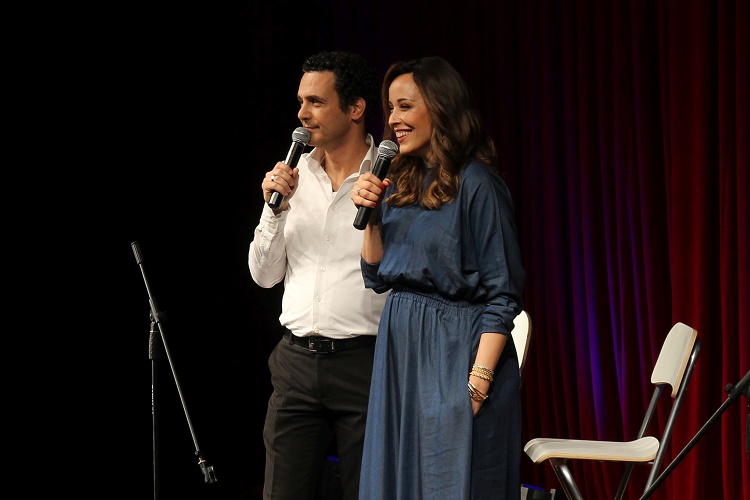
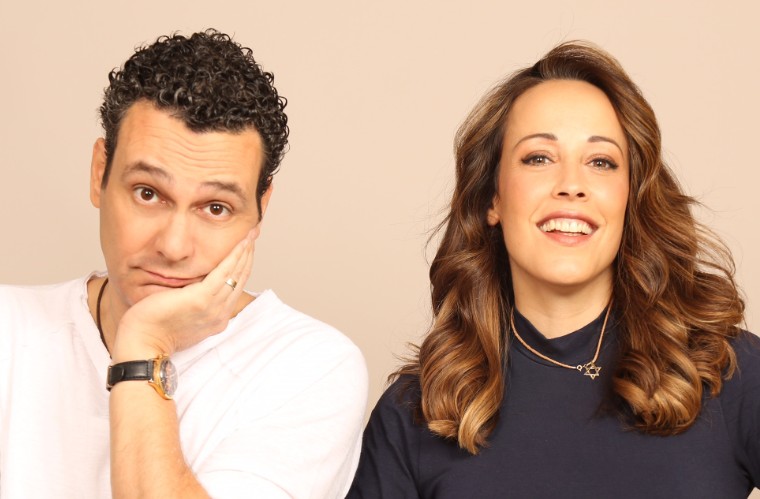
“Our joint stage show — mine and Oded’s. The show is basically the story of our life, together and individually. It mainly laughs about us, our journey, about the fact that I’m usually the one who pushes a bit further in our return to religious life, and about the conflicts that creates.
“Thank God there is a lot of love between us, so we manage and hold it together — but there is a very big difference between us, and that produces funny moments. I’m very happy about this show, because honestly, religious people don’t have many entertainment options that fit them. This show is clean, and suitable for everyone — which in itself is something very special in today’s world.”
A meaningful story from your life?
“I have a story that shows how livelihood comes only from God. When we first started becoming religious, I already knew there were things I would no longer be able to do on television — either because of the content or because of modesty.
“One day my mother said to me — out of worry, not criticism — ‘I hope you made the most of your career already… because you’ve basically ended it for yourself.’ And I said: ‘Well, if that’s the way it’s meant to be, then that’s what it will be.’
“There was also a rabbi who asked me what I was going to do now — how I would work, how I would support myself. And I remember saying to him: ‘Me? Worry about livelihood? God will take care of us.’ And truly, we received tremendous blessing in this area. Not only did my career not end — it actually grew and opened into new places.”
What do you especially love about Shabbat?
“Shabbat is the center of my life. I live from Shabbat to Shabbat. During the week I’m running at 200 km/h — doing so many things. Already a few hours before Shabbat I disconnect — I shut off my phone and I’m just waiting for that peace with the kids.
“I also really love cooking for Shabbat. I honestly don’t understand how I once lived without it.”
What are your thoughts about baalei teshuva?
“It is very sad to me that separate educational frameworks were not established for baalei teshuva and their children. It’s a mistake that we constantly try to fit into systems that weren’t built for us — because we are not the same. We’re different, and that’s okay. Wherever we try to ‘blend in’ and become something we aren’t, the ones who suffer most are the children.
“We are already so many talented, capable people, and I don’t understand how no one is creating this. There are a few such schools — mostly in the north and south, but in the center, it is very lacking.
“Another thing is that baalei teshuva have to remember — we are the bridge. We know how to connect worlds. And it is very important not to deny our past — to remember where we came from, and where we want to go.”
A life lesson you’ve learned?
“I grew up in boarding schools from age 11, and it wasn’t easy. I want to tell all the girls who come from difficult homes, from homes where things are missing — girls who go through painful things, that one day, you will grow up and you will be able to choose the life you want.
“The hardship is temporary, and nothing in the world can defeat the power of prayer. Sometimes things feel very dark — but there is always light at the end of the tunnel.”
After 120 years, what would you hope to know you left behind in this world?
“That I succeeded in glorifying and praising God in the world.”

