Finding Faith Among the Ruins: A Jewish Community Grows in the Caribbean
After Hurricane Wilma devastated their Caribbean island home, Vered and Chaim Vittel Warol not only rebuilt their lives but also founded a thriving Jewish community. Here is the captivating story of their spiritual journey and renewal.
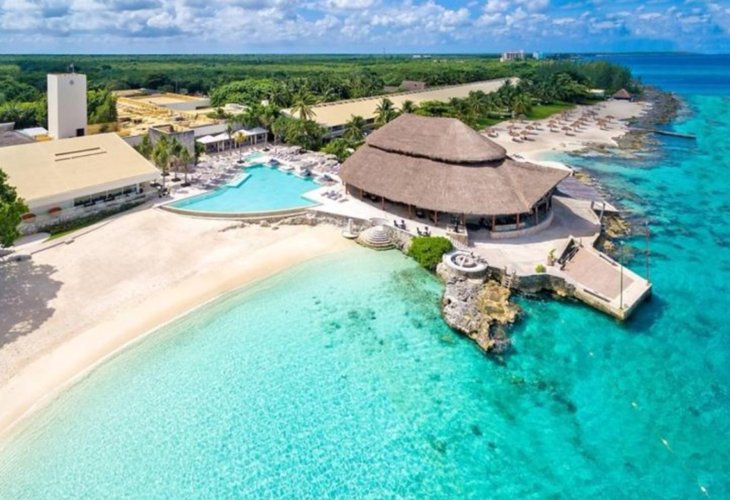
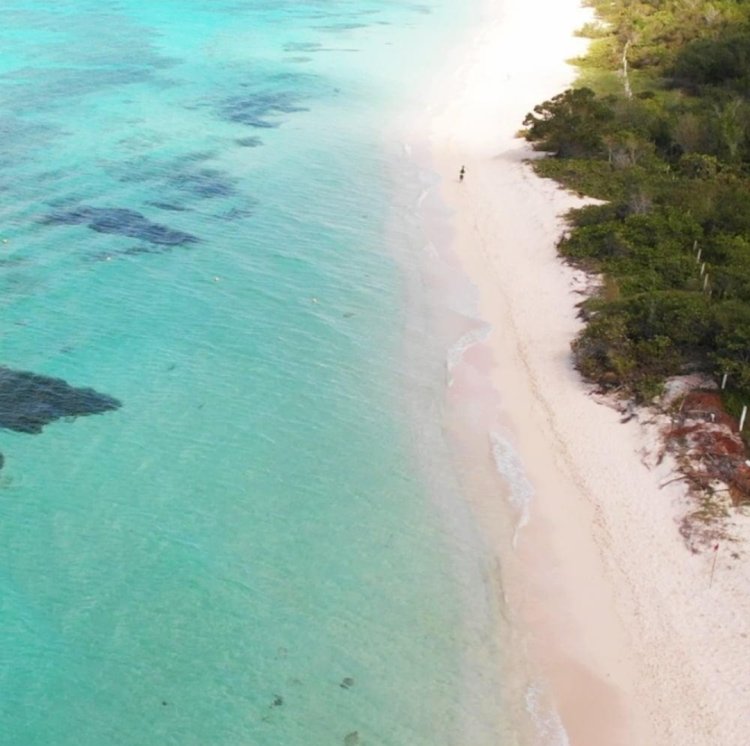
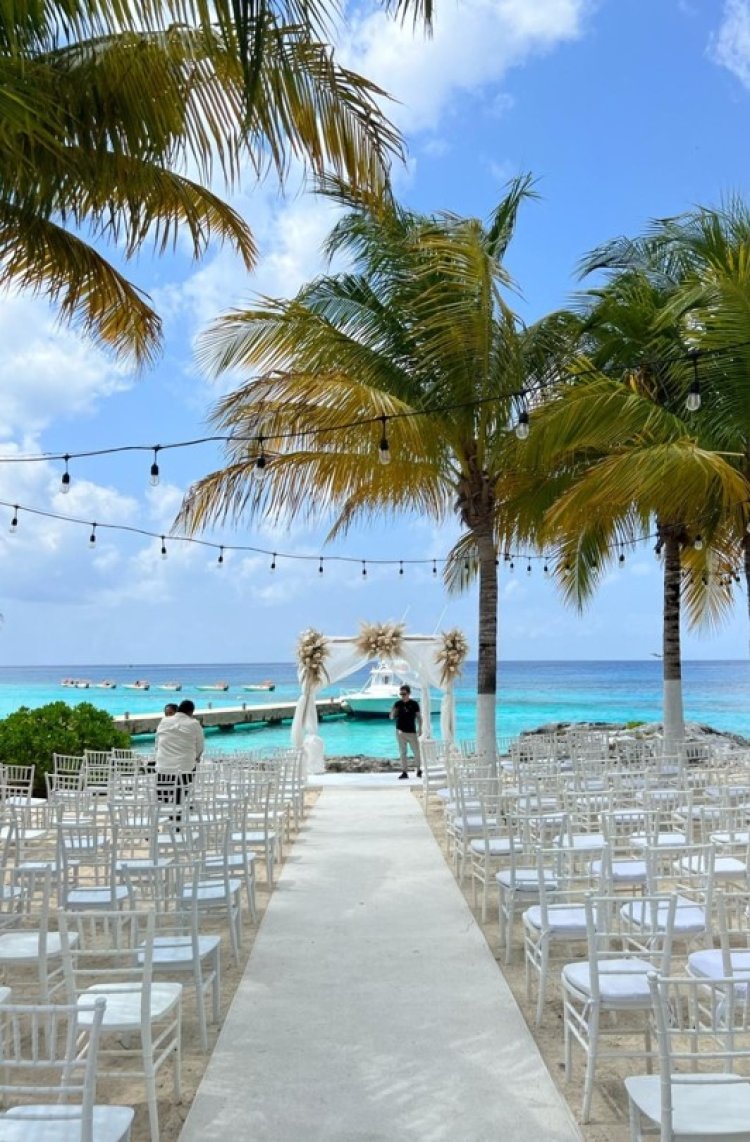
The pier at Cozumel BeachVered Warol thought she had reached paradise in the heart of the Caribbean: Cozumel Island in Mexico fulfilled all her dreams - turquoise waters, white sandy beaches, rich vegetation, beautiful flamingos, and the kind of peace only a remote tourist island can offer. Despite the three planes it took to get from Israel to Cozumel, the mesmerizing beauty compensated for the distance from her family and homeland. The pinnacle awaited her in the rented house that was to become her home: glass walls, a transparent ceiling to the clear skies, and gentle sea waves that kissed the house itself.
"I could sit in the living room and count the dolphins leaping in the clear, calm sea," she recalls fondly. "The surprising thing was, I felt like I had seen this place before. How could it be? Simply because a few years earlier, during my guided imagery classes, I created a 'vision board,' and these were exactly the images that appeared in my dreams. I even had a strange feeling that my future husband would come from abroad. I just didn't realize how far away he would be."
Living by the Sea
Cozumel is a small island near Cancun, on Mexico's Caribbean side. While Mexico is considered a developing country, Cozumel was developed and modern, a hub for extensive tourism.
Vered arrived in Cozumel after marrying her husband, Chaim Vittel Warol. She recounts their beginning: "My uncle from Turkey introduced us after Chaim Vittel was a guest at his home for Passover, and without any coordination, I was also invited. I didn't know anything about Cozumel at that time, but five months later, we got married and moved into the glass house on the beach."
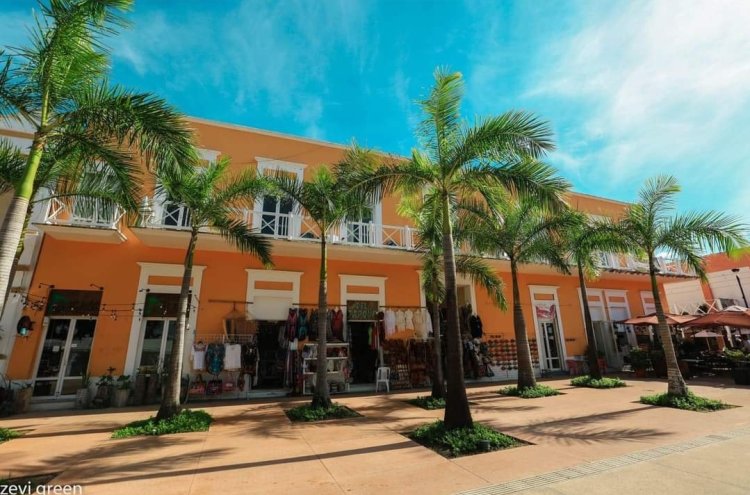
By divine providence, Vered already knew Spanish, thanks to her grandmother, who had immigrated to Israel from Turkey and spoke to her granddaughter in Ladino. As a child, she was frustrated that her grandmother didn't know Hebrew, but as she grew, Ladino became the bridge to Spanish, which made it easier to adapt to island life. Her husband worked in the island's tourism industry, and she helped him and enjoyed the bustling activity. Every day, ten cruise ships would anchor at the island, bringing thousands of tourists for a few hours of shopping, island tours, and beach dives. Every evening, precisely at five, the tourists would return to their ships, and the island would quickly empty of its hustle and bustle.
Vered says they didn't have meaningful connections with other residents: "There were only a few residents on the island and, although there were other Jews, we didn't bond with them. On the contrary, since they also worked in tourism, there was an unspoken competition over who would sell what in which stores. We were deeply immersed in our business and didn't take the time to form friendships or establish a Jewish community. In fact, there was no Jewish life on the island — no synagogue and no Jewish school for the children. Everyone attended the general school, and kosher food wasn't sold in stores. My husband and I, who came from traditional homes, tried to eat only fish, fruits, and vegetables."
Life on the island was isolated from any Jewish teachings, lonely and distant, but it was there that Vered found a profound connection to the Creator: "When I woke up in the morning and saw the waves brushing the house's walls, the vast skies above me, and the beauty of creation, I felt a strong connection to Hashem. 'How wonderful are Your creations, Hashem,' I felt this deeply in my soul and thanked Hashem for the world. Every morning, I would swim in the sea with a snorkel, dive to see the colorful fish, and rise with deep gratitude to the Creator."
After four and a half years, the young Warol family welcomed their sweet firstborn daughter. Vered was busy with her home, work at the store, and trips around the world; yet she felt an inner void gnawing at her. "The pleasures and vanities didn't truly fill me," she sighs. "I started seeking some depth. Something beyond the everyday life; I felt the routine and didn’t know what was lacking."
One day, Vered spoke with a relative in Israel about this intrusive feeling. Her relative understood what she was missing and promised to send her books. "She sent me an entire box filled with books on Jewish thought and philosophy by Rabbi Zamir Cohen, and it was like a treasure for me. I read and read, enjoyed the words, and they had a profound impact on me."
A Heavenly Warning
It turned out to be a deep preparation that Hashem sent Vered before a turning point. "A short while later, we went on a short trip to Israel," she recalls. "At that same time, a minor hurricane occurred on the island, and when we returned to Cozumel, we saw trees broken and destroyed in its wake. I was very upset by the sight, but my husband, experienced on the island, reassured me. ‘It's only a Category 2 hurricane, not serious at all. There are hurricanes that reach even Category 5...’ For some reason, this didn’t reassure me but only made me more anxious. I asked him to insure our stores and goods that very day. He agreed, and as thoroughly as he does everything, chose the most comprehensive policy and signed with the renowned insurance company, Oxford. That was our miracle, for a month and a half later, weather forecasters warned of Hurricane Wilma approaching Mexico's shores. The forecasts spoke of a Category 5 hurricane, and we all were very worried."
Although hurricanes are not commonplace in Mexico, residents are accustomed to preparing for them and know how to stock up. In Cozumel, everyone hurried to buy boards to cover windows, sealing homes with extra care. But Vered had little she could do: they couldn’t board up the large glass walls, nor the special glass ceiling. In her distress, she entered the kitchen and started cooking up a storm... The couple planned to leave their beachfront house during the storm and move inland with other Israelis. However, one of their Mexican employees pressed Vered to flee further.
"She worried about us and convinced me that with a year-old baby, we couldn't stay in Cozumel. The island was predicted to be in the storm's eye, so she said, pushing me to leave the island. Ultimately, we partially agreed and headed to the airport to see if there were any seats on the next flight out of the island."
Again, through special divine providence, Vered and Chaim Vittel discovered that exactly four seats had become available on a flight to Mexico City. They boarded the plane and left. When the plane landed in Mexico City, and they heard the news from Cozumel, their doubts were gone: beautiful Cozumel, the dream island, had turned entirely into ruins.
While in the capital city, they saw their stores destroyed and completely ruined. Every building on the island had collapsed. Vered describes how even the walls crumbled, as if the concrete was sucked out of them, leaving only twisted steel bars. The island had no electricity, picturesque trees were burnt and lopped off, waves flooded the island, and somber residents paddled through streets on kayaks, trying to salvage belongings before being swept back to the sea.
Viewing these shocking images from Cozumel, they realized there was no place to return to. Chaim Vittel encouraged Vered to fly back to her parents in Israel with their little daughter, while he searched for any way to return to the island to see if there was anything to save. Cozumel’s airport had also been destroyed by the storm, and all flights were canceled. Ships changed course since the Cozumel port was ruined and couldn’t host them. After great efforts and pulling some strings, Chaim Vittel managed to join a special rescue flight to the island. But upon arrival, he found there wasn’t much to do. Electricity wasn't reconnected yet, water still flooded the house to a height of one and a half meters, and there was nothing left to salvage.
The Advantage Man Has...
Communication with Israel was complicated, and Chaim Vittel managed to charge his phone only thanks to the car’s cigarette lighter, and even that was a miracle since he had enough fuel. Vered worried greatly for her husband, prayed, and repeatedly baked challah for his safety. After two months of remote shuffling, Vered felt she couldn't bear to be far away any longer and decided to fly back to Cozumel.
"When I arrived in Cozumel, I was stunned. Everything was still destroyed and ruined. Approaching the house we rented, I was doubly shocked: all the walls were swollen from water, furniture was rotten from dampness, and contents were spoiled. My heart ached for the photo albums destroyed by water, the numerous pairs of shoes that became tattered, and the leather bags I loved to collect now torn and ruined. I saw clearly that material possessions can be destroyed in an instant. They were and no longer are.
"And facing the destruction, a clear understanding arose within me: this is from Hashem, the Creator who orchestrated everything, and He is speaking to us. He calls us to stop and change. A deep calm enveloped me, I connected to the deep faith within me, and I knew this was a special message from the Creator. And I had only to understand: what does Hashem want from us? Then I felt the answer: Hashem wants us to create a space for Him among us, a dwelling for His presence. We need to draw close, live as Jews.
"I told my husband about my thoughts, and he agreed enthusiastically. Together, we felt it was time to start anew and to build our lives here as Jews. While staying in the hotel and trying to find ways to recover, we were simultaneously sketching our new Jewish lives: First, we knew we needed to bring a rabbi to teach us what every Jew should know. We wanted to open a Jewish school for the children, and my husband was ambitious, planning that a united and thriving Jewish community would rise here."
Returning to Jewish Life
It seemed far off, but the dream became more real. Vered talks about the heavenly assistance they felt during their recovery steps: "Miraculously, the insurance policy we signed just a month before now stood by us and covered the damages. But we still had to wait for the port to be repaired and back in operation, and see how to start the business again. But everything took too long. Only a few ships began to appear, docking in the sea while passengers rowed ashore in rubber boats. The situation was dispiriting, but we were occupied with a much larger and more exciting matter: My cousin in Israel recommended a young and capable rabbi from 'Yeshivat HaRav,' and to our joy, Rabbi Moshe Nir Pinto agreed to take on the responsibility. Meanwhile, my husband spoke with other Israelis on the island, enlisting them for the thrilling vision. Indeed, about half a year after the hurricane, Rabbi Pinto arrived in Cozumel.
"A little later, on the initiative of the rabbi and my husband, together with other dedicated Jews, we opened the synagogue 'Kol Yisrael Achim – Beit Yosef,' the first synagogue on the island. This was an immensely joyful step for all of us, symbolizing the establishment of Jewish life here."
Vered shares how the rabbi provided kosher food shipments from Mexico City, and opened a small kosher grocery at his home. The rabbi held shared Shabbat meals for the island's Jews, talked with them warmly and respectfully, and strengthened their faith. During this time, Vered and her husband decided to observe Shabbat. This required them to move to a new home closer to the synagogue, ensuring they could attend classes and be close to the community center even on Shabbat.
"Moving to a new house wasn't easy for me," Vered shares. "Just as we finished repairing the rented house from hurricane damage, suddenly to move and leave? I was very attached to the beachfront house, and the new rented home we moved into was simpler, but we knew Shabbat was more precious, so we moved."
The rabbi's gatherings attracted more and more Jews. The competitive tension between local Jews faded and disappeared, and warm connections began to form. Chaim Vittel's dream became reality, and Cozumel steadily nurtured a vibrant Jewish community. Even women's gatherings were held at the synagogue, and community families grew closer and strengthened their observance of the mitzvot. The synagogue became dear to the residents, and after years without one, they knew how to appreciate this holy gift, as Vered tells us with emotion: "What joy it is to feel Hashem within us!" Vered found herself starting her day not gazing at the sea waves, but in heartfelt prayer at the synagogue. She knew how to value this great privilege.
Chaim Vittel advertised on cruise ships an invitation for Jewish tourists to visit the synagogue, announcing that kosher Shabbat meals were held on the island. Many tourists were enthused by the invitation and curiously visited the synagogue gatherings. After a brief visit, many decided to stay on the island for Shabbat. Vered hired Mexican helpers to assist with cooking, following the rabbi's strict kosher instructions. Tourists participated in the meals, listened to sermons, were moved by Shabbat songs, and enjoyed traditional foods. A wave of religious strengthening rose from the island's synagogue at the end of the world.
Meanwhile, Vered gave birth to her son, and her daughter Shirel was ready to start kindergarten. The couple decided their children would not study with non-Jews, moving to the next initiative: a Jewish educational institution in Cozumel. Chaya, the rabbi's wife, was the island's first kindergarten teacher, and parents were delighted with the Jewish education. Little Shirel inaugurated the group's first kids in kindergarten. Later, Chaim Vittel and his friends brought another religious family, the Porta family, and they significantly contributed to the community. Rebbetzin Esti Porta opened a Jewish school in the area and dedicatedly educated the community's children. Even then, Shirel had the honor of inaugurating the first first-grade class.
Rebbetzin Porta held meetings and lessons for the community's women, strengthening them. In these lessons, Vered again encountered the study of Jewish psychology, but not as guided imagery she knew before. Now, the teachings lit from a Jewish angle, new and believing: "Under Rebbetzin Esti’s guidance, we delved into Tanya studies. Suddenly, I connected to the study of the soul from a Jewish place, a purer and higher place, and it was wonderful. Thanks to these gatherings, I went deeper and deeper into the study of the soul from a Jewish perspective. I later studied NLP and CBT methods, and I am currently practicing in a clinic and conducting workshops, everything from that illuminated Jewish connection that began back then, in Tanya's sweet teachings."
Over time, Rabbi Dudi Kaplan and Rabbi Shlomi Peleg, two passionate Chabad emissaries who have done and continue to do so much for Cozumel's Jews, joined the community. Vered shares appreciation, as with their charisma and love for Israel, they advanced community life. They taught lessons in Torah and Chassidut, shared fascinating stories of divine providence, and attracted many Israeli travelers. Vered notes with a smile that people entered the synagogue and didn’t want to leave: "Thanks to them, many Jews celebrated their first bar mitzvah at ages forty and fifty inside. Travelers intended to continue exploring South America, but the warmth and light in the Cozumel community called them, prompting many to stay and repent."
Receiving the Torah on the Small Island
Over time, the small and beautiful island became a Jewish tourist gem. Two kosher restaurants opened for travelers' convenience, followed by a kosher grocery, and the Chabad house together with 'Kol Yisrael Achim' synagogue grew and opened their doors to all visitors. Chaim Vittel and the community maintained contact with rabbis from Miami and Mexico City, who guided the community's progress.
Then, the community had its most moving moment: a magnificent Torah scroll was donated to the synagogue by Rabbi Palti, of blessed memory, who greatly assisted the community. It was the island's first scroll, and the joy and excitement for receiving it at the synagogue were overflowing.
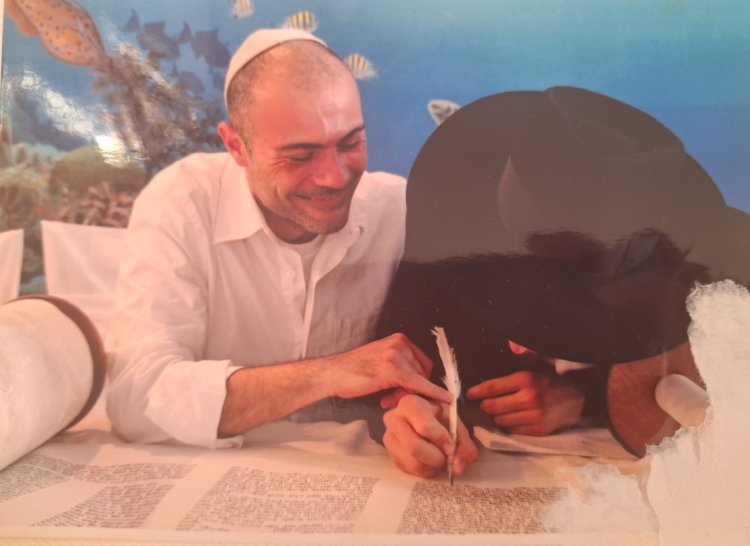
"In 2010, four years after the hurricane, we had a Torah dedication," Vered recalls warmly. "The event began at our home. My husband, the community's president, was honored to write a letter in the scroll, and the occasion was uplifting and emotional. Then, we went out with the scroll in a procession of dancing and singing to the synagogue. It was a special feeling - to receive the Torah here, on the island at the edge of the Earth.
In that year, during Shavuot, we had the privilege to read from our Torah scroll, Cozumel's community scroll. The community members wore white, and the excitement was palpable. The reader read the Ten Commandments aloud, and all the community's children listened in awe. We felt as if we stood at Sinai, receiving the Torah from the Creator. It was an atmosphere one could never forget.
"Many years have passed since," Vered concludes. "The children grew and we moved to Israel. We stay in touch with our friends from Cozumel and are thrilled to hear about the community. Today I am a specialist therapist in CBT and NLP methods, combined with TLT, and I lead an emotional treatment program for children and youth in the Ministry of Education. I receive women and girls in my clinic in Ashdod, and I also conduct workshops and treat women nationwide via Zoom. All of this is powered by that same connection to the soul's teachings that I was blessed to receive in Cozumel. My clinic overlooks the sea in Ashdod, reminding me of the enchanting Caribbean beach. And though there are no flamingos or glass houses here, I always prefer the waves of the Holy Land's sea..."
עברית