

Magazine
From Anorexia to Inner Freedom: Hodaya’s Powerful Journey of Faith, Healing and Choosing Life
After years of starving herself and a long stay in an eating-disorder unit, a young mother shares how prayer, therapy and self-acceptance helped her overcome anorexia, rebuild her family life and learn to truly love her body and her soul
- Tamar Schneider
- | Updated
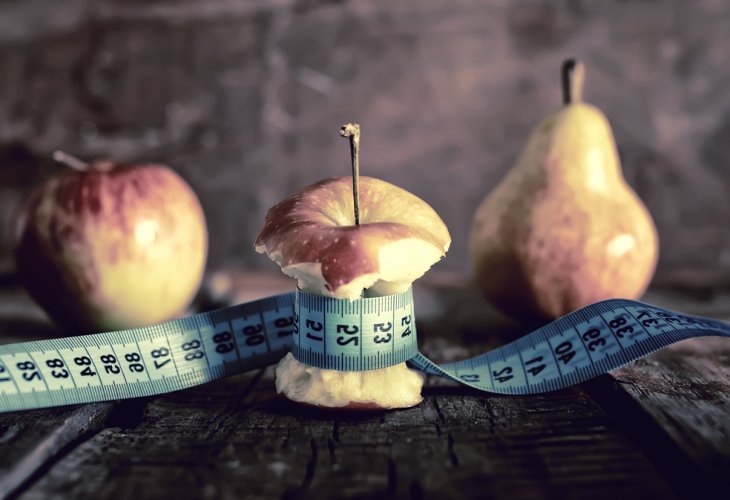 (Photo: Shutterstock)
“The day I arrived at the psychologist in the eating-disorder ward, I cried to her everything I hadn’t cried for two years,” Hodaya begins her raw, emotional story about the anorexia she battled for two long years.
“I told the psychologist how helpless my husband was in the face of what was happening, and that I have two little daughters who need a functioning mother. I already understood that I was trapped inside a prison I had built for myself, and deep down I knew that only I could get myself out of it. That is how my hospitalization in the eating-disorder unit began.
“During those difficult days I prayed all the time, and I would cry and beg the Creator of the world to help me. Every moment was a struggle – not to purge, to eat everything they gave me, and to try even to enjoy the food. It was a battle for sanity, for life – and after a stubborn fight, I was privileged to win.”
Hodaya managed to leave anorexia behind only about a year ago. The road that led her into the illness and then out of it was anything but simple. The descent into the dangerous depths of extreme thinness almost drowned her completely. But she did not give up. With burning faith in God and in the strengths He planted in her, she was able to come through the crisis.
Now she has chosen to tell her story, to give strength to other girls and women going through this same hell – and to their families. “It is important to me that people understand how crucial it is to listen to the soul and give it the right response,” she says with pain.
“Mommy, Food!”
From childhood, Hodaya’s relationship with her body image was complicated.
“I was ‘the fuller daughter’ in the family – not obese, but fuller,” she says. “It was hard for me to find clothes that fit my body, and I was jealous of my younger sister who was thin. From time to time my eating would come up in conversation, and it was important to my mother that I eat in moderation.
“I remember myself already at about ten trying to ‘diet’ in a childish way, which only worked a little. In eighth grade I weighed around 55 kilos, and I was afraid that if I gained more weight I would never manage to get married. I never really liked myself, and I was sure I would not be able to truly love anyone if I kept gaining weight.”
After Birth: From Dieting to Despair
The big crisis around her body image began about a year after the birth of her eldest daughter.
“I reached 73 kilos, and I started really hating myself,” she recalls. “I knew I loved to eat and that I would not manage a strict diet, so deep down I prayed to lose 20 kilos in a month, and I was willing to get sick for it.
“At that time I traveled with my husband to Uman, and what I asked from God there was literally to become sick so I would ‘succeed’ in shedding those extra 20 kilos.
“When we came back to Israel I was so frustrated that I felt as if poison was flowing through my body. I had the feeling that if I ate even one more tiny thing, it would be the end of the world.”
She signed up for a gym, and there the slide down the slope began. “At first it was small,” she says, “but a few months later it developed into a situation where I was getting to the gym many times a week, sometimes multiple times a day.
“My eating shrank to small, light meals, and as time went on even that decreased. I understood I was in an unreasonable state, but the joy and satisfaction I felt when I stepped on the scale and saw I had lost 10 kilos in a month – for me, that was worth everything.
“In my heart, I would thank God for every gram that came off and pray that He would help me keep losing more.”
From there, the disorder worsened: she began compensating in unhealthy ways for anything she ate, terrified of gaining even a little. Outwardly, at events for example, it looked as if she was eating “normally,” but behind the scenes she did everything she could to prevent the food from staying in her body.
“I got to a point where I was living on tiny amounts of food, and even that with terrible fear,” she says. “Within three months I dropped the 20 kilos I had feared so much – but at the same time I became a woman with red eyes, a weak body, and hair that began to fall out.
“I was always cold, I had no patience for my baby daughter, and all desire to live and enjoy life was gone.”
What about your husband – did he not see what was going on?
“My husband saw that I was not eating and already understood that something was wrong, but he was a young, innocent guy and did not know how to deal with it.
“It was not easy for him, and the madness I was in shook our relationship, but neither of us had ever heard the word ‘anorexia’ and we did not understand that this was a serious mental health problem.
“We did not think for a moment that I should seek professional help. He trusted me and believed I would get through it.”
The irrational behavior continued. “I had to weigh myself every day to know how much I had lost,” she says. “Once, when we were staying with my mother-in-law, I turned the whole neighborhood upside down to find a neighbor who had a scale.
“At that stage I even began to be afraid to drink, with an irrational fear that water would make me gain weight. And once I lost those 20 kilos, I started setting myself new goals with even lower target weights.
“All day long my head was full of thoughts and fears around food, weight, and how my body looked.”
By a miracle, her second pregnancy began just then. “I was happy about the pregnancy, because deep down I understood I had a problem and I assumed that thanks to it I would start eating again and come out of this harsh place,” she says.
“But the fear of gaining weight was already stronger than me, and I could not bear seeing my stomach growing.
“At that time, I was not managing to keep any meal down, I suffered from severe nausea and would throw up even without wanting to. In a truly miraculous way, nine months later we had a healthy baby girl.”
What about your extended family – did they understand what was happening?
“My mother was already telling me that I had to eat, and I really did eat in front of her,” Hodaya explains. “But afterwards I would secretly undo everything, without her knowing, which made it hard for her to grasp the full picture.
“Later she began to follow me and realized that I was doing it on purpose, but I denied it and claimed it was just because of the pregnancy. My parents were still worried, but they too did not know the word ‘anorexia’. They had no real tools to help.
“At the same time I went to a personal coach, which outwardly seemed like something wonderful. However, even though the coach tried to help me, my fear of food was stronger than everything.”
“You Are Going to Die”
After the birth, Hodaya understood clearly that she had long crossed the boundaries of any normal diet. She wanted to return to eating normally – but mentally she was already beyond what she could control.
“I stopped purging for a while and convinced everyone that I was getting out of it, but once I had regained their trust I slipped back into the same pattern,” she says.
“On top of that, I did not have the strength to hear my parents’ comments anymore, so I convinced my husband that we should move far away.
“We moved to a big, spacious house, and that’s where the real nightmare began. For about a year, I kept up the destructive behaviors. Things reached a point where my throat was already injured and bleeding. I looked terrible, with dark bags under my eyes and hair ends breaking off under my headscarf.”
The “big secret” was already visible; it could no longer be hidden. “Relatives begged me to eat and tried with all their might to explain that it would be okay,” she says. “On the other hand, there were those who were angry and could not understand how I had led myself into such a terrible state.
“One day my uncle’s wife came to me and told me about a woman with anorexia she had known, who could no longer recover. Her body had become so used to throwing up that it happened automatically, and she passed away at a weight of only a few dozen kilos.
“Another step my parents took was to make it clear to me that if things continued like this, my family would fall apart, my daughters would be taken into foster care, and I would end up in a psychiatric institution.
“But there was one thing they did not grasp – that I needed help from outside, because the reality I was in was no longer under my control.”
The Turning Point
“I begged God to help me get out of it,” Hodaya remembers. “I asked Him to let me eat like everyone else, without fear, and I cried the tears of my life.”
A few weeks later she asked her parents if she could move in with them.
“I understood that I was not able to run my home, and that I needed to start getting help. When my husband heard, he broke down in tears – but in the state I was in, I did not even have the strength to feel his pain.
“I went to my parents’ house and they tried to help, but every time they told me to eat I would fall into a panic attack. I fainted from time to time, and a mother of a girl with anorexia who came to talk to me explained that my body would not be able to survive much longer like this. She told me, ‘Go to the hospital quickly, because you are about to die.’”
Did you agree to go?
“Definitely – I was even relieved,” she says. “I hoped that salvation would come from there.
“But at the hospital they just checked me, told me my levels were a little low, and sent me home.
“I went back to my room broken and shattered and cried out for help. There I came to understand that the right place for me was the eating-disorder unit. In that department they hospitalize only women who want help and are willing to accept its strict conditions – and I was in such a state that I was ready for anything.”
Inside the Eating-Disorder Unit
After her first conversation with the unit psychologist, it was made clear to her that she would be entering a long period of hospitalization.
“It was very hard for me to think about that, but on the other hand I thanked God that there was even a place available for me,” she says.
“Unfortunately, this issue is not at the top of the priorities in the country, and some women have to wait months to get admitted.
“A few weeks earlier I had already forced myself to stop purging, and that was a big achievement for me – a sign that I still had some control over my body.”
In the unit, Hodaya was exposed to shocking sights. “There are women walking around without a spark of life, connected to feeding tubes, eating only after cries and tears,” she describes. “Suddenly I realized that I was one of them, and for the first time I truly understood how terrible I looked.
“The rules in the unit were especially strict: you have to arrive exactly on time for four meals a day. If you are late, you receive a special drink that replaces the meal and tastes awful.
“After every meal, everyone sits under supervision in a large room for two hours. Besides that, it is forbidden to talk about food, body, or weight. You cannot look in a mirror. There are regular therapeutic sessions to support the emotional side.
“Someone who manages to gain weight can go home for Shabbat, but must return to the ward exactly on time. Everything is done with very firm boundaries, without exceptions.”
How was the experience in the unit for you?
“It was very hard and I wanted to go home, but a rabbi I was in touch with encouraged me to hold on and not to give up,” she says.
“I saw women there who had had respectable careers and had ended up in the lowest places. The most painful thing was to hear, from time to time, about women who were no longer with us because they had decided to give in to the illness and leave the unit – or worse, had passed away.
“I had tough battles with myself, and I cried to God constantly to help me. I knew I had to be strong. Sometimes what helped me was to put on music and start dancing – out of faith that one day I would return to a normal life.”
Gradually, a tiny light began to shine at the end of the tunnel.
“I started gaining weight,” she says. “That was a huge achievement for me. At the same time, the voices in the ward kept saying that you never really get out of this, and even if you do – it is never fully.
“Against those voices of despair, I stood with prayers and pleas to God. I wanted so much to eat, and even to enjoy food, but I still had a deep struggle with my body image.”
How did you change your inner perception of your body?
“The change was to begin accepting myself as I am,” Hodaya explains. “Again and again I reminded myself that if God created me this way, then this is the best for me.
“I asked myself: ‘What are you fighting – what God decided?’ And I understood that this fight was taking me to a bad place.
“From then on, I started repeating this to myself daily, because after 22 years of being used to not loving my body, the change does not happen in a second.
“As for eating – there is no person who does not like to eat. Once I internalized that food is not the enemy, the natural enjoyment of it came back on its own.”
Hodaya continued to fight for her sanity. “I refused to take psychiatric medication, and every time I had a panic attack I would fight through it, believing that I could succeed,” she says.
“Throughout that whole period I wrote down every day what I was going through, and above all, I prayed with tears for long hours. God heard my prayers, and after only two months I reached a normal weight.”
Returning Home – and Facing the Fear
At that stage Hodaya was told she could go back home.
“For most people that would sound like wonderful news,” she says, “but I was afraid to go back to regular life and fall again. At home, all I had were memories of purging, hunger, frustration, and arguments.
“On the day I went home everyone was happy for me, but I sat and cried. I went to my parents’ house because I still was not able to function on my own, and I had no choice but to face it.
“I remember one Shabbat when I took my girls to the playground. They were busy playing, and I found myself thinking that maybe I should go back to being thin. The war against those thoughts inside me was unbearable.”
Slowly Rebuilding Life
Despite everything, Hodaya did not give up.
“I remember how I went on a family vacation with my husband’s family, sat and ate with them – and even enjoyed it,” she shares. “That was another big achievement for me – being happy with food instead of seeing it as an enemy.
“I still ate then according to a structured meal plan, but I was no longer in a place of fearing food.
“Little by little I returned to my own home and we began to rebuild life and our marriage. Over time I also went to emotional therapy to open up all the pain that was there. My hair started to grow back, the darkness under my eyes disappeared, and I became a living woman again, with joy in my heart.”
Is there something within you that grew out of all this?
“Yes, absolutely,” she says. “Before everything that happened, I used to complain a lot, and today I understand that I was given this challenge so that I could learn to appreciate life.
“During the hospitalization I missed my husband and daughters so much, and only there did I really feel how meaningful every day with them is for me.
“Another thing I understood is how important it is to give space to our inner feelings and not to neglect them. You can see how the unhealthy seeds that had already sprouted in me in childhood grew and developed into a slippery slope from which there was almost no way back.
“Today I understand how important it is to notice these feelings and give them the right response. I am learning to listen to myself and to give my soul what it needs.”
Do you have any fear that you might one day go back there?
“For a while I did walk around with that fear,” Hodaya admits, “but now it is no longer there. I suffered so much in that place that there is no way I would go back to that nightmare.
“Also, I feel that God did not want to put me into a lifelong illness, but rather to open my eyes to a different perspective on life. When I was in the very heart of the battle for my life, I did not call it a war against anorexia, but a war of faith.
“It was a daily struggle over my belief in my own strengths, and the whole time I encouraged myself – and also other women in the ward.”
What would you like to say to someone who is in that place – and to those around her?
“First of all, you need to know that someone who has reached this place is crying out inside for warm words and help, and even if she seems to resist getting better – that is what she really needs,” Hodaya says.
“Another important point is that unfortunately, the support that comes from the system in this area is not always enough. There is only one small specialized unit, where the emotional treatment is not always as deep and comprehensive as it should be.
“To someone who is in this pit, I have to say something that sounds a bit harsh, but it is the truth: no one will be able to help you if you do not help yourself. If you want to live – you need to start.
“It is painful to put things on the table like this, but there is no other way. Whoever wants to get out of that place has to get up and act.”
Choosing Life
“To end,” Hodaya says, “beyond everything, God is with us and listens to every prayer. It is clear to me that He gathered all my tears and heard my pleas when I was deep in the pit.
“That is why it is so important to keep praying and not fall into despair.
“Today I thank God for every bite of food I eat, for my husband who did not give up and continued to support me, and for my sweet daughters.
“And above all, I am happy that I was privileged to get up again and choose life.”

