

Magazine
Rediscovering Jewish Identity: Powerful Stories of Adult Circumcision
How Rabbi Aharon Yosef Kramer performs adult circumcisions in prisons, war zones, and across the Jewish world
- David Fried
- | Updated
 (Photo illustration: shutterstock)
When the phone rang at the home of mohel Aharon Yosef Kramer, he understood that a mission of the highest importance was about to be presented.
“In my house, a phone call — especially at such a late hour, definitely signals something out of the ordinary,” says the well-known mohel from his home in the city of Beitar Illit. “In that call, I was asked to perform a brit milah (circumcision) for a Jew who had never been circumcised in his youth. I do receive such calls quite often, but this time was different: it was about a prisoner in a high-security jail in the city of Odessa, Ukraine.”
We meet adult-mohel Aharon Kramer after many long years of bringing Jews into the covenant of Avraham Avinu. “These are mainly Jews who did not merit having a brit milah when they were young,” he says. The man who called was one of those Jews whose inner point of Jewish identity suddenly awakened. The moment Kramer received the call, he knew he would have to set aside the schedule he had planned for the next day — just as countless calls had forced him to do in the past. And yet, this time was different.
“It’s not every day that I am invited to do a brit milah in one of the most secure prisons in Ukraine. And perhaps specifically because of where this Jew was, it was crucial to carry out the mitzvah as quickly as possible,” he explains.
Moments after receiving the late-night call, he was already in the middle of preparing for the trip to Ukraine. “It was a Jew who wanted to strengthen his connection to Judaism after being exposed to it specifically inside the prison. I don’t know why he was incarcerated there, and I didn’t ask. What mattered to me was to fulfill the mitzvah as soon as possible. The people who invited me to Ukraine arranged the permits needed to enter the prison, and by early afternoon the following day, I was already standing at the prison gate.”
“At the entrance I met the prison rabbi, who told me that a day earlier he had given a class to the Jewish inmates there and had spoken to them about the mitzvah of brit milah. In the middle of the class, one of the prisoners stood up, said that he was uncircumcised, and asked that we arrange a brit milah for him,” Kramer recalls. “The rabbi told me he answered the prisoner, surprised: ‘In prison?’ But to everyone’s amazement, the prison authorities gave permission to perform the brit inside the prison.”
Kramer describes entering the place as an unforgettable experience.
“The entrance to the prison consists of two doors: when one is open, the other is closed. I arrived, and the guards found the knives I was carrying. Naturally, there was an uproar, but after things calmed down and we explained what they were for, they let us in. We met the prisoner, and with the guards’ escort we moved him to the prison clinic. Remarkably, the guards even allowed us to be alone with him. After the brit, we celebrated with cakes I had brought especially, and the emotional event ended with a Tehillim (Psalms) book that I gave the prisoner as a gift. It was a moment of tremendous emotion. Another Jew had entered into the oldest mitzvah of the Jewish people.”
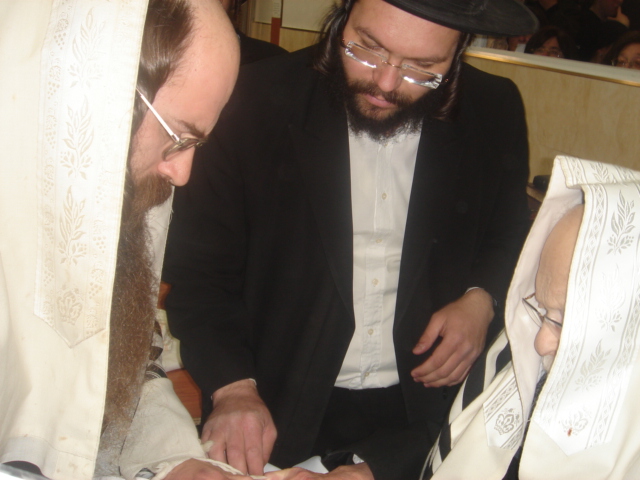 (צילום: באדיבות אהרון יוסף קרמר)
A Brit on Tisha B’Av
Kramer, a 49-year-old kollel scholar, also serves as the chairman of the organization Brit Avot, which performs adult circumcisions in Israel and around the world.
“I’ve been a mohel for adults for decades,” he says. “About twenty years ago, I was teaching Jews who had immigrated from the former Soviet Union at an institution called ‘LeTzion Berina’. During the course of teaching, I discovered that some of the students were not circumcised. This wasn’t because they rejected the mitzvah, but because of ignorance. These were Jews whose every possible connection to Judaism had been crushed by the Soviet regime of terror.”
Kramer was shocked and decided to do everything he could to help those Jews. He contacted a Jewish doctor who had been performing britot under the Soviet regime with great self-sacrifice.
“Together we began arranging britot for the students. Then the parents came, and afterward family friends and other relatives. The phenomenon spread by word of mouth, and many people came asking to fulfill the mitzvah. Over time, we began publicizing this ourselves in newspapers and through other means, and the number of those requesting britot grew and grew. Interestingly,” Kramer adds, “these were Jews who had been cut off from Judaism for many decades, but they knew that a Jew must have a brit milah.”
At the height of this wave, Kramer and his organization were performing around 300 britot a year. “Today there are far fewer,” he says, “but that’s actually encouraging, because it shows that the number of Jews who immigrated from the former Soviet Union without having a brit has dropped significantly.”
To further encourage people to come forward, the organization publishes selected stories about Jews who chose to have a brit milah. “Our publicity brings in more requests,” he notes.
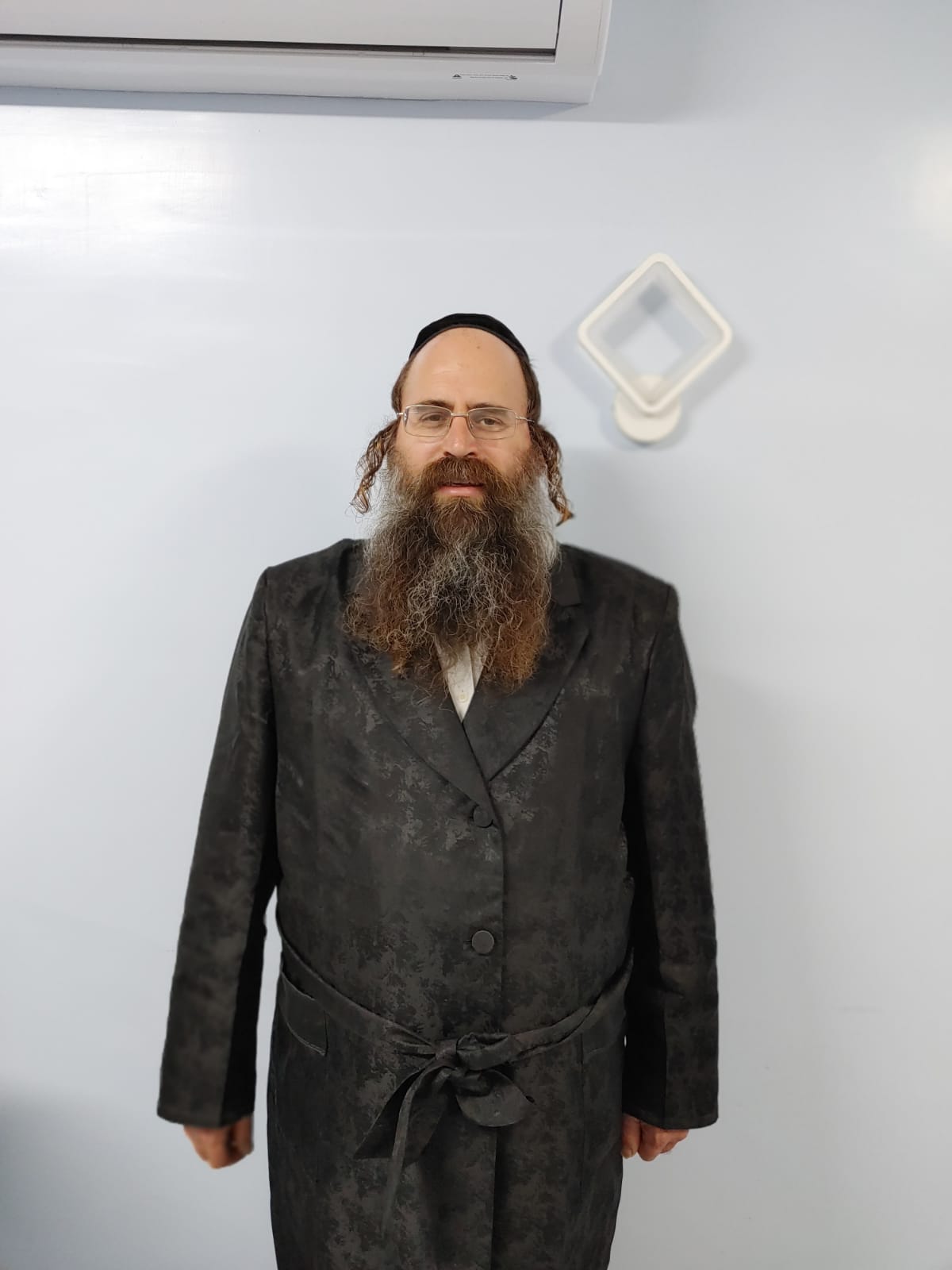 אהרון יוסף קרמר
 In what ways is a brit milah for adults different from one done for babies?
“There are a few differences,” he explains. “For example, in Israel, adult circumcisions are performed in an operating room. In Ukraine, however, there’s no requirement to do the brit in a hospital specifically. Adults also recite the blessing on the mitzvah themselves.
“There was one man, about 52 years old, whom we honored with the blessing, but he didn’t know what to say and exclaimed emotionally: ‘Blessed are You, Hashem our God, King of the universe, I love You…’ Of course, halachically that was a blessing in vain — but spiritually, it was incredibly moving, and I’m certain it made plenty of ‘noise’ in the Upper Worlds.”
“For us mohalim, another difference with adults is that we don’t wait long between the request and the brit. When a baby is born, the parents know and prepare. But when an adult suddenly decides he wants a brit, we try to do it as soon as possible — sometimes within a day, and often even the same day. That’s why I’ve done britot at very unusual times. I especially remember one Tisha B’Av when I performed six britot one after another.”
The biggest complexities, however, are when Kramer is asked to perform britot abroad. “There aren’t many mohalim in foreign countries, so I get called a lot. When I fly to perform a brit overseas, I don’t even take payment for the flight ticket. But the satisfaction is enormous when we see another Jew fulfilling the mitzvah of brit milah — at any age.”
Jewish Blood
Kramer’s stories flow easily. “Recently, we received an inquiry from an Italian Jew — about 22 years old, who up until a year ago, had no idea he was Jewish. One day, a non-Jewish acquaintance told him: ‘You have Jewish blood.’ He was very surprised and decided to investigate. After a thorough search, he discovered that his maternal grandmother was a Jew who had come from Egypt to Italy about 150 years earlier. That meant he himself was Jewish according to halacha.
“After a period of soul-searching, he decided to continue examining his Jewish status, and a beit din (rabbinical court) in Italy ruled that he is a fully Jewish man.
“He then chose to leave university and make aliyah to Israel. Here he entered the Aish HaTorah yeshiva in Jerusalem. After a short time of learning there, they contacted me on his behalf so that I could bring him into the covenant of Avraham Avinu. I arranged an operating room and we set out together to perform the mitzvah. On the way I said to him: ‘You’re a Jewish child whose grandmothers in Heaven have been praying that you return to your roots — and now you merit to fulfill that,’ and we broke out into emotional singing for the entire drive.”
This song — the eternal song of the Jewish people, truly spans the globe. “I’ve done britot in America, Europe, and Asia,” says Kramer.
In one case, he was called to perform britot in the city of Mezhbizh in Ukraine. “I came there to perform circumcisions for several Jews. One of them was a Jewish soldier who arrived straight from the front lines. Interestingly, his commander — also a Jew, was the one who persuaded him to have a brit.
“After the brit, I turned to the commander and asked if it was really possible to just leave the front in the middle of a war, and he dodged the question. It’s clear to me that the Jewish soul — the same soul that found ways to fulfill this mitzvah even in times when it was illegal, still finds ways today to do so, against all odds.”
How is it possible to perform britot in Ukraine during the war?
“The fighting is taking place far from where we were, but the tension is felt throughout the country,” he says. “Because of the heavy fighting, we couldn’t fly directly into Ukraine, so we crossed the border from Moldova into the war-torn country instead. Sandbags were piled along the sides of the roads in the big cities. In some cases we also heard air-raid sirens. Unlike Israel, though, the sirens there are not precise to the exact location of expected strikes; they can be heard even 300 kilometers from the front line. So we did not actually need to take shelter throughout our stay.”
 (צילום: shutterstock)
Weren’t you afraid to enter a country at war?
“There is definitely fear,” he admits, “but I went only after consulting with great Torah sages, who instructed me to travel in order to fulfill this important mitzvah.” Kramer emphasizes that the permission he received was a personal ruling: “No one should take this as a general allowance to travel to Ukraine. Every case must be examined individually.”
“In general,” he adds, “from the very start of the war we were already performing britot there. The rabbis I consulted were informed that various embassies had returned to Kyiv, which was a sign that certain areas were considered safe enough — and they allowed me to go to specific locations where there was a need to perform britot. One of the places I was supposed to do a brit during the war was the city of Mariupol, which the Russians later completely destroyed. The rabbis ruled that if the roads were open from the perspective of the Ukrainian army and government, I could travel there to perform the brit.”
Ukraine was a destination for adult britot even before the war. “A week before the fighting broke out, we did two britot there. At that time, I performed a circumcision for a Jewish man of about sixty. The mood on the streets was that the Americans were exaggerating and that no war would erupt. People I spoke with simply didn’t believe it would happen — but in the end, it did. I, of course, took no chances and left earlier.”
 (צילום: shutterstock)
Has the war changed the number of people seeking brit milah?
“Definitely. You’ll probably be surprised to hear that since the war began, more people have wanted to have a brit. They see the mutual support and solidarity of the Jewish people, which has been particularly visible since the war broke out, and they want to reconnect to their roots.”
Who is the oldest person you’ve circumcised?
“I’ve had the privilege to perform britot for Jews over 80. A few years ago, during the Ten Days of Repentance, I did several britot in Odessa, one of them for an 82-year-old Jew who had been married to a non-Jewish woman. She had passed away some time earlier, and he started going to the synagogue. When he heard that a mohel was coming, his inner Jewish spark awakened and he asked to have a brit milah. And indeed, we performed it for him.”
Kramer explains that there is a natural concern with every adult brit. “It’s not simple, and there are fears of possible complications. In his case, he told us he was healthy, and indeed everything went smoothly, as it does in most cases. Only rarely does a brit become complicated.
“One such case was when a man approached me one Shabbat while I was in Ukraine for britot. He told me his father wanted to have a brit milah. I answered that we do not perform a delayed brit on Shabbat and that he should come on Sunday. The father came on Sunday, and as usual I asked about any medical history I should know. He said he had none.
“We performed the brit, and to my horror I saw that the bleeding would not stop. I asked him again if he was sure he had no medical issues, and he answered that he has diabetes and takes medication for it. As the blood continued to flow and I was working to stop it, I asked him: ‘Why didn’t you tell me earlier?’ and he replied, ‘I decided to fulfill the mitzvah of brit milah and nothing was going to stop me.’ In the end it turned out well. From true self-sacrifice for a mitzvah, one does not lose. I remember this case very well because I missed my flight because of it — but that also turned out for the best, as I was then able to perform another brit afterward.”
“There was another Jew, around eighty, for whom I did a brit, and I especially remember his cry afterwards: ‘I have defeated my father.’ When I asked what he meant, he explained that his father, a committed communist, had never had a brit and did not want to teach his children anything about Judaism — while he, the son, had now merited to fulfill the mitzvah.”
A Brit That Ended in a Full Return
There was also a case that ended in a particularly moving teshuvah story.
“It happened about fifteen years ago. I received a phone call saying that a Jewish man from France, visiting Israel, needed to be persuaded to agree to a brit milah. When I met him, he told me that his father had worked for the French embassy in Morocco. When the father was on his deathbed, they asked him whether to circumcise his newborn son, and he replied in the negative. As a result, the son had accepted that as his father’s will and refused to undergo brit milah.
“In the end, after we met at Misgav Ladach Hospital, I realized there was another reason for his firm refusal. ‘Both Christians and Muslims also claim that they are the chosen people,’ he said to me. ‘So why should I believe that specifically the Jews are?’ Further investigation revealed that he was, unfortunately, married to a non-Jewish woman and did not want to separate from her.
“Once I understood what was behind his resistance, I was able to persuade him. After the brit, I took him to the shtieblach in Meah Shearim, where we danced and celebrated the mitzvah with the crowd.”
The surprising ending came three weeks later, when the man called Kramer and told him that he had left his non-Jewish wife and was on his way to settle permanently in Israel.
“‘And I said to you, in your blood you shall live’ is written about brit milah. And indeed, these stories prove more than anything that even in the farthest corners of the world, this mitzvah is the true lifeblood of the Jew.”

