

Magazine
Touching the Ashes of the Destruction: An Archaeologist’s Perspective on Tisha B’Av
Dr. Avi Solomon on Western Wall excavations, Second Temple ruins, and how the stones of Jerusalem tell the story of the destruction
- Moriah Luz
- | Updated
 In the circle: Dr. Avi Solomon (Credit: Elisha Grosberg)
“When you touch the ashes left behind by the fires of destruction, you undoubtedly understand Tisha B’Av much more deeply,” says Dr. Avi Solomon, an archaeologist and one of the excavators and researchers of Jerusalem and the Western Wall Tunnels. Solomon dedicated his doctoral dissertation to the study of the ancient scrolls discovered at Qumran, with a special focus on Jerusalem. As part of this work, he researched the structure of the Temple, the laws of sanctity and purity of Jerusalem, and halachic laws related to the Temple and its sacred service.
Twenty-seven years ago, Solomon joined as a research assistant to Professor Dan Bahat, the archaeologist who directed the excavations of the Western Wall Tunnels. When Professor Bahat retired, Solomon took his place and over the years continued researching the area of the Old City basin.
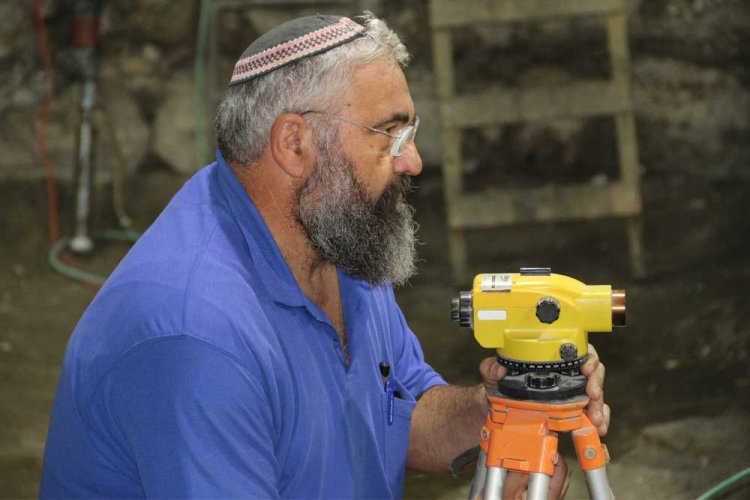 אבי סלומון בחפירות
Bustling Jewish Life
“I often say that our role as archaeologists in a place like this is to make the stones speak to the public. When people come to an excavation site and see burnt and shattered stones, we explain that this stone once stood proudly in one of the upper rows of the Western Wall, when the Temple still stood in its full glory. We go on to explain that it fell during the destruction and ended up where it lies today, thrown onto the ground alongside other stones. Suddenly, the public understands the magnitude of the devastation that took place here.
“When visitors see a wall whose lower part is built of hewn stones from the Second Temple period and whose upper part is made of stones from later eras — with a very clear fracture line running through it, the destruction becomes unmistakably visible. You can show people that below the destruction line are stones from the Temple period, while above it is construction from Aelia Capitolina, the pagan city built by the Romans in Jerusalem several years after the destruction, as well as from later periods.”
Since the destruction of our Temple nearly 2,000 years ago, many peoples have passed through this place. “During excavations in the Old City basin, we had to remove layers of soil from many later periods before reaching the Second Temple layer,” Solomon explains, listing them rapidly: “We began by removing the modern layer of recent decades, then the Ottoman period, the Mamluk period, the Crusader period, the Byzantine period, the Early Islamic period, and the Roman period. Only after removing all those layers do you reach the layers of the Second Temple and the destruction itself.”
One of the most moving discoveries Solomon uncovered in his work was a complex of large ritual immersion pools (mikva’ot) from the Second Temple period. Masses of pilgrims immersed themselves in these enormous pools. Their size and dense layout vividly illustrate the vibrant life that existed here during the time of the Temple.
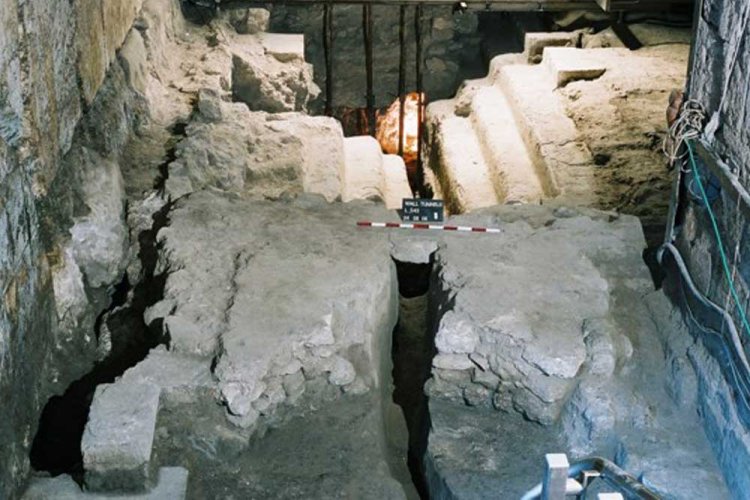 מערך מקוואות טהרה שנהרסו במהלך מרד החורבן (קרדיט: הקרן למורשת הכותל)
Does being a Torah-observant archaeologist give you an additional perspective on the findings?
“Absolutely. There are things I understand thanks to my familiarity with the Mishnah and halacha. For example, regarding the mikva’ot complex: some researchers who are not Torah-observant claimed these were not ritual baths but water pools. Their argument was that a mikveh requires an ‘otzar’ — a reservoir of rainwater connected to the immersion pool. Since these mikva’ot lacked such a reservoir, they claimed they could not be mikva’ot.
“But when we open the halachot of mikva’ot,” Solomon clarifies, “we find that a mikveh fed directly by spring water does not require an additional reservoir.” The mikva’ot uncovered in the Western Wall Tunnels received their water directly from the aqueduct that carried water from Solomon’s Pools near Bethlehem to Jerusalem. According to halacha, Solomon explains, not only were these valid ritual baths — they were actually of the highest level of ritual purity possible.
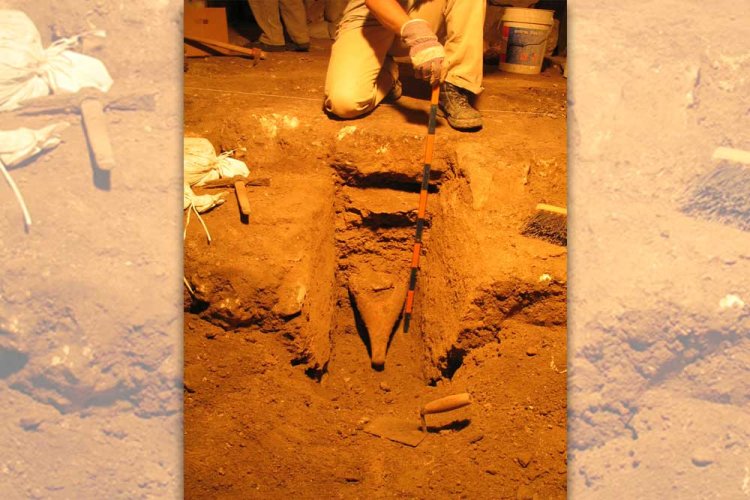 אמפורה רומאית החוסמת תעלת המשכה למקווה טהרה שנהרס במרד החורבן (קרדיט: ד"ר אבי סלומון)
We are in the period of the Three Weeks, approaching Tisha B’Av. How present is the destruction in the archaeological findings?
“In an excavation conducted about thirty years ago — before I worked here, archaeologists found seven ballista stones,” Solomon says. “These are spherical sling stones that served as ammunition at the time. They were found only a few dozen meters from the Western Wall, embedded in the floor of a magnificent Second Temple–period structure. They were likely hurled either by the Romans toward the Temple Mount, or by Jewish rebels toward the Romans trying to breach it. Another possibility is that they were used during the internal civil war that preceded the destruction and took place in this area.”
“In another excavation area,” Solomon adds, “we found something that shook us deeply. Beneath the soil layers, a water installation — essentially a storage area, was uncovered, and inside it were unmistakable signs of the destruction: a layer of ash, charred wooden beams, and fragments of stone vessels. We could literally see how the place burned during the destruction of the Second Temple. This is one of the places where I can say with certainty that we physically touched the destruction.”
Stone vessels, he notes, were unique items most commonly used by Jews during the Second Temple period who were meticulous about the laws of ritual purity. Since stone vessels do not contract impurity according to halacha, some people preferred them despite their heaviness and inconvenience.
Solomon also points out another site where a mikveh was deliberately sealed, and on top of it the Roman legion built a bread oven — essentially an industrial furnace, immediately after the destruction. “The legionnaires built the oven directly over the ruins of the mikveh,” he says.
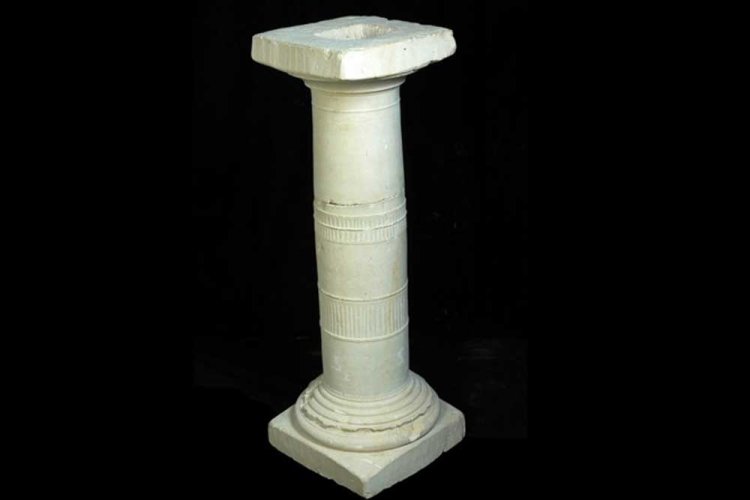 רגל שולחן מאבן שאותרה בחפירות, לאחר ניקוי ורפאות (קרדיט: רשות העתיקות)
Elsewhere, a kitchen from a Jewish home dating to the Second Temple period was uncovered, damaged during the destruction. The kitchen lay in ruins, and among the debris archaeologists found a beautifully crafted stone table leg and the remains of two large stone jars.
Not only layers of ash and fire were uncovered, but also memories of baseless hatred. “In the years leading up to the destruction, Jerusalem was torn apart by a brutal civil war. Two Jewish leaders — John of Gischala and Simon bar Giora, fought each other and dragged many Jews into the conflict. John of Gischala fortified himself on the Temple Mount, while Simon bar Giora entrenched himself in the Upper City, the area of today’s Jewish Quarter. According to the historian Josephus, amid their battles they destroyed large sections of a massive bridge that led to the Temple Mount.”
Solomon adds that Roman legionnaires later repaired the bridge for their own use. Excavations clearly show which sections were destroyed and which were rebuilt by the Roman legion and later peoples.
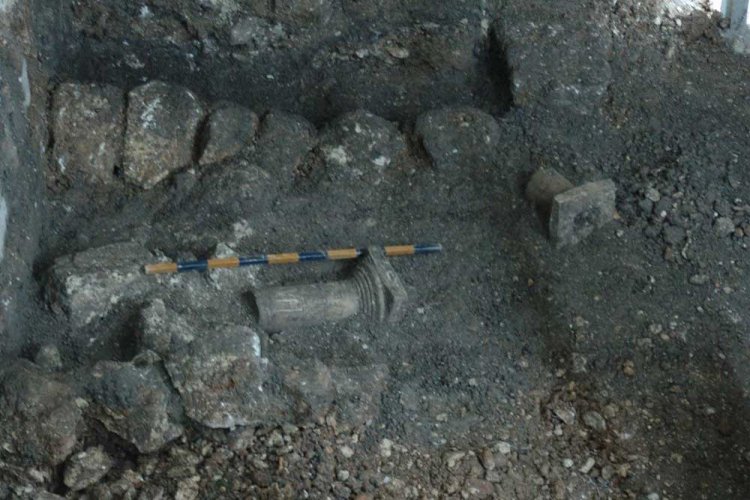 רגל של שולחן מאבן בתוך שכבת חורבן מימי בית שני (קרדיט: ד"ר אבי סלומון)
As an archaeologist, when you uncover such findings, does it affect you emotionally, or do you examine everything purely professionally?
“Of course it affects you,” Solomon answers immediately. “When you touch a destruction layer and see the results of the devastation, you suddenly understand much more deeply why we mourn on Tisha B’Av. All the customs of mourning and the reduction of joy that our sages instituted in memory of the destruction take on far greater meaning as a result.”
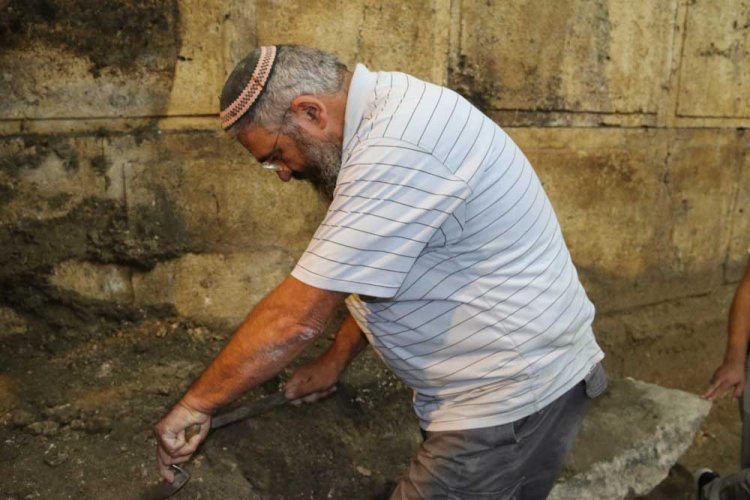 אבי סלומון בחפירות
