

Magazine
The Silent Front: The Wives Supporting Israel’s Wounded Heroes
Behind every wounded soldier stands a wife carrying her own invisible burden. Avital Shindler shares the long road of recovery, the emotional and spiritual challenges families face, and how a growing community of women is finding strength and purpose after injury.
- Michal Arieli
- | Updated
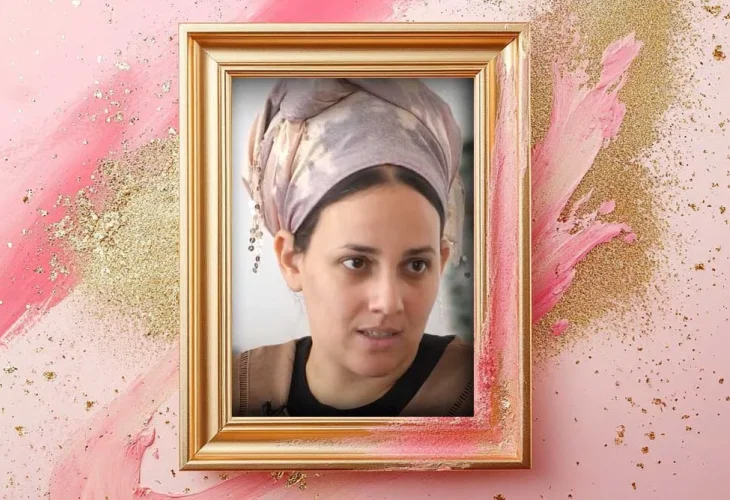 Avital Schindler
“Nearly two years have passed since Amichai was wounded, and sometimes it feels as though we have begun to adjust to our new reality. But then something happens that reminds me life will never return to what it once was,” says Avital Shindler, wife of Amichai, who bravely defended his family in their home in Kerem Shalom when terrorists broke in on Simchat Torah 5784. Amichai was critically injured in the attack and lost his arm.
“That is exactly what happened last week as we began preparing for our youngest son’s upsherin, which will take place in about a month,” Avital shares. “Amichai mentioned that he wanted to cut one of our son’s curls, and suddenly it hit us that he cannot. He has only one hand, and even that is limited.
“Amichai did not want to give up. At his next session with the occupational therapist, he asked her to teach him how to cut hair. We got special scissors, and with God’s help, he will do it. But for me, it brought everything back to the beginning, the realization that this challenge will continue to accompany us in the future. As Amichai often says, ‘If life were meant to return to what it was, then what was the purpose of everything we went through?’”
Facing the Challenge Together
Avital is full of life and inspiration, something evident throughout the conversation. “We are here to raise our children with joy and to continue living a full family life,” she explains. “Our family did not collapse because of the injury. We are strong, and the children show remarkable resilience. At the same time, it is clear that this situation brings many challenges, both big and small.”
“The first time I truly realized that Amichai’s struggle was also mine happened in the hospital, about three weeks after he was injured,” she continues. “Until then, I was focused purely on survival. Once his condition stabilized, I allowed myself to spend more time at home with the children.
“Suddenly, I understood how demanding my role was. I had to help the children process the situation while maintaining a sense of normalcy, enrolling them in new schools after we were evacuated from our home. All of this while being by my husband’s side whenever possible, caring for him and supporting him.”
“At that point, I felt an overwhelming need to talk to women like me, to share feelings, advice, and strength. I approached the hospital social worker and asked if there were support groups for wives of injured soldiers. She told me there were none. There were groups for the injured themselves and for families in general, but no one had thought to create a space specifically for the women.”
“Personally, that was very disappointing,” Avital admits. “There are so many wonderful people around us who embrace us and try to provide everything we need. They truly go above and beyond, and we are not lacking materially. But as kind as they are, they do not really understand what I am going through. No matter how much they hug and support, it is never quite the same kind of embrace.”
“That is why I was so relieved when I later learned about a Facebook group called Forum for Wives of the Wounded. Again and again, women posted messages like, ‘I have nowhere else where people understand me, so I am writing here.’ And we truly understood one another. Even when someone is dealing with a different injury or a different story, the feelings are the same. You do not have to explain. You are living the same reality.”
What Do the Wives Go Through?
“It is an enormous challenge that begins already during hospitalization, when a woman has to divide her time between her children at home and her husband in the hospital,” Avital explains. “One of the hardest aspects is that there is no one to truly share the burden with, because the husband who used to be her partner has now become someone who needs support himself.”
“And even after he is discharged and comes home, life never truly goes back to normal. Sometimes there are amputations, wheelchairs, or other disabilities. Some wounded soldiers are fed through tubes. Others lose hearing or vision, or face different limitations.
“Even when the injury is considered relatively mild, daily life does not return to what it was. Expectations arise that the husband will resume functioning, but he is still struggling internally and cannot yet reintegrate.”
“With psychological injuries, it can be even harder. You may see a man who goes back to work and appears functional, but at home he collapses and does not feel part of the family. This affects communication between husband and wife. She must choose her words carefully, trying not to hurt him while helping him return to life. It also shows up as exhaustion, a need for silence, and difficulty coping with the noise and energy of children.”
“One of the special things about our group is the effort to maintain optimism and focus on the good. One of the leaders began a weekly tradition of sharing something positive every Thursday, a good moment from the week.
“Very quickly, we discovered that alongside all the challenges, good things happen too. They may seem small from the outside, but for us they are deeply moving. Things like, ‘My husband got up and took the kids to kindergarten,’ or, ‘I was completely exhausted, but I still managed to help a neighbor.’ It is incredibly moving to see how the women actively look for the good and work so hard to stay optimistic.”
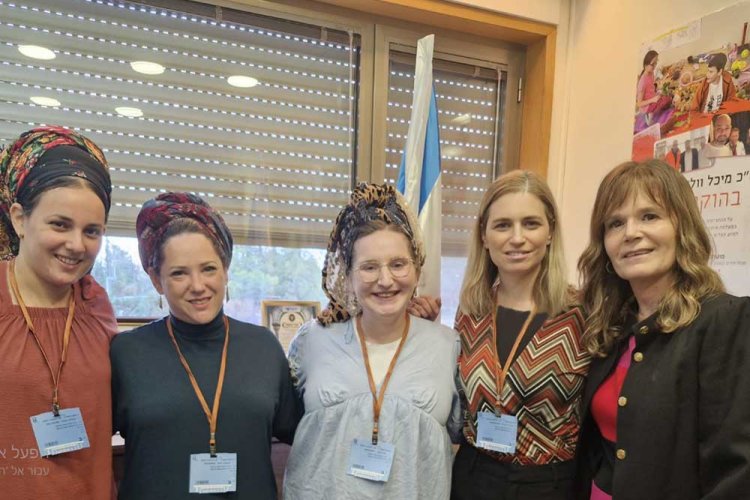 Meeting with Michal Waldiger as part of ongoing efforts to support the wives of wounded soldiers.
A Growing Community
“The Forum for Wives of the Wounded began as a small Facebook group and has steadily grown. Today it includes around 500 women,” Avital says. “But honestly, that is just a drop in the ocean. Our potential is closer to 5,000, and we have not even reached a tenth of that yet.”
“What is striking is that many women join much later and say things like, ‘My husband was injured on Simchat Torah,’ or, ‘He was injured a year ago,’ and it turns out they had no idea we existed at the time. That is heartbreaking, because our entire purpose is to help and be helped.”
“Most women join a month or two after the injury. At first, they are immersed in hospitalization and treatment. Some also struggle with identifying as part of a wounded families community. But once they begin to process what happened, we usually meet them in our group.”
“A few months ago, as I realized the scope of the group and understood it would continue to grow, I decided to take the next step and turn it into a nonprofit organization,” Avital explains. “It required tremendous effort from me and from other women. We are all wives of wounded men, already dealing with daily challenges, and establishing an organization added another layer of responsibility. But we did it because we recognized the need and wanted to support women precisely when they need it most.”
What Does the Organization Offer?
“We continue to run our support groups, and we have also added retreats and special days out, separately for mothers and for families,” she says. “Over time, we also began helping women navigate their rights in the most practical way possible. There are many benefits that wives of the wounded do not even know they are entitled to.”
“With the Ministry of Defense under enormous strain, their social workers simply cannot meet the needs of all the families. We advocate wherever we can, including in the Knesset, pushing for expanded support systems. The needs are immense, and it is clear that the safety net must be widened to truly care for the wounded and their families.”
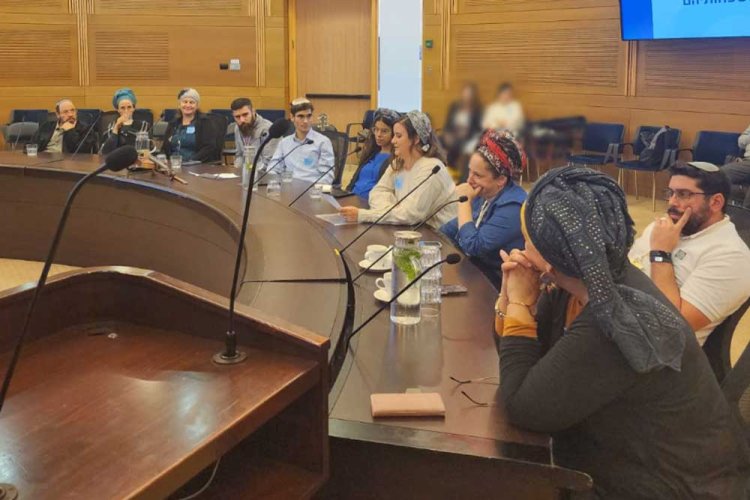 Wives of wounded soldiers at the Knesset.
Carrying Others While Carrying Your Own Pain
“Yes, it is hard,” Avital answers honestly. “It is hard living this reality, being a mother of six and the wife of an amputee, still displaced and not yet back in our home in Kerem Shalom. It is not easy to step out of that and care for others.
“But I feel that God gives me the strength and shows me, ‘This is your role.’ In everything I do, I meet the right people who want to help once they understand the importance. That is how things move forward, and I realize that I need to be here, doing this work.”
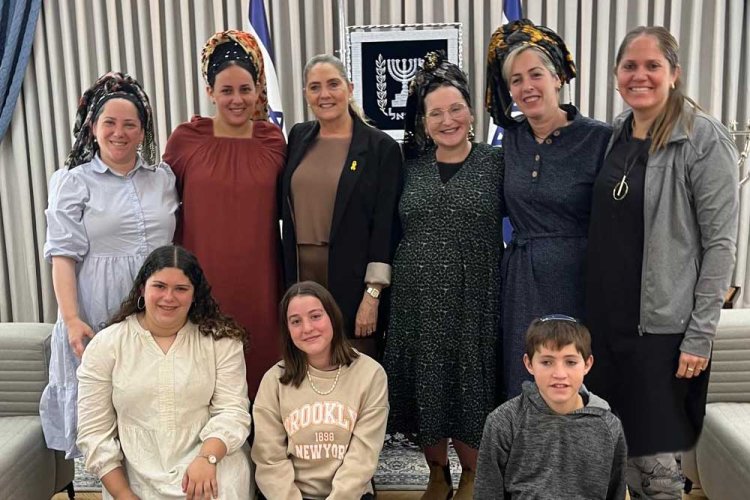 Avital and members of the organization during a meeting with Michal Herzog.
Growth Through Pain
“Before the war, I worked on integrating people with special needs into the workforce and planned to transition into social work studies shortly after Simchat Torah,” Avital says. “That did not happen, and it likely will not happen anytime soon.
“Next month, we are scheduled to return home to Kerem Shalom and begin settling back into everyday life. That alone is a major challenge, because everything in the moshav reminds us of what happened. But both Amichai and I are certain that this ordeal came to make us better people than we were before. That is why we are returning, to continue growing and rebuilding.”
Where Do the Strengths Come From?
“I have always been a doer,” Avital reflects, “but if we had not gone through what we experienced over the past two years, the strength that comes out of me today would not be nearly as powerful.”
“I often tell the women I speak with that when a person faces a trial, they can fall and break. But if they choose to grow from it, that growth will inevitably be meaningful.”
“And it is not just me. I hear this from many other women. Alongside the hardship and the effort it takes to keep going, they discover parts of themselves they never knew existed. We are not angels, but when I look at the bigger picture, I see many women who have been deeply strengthened by this experience.”
Avital also has a message for those who want to help but sometimes feel unsure how. “It is important to understand that injury is a long process, sometimes lasting years. Even if it looks like someone has returned to themselves, the struggle remains beneath the surface. Throughout all of this, the wife and the family are also coping.
“That is why every word of care matters. It is not strange to show up with a cake or ask if help is needed with the children, even long after the injury. The need is still there. Knowing that someone cares gives tremendous strength.
“It is also an opportunity to let any woman who is coping know about our organization. We are here to help, and our greatest aspiration is simply to be here for others.”

