

Magazine
Discovering Jewish Roots in Italy: A Community's Journey
Deborah Hazan and her family are working to rebuild Jewish life in northern Italy, opening their home and Shabbat table to Jews searching for connection. Through quiet dedication and faith, they are helping revive a community that once nearly disappeared.
- Miriam Salomon
- | Updated
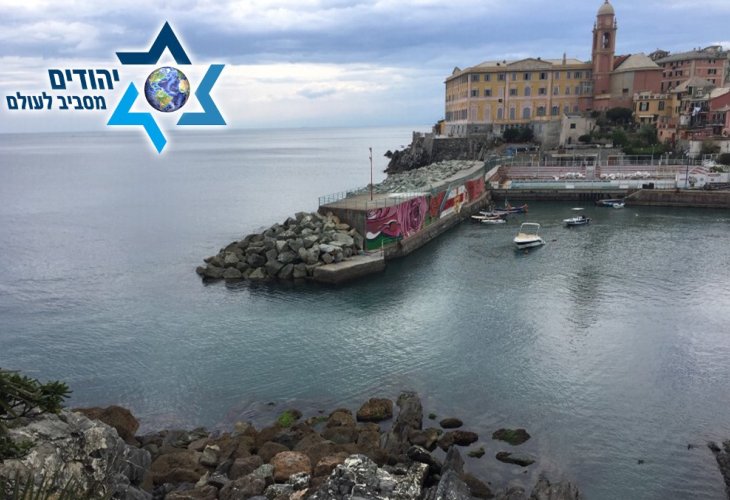 Nervi, Genoa, Italy
What Does Italy Mean to You?
“For us, Italy is a beautiful, ancient, and somewhat old-fashioned country, with many Jews who have been lost over time. Some people see Italy through the lens of ancient Rome, but in our daily lives, we don’t really feel that history. The painful past isn’t something that’s constantly present here.”
Is There a Special Reason You Live Here?
“My husband and I are originally from Argentina, and three years ago we came to Italy on a mission. In fact, when my husband was twenty, he was sent from a yeshiva in Israel to Italy with a group of friends to study and help strengthen the local yeshiva.
“He picked up Italian fairly quickly, although it was confusing at first because of how similar it is to Spanish. Many words sound familiar but mean something completely different, so you think you understand a conversation when you really don’t. Despite that, my husband managed well and even taught children in the Milan community for three years.
“He returned to Argentina at twenty-five, where we married and built our family. Over the years, he stayed in touch with the Milan community, and they invited us several times to return on a mission. When our children were young, we felt we couldn’t move to a place without proper Jewish educational options.
“Thirty years later, when our youngest daughter was fifteen, one of my husband’s former students, now a school principal in Milan, reached out again. This time, we felt the timing was right, and we agreed.”
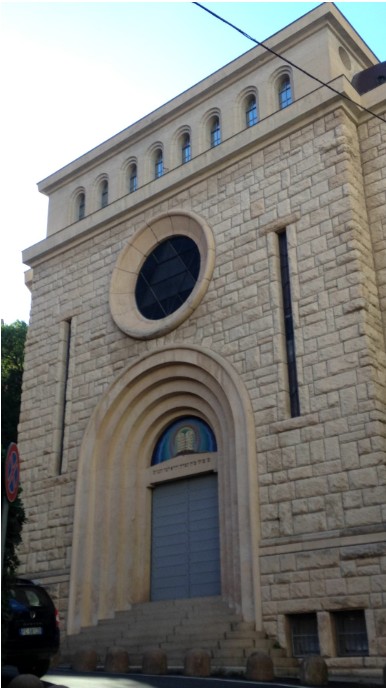 The synagogue of the Genoa Jewish community.
“In Milan, we both worked as teachers, and my husband also traveled twice a week to Genoa to work with the small Jewish community there. We spent many Shabbatot in Genoa, loading the car with everything we needed every Friday after I finished teaching and driving there to be with the local Jews.
“Over time, the workload became overwhelming. It was also difficult to adjust to teaching after having served as community directors in Argentina. Thank G-d, six months ago we moved to Genoa to focus fully on the Jewish community there.
“The community is small and consists mainly of elderly Holocaust survivors who hid their Jewish identity for many years, their families who often don’t know about their Jewish roots, and Israeli students studying at local universities. Slowly, the community is experiencing a spiritual awakening. There is a great deal of meaningful work to do, finding Jews, reconnecting them to their heritage, and creating a central home for Jewish life in the city.”
What Educational Options Are Available for Jewish Children?
“There are no Jewish educational institutions in Genoa, not even kindergartens. Sadly, the Jewish population is very small, and there are many interfaith marriages, which presents ongoing challenges.
“Milan is the closest city with Jewish schools. It has three institutions, two serving observant families and one for the broader Jewish community. All include kindergartens, elementary schools, and high schools. Many boys eventually attend yeshivas outside of Italy during their teenage years.
“Our children are already grown. Some live in Israel, and three are married, thank G-d. Our youngest daughter attends high school in Milan and stays during the week with a Jewish family we know. Milan is about two hours away, and while the weekly travel is difficult, it is our best option.
“She comes home for Shabbat whenever possible, except in winter when Fridays are short, so she visits twice a month. She is in her final year and taking exams equivalent to those in Israel. As far as I know, it is the only school in the world that arranges for students to take updated Israeli exams on the same dates as students in Israel. With G-d’s help, she plans to attend seminary in Israel next year.”
What Does a Typical Week Look Like?
“I give regular classes for women in our home. The topics change with the calendar. Before holidays, we focus on the relevant laws. At other times, I teach about kashrut, Shabbat observance, hafrashat challah, and everyday halachot.
“I set aside one fixed day for organizing activities, but beyond that, I don’t have a strict schedule. Even if I plan a day for cooking or errands, if a local Jew calls and wants to visit, we drop everything to be there for them. That happens often.
“Just last Thursday, as I was about to begin cooking for Shabbat, a Jewish man called and asked to come over. He arrived, put on tefillin, spoke with my husband, and stayed for several hours. I fell behind on my Shabbat preparations, but that’s exactly why we are here, to make people feel welcome and supported.”
“Sometimes we visit people in their homes as well. Recently, an elderly man asked my husband to meet him at his office. My husband helped him put on tefillin, and the man began to cry. He said the last time he had recited Shema Yisrael was during the Holocaust, while hiding in the mountains, terrified as the Nazis entered his town. He whispered the Shema in fear throughout the night. It was a deeply moving moment.”
“In between, I manage the household, shop, and cook. Grocery shopping here requires planning. In Genoa, I can buy only certain dry goods, fruits, vegetables, and fish. Meat, poultry, dairy products, wine, and grape juice with proper certification are available only in Milan. Sometimes we even travel to Nice to restock.
“Once every month or two, I make the long drive to Nice, which offers a wider selection of kosher products. In winter, the journey can be dangerous. Heavy rains cause landslides, roads are blocked, and aging bridges sometimes collapse. It’s not uncommon, and residents frequently complain about the lack of infrastructure maintenance.”
How Do You Prepare for Shabbat?
“I usually begin shopping on Tuesday. Nothing can be bought in one place. Fish at one shop, fruits elsewhere, flour and oil for challah baking at a supermarket, and disposable items somewhere else. Often, certain kosher items are missing, which extends shopping into Wednesday.
“Thursday is devoted to cooking and baking. I bake challah on Thursday and freeze it immediately. On Friday, shortly before Shabbat, I place it on the hot plate. There is no option of buying prepared kosher food, so everything is made at home. I also clean the house on Thursday and Friday. Hiring help here is very expensive, so I do it myself.
“I never know how many guests we’ll have for Shabbat. Sometimes four, sometimes twelve. There are regular guests, people from the synagogue, and occasionally tourists. I always prepare extra food.
“We use only boiled grape juice and wine, since guests sometimes have unclear Jewish status. Because of the Holocaust, many Jews hid their identity, and their descendants often lack documentation. On Shabbat, everyone gathers in our home. My husband shares divrei Torah, leads zemirot, and the atmosphere is warm and uplifting.”
What Is the Weather Like?
“It’s winter now. Winters here are colder than in Israel, but there’s usually no snow. Temperatures hover around one or two degrees Celsius.”
What About the Political Climate?
“I’m not deeply involved in local politics and cannot vote since we are not Italian citizens. Elections were held two years ago, and the overall situation is calm.”
Do You Experience Antisemitism?
“Like much of Europe, there has been a rise in antisemitism. With global tensions increasing, there is more public discussion about Jews. Still, Italy is considered less antisemitic than many other European countries.
“My husband walks openly in the street wearing a hat and kippah. People sometimes warn him that it’s dangerous, but we don’t feel that way. On the contrary, people often approach him out of curiosity. When they learn he’s Jewish, many ask for blessings and say they love Jews. Thank G-d, although antisemitism exists, we have not personally encountered it, and we feel Hashem’s protection.”
How Do You Mark Tu Bishvat and Purim?
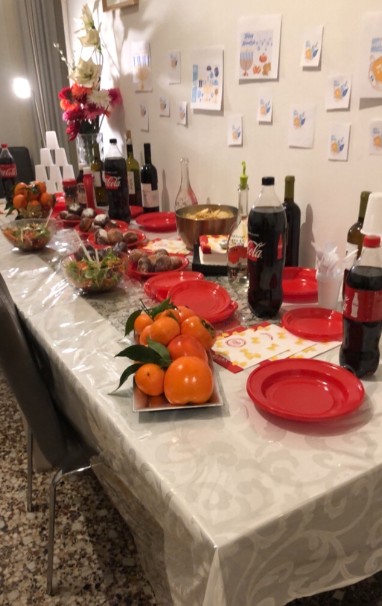
“On Tu Bishvat, we hold a communal fruit gathering at the synagogue, blessing fruits together with the local rabbi. If fruits from Israel are available, we buy them. If not, we use what’s available. There are many unfamiliar fruits here, and I prefer sticking with traditional ones whose blessings I know.”
“For Purim, we are already searching for a large hall. Last year we held a joyful celebration at the synagogue, with a public Megillah reading and festive meal. Some guests came in costume. My daughter dressed as a gumball machine, using colorful boards and pom-poms.
“It’s not quite like Purim in Israel. There’s no street atmosphere, and costumes are often mistaken for carnival celebrations held around the same time. We ended the evening by delivering personal mishloach manot to every local Jew. Many had never heard of the mitzvah and were deeply moved, especially when they found a package of Israeli Bamba inside. The children were especially excited.
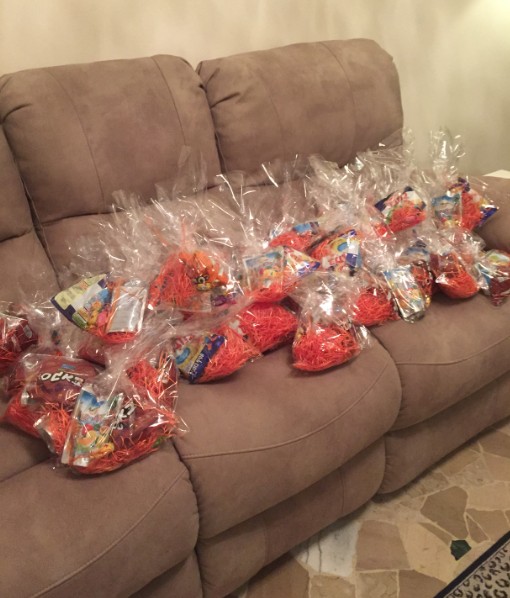 Mishloach Manot ready to be delivered.
Have You Visited Israel Recently?
“Thank G-d, we visited Israel this year and are planning another trip soon. We avoid traveling during peak holiday seasons. In Israel, I visit our children, see our blessings up close, and ease the longing.
“We also visit the Kotel and the graves of tzadikim, drawing spiritual strength for the year ahead. We don’t usually tour, Italy has plenty of scenery. We come to Israel for its holiness. Every visit fills us with renewed strength.
“My husband can attend synagogue daily for all three prayers. Do you know what a gift that is? To be surrounded by Jews, immersed in a spiritual environment, it’s incredibly uplifting.”
Is There Anything You Miss from Israel?
“There’s almost nothing available here. Milan has kosher food, but not the variety we’re used to. When I visit Israel, I stock up on soup almonds, soup mix, jelly, pudding, chocolates, candies, and cheese. The flight is short enough that dairy products don’t spoil.”
A Story That Could Only Happen Here
“When we first arrived and began connecting with local Jews, we heard about a well-known Israeli singer living here. People told us, ‘He’ll never be interested in Judaism.’ But we waited.
“At one community event, we met him and invited him for a Shabbat meal. He came and enjoyed the Israeli dishes I prepared just for him. Slowly, a relationshipformed. He doesn’t put on tefillin, but he is open in other ways.
“For Chanukah, he agreed to attend our public celebration and even performed with his choir after the menorah lighting. It was deeply moving for everyone there.”
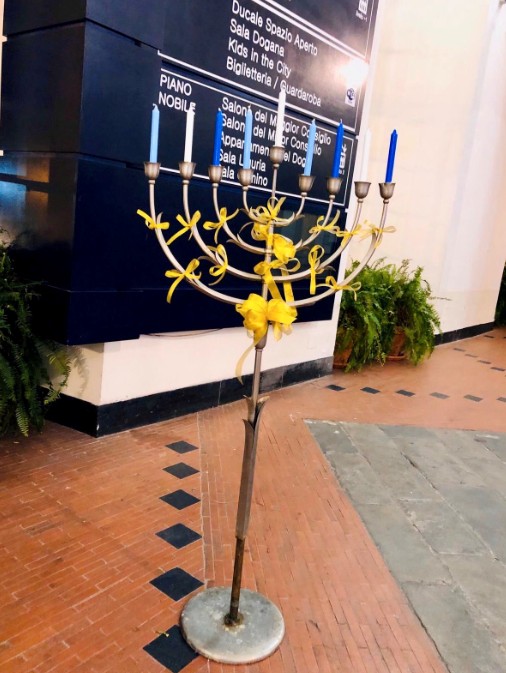 The menorah at the public ceremony.
“We’ll never forget arriving from Milan two days before Pesach with dozens of shmurah matzahs to distribute. Time was short, and preparing the public Seder made it seem impossible. Then, unexpectedly, that same singer called and offered to help.
“He took his scooter and personally delivered matzahs throughout the city. Within hours, every Jewish household had shmurah matzah for the Seder. The image of a famous singer arriving at Jewish homes with matzah is something we will never forget.”

