

Magazine
Yonatan Shahar: Music, Faith, and Healing Through Song
A Jerusalem-based musician on Teshuvah, prayer, and working with at-risk youth
- Avner Shaki
- | Updated
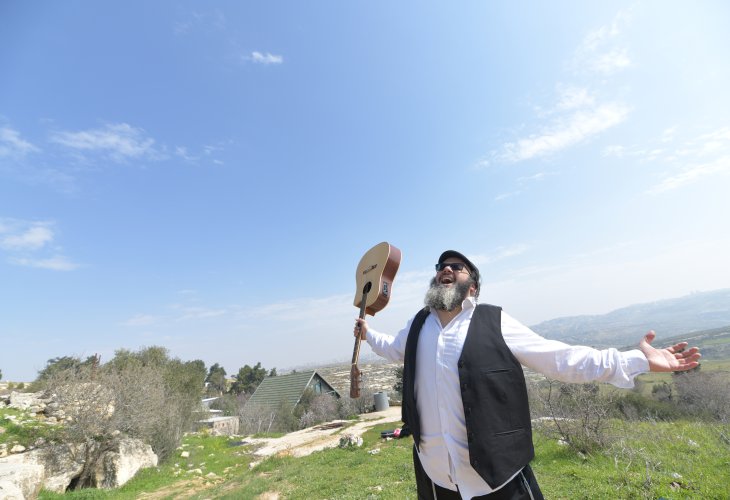 Yonatan Shahar (Photo: Meir Adri)
Yonatan Shahar is married and a father of three who lives in Jerusalem. He is a creator and musician who works with at-risk youth and people coping with mental health challenges.
Don’t Look Far Away
“My parents are baalei teshuvah (returnees to religious observance). We were always religious to some extent — there was even a television in the house at one point. But at a certain stage, when I was still quite young, my parents went deeply into the teshuvah process.
“We lived in Or Akiva. My father was among the pioneers of Israel’s high-tech industry, and my mother is a social worker. Even though we became a Haredi family and went through a very complex and fascinating process, my parents chose to stay in Or Akiva — and that amazes me.
“Today I live in Jerusalem’s Beit Yisrael neighborhood. There are many ultra-Orthodox families here, alongside many baalei teshuvah, and I clearly see the very real challenges that many returnee families go through. Today, many rabbis guide baalei teshuvah to stay as close as possible to their natural living environment — not to leave the place they lived before returning, not to abandon their jobs or their social circles, as much as possible and without contradicting halacha.
“I believe in a deep teshuvah that comes from within and walks alongside life. Even when changes are made, it’s best that they happen through inner work, moderation, and not all at once. People who suddenly abandon everything often find themselves left with nothing. And into that upheaval, they bring their children, who don’t understand why people suddenly look at them differently and who encounter many difficulties.
“Growing up in Or Akiva, the boundaries were clear. We didn’t mix excessively, and in my opinion that allowed us to enter the world in a healthy way. The world outside isn’t so frightening — it’s right next to you, but at the same time, you don’t dissolve into it. For many years, I’ve been active in this space between the Haredi world and baalei teshuvah, trying to help as much as I can in this important area.”
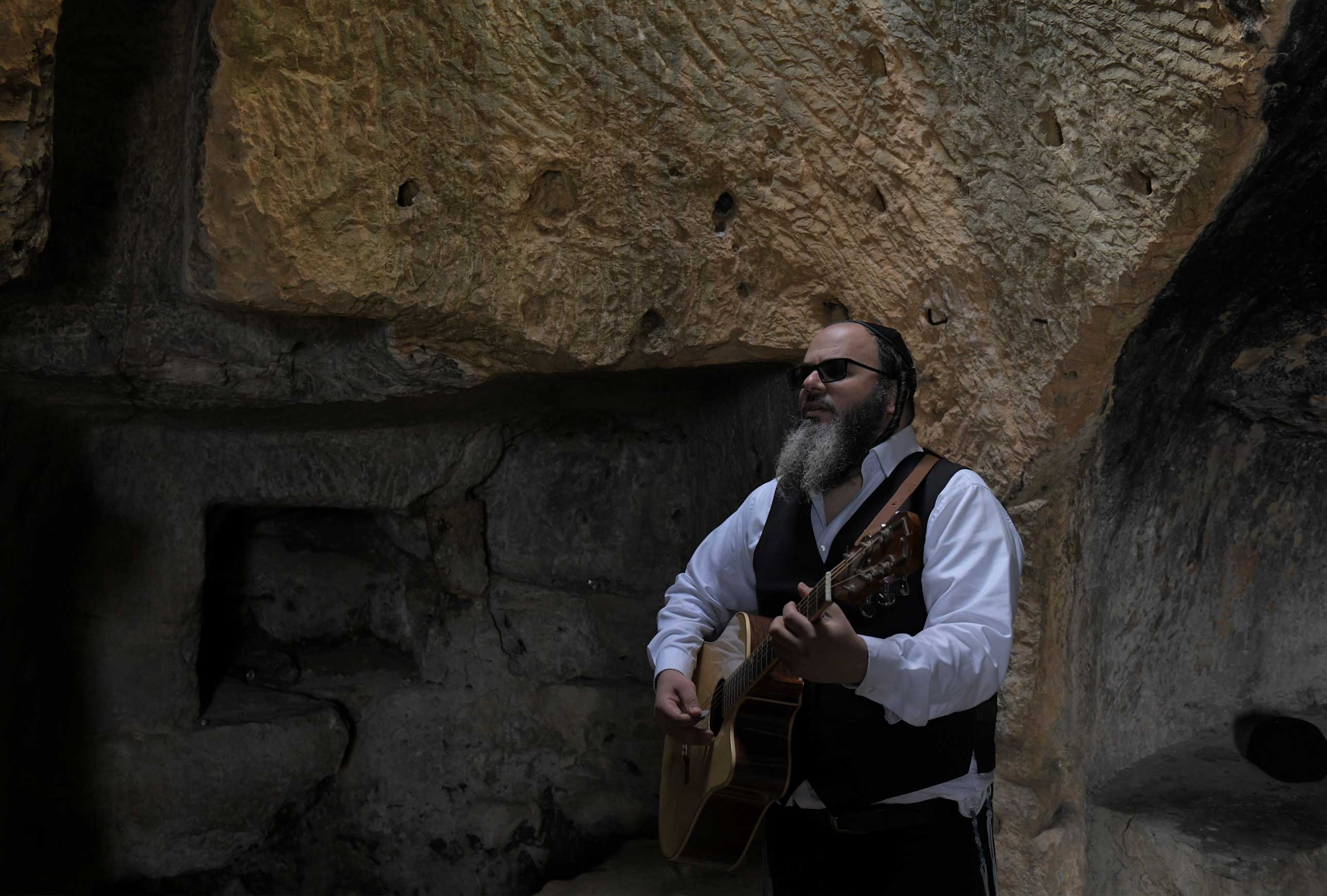 (צילום: מאיר אדרי)
A Birthday Gift
“After the regular path through religious schools and yeshivot, at a certain point I began an independent spiritual journey and drew close to the teachings of Rabbi Nachman of Breslov. That’s where I found myself. Following that, I decided to travel to Uman. Later, I moved to Jerusalem and built my home here.
“My wife comes from a background similar to mine, and at a certain stage she also grew closer to Judaism. One of my friends once told me he wanted to buy me a Breslov book set for my birthday — a set that deeply interested me, and I said I’d be happy. In the end, it didn’t work out and we more or less forgot about it.
“A few months later, that same friend and his wife introduced me to my future wife. Thank God, we got married. When we got engaged, my wife gave me a gift — the very same Breslov book set that friend had wanted to give me back then. It was a deeply moving closing of the circle, and a joyful wink from the Creator.”
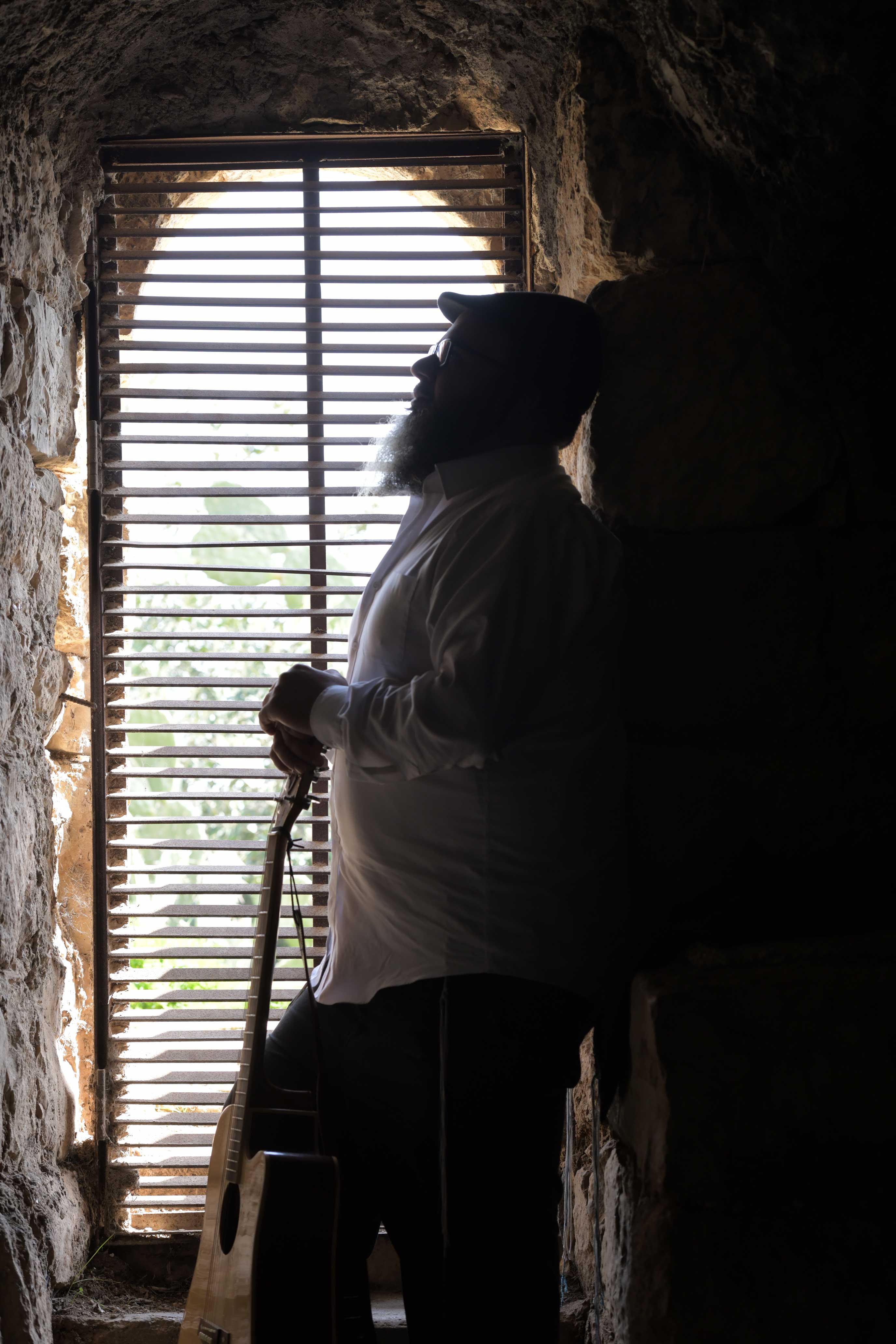 (צילום: מאיר אדרי)
A Painful Farewell
“I see my place as a creator and musician as my form of expression. Just as a photographer walks with a camera and captures moments, and a painter carries an easel and paints what he sees, I compose what I experience.
“Throughout my life’s journey, I encounter different realities, struggles, and dilemmas, and I try to distill insights from them that eventually become songs. Many of my songs were written following encounters with people or events — when I experience things with great intensity.
“For example, the line from the song ‘All That You Are’—
‘A memory of a loved one who circled your life and left, never to return’— was written after a painful separation from a dear friend who accompanied me closely for a long time.
“In general, I don’t really see myself as a ‘singer’ in the professional sense. I see myself as a presenter of my songs. God passed them through me, and I try to be faithful to them and present them honestly.”
Turning the Plane Around
“At the beginning, I never imagined I’d become a full-fledged musician. I studied music informally, began playing guitar, and alongside that started composing songs. My first compositions were written during my yeshiva years, in my early twenties.
“I left the yeshiva as part of a personal spiritual search. When I met friends again years later, I was surprised to discover that the very first song I composed there had become a local hit.
“I also didn’t promote my first professionally released single, ‘Don’t Believe Him,’ in any organized way. I simply sent it as an audio file to a few friends. God willed it, and things started moving.
“About two weeks later, I received an urgent call informing me that media personality Yedidya Meir wanted to meet me. The next morning, on his radio show, he shared that he first heard the song while on a flight to Los Angeles — and that upon hearing it, he wanted to ask the pilot to turn the plane back to Israel just so he could broadcast it.
“When he returned to Israel, he indeed played the song frequently, including on his joint program with his wife Sivan on Galei Tzahal. Thank God, the song succeeded and was widely broadcast. That was the moment I understood that I needed to step forward seriously, with all that entails.”
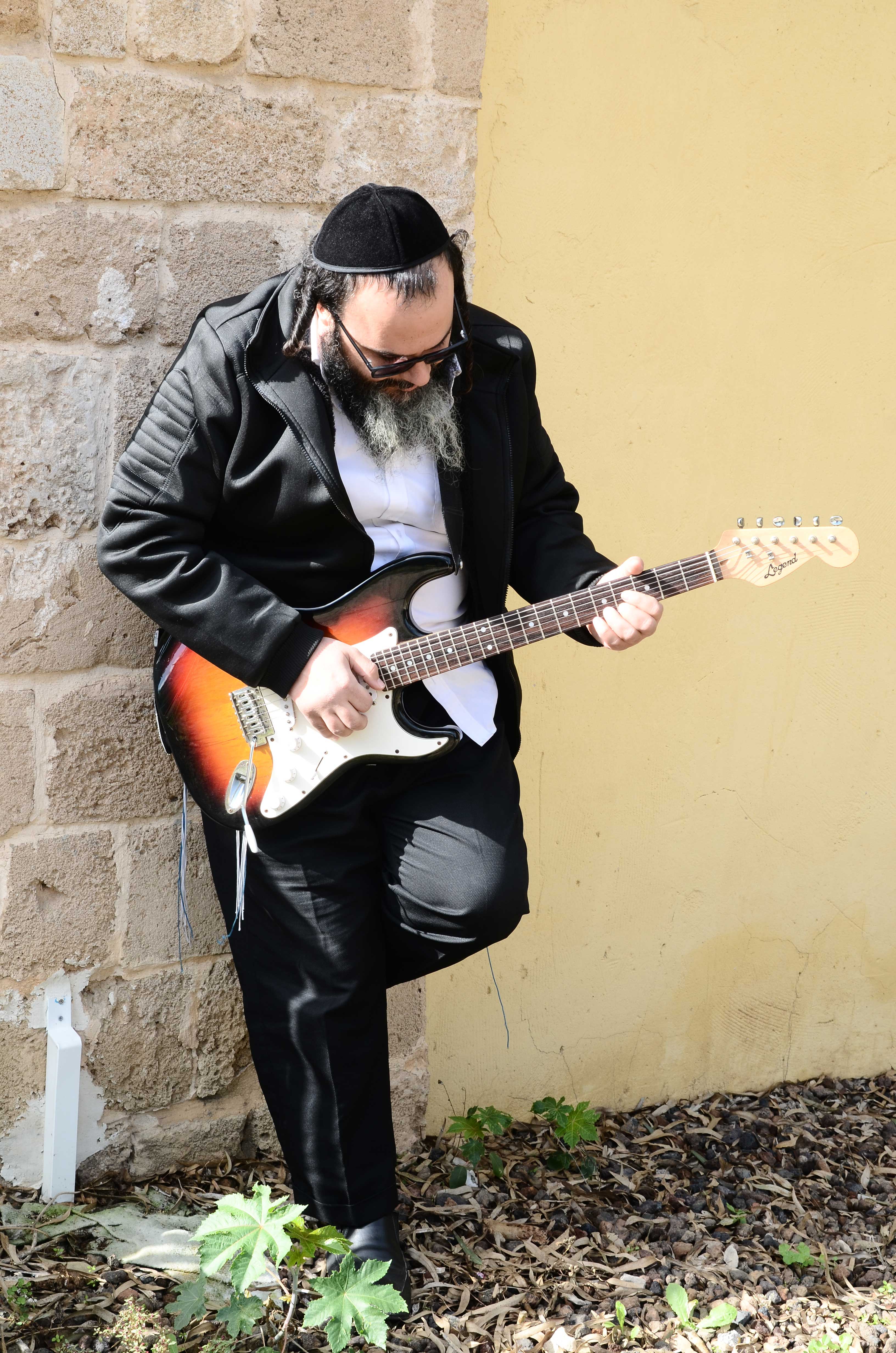 (צילום: סמדר כהן)
All That You Are
“These days I’m releasing my first album, ‘All That You Are.’ I chose this title because I truly believe that who you are today is the sum of everything you’ve gathered along the way. What you’ve experienced walks with you.
“I understand today that my entire childhood, the struggles, the dreams — everything, is within me and shaped who I am. I’ve been writing and composing for nearly twenty years, and everything comes together here.
“The album is a kind of summary of my journey so far: the Haredi world, baalei teshuvah, at-risk youth, people coping with mental health challenges, serving God, family life, and of course, personal experiences I’ve gone through. I invite people to dive into the album and truly listen. There are very deep things there, and I hope they touch people.”
I Will Sing to God While I Live
“On one occasion, I had the merit of playing music for a young girl with severe brain damage. She was deeply moved and swayed with intense emotion.
“After I finished, her father told me that since she was injured in a serious accident, the only part of her brain that still functions is the one connected to sound and song.”
Hope
“My greatest dream is to reach many hearts — to enter them and pray together with them through my songs. I want my songs to become anthems for people who are walking paths I once walked and am still walking.
“I hope listeners will find themselves in the songs, draw comfort and encouragement, and perhaps even gain an insight that will influence their lives.”
Faithful to the Source
“The thing I fear most is losing the inspiration and innocence of the beginning. The songs are words and melodies that emerged from me — from my most natural and authentic place.
“I’m facing new audiences and projects, but I pray to remain in my good, natural place — to stay true to myself, my principles, my boundaries, and the things I believe in.”
Created for Me
“What makes me truly happy is hearing that one of my songs genuinely touched someone. Just recently, a man approached me after listening to my album and said:
‘I’m sure you wrote the song “To Be So Good” specifically for me. I’m exactly in that place right now, and it touches me deeply.’
“He shared that for a long time he had been broken and almost completely hopeless after a serious crisis, and that the song became a prayer for him: ‘To be so good, to keep on loving.’
“I was deeply moved. It’s an indescribable feeling to touch someone at their deepest point and help them reconnect, hope, and pray.”
What Is a Mother to You
“My main work is with at-risk youth, and I’ve been involved in this field for many years. I served as a mentor and guide in yeshiva frameworks and others, and today I mainly accompany young men through music.
“We talk, we write songs together, and I try to draw things out of them that will help them. A few months ago, I sat with one of the teens I mentor, and he told me he wanted to write a song about his mother. I asked him, ‘What is a mother to you? What would you want to say to her?’ As he began speaking, I found myself in tears. It was incredibly moving.
“On weekends, I’m mostly at ‘Hatzroni’s Zula.’ The Zula is a place in central Jerusalem where any teen who needs attention, a hug, and a calm place to spend Shabbat can come. It’s especially active on weekends, the most dangerous times — Thursday night and Saturday night.
“With everything happening outside, we’re on the front line helping these youths find themselves. The place is closely supervised. At the heart of everything that happens there is singing. We sit in a circle, the room is dark, candles are lit, and we simply sing and play music deep into the night.
“People come and go throughout the evening — some join the circle, some talk, and there are creative corners for those who want. These are youths who have lost their way, and this is truly therapeutic for them. Our approach is that we don’t initiate conversation — anyone who wants to talk knows they can always come to us.”
The Power of a Word
“A few years ago, we decided to do something positive at one of the places where I worked. We held a discussion circle where one of the counselors said something good about each participant, and I dedicated a song to them.
“When we reached a teen with an extremely complex life story, the counselor told him that he believed in him, and that he had immense strength and unique motivation. I chose to dedicate to him the song ‘Ben Adam, Rise Up’ by Rabbi Kook.
“We began singing, and suddenly I saw him break down completely. Afterward, he told us it was the first time in his life someone had told him they believed in him and saw his strength.
“A few days ago, I spoke with that counselor again, and he told me he recently met that same young man. The young man said it affected him on unimaginable levels and that he would never forget it. This is someone who, in recent years, has been in prison and closed psychiatric wards — and yet that moment deeply impacted him.
“Very often, we have no idea what a single sentence can do to another person.”
Back and Forth
“A talented creator named Harel Tal recently released a song called ‘Where Shall I Go.’ It’s a powerful prayer-song — a true cry. In it, he asks for closeness to God from anywhere and at any cost.
“While working with the amazing youth at Hatzroni’s Zula, we once sang this song together late into the night, again and again. Hearts opened in an extraordinary way. We sang so intensely that I was hoarse for two weeks afterward.”
Our Great Nation
“A few years ago, I had the privilege of serving as the prayer leader on Yom Kippur in a secular neighborhood in Petach Tikva. We were just over a minyan, praying in a small classroom throughout the holy day.
“Near Ne’ilah, the congregants asked me to say a few words. I turned toward the crowd, and the sight before me was astonishing: the entire schoolyard was filled with people — men, women, and children — some on bicycles, others holding dog leashes.
“They had all come to hear the final shofar blast sealing the holy day. Who is like Your people Israel, one nation in the land.”
Law and Freedom
“My Judaism is both the most structured, defined framework — and at the same time the space with the greatest freedom and creativity. Judaism is connection to God in every action, place, and moment.
“My creativity draws from my connection to Jewish life — from the aspirations, dilemmas, ups and downs that turn life as a Jew into a fascinating and empowering journey.”
For You, Silence Is Praise
“I once met an older man with sparkling eyes named Eliyahu. After a brief introduction, I was captivated by his personality and the optimism he radiated.
“I asked him, ‘Tell me a bit about yourself.’ Instead of answering, he opened the siddur in front of him and pointed to the first page, where a memorial sticker bore the name of a woman and three children, all of blessed memory.
“‘This was my wife,’ he said, ‘and these were my children.’ He pointed to the lines below. ‘They all passed away due to complications from a rare illness.’
“I fell silent, not knowing what to say. Suddenly, my own anger, jealousy, and rigid ideals felt small, meaningless, even foolish. I just wanted to hug this man. That conversation gave me deep perspective on life.”
Dancing in the Water
“I’m a total ‘mikveh and spring’ enthusiast. Whenever I’m invited to spend Shabbat somewhere, the first question I ask is whether there’s a mikveh nearby.
“Many years ago, I spent Shabbat in Gush Katif. As sunset approached, I realized I hadn’t immersed yet. We were sitting in someone’s home, talking about the upcoming evacuation, and suddenly I said, ‘I need a mikveh — I haven’t immersed yet.’
“The host looked at me simply and said, ‘There isn’t a mikveh anywhere in the area.’ I panicked, until he added, ‘Except here, in my house. You’re welcome.’ I entered the water dancing.”
Free My Soul from Its Prison
“One of the first years I traveled to Uman for Rosh Hashanah, I stayed with several friends in the apartment of a local non-Jew. Like everyone else, after the holiday meal I went to bed, planning to wake early for the Day of Judgment prayers.
“When I woke up, I realized my friends had risen earlier, gone to pray, and locked the apartment from the outside. A quick check revealed that I had no way to leave and would have to wait hours for someone to return.
“My heart sank. It meant I would have no minyan on the Day of Judgment. I gathered myself and remembered the halachic teaching that one who must pray alone should do so at the time when the community is praying and align his heart with them.
“When sunrise arrived, I stood to pray in the non-Jew’s kitchen, facing the Land of Israel, my heart with the community. I have no idea what happened there — but my heart opened in an extraordinary way, and tears flowed freely.
“When I opened my eyes after the Amidah and glanced at the clock, I realized almost an hour had passed without my noticing. It may have been the most powerful prayer experience of my life.”

