

Magazine
From One Child’s Battle to Thousands of Lives Saved
After losing their son Moshe to leukemia, David and Miriam transformed their grief into a mission that reshaped Jewish medical history. This powerful story traces the creation of the world’s largest Jewish bone marrow registry and the thousands of lives saved through Moshe’s legacy.
- Michal Arieli
- | Updated
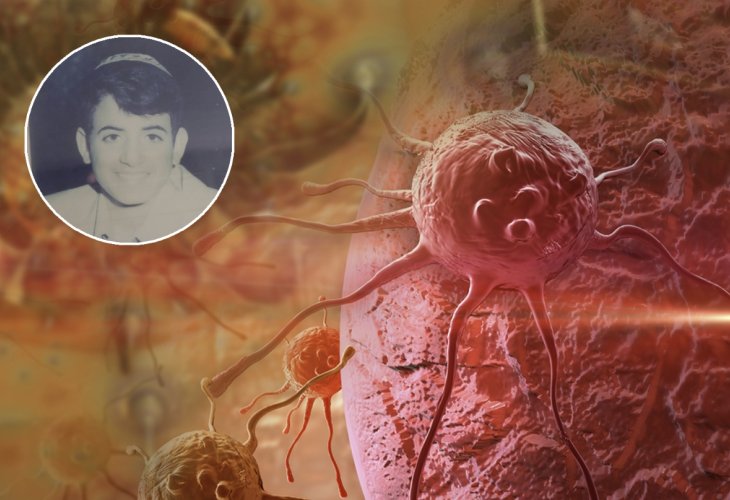 (Inset: Moshe before his illness)
“We were privileged to be partners in saving the lives of 3,765 Jews,” says David Sachayek, repeating the number again and again with visible emotion. “Three thousand seven hundred and sixty-five people are alive today thanks to the bone marrow registry we established.”
His voice is filled with excitement and deep satisfaction. According to David, the registry, now recognized as the Jewish global bone marrow database, currently includes 1,480,210 samples. Of those, 611,957 were donated by IDF recruits on their very first day of enlistment.
“But to be precise,” David adds softly, “it isn’t really thanks to us. It’s thanks to our son, Moshe.”
Fighting for Life
Twenty-three years have passed since David and his wife Miriam received the devastating news about their son’s illness.
“It was the very day Yitzhak Rabin was assassinated,” David recalls. “The nation was mourning the loss of its prime minister, and at the same time, my wife and I were called in to speak with a doctor at HaEmek Hospital. It followed a long period during which Moshe, our thirteen year old son, wasn’t feeling well, and we had no idea why.
“At that meeting, the doctor finally told us they had identified the problem. Our son had blood cancer, leukemia, what they described as a milder form. Even then, the doctor explained that there was no oncology department in Afula, so we were referred to Schneider Children’s Medical Center in Petah Tikva.”
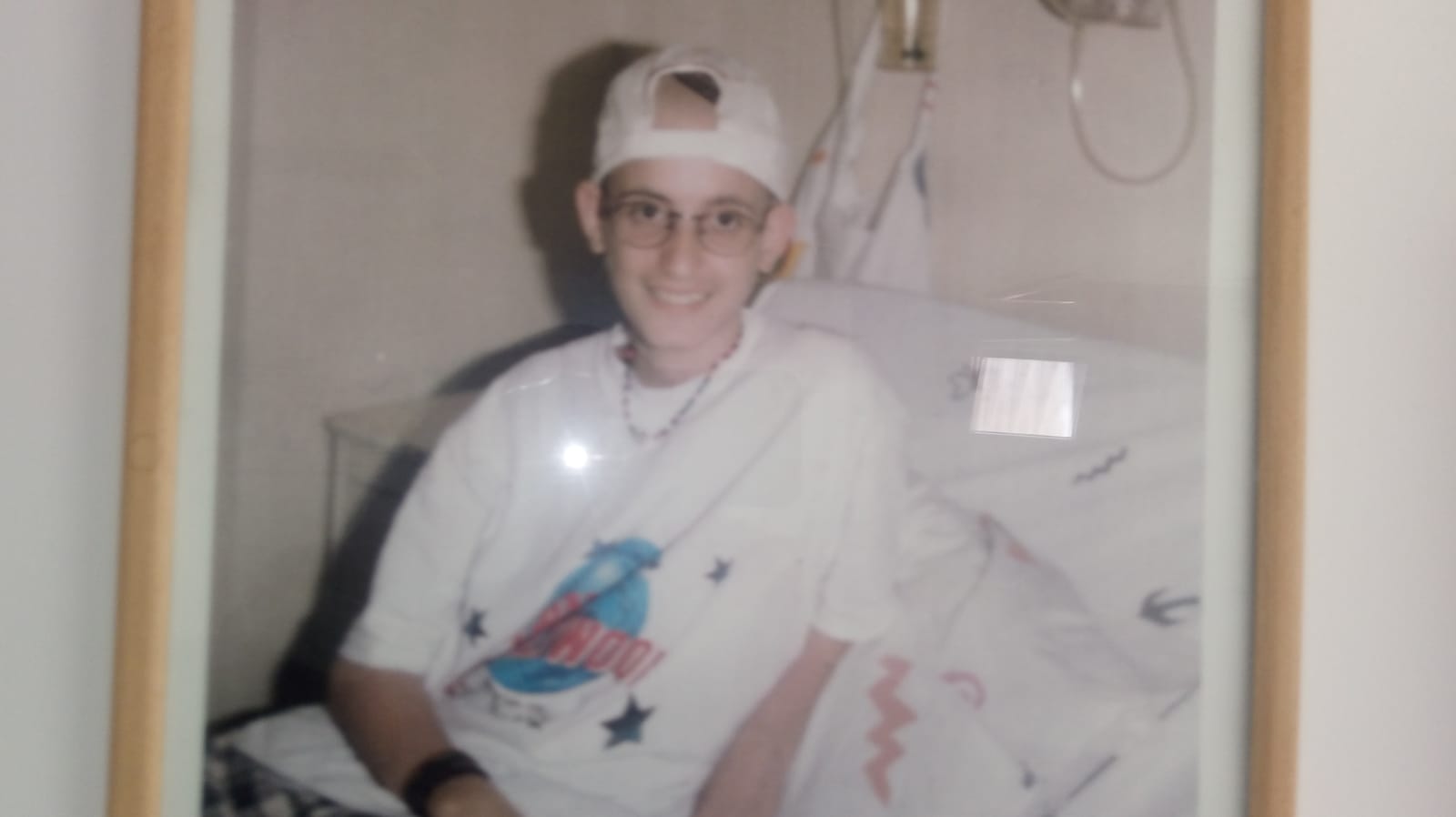 Moshe Sachayek z"l in hospital
How did you react to such news?
“How could we feel?” David answers. “It felt as if the sky had fallen. There’s no other way to describe it. That same day, we explained everything to Moshe and tried to encourage him by emphasizing that it was the milder type. Treatment began almost immediately, and we did our best to remain optimistic.
“But our home was turned completely upside down. Having a child hospitalized at Schneider for intense treatments meant endless travel for my wife and me, and the lives of our other children were disrupted entirely. We had four other children at home, the youngest just two and a half years old at the time.”
David says the chemotherapy treatments were far harsher than anything they had imagined. “After each treatment, Moshe looked completely drained, like a rag, thin as straw. It was heartbreaking to see.”
The most difficult news came nine months later. “The doctors called us in and told us that the treatment hadn’t worked. They wanted to move to a more aggressive plan, hoping it would help.”
David pauses. “That’s when we asked them directly, with clear-eyed realism: ‘If this treatment also fails, what can save our son?’ They told us only a bone marrow transplant could save his life, and that first a suitable donor would need to be found.
“They explained that matching was done through blood tests, but that Hadassah Hospital, the only place in Israel performing them at the time, could conduct only thirty compatibility tests per week.”
A Nationwide Effort
“As Moshe began the new, harsher treatments, his condition deteriorated,” David continues. “The side effects were brutal. Along the way, he developed a severe intestinal illness that completely exhausted him. After three weeks, when he recovered, he couldn’t even walk. That’s when I truly understood the Talmud’s words, ‘All illness, but not intestinal illness.’ It’s truly horrific.”
Family members were tested first, but none were suitable donors. “We realized we needed a far broader effort,” David explains. “Thirty tests a week were meaningless. To find a donor, hundreds of thousands of samples are needed. But how could we ever reach such numbers?”
David began researching options abroad and discovered a laboratory in North Carolina capable of processing 3,000 tests per week. “We contacted them immediately. Then we decided to organize a nationwide campaign to enlist as many people as possible. The question was how.”
“At that time, there was virtually no public awareness of bone marrow donation,” he says. “People simply didn’t know what it was. The media didn’t rally to help. One radio station allowed me to tell my story, but I was given just one minute. I spoke as fast as I could and barely managed to explain anything. I realized then that salvation wouldn’t come from the media. We would have to act ourselves.”
Mobilizing the Nation
How did you do it?
“A close friend joined me, and together we launched an educational campaign across the country. I focused on visiting yeshivot, speaking to the students. I knew yeshiva students would be eager to help and perform an act of kindness.
“Every day I traveled from Afula to Jerusalem, going from yeshiva to yeshiva. Many asked me to speak during lunch so I wouldn’t interrupt learning, which meant carefully timing multiple visits each day.”
Magen David Adom joined the effort, setting up blood-testing stations nationwide. The laboratory sent special tubes, but there was a catch. “The anti-clotting agent worked for only twenty-four hours,” David explains. “If we were delayed, everything would be lost.”
At this point, David emphasizes the extraordinary help of El Al. “I told them I had no way to pay for shipping 3,000 samples. They covered the entire cost and personally ensured the samples were transferred efficiently from Israel to North Carolina within the limited time frame.”
In the end, they collected 2,500 samples. “We were overjoyed when we heard they arrived safely,” David says. “But the joy was short-lived. The lab informed us that none were a match.”
A Child of Greatness
David learned the news while Moshe was beside him. “Moshe was an extraordinary child,” he says. “He skipped grades, read from the Torah at age four, and excelled in mathematics and science. The world lost a tremendous soul.
“When he heard there was no donor, he asked for the phone. He called the friend who had helped us and told him. The friend immediately said, ‘So we’ll do another campaign.’ Moshe replied, ‘What, do you want to defeat G-d?’ He meant that if Heaven was preventing the transplant, perhaps it wasn’t meant to be.”
Despite this, Moshe’s friends from Midrashiyat Noam insisted on organizing another campaign. “I was completely exhausted and didn’t think I could do it again,” David admits. “But they told me, ‘You won’t have to do anything. We’ll handle it all.’ I couldn’t refuse.”
They gathered 3,500 more samples. Again, none were matches.
The Illness Returns
After the second campaign, Moshe entered remission. “For ten months, he returned to some form of routine,” David says. “Then came a routine follow-up at Schneider. The doctors didn’t call us in. We understood why. The cancer had returned, and we knew what that meant. The chances of survival were nearly zero.”
Moshe was hospitalized continuously from Tisha B’Av until Cheshvan. “I stayed with him the entire time,” David says. “My wife managed the home and traveled to the hospital several times a week.”
One day, a senior oncologist told David, “Your son is the sickest patient in the department.” David replied, “There are two sides here. You know how to heal, and I know how to pray. You do your part, and I’ll do mine. Hashem will accept both.”
Throughout those months, David felt they were placed there to strengthen others. “On Rosh Hashanah, we brought a shofar blower. Doctors and nurses gathered to hear the shofar. We made Kiddush and sang songs. It felt like a true Yom Tov.”
Moshe passed away on the 23rd of Cheshvan. “Every doctor stood by his bed afterward,” David recalls. “Each spoke through tears about what they had learned from him. One spoke of his wisdom, another of his humility. One said, ‘I’ve never seen a child receive chemotherapy and continue studying from a book.’”
The Decision to Build a Global Registry
“After Moshe passed away, life changed again,” David says. “I realized Hashem had placed me in this position for a reason. I had 6,000 samples. I knew they couldn’t be wasted.”
When hospitals showed little interest, David decided to act. “I resolved to establish the largest Jewish bone marrow registry in the world.”
He turned to Dr. Bracha Zisser, who had supported the family throughout Moshe’s illness. “Without the Zisser family, none of this would have been possible,” he says.
Together, they expanded the registry and worked with the IDF so that every new recruit could join automatically. “I kept repeating a verse from Iyov,” David says. “‘Though your beginning was small, your end will be very great.’”
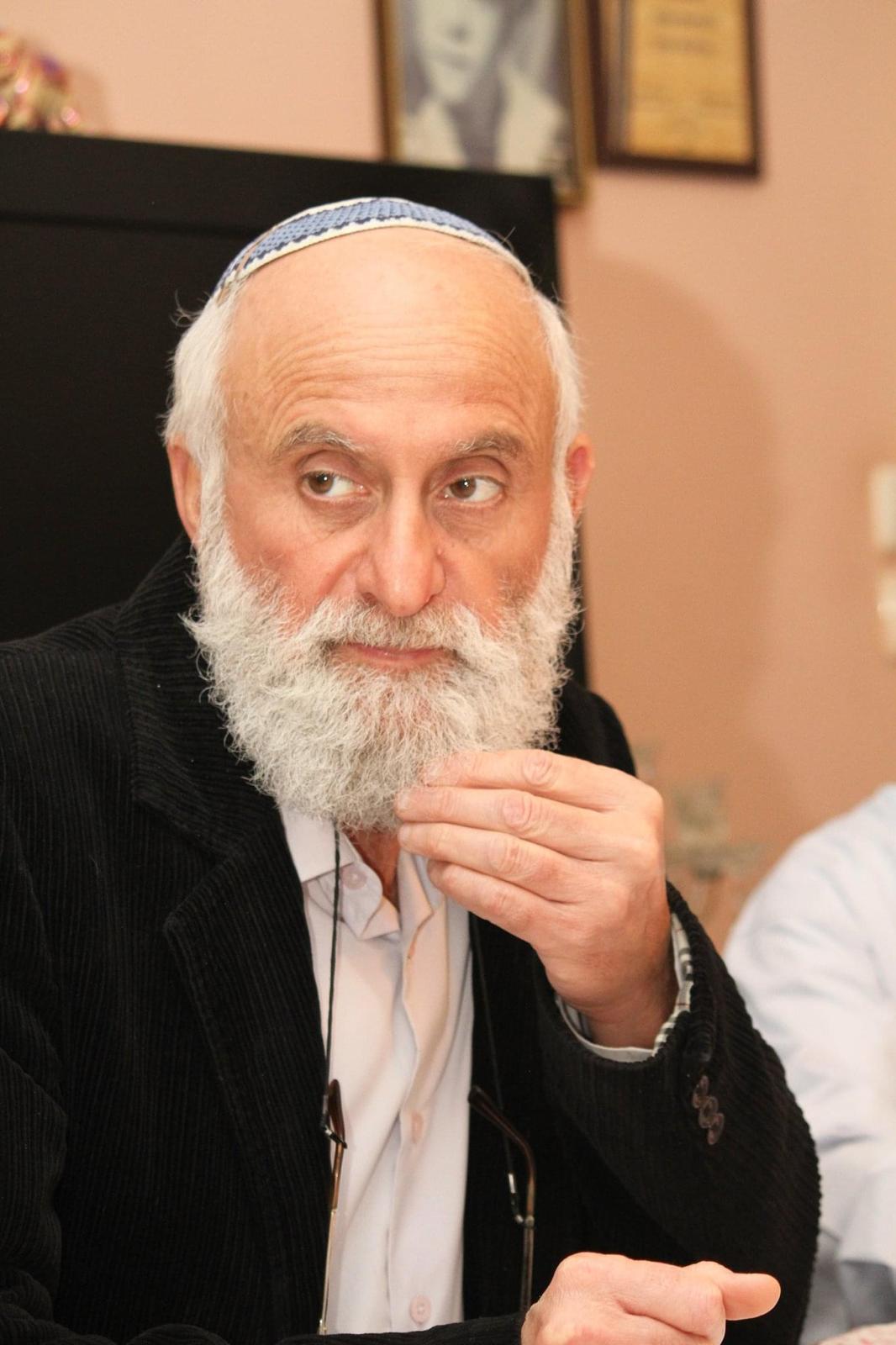 David Sachayek
A Living Legacy
Each year, David holds a memorial for Moshe on the 23rd of Cheshvan. “We invite his friends, nearly one hundred of them. They’re almost forty now. We tell them how many lives have been saved thanks to the registry. Thanks to Moshe. Thanks to them.”
David ends with a request. “If you’re reading this and aren’t part of a bone marrow registry yet, join the Ezer Mizion program. Anyone up to age fifty-five can do it today with a simple saliva test. Who knows? You may one day save a life.”

