

Magazine
Rabbi Shalom Arush on Tragedy and Faith: Holding On Without Questions
After a devastating family loss, the Breslov leader of Chut Shel Chesed speaks about emunah, grief, joy, and the call to strengthen love of Israel
- Hidabroot
- | Updated

“We do not ask questions. We are believers, children of believers, and we know that whatever the Merciful One does is for the good,” begins Rabbi Shalom Arush, head of the Chut Shel Chesed institutions, in a monologue saturated with faith. “The secret of faith is not to budge from it by even a hair’s breadth. To stand like a cliff against the waves of the sea, no matter what passes over you. Sometimes the waves are smaller and sometimes the waves are higher, but faith remains exactly as it is. This time we were struck with a very hard and painful blow, but faith has not moved from its place.”
The Accident and the Hospitalization
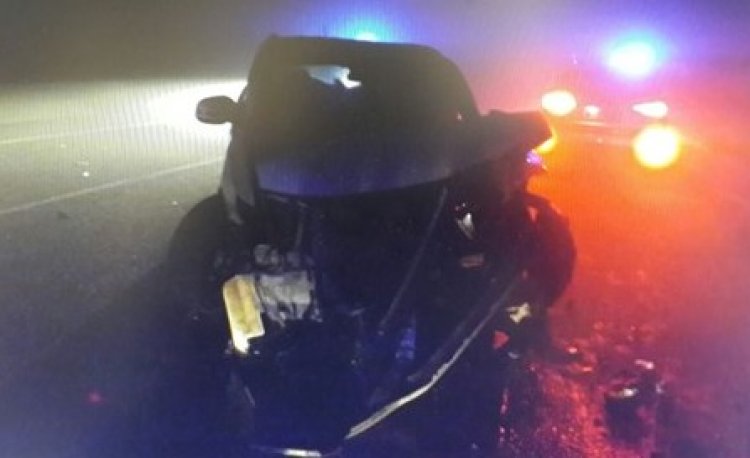
Two months ago, members of the family of Rabbi Shimon Arush, the son of Rabbi Shalom Arush, were hospitalized at Barzilai Hospital in Ashkelon. The father, Rabbi Shimon, was hospitalized in very serious condition. The mother was in moderate condition, and their two children, Nachman and Miriam, were also in serious condition in intensive care. Their baby, one year and eight months old, Feiga Chana of blessed memory, who was injured in the terrible accident, passed away.
The family had been at the hillulah of the Baba Sali of blessed memory in Netivot. Late at night, after finishing their prayers at the grave of the tzaddik, they set out for home in Jerusalem. Heavy fog covered the road, and apparently one of the vehicles drifted and drove in the opposite lane for about eight kilometers until it collided with another car. The family left the car conscious, but the baby, it seems, suffered a severe head injury. Rescue teams rushed to the scene and evacuated her to the hospital while performing resuscitation, but upon arrival the doctors were forced to pronounce her dead.
Telling a Father the Unthinkable
At first, Rabbi Shimon did not know that his little daughter had been killed. Only after several days did his condition begin to improve. With no one else able to do it, his father, Rabbi Shalom, was compelled to carry the terrible burden and inform his son of the bitter news.
How does a person deliver such news to a son? A father telling his son about the death of his baby is beyond human strength to bear.
“It was not easy, without a doubt. At first we did not want to tell him so he could regain some strength, but after he stabilized and the doctors said it was possible to tell him, it became our obligation to do so. He will need a great deal of support and a great deal of love, and above all, a great deal of faith in the Holy One, blessed be He. Hashem gave and Hashem took. He is the One who decreed to take her pure soul and raise it heavenward, to bring her to Gan Eden. And we do not ask questions. We accept everything with love.”
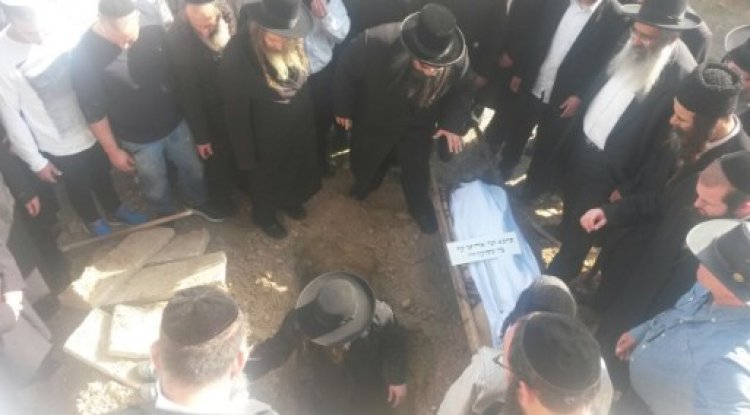
A Tiny Soul Taken Too Soon
“One must understand that there are very special souls that choose of their own will to come into the world. They choose to come for a year or two only, in order to bring a tikkun (repair) to the world. These are the souls of children who are taken from us suddenly before they have ever tasted sin, because that is what they wanted, to come for a short time and to repair.
“Feiga Chana was such a sweet soul, so full of goodness, as her mother said about her, that there was not a drop of evil in her. Not a single drop of wickedness or sin. Everything is pure and refined in them, and in that way they rise Above completely purified. I told my daughter in law that now that Feiga Chana of blessed memory has gone up to Heaven, they enjoy her there no less than we enjoyed her, her pure soul and the goodness that was in her.”
Named for Feiga and Remembering Rabbi Nachman’s Pain
“She was named Feiga after the righteous woman, the mother of Rabbi Nachman of Breslov of blessed memory,” Rabbi Arush says. “Rabbi Nachman himself had three daughters and a son who passed away during his lifetime. Rabbi Natan tells that one day he was with Rabbeinu, and his little son Shlomo Ephraim, who was only a year old, fell ill with tuberculosis and was near death. The rebbetzin came and cried out: ‘Please save our son. I know you have the power to do so.’ Rabbi Natan was there and testified that Rabbeinu said: ‘Who knows what great tikkun he accomplishes by ascending to Heaven.’
“But the break and the pain over his son’s passing were enormous. He was deeply attached to him and spoke of him in exalted terms, and he wept bitterly over his death.”
Morocco, the IDF, and Breslov
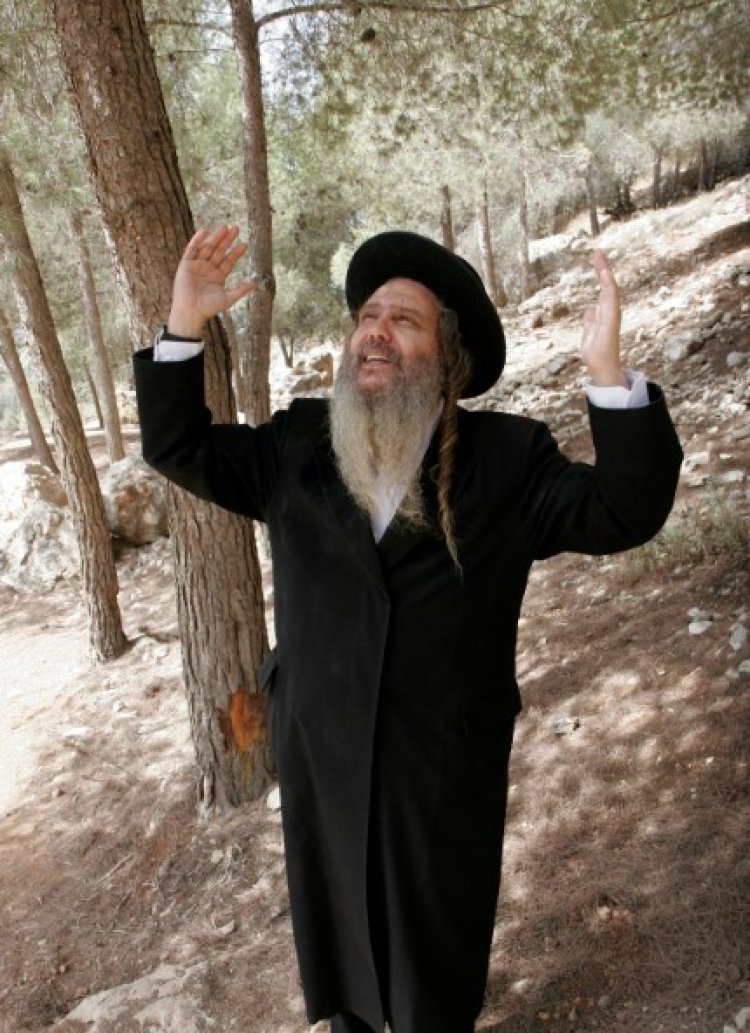
There is hardly anyone connected to the Jerusalem Breslov community who does not know the smiling, energetic, faith filled figure of Rabbi Shalom Arush, head of the Chut Shel Chesed yeshivah for baalei teshuvah in Jerusalem.
The rabbi was born in Morocco and immigrated to Israel with his family at age 13, growing up in Petah Tikva. The home he grew up in was religious, and as he tells it: “On our first Shabbat in Israel, my father was sure that since in Israel there are only Jews, obviously no one drives on Shabbat and you can walk in the middle of the road. When he saw cars driving and a restaurant open on Shabbat, he asked: ‘Did they bring us to a place of non Jews?’ When someone explained to him that these were Jews, he was furious to the depths of his soul.”
At first the young boy studied in a religious framework, but before long all his brothers left religion. He too was sent to a non religious high school, and after graduating he enlisted in the army. Thanks to his special abilities he was accepted into the elite rescue unit of the Israeli Air Force, Unit 669, where he served as an airborne combat medic and participated in many classified operations. Afterwards he studied economics at university.
Those were the years of war with Egypt, when fierce battles took place along the Canal. During his studies he received the bitter news from the unit in which he had served: a helicopter carrying five of his friends crashed on its way to an operational mission. All five were killed.
The Turning Point That Brought Him Back
It was a terrible day whn he escorted five friends to their final rest, in five funerals held one after another, and those moments caused a dramatic turning point in his life. He began asking himself: Is it really so, that a person lives long moments and in one instant everything disappears? Is this the purpose of man? And if so, why do we toil, and what is the purpose of all this?
Those questions tormented him and led him to explore Judaism. Slowly he drew close to his Jewish identity and to his Creator. In his search for truth he began to connect to the teachings of Rabbi Nachman of Breslov. He studied at Yeshivat Shuvu Banim under Rabbi Eliezer Berland in Bnei Brak, and also grew close to Rabbi Yitzchak Levy Bender and Rabbi Shmuel Shapira of blessed memory, from whom he absorbed much. Later he studied at Yeshivat Dvar Yerushalayim, where he learned halachah and Talmud.
This was not the first painful blow he had faced. At the beginning of his journey it was hardship and the desire to find meaning in suffering that brought him toward Judaism.
“Everything I wrote, everything I said, it all came from the heart, from my life experience. From within difficulties and afflictions I wrote about a person’s difficulties and afflictions. When I had debts, I wrote from within that experience about the test of debts and financial strain. When I wrote about the secret of happiness, it was from my own search for it. That may also be the secret of success, because these are words that come from the heart, not only a collection of other people’s words. It is important too, but words written out of personal work and personal experience are far more impactful.”
How Do You Heal Pain Like This?
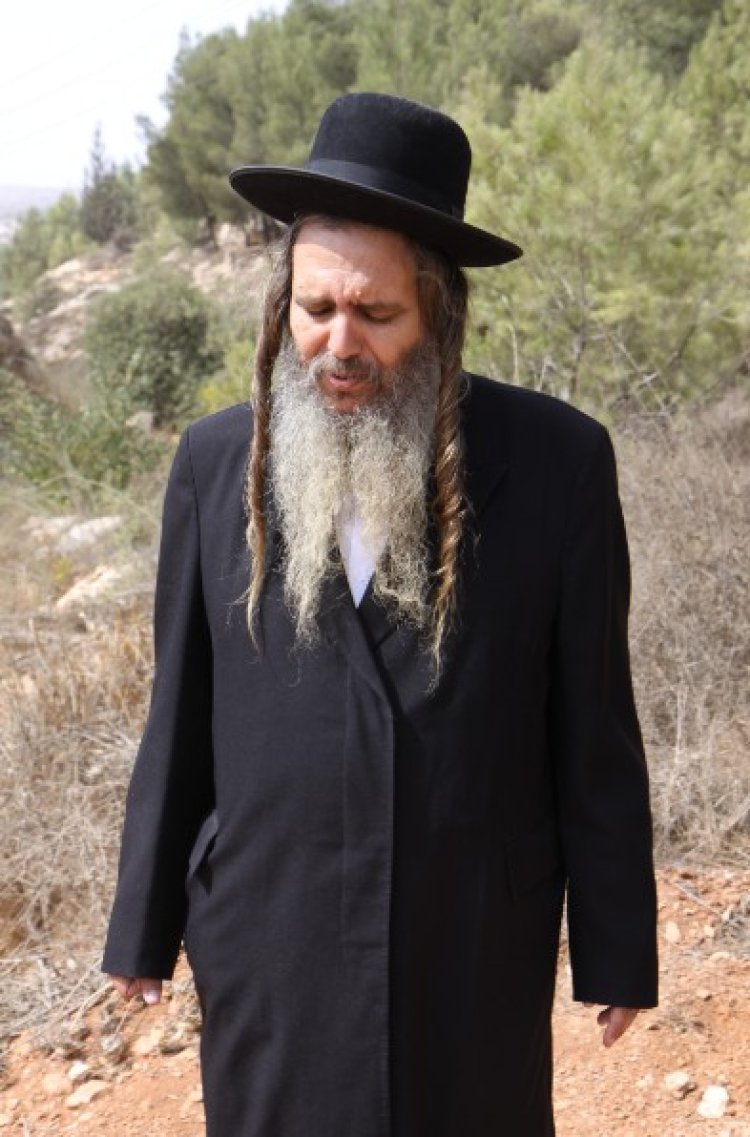
How does one heal such pain? How does one emerge from such a break? The rabbi is known as someone who strengthened many hearts and fortified the faith of thousands. In a case like this, when tragedy knocks on the door of one’s own home, what one has said to others takes on enormous weight.
“Every person has harder times and easier times, better times and less good times. The secret is to strengthen yourself in faith, to accept everything with love, and to continue knowing that even what seems bad at first is all from Him, blessed be He. You do not always see the good immediately, you do not always see the good at all, but you must always know that it is so.
“In the teachings of our master Rabbi Nachman of Breslov we see that he spoke a great deal about this, to strengthen yourself in faith without questions, without doubts. The pain is great and immense, and Heaven forbid to think that if one cries and grieves it means a lack of faith. A person must cry. A person must grieve and mourn. You do not need to summon tears. They come on their own, from a torn heart, and you must allow the heart to cry.
“But after everything, one must know that it is all in His kindness. First we cry and weep over this bitter news. We mourn and lament. But in the end we must strengthen ourselves from it and learn that we are all in the hands of Hashem. In the end one must recover, and even return to trying to be in joy, to rejoice with the Holy One, blessed be He, over every kindness that He does with us.”
Joy, a Smile, and Prayer
Rabbi Arush is known for a unique path that educates toward joy and faith. In his office at the Chut Shel Chesed yeshivah hangs a golden sign that reads: “Office of the Minister of Smiles and Joy, Rabbi Shalom Arush.” Hundreds of people stream into his office, each with his own pain and sorrow, seeking comfort. In his lessons too, the rabbi weaves in humorous remarks, and at times even begins to sing in the middle of a class to uplift the soul.
Smiling and joy, which Rabbi Arush teaches, are rare commodities in times of hardship. But now, when he himself bears such a heavy tragedy, is it still possible to find a path to joy?
“Joy does not come by itself. It is not easy. It is never easy. There is a very strong evil inclination to sink into despair, to fill yourself with sorrow, and that causes a great fall, Heaven forbid. A person who lives without joy has no life. This is the main battle with the evil inclination in this world, to fight and to rejoice with the Holy One, blessed be He, despite hardships and pain.”
“When did you find out about the terrible accident?”
“I knew immediately. I knew that Feiga Chana had been seriously hurt even before I knew that my son Shimon was injured as well. I myself was also at the gravesite of the holy Baba Sali that evening. I took part in the hillulah and returned to Jerusalem. Shimon called me right away when he managed to get out of the car and cried to me on the phone: ‘Abba, the baby is hurt. Abba, the baby is not okay. Please pray.’ I immediately knew the baby was in serious condition.
“He himself still did not know, he had not yet felt that he too was injured. After a few minutes Shimon’s condition deteriorated badly. They took him to the hospital in critical condition, but the baby had already passed away. Afterwards I saw her. She passed away without external injury, without any visible signs, whole and pure. Now we also have someone with God, and therefore we are closer to Him. Now, so to speak, we have a messenger there Above, in Heaven.”
“Did you merit to meet the Baba Sali during his lifetime?”
“I did not. I was young and I did not manage. But there was one time I decided that I wanted to go in and see the radiance of his face. I traveled a long time until I reached Netivot and his home, and then they said that on that day he was not receiving visitors. I had one opportunity to see him, but apparently it was decreed that I would not see him.”
Accidents After Hillulot
This is not the first accident on the road back from the Baba Sali’s hillulah. Sadly, it has happened more than once.
“It is indeed interesting that there are two great tzaddikim for whom there are special hillulot. There is a great hillulah for the godly Tanna Rabbi Shimon bar Yochai in Meron, and there is a hillulah for the Baba Sali in the south. Unfortunately, on the way back from their hillulot there are almost always disasters, not always fatal, but there are accidents.”
Is there meaning beyond the technical factors of late hours, heavy traffic, and exhaustion?
“There is, apparently, the idea that when a person comes to a hillulah and draws close to a tzaddik, there are expectations of him. There is a greater obligation to strengthen himself. You cannot be with the tzaddik and then return to your routine as usual. You need to elevate yourself, to rise, to correct your deeds. Whoever is present at a tzaddik’s hillulah must grow from it.”
The funeral took place that same day, very quickly, and many who wanted to attend did not make it. Was that intentional?
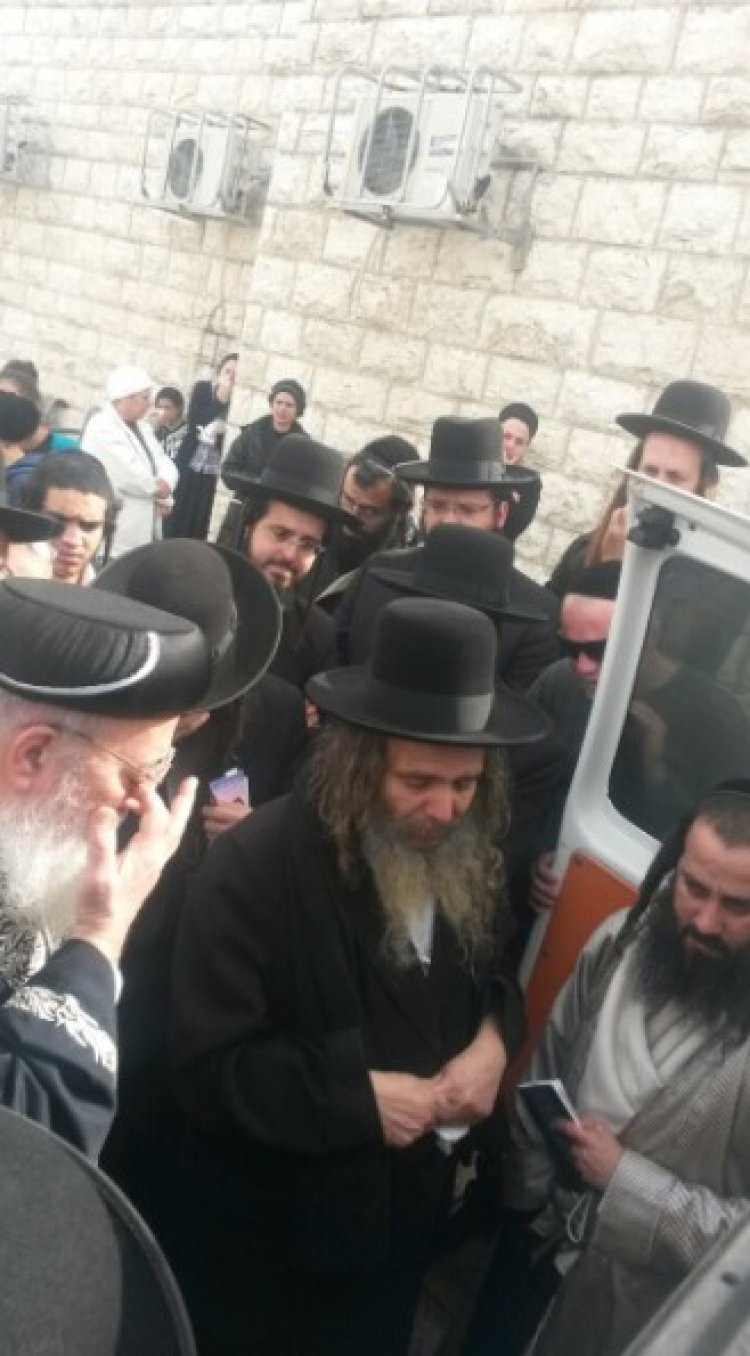
“Yes. We did not want publicity. We did not want to burden the public. For my part, I would not have notified anyone other than family and close associates. Why burden the public? We were struck with a very hard blow, and the entire family was in the hospital, so the funeral left from my home. We said a few words, we said the prayers and Kaddish, and we continued to the cemetery. Why prolong it? Who does that help? The pain is terrible.”
What do you say to the students about a case like this? Surely they ask why it happened.
“Anyone living in this world needs to seek the truth, to see where he still needs to fix, where he is still not whole. A person who thinks he has already arrived at the ultimate truth is making the greatest mistake. We too must examine our deeds and think about where we erred.
“I have no doubt that these sacrifices we are offering came to awaken us about one thing, to distance ourselves from dispute and to increase love of Israel. This came to wake us up to distance ourselves from lashon hara, from conflict, and from bad character traits.
“The Talmud says that in the generation of King David, who were engaged in Torah, they would go out to war and lose because there were speakers of lashon hara among them. In contrast, in the generation of Achav, who were wicked and worshiped idols, they would go out to war and win because there were no speakers of lashon hara among them. From here we see that the common assumption, that Torah alone protects the Jewish people, is not accurate. Torah with conflict does not protect the Jewish people at all. Torah with lashon hara protects nothing. In contrast, peace and love of Israel are the strongest shield, so strong that even over idol worshippers they provide protection.
“If we lack protection, if we suffer afflictions and disasters, it is only because we lack this protection of love of Israel. We have baseless hatred and disputes. Therefore, especially in this time, we must awaken in this area, stop the hatred, stop the Satan dancing among us. Who knows how many disasters and how much pain this brings upon us. This is the time to increase love of Israel.”
“How is the yeshivah managing in the meantime, when the rabbi is occupied almost entirely with this?”
“I received tremendous support from the students and acquaintances. Everyone shared in my sorrow, and each one tried to help in whatever way he could. I am deeply grateful and I thank each and every one of them for sharing in the pain and helping carry the burden.”
Thirty Years of Chut Shel Chessed
These days mark exactly thirty years since the founding of the institutions Rabbi Arush established.
“Thank God, today in our generation we see an enormous return to Judaism. Not a hunger for bread and not a thirst for water, but to hear the word of Hashem. Wherever we go, people want to learn Judaism, to learn Torah, and to hear the word of Hashem. Every day more Jewish souls strengthen themselves in Torah and mitzvot, and the word of Hashem reaches every corner of the world.
“Recently, a priest who leads hundreds of thousands of people in the United States came to visit Israel,” the rabbi reveals, “and he asked to meet me. We spoke, and he wanted to hear the Jewish outlook on faith and life. Even non Jewish priests come to hear what Judaism and Torah have to teach. How much more so Jews. Even if it seems they are far, in the end we discover that with one small spark they awaken to their Judaism.
“There are those who say this is a sign of Mashiach’s coming. I always say that according to Breslov, the principle is that we must make sure you are not preventing Mashiach’s coming. That you do what you need to do so you will not be the one delaying it. And every Jew who learns Torah, every Jew who draws closer to Judaism, is one less delay.”
Short Profile: Rabbi Shalom Arush, Minister of Smiles
Rabbi Shalom Arush is the head of the Chut Shel Chesed yeshivah in Jerusalem and one of the leading figures in the Breslov community, with thousands of students around the world. Three decades ago he founded the Chut Shel Chesed institutions.
The yeshivah was originally named Chut Shel Chesed because it was established for students who rise at midnight to learn Torah, based on the words of Chazal: “Whoever learns Torah at night, a thread of kindness is drawn over him by day.”
Today the yeshivah operates during the daytime, but it still includes a midnight kollel, and it is housed in an ancient building in the Meah Shearim area. Nearby are additional institutions connected to the yeshivah, including a cheder and educational frameworks for children. Rabbi Arush established branches in many places throughout the country, and in the past he would visit them once a week.
Rabbi Arush spreads Torah throughout Israel, traveling from place to place to draw hearts close to their Father in Heaven and to spread the teachings of Rabbi Nachman of Breslov worldwide. He is known for educating toward joy and is called by his students “the Minister of Smiles,” because of his custom, following the way of the sages, to open each lesson with a humorous remark.
He has also authored many books that became bestsellers, foremost among them In the Garden of Faith, a guide on faith printed in tens of thousands of copies in many editions and translated into six languages, along with In the Garden of Peace, In the Garden of Longing, In the Garden of Happiness, a guide on livelihood, and more.

