

Magazine
Eli Cohen: The Spy Who Never Returned
Fifty years have passed since Eli Cohen was executed. Books and research have delved into the legendary spy who never came back from Damascus, and whose burial place remains unknown. How was he captured, and did Israel do everything in its power to bring Eli Cohen home?
- Avraham Rosen / Yom Leyom
- | Updated
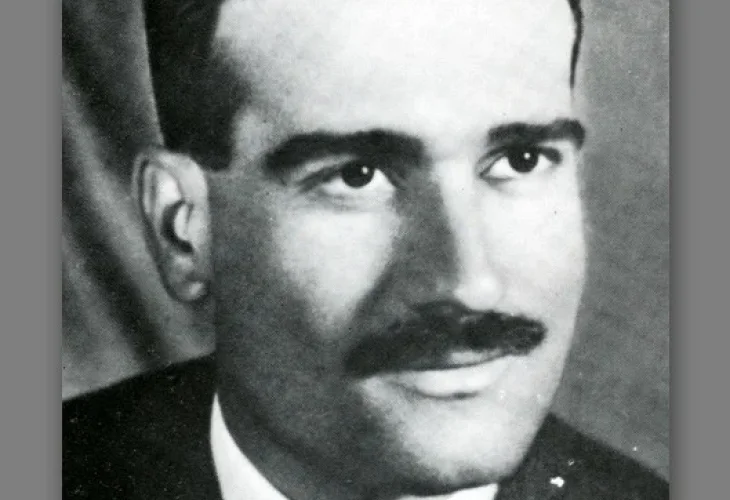
In the early hours of the morning, at exactly 2:00 AM, knocks on Eli Cohen's door in one of Damascus's upscale neighborhoods marked the end of Israel's greatest spy. Cohen, known as Kamel Amin Thabet in Syria and closely connected to the country's top officials, was caught listening to a transmission from Tel Aviv. Dozens of soldiers, security police, and agents surrounded his building. Cohen did not resist arrest, and the last message he sent to Israel was dictated by Syrian intelligence. The message, meant for Prime Minister Levi Eshkol, read: "Kamel and his friends are visiting us for some time now. We will inform you of their fate soon." Israel understood that Eli Cohen's time was up.
Cohen was recruited in 1960 to Unit 188 of the Israeli Defense Forces' Intelligence Branch. He later joined Mossad and was among the founders of the organization's operations unit, 'Kesarya.' Despite having been involved in the 'Lavon Affair,' his talents and genius, particularly in languages and memory, ensured he wasn't easily dismissed.
Israel's Greatest Spy
Journalist Tom Segev, who authored 'Lonely in Damascus', uncovered a series of intriguing details. Segev noted: "Cohen operated in Damascus for three consecutive years, providing reliable and accurate information. He integrated into Syrian society with astonishing speed, broadening his circle of contacts significantly. Following his capture, nearly 500 people were detained across Syria. His investigation extended beyond Syria to Egypt and Lebanon. Cohen was undoubtedly Israel's greatest spy. Absolutely no doubt."
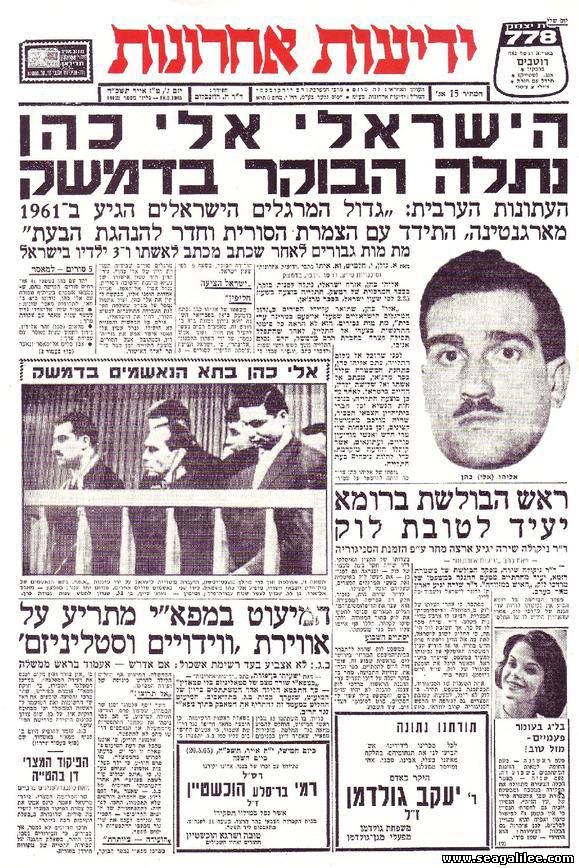 Front page news of Eli Cohen's death
Segev's conversations with intelligence personnel, who received Cohen's reports, revealed that Cohen visited the Golan Heights three times, from Quneitra to Al-Hamma. Contrary to the published claim of a single visit, this was a rare feat even among the Syrian military.
Segev recounts the version of Salah Ad-Din Ad-Dhli, the ruthless judge who sentenced Cohen, claiming he entered Syria with the help of a Syrian feudal lord who was actually a NATO agent, assisting Cohen for payment. Segev expresses skepticism, emphasizing Syria's interest in downplaying Israel's achievement, thus questioning the narrative's accuracy.
An interesting piece Segev reveals involves the wife of that very judge, who worked for an airline. Through her connections, Cohen managed to send letters out of Syria undetected. This surreal twist involved the judge's wife unknowingly acting as a courier for Cohen, traveling with his letters to Europe, bypassing censorship.
Cohen's intelligence was invaluable. His exposure provided rare insight into a secretive realm. Known details, elaborated on in Segev's book, included Israel receiving Jordan River diversion plans in full. In another case, Segev recounts, Cohen was the first to report Damascus's plan to establish Fatah and its terrorist coordinator. Israel failed to grasp its importance.
"There are no direct testimonies about Cohen's operational achievements," estimates Segev. "The Syrian intelligence hasn't revealed the extent of the damage Cohen inflicted." However, Prime Minister Levi Eshkol remarked post-Six-Day War: "Without the information Cohen provided, the IDF would have had to recruit more brigades for the Golan Heights."
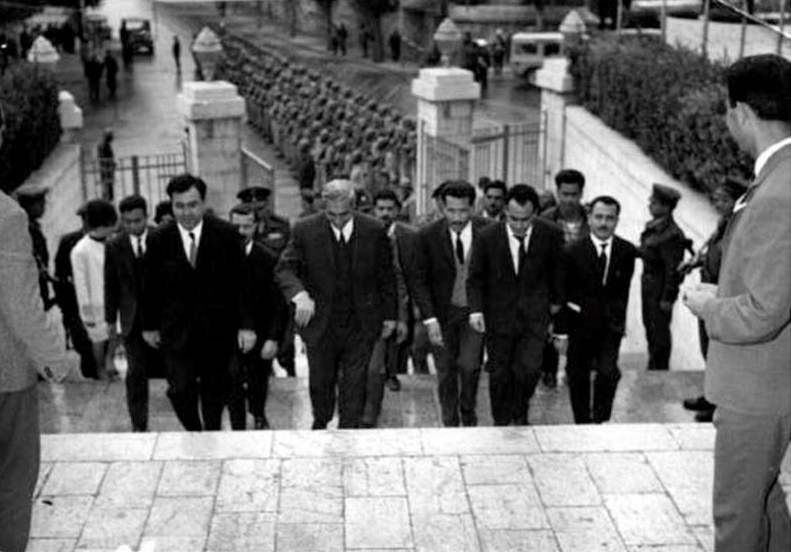
How Eli Cohen Was Exposed
Several versions explain Cohen's exposure. Segev claims that post-arrest, claims surfaced about his lack of self-discipline. Initially whispered in private, these allegations became public. It was said Cohen went overboard with his reports, driven by limitless motivation, even against orders to lie low. Psychological evaluations noted this potential, citing his courage and intelligence but warned of his tendency to take unwarranted risks.
"Before his final return to Damascus, after visiting Israel," recalls Segev, "Cohen sensed it was over. His reception cold, Syrian President Amin Al-Hafiz, once a friend, distanced himself. Formerly greeted by many at the airport, only one awaited his return. Unknown to him, his apartment was searched in his absence. When Syrian authorities questioned President Al-Hafiz about the 'Argentinian tourist,' he replied with doubt."
Cohen was ordered by his handlers not to use his Morse machine for two weeks. Unexpectedly, a friend's story about meeting Franz Rademacher, a notorious Nazi hiding in Damascus, compelled Cohen to breach this directive, intent on reporting his discovery. This, among other factors, heightened the Syrian intelligence chief's suspicions.
Cohen reported to Israel about meeting Rademacher, seeking instructions, with clear orders to drop the matter. In September 1966, posthumously, German intelligence abducted Rademacher from his Damascus residence, partly thanks to Cohen's earlier tips. "How the German Intelligence Agency learned of Rademacher's address remains unknown," Segev hints. Yet, years later, an unofficial comment attributed Rademacher's capture to Cohen's efforts.
Following Cohen's arrest, another theory emerged: Syrian authorities noted sabotage effectiveness on their water projects soon after dispatch, deducing the presence of a mole.
In early January 1965, a shipment of sophisticated Soviet wireless devices arrived in Latakia for Syrian military use, prompting a 24-hour radio silence to test the equipment. Unaware, Cohen continued transmitting, allowing Syrian soldiers to trace and decode his signal. When they stormed his apartment, Cohen was caught receiving a message from Tel Aviv, offering no resistance.
The morning of January 18, 1965, marked Cohen's capture. Three Syrian intelligence officers, led by Colonel Suweidani, surrounded and breached his apartment. "The game is over," Suweidani declared, swiftly ending the mission to capture one of Israel's esteemed spies.
Syrian security chief detailed Cohen's capture. "We located the apartment's antenna and planned the raid for 2:00 AM, hoping to catch him asleep. Inside, we found him alert, receiving a message from Tel Aviv, seeking additional information."
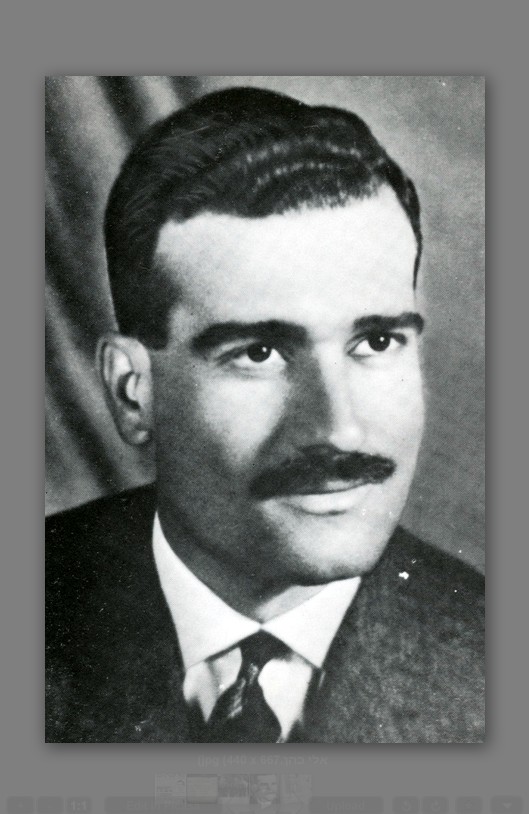 Eli Cohen
The Interrogation
Eli Cohen's capture remains a mystery, says Segev, noting that the key to his arrest lies with the Syrians. An Israeli investigative committee concluded that the Soviet equipment then in Syria's possession wasn’t advanced enough to detect Cohen's transmissions. However, later accounts reveal otherwise.
Years later, former President Hafiz recounted the acquisition of sophisticated Soviet technology shortly before Cohen's capture, unbeknownst to Israel. "Hafiz claims this led to Cohen's arrest," adds Segev, "Implying without it, he might have gone unnoticed."
Amin Al-Hafiz also described Cohen's interrogation. During questioning, Cohen referenced a mosque in Argentina, using the term "The Muslim mosque," a linguistic error that alerted Al-Hafiz as Muslims simply say "the mosque."
Concluding Cohen wasn't a Muslim, Hafiz instructed to focus on his true identity. As the case unfolded, Cohen, poised as a quintessential spy, remained silent, as pieces gradually fell into place.
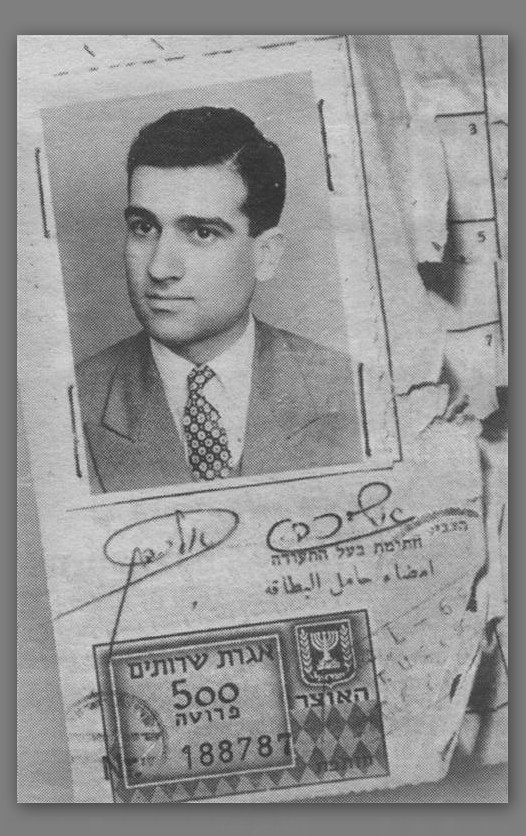 Eli Cohen
The Verdict
Cohen's trial in Syria sparked significant discomfort due to his high-level connections. Despite Israel's numerous attempts to save him, all efforts were in vain. Cohen was sentenced before even standing trial. Executed in Marjeh Square, he left behind a wife and three children in Israel. "I ask you," he wrote to his wife Nadia, "not to mourn but to look towards the future."
During his trial, Cohen recounted the circumstances of his recruitment to Damascus. "Someone named Zalman approached me," he stated, "recognizing my potential for intelligence work, offering overseas travel."
Despite rejecting initial offers due to family ties, Cohen later agreed to a six-month trial period, supported by a notable salary, significantly higher than his previous work.
Without legal representation, Cohen detailed his ties with Damascus's regime, admitting regular visits to Israel while maintaining a faux Arab identity.
To the Syrians, Cohen was "Israel's greatest spy to ever operate in an Arab country." Before his execution, he calmly prayed with Rabbi Nissim Andibo from Damascus, maintaining composure until the very end.
Eli Cohen's body was left hanging for six and a half hours in the square, viewed by thousands. His verdict, scripted on a white sheet covering his body, was broadcast entirely by Syrian media. At 9:00 AM, his body was taken to Damascus's Jewish cemetery for burial, according to information released then.
Israel's attempts to save Cohen included offers to exchange him for Arab prisoners or supply humanitarian aid to Syria, all refused.
Post-execution, Nadia's attorneys requested the return of Cohen's body and his last letter to Jerusalem, but to no avail. In August 2008, Amin Al-Hafiz's former aide admitted to reburial attempts to deter Israeli retrieval, leaving Cohen's grave unknown.
Segev's book includes a detailed account from Al-Hafiz's assistant, who accompanied Cohen to the gallows and witnessed the covert burial — a hasty, unmarked interment that dissipated as the area evolved over decades, making location recovery unlikely without precise intelligence archives.
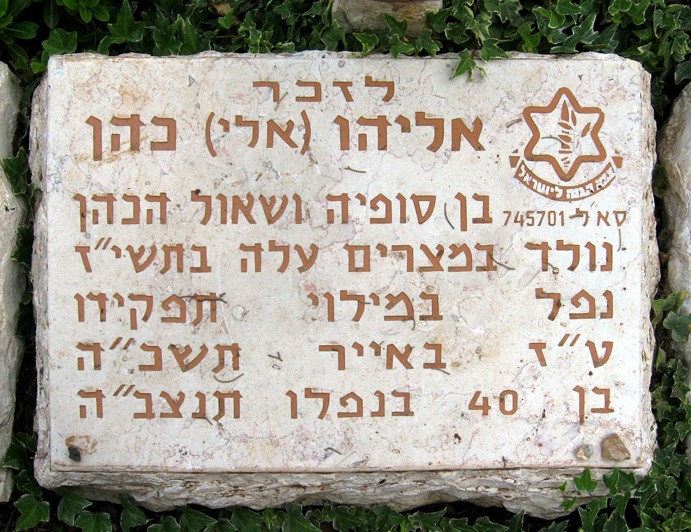 Eli Cohen's memorial
A Nation in Mourning
In the hours following the execution, Eli Cohen's modest home in Bat Yam held a doll, his last gift to his daughter, Sofia, during a recent "European" business trip. His daughter, then 4, pleaded for him to remain home. Cohen soothed her fears, promising this was his final departure.
Sofia, newly fatherless, played alongside her younger sister, Irit, while their infant brother, Saul, rested. Nearby, Eli's mother, Sofia Cohen, mourning hysterically, lamented her son's loss.
Nadia, Cohen's wife, endured stoically during trial weeks, petitioning international entities like the Red Cross for assistance, but efforts all met with rejection. Despite a composed facade, grief ultimately consumed her post-execution.
Today, Sofia, now a clinical psychologist with her own family, recalls letters orchestrated by Mossad's quarters sent in her father's name, simulating a facade of normalcy. These letters, retrospectively analyzing, show the extent of deception woven around her mother's unknowing role in a broader espionage scheme.

